Luxury Handbag Tissue and Wrapping Explained: Weights, Folds and Acidity Compared
What tissue belongs in a luxury handbag box? Acid-free tissue at 30 grams per square metre, at a neutral pH between 6.5 and 7.5, folded rather than scrunched, in two sheets for a clean silhouette and four where hardware can mark. Lighter weights at 22 and 17 gsm exist for interleaving and for transit protection respectively, and neither belongs in the reveal. This article compares the three weights and four fold patterns, and gives the two tests that close the specification.
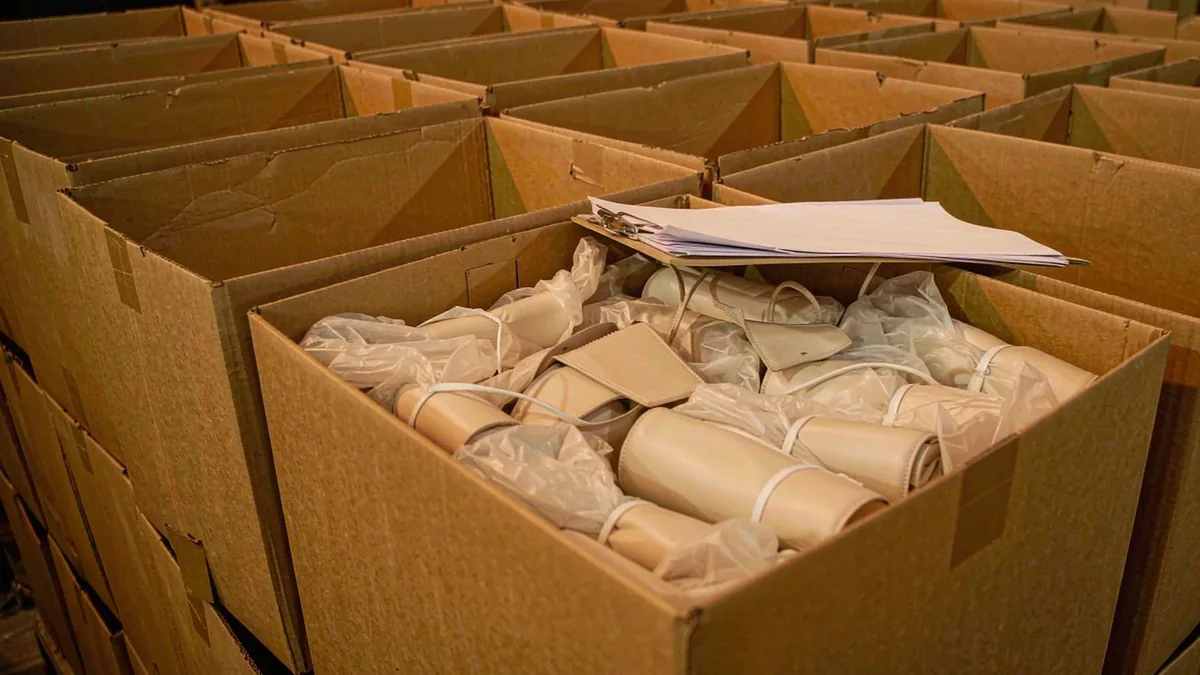
Tissue is the least costly layer in a presentation set and the one that decides whether an opening feels paced or perfunctory. It is also the layer most often bought on price alone, which is a mistake of proportion rather than of pennies: the difference between a good sheet and a marginal one is a small fraction of set cost, and the difference in how the opening reads is the whole of it. Three specifications govern the outcome: weight, acidity and how the sheet is folded.
What Tissue Does in a Luxury Bag Set
Tissue does two jobs that pull in opposite directions. It has to protect the surface of the piece against abrasion, against hardware pressing on leather, and against dust over months in storage. And it has to slow the reveal, because the interval between the lid clearing and the piece being in the hands is almost entirely produced by the tissue. A sheet that protects well but shreds at the fold has failed at the second job, and one that looks beautiful but scratches a finish has failed at the first.
- Protects the finish against abrasion from hardware and from the box wall.
- Separates the piece from dust over months of storage.
- Paces the reveal, which is the part the client actually remembers.
- Carries a mark, where a programme wants one, at a single colour.
- Signals intent: folded tissue reads as wrapping, loose tissue reads as packing.
Tissue Weights Compared: 17, 22 and 30 gsm
Three weights cover every programme and each has a clear home. At 30 gsm, acid-free tissue handles well, holds a fold without springing open and gives enough opacity to hide the piece without concealing its shape. At 22 gsm the sheet is noticeably more transparent and holds a fold only lightly, which suits interleaving between a strap and a flap rather than the reveal. At 17 gsm the sheet creases in transit and reads, unmistakably, as packing material.
| Weight | Fold behaviour | Opacity | Best used for | Verdict |
|---|---|---|---|---|
| 30 gsm acid-free | Holds a crisp fold, does not spring | Good | The reveal layer, 2 to 4 sheets | The standard |
| 22 gsm | Holds a light fold only | Moderate | Interleaving between hardware and leather | Supporting layer |
| 17 gsm | Creases in transit | Low | Transit protection, never the reveal | Avoid in the reveal |
| 30 gsm, printed | As above, ink raises stiffness slightly | Good | A single-colour mark at low coverage | Optional |
| 30 gsm, recycled | Slightly less crisp | Good | Where a recycled claim is required | Good substitute |
| Glassine | Springy, does not hold a fold | Translucent | Interleaving where moisture matters | Specialist only |
Acidity and the pH Question
Acidity is the specification that protects the piece over months rather than seconds, and it is the one most often omitted from a packaging order. A sheet at a neutral pH, between 6.5 and 7.5, does not react with a finished leather surface during long storage. An acidic sheet can leave a mark on a pale calfskin that appears weeks after delivery and that no amount of care card prose will explain to a client.
The test is simple and worth insisting on: a 48 hour contact test between the tissue and the actual production finish, held under a light load, then examine the leather for any transfer or change in sheen. It takes two days and it is the only reliable way to know. Where a programme is using a vegetable-tanned or an aniline finish, the contact test should be run on that specific finish rather than on a standard substitute, because the two behave differently.
- Reveal tissue
- 30 gsm, acid-free, 2 to 4 sheets per piece
- Interleaving
- 22 gsm, used between hardware and leather
- Acidity
- Neutral pH, between 6.5 and 7.5
- Contact test
- 48 h against the production finish under a light load
- Opacity
- High enough to hide the piece without concealing its shape
- Single-colour flexo, low coverage, rub-checked
- Fold
- Single envelope for a short reveal, opposed for a longer one
- Storage before packing
- Flat, away from direct light, to avoid a set crease
- Chain of custody
- Available where the destination market requires it
Four Fold Patterns Compared
The fold does more to pace the reveal than the sheet does, and it costs nothing beyond packing time. A single envelope, where two sheets are folded toward each other from opposite sides, gives the shorter end of the reveal and suits a clean silhouette. An opposed envelope, four sheets folded in two pairs, roughly doubles the time and suits a piece with hardware that needs separating. A book fold suits a flat piece. Loose crumpled sheets are the fourth option and should not be one.
Single envelope
Two sheets folded toward each other. The shorter reveal, around six to eight seconds, and the cleanest look for a simple silhouette.
Opposed envelope
Four sheets in two pairs. Roughly doubles the reveal and is the right choice where hardware must be separated from leather.
Book fold
One large sheet folded around a flat piece like a jacket. Elegant on evening bags and awkward on anything with depth.
Loose or crumpled
Reads as packing rather than wrapping at any weight. The one option with no setting in which it is the better answer.
Printed or Plain: What a Mark on Tissue Costs
A mark on tissue is the least durable impression in the set, because the sheet is opened once and discarded. It is therefore the last place a programme should add a second colour. Single-colour flexo at low coverage is the sensible limit: it keeps the sheet soft, it avoids a heavy ink film that could rub against a pale finish, and it costs a fraction of a second colour on the box.
Where a mark is printed, two checks belong in the specification. A rub test with a white cloth on the printed area, and a repeat of the 48 hour contact test on a printed sheet rather than a plain one, because ink raises the stiffness of the sheet slightly and changes how it behaves against a finish. Both take minutes and both are usually skipped. A third check is worth adding where the programme ships into a humid market: pack a set, hold it for a week at elevated humidity, and open it. A sheet that has absorbed moisture and gone slightly translucent is a legitimate performance issue rather than a cosmetic one, and it is far easier to change the sheet at specification stage than to explain a damp opening to a client in August.
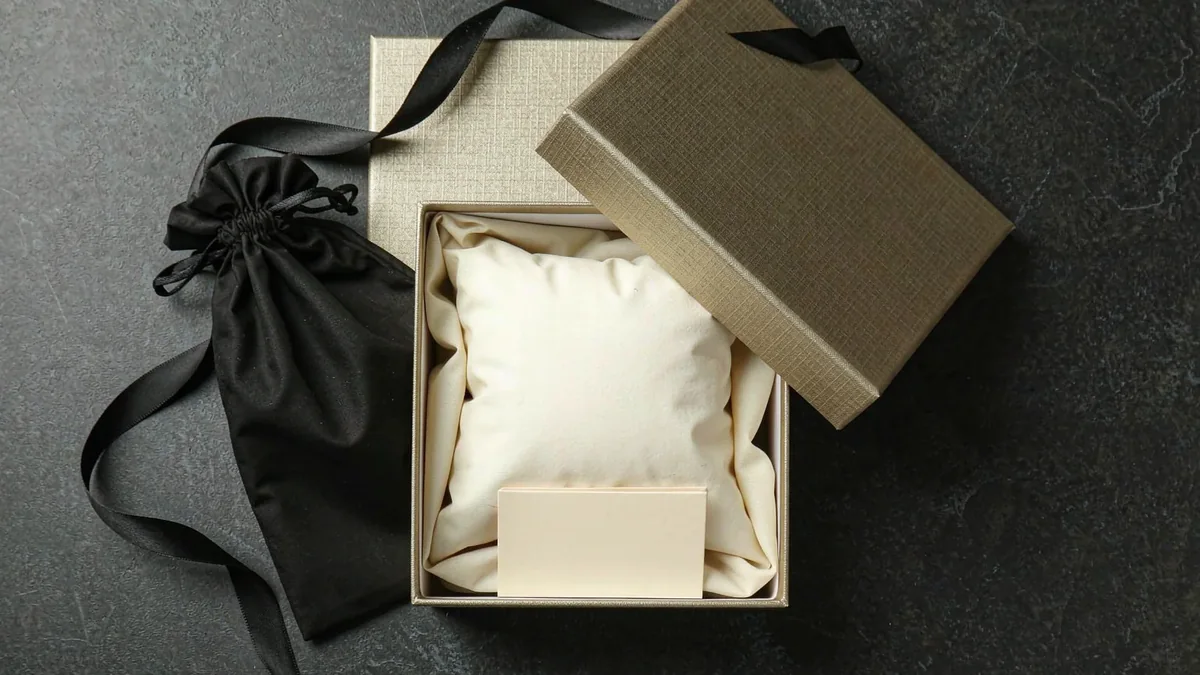
Tissue and the Material It Sits Against
Different finishes ask different things of the sheet. A nappa or an aniline calfskin marks readily and wants a soft, neutral sheet with no printed area in contact with the panel. A saffiano or a cross-hatch embossed leather is far more tolerant and can take a printed sheet without complaint. An exotic material with scales or a raised grain wants more interleaving, because the raised surface is what abrades against anything it touches.
Hardware is the other variable. A turn-lock, a heavy zip pull or a chain strap will press an indentation into leather over weeks in a box unless something separates them, and tissue is the least costly thing that will do it. Where a piece has a chain, add two sheets specifically at the contact point rather than adding two sheets everywhere, which is the more common and more expensive response.
How Many Sheets a Programme Actually Needs
Two for a clean silhouette with no raised hardware. Three where the piece has a single hardware element that could mark. Four where a chain, a heavy turn-lock or an exotic surface needs separating on more than one face. Beyond four, additional sheets lengthen the reveal past the point where it feels considered and start to read as protective packing, which is the opposite of the intention.
The sheet count is also the easiest specification in the whole set to change mid-run, because it is an instruction rather than a material. That makes it the right lever to use when a programme wants to alter the pacing of an opening without touching cost, approval or tooling. Pack three variations, time three people, and fix the count that lands in the eight to twelve second band.
Where Tissue Specifications Go Wrong
Four errors repeat. Weight bought down from 30 to 17 gsm to save a fraction of set cost, which shows immediately at the fold. Acidity omitted from the order entirely, so the sheet is specified by weight alone and the contact test is never run. A fold pattern described in words rather than shown in a photograph, so three packers fold it three ways. And a second colour added to a sheet that is discarded within seconds of being opened.
Hold the production tissue against the production finish under a light load for 48 hours, then look for any change in sheen. It is the only reliable way to know whether the sheet is safe for a pale calfskin, and it costs two days rather than a season of returns.
Storage, Handling and the Sheet Before It Is Folded
A specification for tissue is incomplete without a line about how the sheet is stored before it reaches the bench. Tissue kept in a roll or pressed under a stack develops a set crease, and a set crease runs straight through the middle of a fold the packer is about to make. Store it flat, away from direct light, and rotate stock so that the oldest sheets are used first, because a sheet that has been flat for a year folds differently from one that has been flat for a week.
Handling matters in the same way. Packers working quickly reach into a stack and take three or four sheets at once, which is how a two-sheet specification becomes a four-sheet one without anyone deciding it. Counting sheets sounds like an instruction too obvious to write down, and it is one of the two most common reasons a set drifts from its specification between the first article and the middle of a run. The other is a fold that was photographed once and then taught by word of mouth.
What Tissue Costs in the Set
Tissue typically carries 4% to 7% of set cost, which makes it the second smallest line in the set and one of the largest in effect. Set against a reference unit cost of USD 4.80, the difference between a good sheet and a marginal one is a small fraction of the total, which is why reducing it is almost always the wrong economy. The sheet count, not the sheet quality, is the lever to move.
Fitting Tissue Into the Programme Clock
Tissue is a stock item with a short lead time, which is precisely why it is ordered late and then becomes the excuse for a slip. Order it with the rest of the set, run the contact test during sampling, and confirm the fold pattern with a photograph in the packing instruction. Sampling takes 6-10 working days and 12-15 for complex constructions, bulk production runs 35-50 days, inspection sits at AQL 2.5 under ISO 2859-1, and handover is on FOB Xiamen terms. See luxury handbag packaging for how the tissue layer sits inside the wider specification.
Take this to the bench
- Specify 30 gsm acid-free at a neutral pH for the reveal, 22 gsm for interleaving, and never 17 gsm. Run the 48 hour contact test on the production finish, photograph the fold, and change sheet count rather than sheet quality when the pacing needs adjusting.
Specify the tissue layer
Send the silhouette, the finish and the hardware, and we will set the weight, the sheet count and the fold around them. Work runs at 500 pcs per style and colourway through our validated partner factory Quanzhou Yingming Bags, an SGS-validated site operating since 2014 with 7 production lines and capacity of about 200,000 pcs per month. Request a quote
Frequently Asked Questions
What tissue weight is right for a luxury handbag box?
Acid-free tissue at 30 grams per square metre for the reveal layer. It handles well, holds a fold without springing open, and gives enough opacity to hide the piece without concealing its shape. At 22 gsm the sheet suits interleaving; at 17 gsm it creases in transit.
Why does tissue acidity matter?
A neutral sheet between pH 6.5 and 7.5 does not react with a finished leather surface over months of storage. An acidic sheet can leave a mark on a pale calfskin that appears weeks after delivery, which no amount of care card prose will explain to a client.
How is tissue acidity tested?
By a 48 hour contact test between the tissue and the actual production finish, held under a light load, followed by an examination for any transfer or change in sheen. On a vegetable-tanned or aniline finish, run it on that specific finish rather than a standard substitute.
How many sheets of tissue should a bag be packed in?
Two for a clean silhouette with no raised hardware, three where there is a single hardware element that could mark, and four where a chain, a heavy turn-lock or an exotic surface needs separating on more than one face. Beyond four the reveal starts to read as packing.
What is the best fold for a luxury bag reveal?
A single envelope of two sheets, folded toward each other, for a short reveal of around six to eight seconds. An opposed envelope of four sheets roughly doubles the time and suits pieces with hardware. A book fold suits a flat piece such as an evening bag.
Should tissue be printed with a mark?
It can be, at a single colour and low coverage using flexo. A second colour on a sheet that is discarded seconds after being opened is the wrong place to spend. Where a mark is printed, run a rub test and repeat the contact test on a printed sheet.
Does printed tissue behave differently against leather?
Slightly, because ink raises the stiffness of the sheet and changes how it sits against a finish. That is why the 48 hour contact test should be repeated on a printed sheet rather than a plain one, alongside a rub test with a white cloth on the printed area.
What tissue suits a bag with a chain strap?
Add two sheets specifically at the contact point where the chain rests against the leather, rather than adding two sheets everywhere. A chain will press an indentation into leather over weeks in a box unless something separates them, and tissue is the least costly separator.
Does the leather finish change the tissue specification?
Yes. A nappa or aniline calfskin marks readily and wants a soft, neutral sheet with no printed area in contact with the panel. A saffiano or cross-hatch embossed leather is far more tolerant, and an exotic material with a raised grain wants more interleaving.
How much does tissue cost in a packaging set?
Typically 4% to 7% of set cost, which makes it the second smallest line and one of the largest in effect. The difference between a good sheet and a marginal one is a small fraction of the total, so the sheet count is the lever to move rather than the sheet quality.
What are the four most common tissue mistakes?
Weight bought down to 17 gsm to save a fraction of set cost; acidity omitted from the order entirely; a fold pattern described in words rather than shown in a photograph; and a second colour added to a sheet discarded within seconds of opening.
When should tissue be ordered in a programme?
With the rest of the set, not at the end. The contact test belongs in sampling, and the fold pattern belongs in the packing instruction with a photograph. Sampling takes 6-10 working days, bulk runs 35-50 days, and inspection sits at AQL 2.5 under ISO 2859-1.
People Also Ask
What is acid-free tissue?
Tissue made to a neutral pH, between 6.5 and 7.5, so it does not react with a finished leather surface during long storage. At 30 gsm it also folds crisply, which is what paces the reveal.
What does 30 gsm tissue mean?
Thirty grams per square metre, the weight at which tissue holds a crisp fold and gives enough opacity to hide a piece without concealing its shape. 22 gsm suits interleaving and 17 gsm creases in transit.
How do I fold tissue around a handbag?
Use a single envelope: two sheets folded toward each other from opposite sides. It gives a reveal of six to eight seconds and the cleanest look. Four sheets in an opposed envelope roughly doubles the time.
Can tissue damage a leather bag?
An acidic sheet can leave a mark on a pale calfskin over weeks of storage. Prevent it by specifying a neutral pH and running a 48 hour contact test against the production finish before the run is approved.
Should I print on tissue paper?
Only at one colour and low coverage. The sheet is discarded seconds after opening, so a second colour is poor value. Always rub-test the printed area and repeat the contact test on a printed sheet.
Sources and further reading
Every figure on this page is either our own programme data or attributed below. Open the originals before you write them into a specification.
- Technical Association of the Pulp and Paper IndustryTAPPI Test methods for tissue grammage, opacity and surface pH used in specification.
- ISO standards catalogueInternational Organization for Standardization Reference for paper test methods and ISO 2859-1 inspection at goods-in.
- FSC certification and chain of custodyForest Stewardship Council Chain of custody reference where the tissue carries a certified claim.
- Leather Working Group audit protocolLeather Working Group Environmental reference used alongside contact testing on finished leather.
- REACH legislationEuropean Chemicals Agency Substance restrictions relevant to inks applied to printed tissue.