Luxury Handbag Resale Pricing Guide: The Five Drivers, Three Price Bands and the Specifications That Protect Them
Resale pricing for a luxury handbag is set by five drivers: material honesty, hardware integrity, construction method, condition tolerance and archive recognition. Four of the five are decided before the first sample is cut, which makes secondary-market performance a specification outcome rather than a market accident. This guide works as a checklist — fourteen items a maison can write into a tech pack at design stage, each with the reason it moves a piece between the three observable price bands on the secondary market.
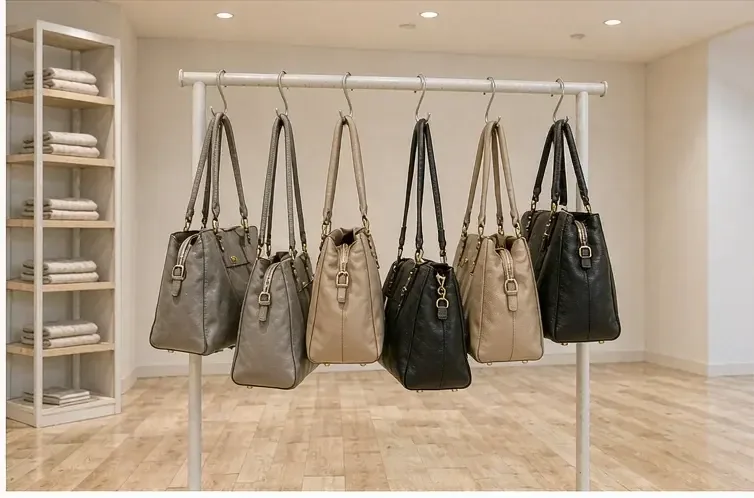
The Five Drivers Behind a Secondary-Market Price
Resale price on a luxury handbag is set by five drivers in descending weight: material honesty, hardware integrity, construction method, condition tolerance and archive recognition. Four of the five are decided before the first sample is cut, which is why secondary-market performance behaves like a specification outcome rather than a market accident.
Material honesty means the outer leather is what the brief says it is, at the substance the pattern requires, from a tannery whose audit reference can be named. Hardware integrity means the closure substrate is solid rather than cast wherever load passes through it. Construction method covers stitch density, edge work and structure. Condition tolerance is how well the piece absorbs ten years of handling. Archive recognition is whether the silhouette is already legible to a buyer.
A label that treats these five as a checklist at design stage can move a piece a full band up the secondary market without changing its design language at all. A label that treats resale as somebody else's problem discovers the difference later, usually when a retail partner asks why the line is being marked down.
Checklist Part One: Material Specifications That Hold Value
Material is the first driver and the easiest to specify badly, because a single word covers a wide range of substance and finish. Write substance in millimetres, name the tannage, and require a retained reference panel per lot so the tenth year can be judged against the first under the same light.
- Full-grain calf at 1.2-1.4 mm for structured panels; below 1.0 mm the panel needs interlining and the patina suffers.
- Vegetable-tanned shoulder at 1.4 mm where the brief wants visible ageing along the handle and the fold.
- Lining at 0.6-0.8 mm in lambskin or dense cotton twill rather than a light synthetic that abrades at the corners.
- Substance measured and recorded at goods-in, because a range written on paper is a tolerance the bench will use.
- One lot per colourway where the run allows it, so panels cut from adjacent hides stay in sequence through assembly.
- A sealed retained panel per lot, held 24 months, for any later dispute about hand, colour or substance.
- Tannery audit reference filed with the lot, naming the site, the audit date, the status and the expiry.
The last two items are the ones programmes skip, and they are the least costly in the file. A sealed panel costs a few centimetres of leather. Reconstructing an argument about colour two years after delivery costs the account.
Substance is also the figure most often negotiated away, usually for a saving nobody can see. Dropping full-grain calf from 1.2-1.4 mm to 0.9-1.0 mm removes a meaningful share of the material cost on the outer panels, and it removes the panel's ability to hold a crease without interlining. The bag looks identical on a shelf for three weeks, then the corners start to round and the structure begins to read as tired.
Checklist Part Two: Hardware and Closure Integrity
Hardware is the second driver and the one most visible in photographs, which is also why it is the one most often substituted. The specification has to name substrate and process rather than finish colour, or a cast part will arrive carrying the right name and the wrong weight in the hand.
- Substrate named per component, not per style: brass bar stock against zamac die-cast, decided where load passes.
- Plating thickness read by XRF and recorded in micrometres, commonly 0.15-0.3 µm of gold tone over a nickel barrier.
- Corrosion proved by neutral salt spray to ISO 9227: 24 hours as standard, 48 hours for antique finishes.
- A cycle-test floor of 5,000 open-close operations written into the pack for every load-bearing closure.
- Nickel release answered under REACH Annex XVII entry 27, and lead under CPSIA wherever the line sells into the United States.
- Finish tone matched across clasp, feet and strap slides, agreed against one master sample under retail lighting.
A closure is the component a client touches every single time the bag is opened. It is also the component that cannot be quietly substituted without the change surfacing in secondary-market listings within a season.
Three Price Bands and What Separates Them
The five drivers resolve into three observable bands on the secondary market. The boundaries move with currency, platform fees and season, and no house should design to a number, but the pattern is consistent enough to work as a design input months before sampling.
| Band | What sits in it | Construction signature | Typical behaviour |
|---|---|---|---|
| Upper | Recognised silhouettes in full-grain or exotic leather with solid brass closures | Hand-set frame, 8-9 stitches per inch, four-coat edge, removable base board | Holds or exceeds original retail once the season closes |
| Middle | Current structured shapes in good calfskin with plated brass hardware | Machine-set structure, 8 stitches per inch, three-coat edge | Settles below original retail, then flattens and stays there |
| Lower | Seasonal shapes in corrected grain with cast hardware and bonded structure | Bonded structure, machine stitch, two-coat edge, glued interior | Falls quickly in the first year and keeps falling |
Read the construction signature column rather than the behaviour column. Behaviour is the outcome; the signature is the set of decisions a tech pack actually controls.
Checklist Part Three: Construction and Edge Work
Construction is the third driver and the hardest to photograph, which is exactly why it separates the bands. Stitch density, edge coats and the way a gusset meets a panel are all legible to a trained buyer within a few seconds of handling, even when they are invisible in a listing.
- Stitch density at 8-9 stitches per inch with 0.45 mm bonded nylon 69, tension matched on both faces.
- Edge paint in four coats, each flashed off at 60 °C for 8 minutes, sanded 320-grit between coats two and three.
- Gusset joined to the panel with the seam allowance skived rather than folded, so the corner sits flat without bulk.
- Interlining specified by name and weight, never substituted on the bench for whatever happens to be available.
- Symmetry checked against the pattern at three points: the base, the closure centre line and the handle apex.
- Final hand applied after inspection, so the inspection sees the bag the client will actually receive.
Two of these cost nothing and prevent most complaints: naming the interlining, and checking symmetry at three points. Both are specification habits rather than bench skills, and both belong to the brand rather than to the workshop.
Condition Tolerance: Designing for the Tenth Year
The fourth driver, condition tolerance, is the one almost nobody writes down. It asks how the bag will look after ten years of regular use, and it is decided by six material choices rather than by luck. Labels that specify it tend to produce pieces that get repaired instead of replaced.
Tannage
Vegetable-tanned leather darkens and softens along the fold; chrome-tanned holds its tone and then cracks. Choose deliberately, because the two fail in different ways.
Handle build
A handle that carries 2 kg repeatedly needs 1.4 mm substance and a folded edge. Most handle complaints trace back to substance rather than to stitching.
Feet
Four brass feet at 6 mm diameter keep the base panel off a surface. Without them the base absorbs every scuff the piece meets.
Lining tone
Dark suede or dense twill hides contact; pale kid shows it within a month. The choice looks cosmetic at launch and becomes decisive by year five.
Edge chemistry
Water-based edge systems flex with the panel. Rigid solvent coatings chip at the corner where the gusset folds, which is the first place a buyer looks.
Repairability
A removable base board and a screwed closure plate let a bench repair the piece. Fully bonded assemblies quietly end its second life.

Archive Recognition and the Price Premium
The fifth driver is recognition: whether a buyer can place the silhouette without being told. It is the only one of the five a young label cannot buy, and it is the reason so many new houses open with a shape that already reads as familiar rather than one that has to be explained.
- Archive recognition
- A silhouette legible to a buyer without explanation; the strongest single predictor of secondary demand.
- Material honesty
- The leather is what the brief says, at the substance the pattern requires, from a named tannery lot.
- Hardware integrity
- Solid substrate wherever load passes, with plating thickness recorded rather than assumed.
- Construction
- Stitch density, edge coats and seam skiving written into the pack rather than left to workshop habit.
- Condition tolerance
- Choices made for the tenth year: tannage, feet, lining tone, repairability.
- Documentation
- Lot records, laboratory reports and audit references held together so a claim can be proved in an afternoon.
Recognition cannot be bought in a season, but the other four drivers can be built, and they are the ones that decide whether a recognised shape actually holds its price when it reaches the secondary market.
Where Resale Thinking Misleads a New Label
Resale thinking misleads when a label designs for the secondary market instead of for the client who will carry the piece. The two are usually aligned, but not always: a shape that photographs well and resells well can still be uncomfortable on the shoulder for a full day.
Design for the client first, then check the resale consequence. Retention follows from material honesty, hardware integrity and construction quality, all of which also make the piece better to carry. A specification written purely for resale tends to optimise the photograph rather than the object, and the market reads that difference within two seasons.
The second trap is treating a resale figure as a target. Bands move with currency, platform fees and season; a tech pack controls none of that. It controls the specifications underneath, and those are what compound.
A third trap is designing scarcity rather than quality. A short run does lift secondary prices for a season, but a short run of a poorly specified piece produces a listing nobody wants at any price. Scarcity amplifies what is already there; it does not substitute for it. Labels that sell out and then watch their own pieces sit unsold on resale platforms learn this in the most expensive way available.
Turning the Checklist Into a Specification
The fourteen items across the three checklist parts only work if they reach the tech pack as numbers. A brief that says 'solid hardware' produces a cast part; one that says 'brass bar stock, 0.15-0.3 µm gold tone over a nickel barrier, 5,000 cycle floor' produces the component the design actually needs.
Programmes specified this way reach an approved sample in 6-10 working days for a straightforward piece and 12-15 where a frame, clasp or plate is custom-cut, with bulk at 35-50 days, inspection to AQL 2.5 (ISO 2859-1), a minimum of 500 pcs per style / colourway, and shipment on FOB Xiamen. The Luxury Market & Trends hub tracks how resale behaviour is feeding back into 2026 briefs, and the sampling route page sets out the rounds in detail.
Want a resale-aware specification for your next line?
Send the silhouette, the target material and the intended retail position, and we will return a tech pack with the fourteen items priced, a sampling window of 6-10 working days and a bulk timeline. Start at /contact-quote/.
Frequently Asked Questions
What drives the resale price of a luxury handbag?
Five drivers, in descending weight: material honesty, hardware integrity, construction method, condition tolerance and archive recognition. Four of the five are settled at tech-pack stage, which is why resale performance behaves like a specification outcome rather than something a market decides after launch.
How much does hardware substrate affect resale value?
A great deal. A closure cut from brass bar stock carries different weight and a different wear pattern on its strike plate than the same closure cast in zamac with an identical finish name. Buyers notice it in the hand, and listings reflect it within a season.
What stitch density do upper-band bags typically use?
Eight to nine stitches per inch with 0.45 mm bonded nylon 69, with tension matched on both faces. Lower-band production often runs at seven or below with a lighter thread, which shows as a looser seam line and earlier wear along the fold.
Why do some bags hold value while others fall quickly?
Because the specifications underneath differ. Full-grain leather at 1.2-1.4 mm, solid brass hardware, four-coat edges and a removable base board all survive a decade of use. Corrected grain, cast hardware and bonded interiors do not.
Does a recognised silhouette always command a premium?
Recognition is the strongest single predictor of secondary demand, but it only pays if the other four drivers support it. A familiar shape built from thin corrected grain and cast hardware will not hold, whatever the outline resembles.
How should a new label think about resale when designing?
Design for the client who will carry the piece first, then check the resale consequence of each specification. The two usually align, because material honesty and solid hardware also make the bag better to carry day to day.
What specifications protect condition over ten years?
Six choices matter most: tannage, handle substance, protective feet, lining tone, edge chemistry and repairability. A removable base board and a screwed closure plate, for instance, let a bench repair the piece rather than write it off.
Is water-based edge paint better than solvent-based?
For longevity, generally yes. Water-based systems flex with the panel, while rigid solvent coatings chip at the corner where the gusset folds. Water-based systems also meet most current retailer limits on volatile organic compounds.
What minimum quantity suits a resale-focused first run?
500 pcs per style / colourway. That threshold covers pattern setting, any frame or clasp tooling, and the two sampling rounds most pieces need, while keeping the run small enough to protect scarcity on the secondary market.
How does documentation affect secondary-market confidence?
It turns a claim into something checkable. A lot record, a laboratory report naming that lot and a tannery audit reference with site and expiry let a seller answer a buyer's questions in one message instead of a fortnight.
What does a solid brass closure add to unit cost?
Machining a closure and frame from brass bar stock rather than casting in zamac typically adds around USD 4.80 to the unit cost of a mid-size bag, before plating specification. The return appears in weight, closure sound, wear pattern and, later, resale retention.
People Also Ask
Do luxury handbags hold their value?
The upper band does, because the specifications underneath survive a decade: full-grain leather, solid brass, four-coat edges and a repairable interior. The lower band does not, whatever the launch price was.
What makes a handbag valuable on the resale market?
Recognition of the silhouette, honesty of the material, integrity of the hardware and the way the piece has aged. All four are decided long before the bag reaches a shop floor.
How is resale value calculated for designer bags?
Platforms compare recent settled prices for the same style, material and condition, then adjust for currency, fees and season. The spread between bands is wider than most brands expect.
Should a new brand design for resale value?
Design for the client first and check the resale consequence second. The specifications that protect resale also make the piece better to carry, so the two rarely conflict when handled in that order.
Does exotic leather improve resale retention?
It can, where the paperwork is complete. A CITES permit or re-export certificate that reconciles with the commercial invoice is what converts exotic material into resale confidence rather than risk.
Sources and further reading
Every figure on this page is either our own programme data or attributed below. Open the originals before you write them into a specification.
- ISO — International Organization for StandardizationISO Publisher of ISO 2859-1 sampling procedures used in inspection plans, plus ISO 11644 for finish adhesion and ISO 3376 for tensile strength of leather.
- European Chemicals AgencyECHA Administrator of REACH, including Annex XVII entry 27 on nickel release from metal components in prolonged contact with skin.
- CITES — Convention on International Trade in Endangered SpeciesCITES The permit and re-export certificate framework governing exotic skins, whose numbers must reconcile with the commercial invoice line.
- Leather Working GroupLeather Working Group Tannery audit protocol whose reference, with site, audit date and expiry, is filed per lot rather than claimed per tannery.
- Business of FashionBusiness of Fashion Trade coverage of luxury pricing, resale channels and the commercial pressures behind seasonal collection decisions.