Designer Bag Resale: Production Takeaways — Five Specification Decisions That Decide What a Piece Is Worth Three Years Later
What does designer bag resale actually teach a production team? That condition is read in five places, in a fixed order: closure, strap, edges, interior, and replaceability. Nothing else decides the secondary figure nearly as strongly. Those five are also straightforward to get right at specification stage — 8 stitches per inch on load seams, three-edge coats, replaceable feet — and impossible to fix once bulk is cut.
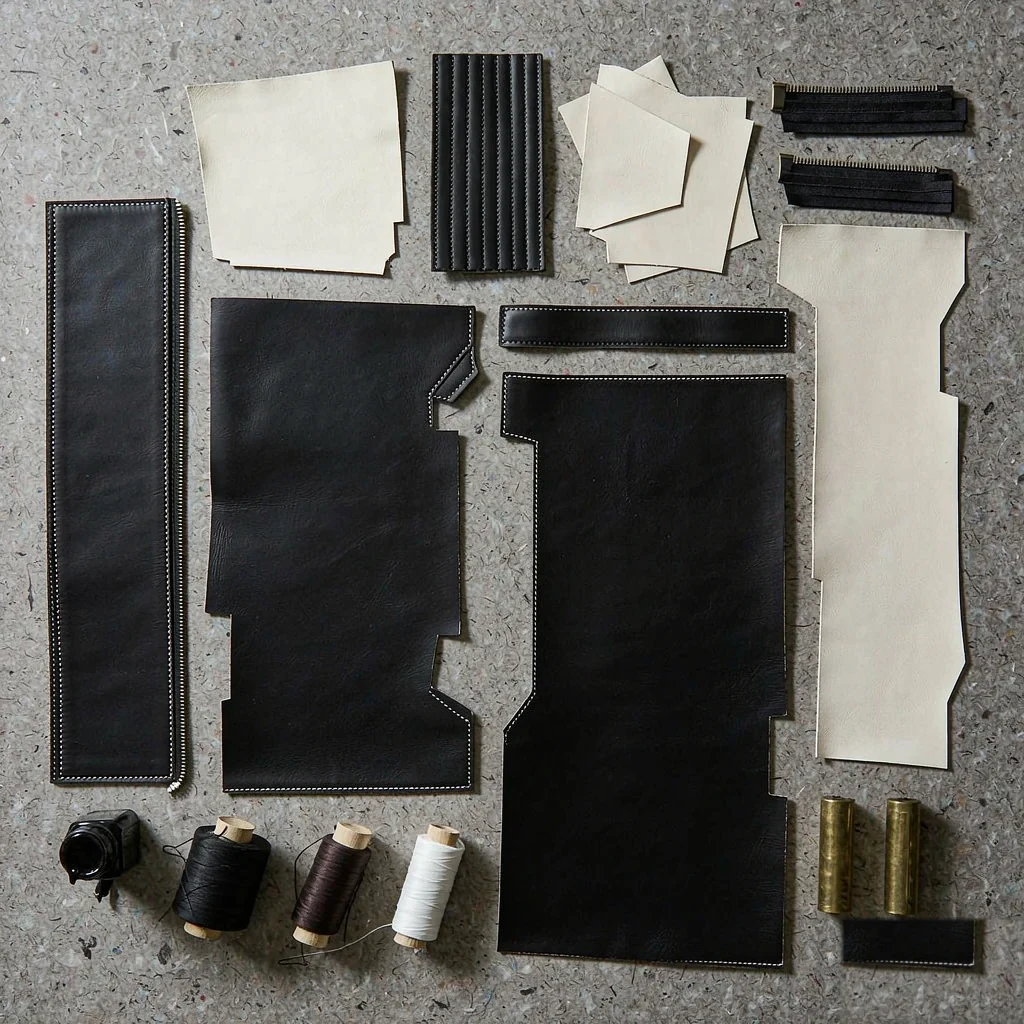
Start with the listing rather than the launch
Resale evidence is unusually honest, because nobody writing a condition description has any interest in flattering your design intent. Read a hundred listings for pieces similar to yours and a pattern appears within an hour: certain failures show up everywhere, certain details are mentioned as positives, and almost nothing about how the piece was marketed survives three years of use.
So the productive way to use resale data is as a specification checklist rather than a pricing signal. Every complaint repeated across listings maps to a line in your own document, and most of those lines cost very little to change before a first run. The order below is the order in which condition is read, which is not the order most specifications are written.
What resale condition descriptions actually record
Resale platforms grade condition, and graders always work from the outside in, starting with whatever meets the hand first. Closure operation comes before anything else because it is the thing tried first. Then straps and their attachment points, then edges and corners, then the interior, then odour, which nobody plans for and everybody notices. Brand narrative appears nowhere in the sequence.
| Condition note | Where it comes from | Specification line that prevents it |
|---|---|---|
| Closure feels loose or stiff | Turn-lock or magnet tolerance drift after wear | Closures cycled through a set number of operations before sign-off |
| Strap edge cracking at the anchor | Load concentration with insufficient reinforcement | Reinforcement piece under the anchor plus denser stitch on load seams |
| Corners rubbed through | Edge finish applied in one heavy coat | Three thin coats with drying between, each edge dressed flush |
| Interior sticky or peeling | Coated lining failing at elevated humidity | Lining tested for coating adhesion, not only for colour fastness |
| Bag slumps when empty | Interlining too light for the chosen leather | Weight and stiffness specified together rather than separately |
| Odour on opening | Adhesive cure time cut short before packing | Cure interval written into the plan and respected before boxing |
Two rows on that table are worth arguing about in every development round because they are habitually decided last. Interlining weight is chosen after the leather, when it should be chosen with it, and adhesive cure time is decided by whoever is packing rather than by whoever wrote the specification.
Decision one: the closure is judged before anything else
A closure is the only part of a bag everyone operates on every occasion, which makes it the most inspected component on the piece and the first thing noticed when it degrades. Specify it by cycle rather than by appearance: how many open-and-close operations should it survive, and does it feel identical at the end of that count? That single question prevents most resale complaints about closures.
- Turn-lock and closure operation
- Cycled through an agreed number of operations in approval, not merely inspected visually
- Magnet specification
- Pull strength stated in written form, so replacement magnets match the original in feel
- Zip running
- Main closure commonly specified at #5 gauge with interior pockets at #3, each checked for smooth travel
- Stitch density on load seams
- Commonly 8 stitches per inch, with finer work at 9 reserved for decorative runs
- Thread specification
- Ticket size and composition recorded, since a substitute thread changes seam behaviour entirely
- Hardware plating
- Thickness stated in microns together with the agreed salt spray duration for the intended markets
- Closure geometry
- Tolerance stated numerically so that a replacement behaves identically to the original fitting
The last two lines exist for a reason most teams discover too late. A replacement fitting ordered three years later arrives to no specification at all, and the difference in feel between the original and its replacement is exactly what a resale grader notices next. Recording numbers rather than descriptions is what makes replacement possible.
One further habit helps and costs nothing. Keep a single approved closure in each season's file as a physical reference, on its original card, alongside the cycle count it passed. Verbal descriptions of feel drift year on year, while a retained component settles any argument about what the original actually did in twenty seconds.
Decision two: the strap carries everything
Straps fail at the anchor rather than in the middle, which is why reinforcement under the attachment point matters more than the strap's own thickness. A beautiful full-length strap attached through unreinforced leather will tear out long before the strap itself shows any wear, and it takes the whole body with it when it goes.
- Specify the reinforcement piece under every anchor in writing, with its own material reference rather than a note to match.
- Choose whether the strap is removable, and if it is, write the fitting size into the specification so it can be replaced.
- Set the stitch count on load-bearing seams higher than decorative ones and note each value separately.
- Check the strap drop under load rather than flat, since a loaded strap behaves differently from a photographed one.
- Decide the chain, adjuster and hardware finish together, because a mixed metal set reads as wear even when it is new.
- Run one strap to destruction in approval and record where it failed, then reinforce exactly that point.
That last step sounds excessive and costs an hour. It is also the only way to know whether reinforcement is in the right place, because strap failures consistently occur somewhere nobody predicted, usually where stiff meets soft, and nearly always at a point where a hidden panel edge sits immediately behind the stitching.
Decision three: edges are where condition is read
Edges are how a stranger decides how well a bag was made. Corners in particular get rubbed, and a single heavy coat of edge paint lifts at exactly the point everyone looks. Three thin coats with drying between each, dressed flush to the leather, survive far longer than one form coat, and the difference is visible from a metre away within two years of use.
Edge work also has a specification-by-numbers component that rarely gets written down: edge thickness after dressing, edge paint applied to both the body edge and the strap edge from the same batch, and a stated interval before any piece is handled or packed. Consistency across a run shows up in photographs, which is what resale listings consist of.
Decision four: interiors age faster than exteriors
Exteriors are protected by being handled; interiors are attacked by whatever is put inside them. Coated linings peel, pale linings take colour from everything, and lightweight interlinings allow the piece to lose its shape once it has been carried empty a dozen times. Every one of those is a specification choice rather than a wearing-out process.
Lining coating failure
Specify coating adhesion testing alongside colour fastness. Humid storage and warmed interiors are where linings peel, usually first at the base seam rather than anywhere visible.
Shape loss
Choose leather weight and interlining together, then test by carrying rather than by holding. A piece that holds its shape empty but slumps loaded has the wrong interlining for that leather.
Interior organisation
Slip pockets and leashes are the most mentioned feature in listing descriptions when present and the first complaint when absent. Add them; the cost is in construction minutes, not materials.
Colour transfer
Check dark exteriors against pale linings for rub transfer before confirmation, since it is only discovered once a customer puts something inside.
Odour control
Respect adhesive cure intervals before boxing. Nothing lowers a condition grade faster than a smell, and no amount of finishing will remove one after packing.
Interior visibility
Interiors are photographed in every listing. A clean internal seam, a tidy logo application and dust-free corners all read directly as quality to someone deciding what to pay.
The final card deserves more weight than its position suggests. Resale listings photograph interiors extensively, often more extensively than exteriors, because condition is judged there. Seams that would never be seen by anyone carrying the piece become the deciding image in a sale made three years later by someone comparing four similar listings.
Decision five: what can be replaced, and what cannot
Replaceability is decided at pattern stage or not at all. A strap sewn permanently into the body cannot be replaced without unpicking and rebuilding the piece; the same strap attached through accessible fittings is a ten-minute job for any competent bench. The second version costs marginally more in components and enormously more in what it does for the piece's later life.
- Write every fitting size into the specification, so a replacement ordered later is the right one rather than a near match.
- Choose standard droppable foot hardware over bonded or unusual forms, because unusual tooling stops running eventually.
- Keep a small spares holding per run: turn-locks, feet, strap ends and any component that appears more than once per piece.
- Specify linings that can be unpicked and restitched without damaging the exterior, since interior repair is the most common service.
- Avoid constructions requiring the piece to be turned inside out to reach a fitting; that is where service cost rises sharply.
- Record the hardware finish rather than describing it, since plating compositions change and later components must match.
A piece that can be serviced keeps its figure on the secondary market, and that figure increasingly anchors what a first buyer will pay. The whole argument for replaceability is therefore commercial rather than sentimental: it is read on the resale page and reflected in the primary price.
Reading condition grades back into the specification
Make this a habit rather than a project. Once a collection has been shipping for eighteen months, read ten resale listings for it and write down every condition note in one column and the specification line responsible in another. Two rounds of that exercise will change how your next development round is specified more than any internal review you could commission.

None of this changes our own working numbers. Sampling runs 6-10 working days, 12-15 for complex constructions; bulk runs 35-50 days once the sample and materials are confirmed; minimums stay at 500 pcs per style and colourway; and inspection is agreed at AQL 2.5 under ISO 2859-1 with a written defect library before the line starts. It also does something subtler that tends to change behaviour inside a team. Once condition notes are traced to named lines, the conversation moves away from whether a piece feels luxurious and towards what exactly is being specified, which is where durability actually lives. That shift usually survives long after the particular listing exercise has been forgotten.
Building the resale-proof piece inside ordinary timing
The five decisions above add perhaps two days to a development round, and those two days buy the closure cycles, the strap destruction test, the edge comparison, the interior rub check and the rub-down of construction minutes. Compared with the alternative — discovering all five through resale condition notes two years after bulk — it is difficult to argue the economics of skipping them.
Write durability into the specification rather than the brief
Send us the construction you have in mind and we will return the specification lines we recommend — stitch counts, edge build, interlining and replaceable fittings — in writing, before sampling begins. Request a quote.
Frequently Asked Questions
Why do resale listings say more about quality than reviews do?
Because a condition grader has no interest in flattering anyone and examines the piece systematically, component by component. Reviews describe the purchase; listings describe three years of use. Reading a hundred of them reveals which specification lines failed far more reliably than any internal review a team could commission.
Which part of a bag should get the most development attention?
The closure, because everyone operates it on every use and degradation is felt immediately. Specify it by cycle count rather than by appearance, with tolerances stated numerically so replacement parts behave identically. After the closure, the strap anchor, since failures there take the whole body with them.
How many stitches per inch should a structural seam have?
Eight is common for load-bearing seams, with nine reserved for finer decorative runs and seven occasionally used on heavy assemblies where the leather cannot take closer spacing. Record the value per seam rather than per piece, since a single number invites a single interpretation everywhere.
Why do bag corners wear through so fast?
Usually because edge finish went on as one heavy coat, which lifts at precisely the point where a bag meets a surface. Three thin coats with drying between each, dressed flush to the leather, survive far longer. It is minutes of additional work and it is visible from across a room.
What makes an interior feel poor after a year?
Coating failure on the lining, colour transfer from dark exteriors, and loss of shape from interlining too light for the leather chosen. Each is specified rather than inevitable. Check coating adhesion under humidity, test pairs together, and specify leather weight and interlining in the same decision.
Should straps be removable?
Where the design permits it, yes. Removable straps make the most frequently damaged component replaceable by any competent bench, and they let one body serve several uses. If the design cannot accommodate it, reinforce the anchor properly and record everything needed to rebuild it later.
How do replacement parts stay identical years later?
Record every fitting numerically rather than descriptively: plating thickness in microns, thread ticket size, zip gauge, magnet strength. Description-based specifications guarantee a near match on the next order, and a near match is visible to anyone comparing hardware across one piece. Keep those values alongside the pattern rather than in an email thread.
Does better construction really raise the resale price?
Yes, because resale grading rewards condition, and condition is mostly what the specification decided. Two similar bodies from labels of similar standing can differ substantially on the secondary market, and the difference usually comes down to closure feel, edge condition and whether the piece still holds its shape.
What is the least costly durability improvement available?
Holding spares. A hundred turn-locks, feet and strap ends fit in one carton and cost very little against a season, yet they convert a damaged closure from an unsellable piece into a two-hour bench job for years afterwards. Set them aside alongside the first run.
How long after launch should resale listings be reviewed?
Around eighteen months, once pieces have genuinely been used. Review ten listings, list every condition note and trace each back to a specification line. Two rounds of that exercise will reshape the next development round more than most consultant reviews, and it costs one afternoon.
People Also Ask
What reduces the resale value of a designer bag most?
Visible edge and corner wear, loose or stiff closures, interiors that have peeled or lost shape, and any odour. Those four decide most condition grades. All of them trace back to specification decisions made long before the piece reached its first owner.
Are metal feet worth specifying on structured bags?
Yes, particularly in a droppable form that can be replaced when worn. Feet protect the single most rubbed part of a structured base, and replaceable ones mean the protection still exists in year five rather than being ground away permanently by year two.
Why does a bag lose its shape after a year?
Usually interlining too light for the leather chosen, specified separately rather than together. Test the piece carried and loaded rather than held empty, since the disagreement between those two states is exactly what later becomes a slumped silhouette in photographs.
How should an interior be specified for longevity?
Test coating adhesion alongside colour fastness, check dark against pale pairs for transfer, organise pockets usefully, and specify interlining weight with the leather. Then respect adhesive cure intervals before packing, since odour is otherwise unavoidable and unfixable afterwards.
Can an existing construction be made more durable?
Partly. Edge build, interlining weight and lining choice can often change without touching patterns. Closure geometry, anchor reinforcement and strap attachment generally cannot. The durable decisions available later are the least valuable ones, which is why specification timing matters most.
Sources and further reading
Every figure on this page is either our own programme data or attributed below. Open the originals before you write them into a specification.
- ISO — standards catalogueInternational Organization for Standardization Publisher of ISO 2859-1 inspection sampling, ISO 11644 finish adhesion, ISO 3376 tensile strength and ISO 105 colour fastness.
- Leather Working GroupLeather Working Group Publishes tannery ratings referenced when selecting articles intended to age visibly rather than merely wear.
- The RealRealThe RealReal Publishes public condition grading categories that show how second-hand condition is assessed and described for leather goods.
- Vestiaire CollectiveVestiaire Collective Peer-to-peer resale platform whose listings document which components degrade most visibly across several years of use.
- Sourcing JournalSourcing Journal Covers how brands use resale and repair data to revise material and construction specifications in production.