Luxury Handbag Packaging for Boutique Retailers: A Practical Checklist
What does a boutique actually need from presentation packaging? Three things a flagship does not: a footprint small enough for a shared counter, near 240 by 180 mm; a handover that completes in about 90 seconds because there is one person serving; and storage tolerance, since cartons will be stacked three high in a stock room and opened with whatever blade is nearest. Everything else — finish, foil, relief — is decided after those three are answered honestly for the rooms the pieces will really be sold in.
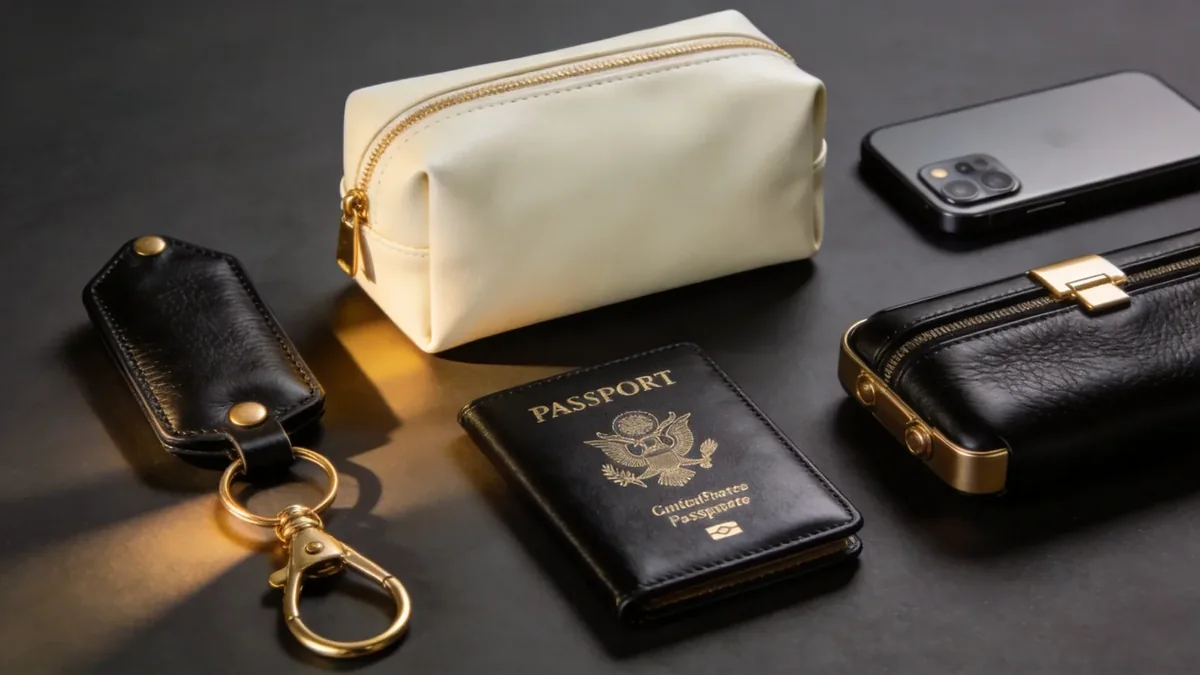
Why Boutiques Need a Different Pack
A flagship is designed around presentation; a boutique is designed around turnover in a small room. That difference changes the packaging brief completely. In a flagship, a carton can be large because there is space to set it down and time to open it. In a boutique, the same carton occupies the counter the next customer needs, and the person behind it is also the person answering the telephone.
Three constraints follow directly from the room. Footprint, because the counter is shared. Handover time, because staffing is thin. And storage tolerance, because stock arrives in bulk and is kept where there is space rather than where the drawing assumed. Any pack specified without those three will eventually be quietly simplified by whoever is working there.
Constraint One: Footprint on a Working Counter
Around 240 by 180 mm is the practical upper limit for a carton that has to sit beside a till and a wrapping station. Anything larger either goes on the floor or waits until the counter clears, and both outcomes quietly reduce how often the pack is used at all. If a larger presentation is required, it belongs in a display unit rather than in the handover flow.
Height matters as much as area because vertical space is what gets used next. Cartons intended to stack during busy periods should hold dimenions within ±1 mm so three stack squarely, and should carry a reinforced base so the bottom carton in the pile is not the one that suffers. A three-high stack in a stock room for six weeks is a more severe test than any single handover, and it is the test most packs never meet because nobody designed for it. Where presentation cartons arrive already assembled, storage volume becomes a second constraint, since a rigid carton occupies the same volume empty as full and ten spare cartons can consume a shelf that was intended for stock.
Constraint Two: Handover in Ninety Seconds
Time the process rather than imagining it. From greeting to the customer leaving with a bag in hand, a well-designed boutique pack should complete in about ninety seconds, which leaves roughly thirty seconds for the pack itself. Everything in the specification should be judged against that window: a lid that resists too hard, a ribbon that re-ties, or an insert that grips all cost seconds nobody has.
- Lid resistance set so it lifts with one hand while the other holds the piece steady.
- Ribbon long enough to find quickly, around 120 mm of working length after the knot.
- Insert releasing the piece at under 3 N rather than gripping it in place.
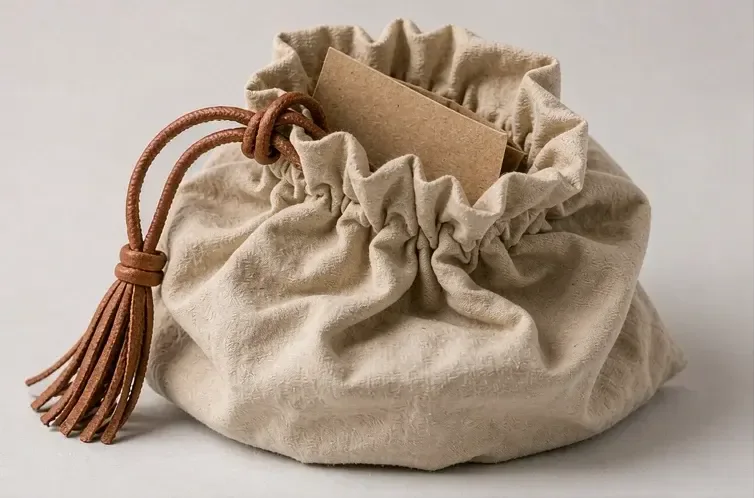
- Dust cover opening by drawstring rather than by a difficult fold.
- Care card placed where it is visible rather than requiring a search.
- No step requiring scissors, a blade or a second pair of hands at any point.
Constraint Three: Storage in a Small Stock Room
Cartons arrive before they are needed and are kept wherever there is room, usually stacked three high on a shelf in a back room with the same humidity as the street. That environment is harder on packaging than the journey is, mostly because nothing is moving the stack to even out the load over several weeks of standing still.
- Counter footprint
- Near 240 x 180 mm maximum for a shared counter
- Handover time
- About 90 seconds from greeting to handover
- Extraction force
- Under 3 N so the piece releases without a pull
- Stack tolerance
- Dimensions within ±1 mm so three stack squarely
- Ambient guidance
- Storage below 65 percent relative humidity suggested
- Replacement spares
- Around 5 percent of units held as spare covers
- Carton pool
- Returnable outer cases available on request
Two practical notes prevent the commonest complaints. Ask for cartons to be delivered with protective outer sleeving that stays on until the carton is used, since the front carton in a stack absorbs every knock of a busy season. And request spare dust covers at around 5 percent of unit numbers, because covers are what actually get lost, damaged and requested by customers months later.
Opening Without Damaging Anything
The most destructive moment in a boutique is not storage; it is the opening. Cartons arrive in an outer case, somebody needs one quickly, and the nearest blade goes down the seam. If the blade runs deeper than the outer, it scores the presentation carton underneath, sometimes through the wrap and into the board.
Specify the outher accordingly. A tear strip removes the blade from the process entirely and is the single most effective change available. Where a tear strip cannot be included, print a clear cut line with a lift symbol, and keep the internal void above 25 mm so there is margin between the outer seam and the presentation carton beneath it.
Presentation Versus Practicality on Open Display
Some pieces are displayed in their cartons and some are handled only at handover, and the two require different things. A carton sitting open on a shelf needs interior contrast so the piece reads at arm's length, while a carton held in the stock room only needs to survive until the moment it is used. Deciding which applies saves either money or disappointment later.
Where cartons are displayed, three details carry the read: interior colour a few shades lighter than the piece, a dust cover that folds rather than bunches, and enough collar height that the piece sits proud rather than sunk. Where they are not displayed, spend instead on protection and on outer sleeving, which nobody photographs and everybody benefits from.
| Decision | Displayed on shelf | Stored until sale |
|---|---|---|
| Interior colour | A few shades lighter than the piece | Neutral; no contrast requirement |
| Collar height | Higher, so the piece sits proud | Standard, clearance above 3 mm |
| Outer sleeving | Remove cleanly at display set-up | Keep on until the piece is sold |
| Foil or deboss | Deboss reads better under warm light | Either; deboss hides storage wear |
| Dust cover finish | Visible, so it must fold well | Functional only |
Reordering Small Quantities Without Penalty
Boutiques rarely reorder in the quantities flagship shops do, which creates friction where minimum generation runs high. The workable arrangement is a standing specification held on file so a reorder can be placed against an existing tool rather than redeveloped, with the minimum applied per style and colourway rather than to the order as a whole.
Plan reorders on lead times rather than on need. Samples take 6-10 working days, or 12-15 where fitted interiors are involved, and bulk occupies 35-50 days. A boutique that reorders when stock runs low will always be waiting; one that reorders against a forecast course will always have cartons in the back room.
Handling Returns and exchanges cleanly
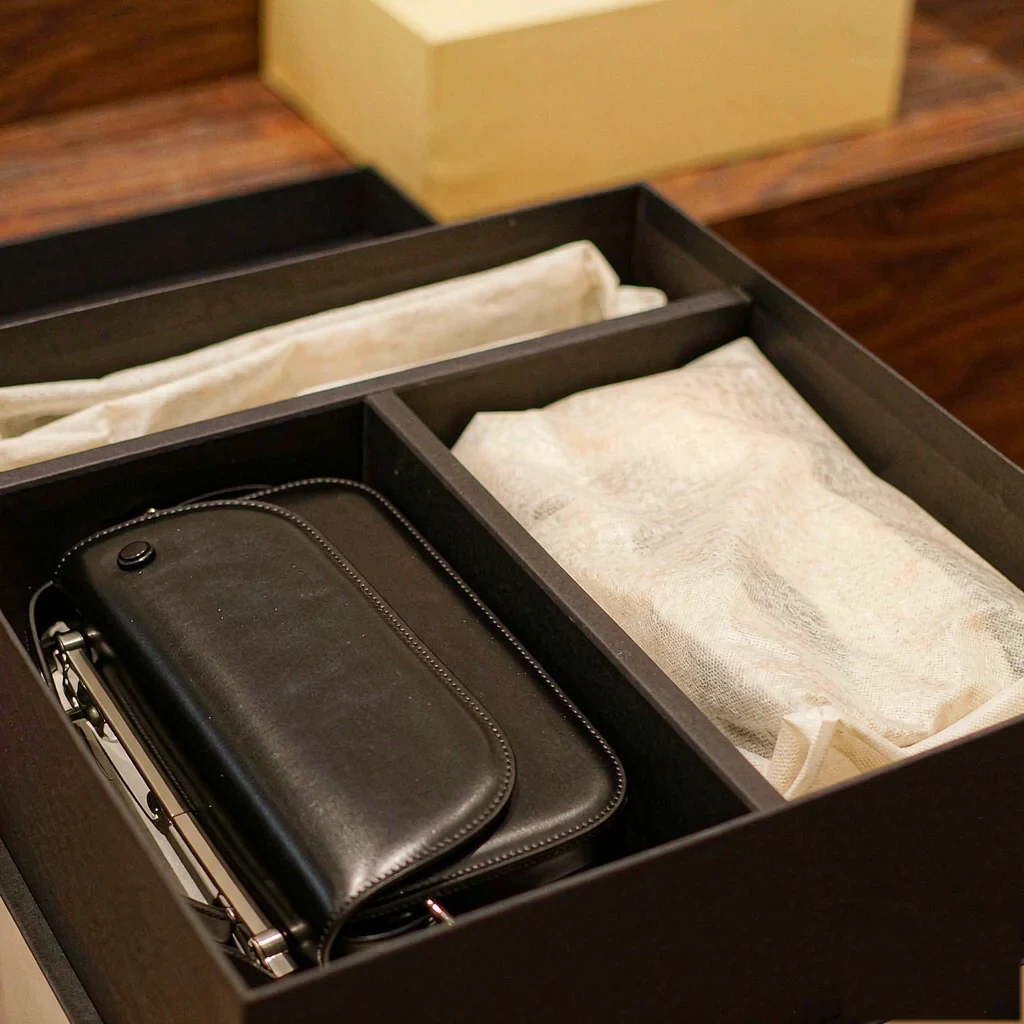
Returns reveal weak specifications faster than sales do. A customer bringing a piece back usually has the dust cover but rarely the carton, and rarely brings either in good condition. Build for that reality by keeping spares rather than by expecting the original pack to be serviceable after a few weeks in someone's wardrobe.
The second point is consistency. If a replacement carton looks like the original, the exchange feels considered; if it differs by even a delta E of 2.0 or so in the board colour, the customer notices and the exchange feels improvised. Holding the standing specification tightly is what makes exchanges invisible rather than memorable.
One person serving means every extra second in the handover is taken from somewhere else. If a step needs two hands, a tool or more than thirty seconds, it will quietly be skipped.
The Boutique Packaging Checklist
Twelve lines cover everything above and can be run against any pack before committing to it. Read them against a finished sample standing on the actual counter rather than on a bench, because several depend entirely on the room they are read in. Better still, hand the list to whoever works the counter and let them score it, since their answers predict what will actually be used.
- Footprint fits the counter without clearing anything else away.
- Three-carton stack sits square and stable on a back-room shelf.
- Lid lifts with one hand while the other hand holds the piece.
- Piece releases under about 3 N without any sense of pulling.
- Ribbon can be found and used without re-tying or re-threading.
- Outer opens by strip or along a printed line rather than by guesswork.
- Internal void above 25 mm keeps any blade away from the carton.
- Board colour matches the standing reference within delta E 2.0.
- Care card and dust cover are visible without searching for them.
- Spare covers held at around 5 percent of expected unit numbers.
- Reorder can be placed against existing tooling without redevelopment, using the reference number printed inside every lid.
- Whole handover completes in about ninety seconds with one person.
Pricing, Tickets and Security Tags Without Damage
Independent retailers still apply their own labels, and how a pack tolerates that belongs in the specification. Two risks follow: an adhesive ticket applied directly to a presentation carton, and a security tag pinned through dust cover fabric instead of through a seam allowance. Both leave permanent evidence on packaging that is otherwise reusable.
Three measures reduce it to very little. Provide a dedicated ticket zone on the base rather than on the lid, printed as a small panel and using low-tack adhesive that releases cleanly. Offer pin-through points on dust covers rather than letting tags go through the main panel. And note on the interior care card that tickets should be removed gently from one corner rather than pulled across the surface.
Sustainability Questions Customers Ask
Independent retailers are asked about materials more often than any other part of the chain, because the question is asked face to face. Two answers cover most of it honestly: what the board and paper carry in terms of chain of custody, and whether the pack separates into a single material stream without tools. Both should be stated inside the lid rather than only online.
Avoid overclaiming. A laminated board and a foam insert are not going to enter a paper stream together, and saying otherwise is worse than saying nothing. The credible statement is specific and modest: this board is certified, this cover is cotton, and this insert separates by hand in a few seconds. Written inside the lid, it also saves the staff from having to answer a question they were never briefed on.
Programme Figures for Boutique Orders
Our programme runs through our validated partner factory Quanzhou Yingming Bags, an SGS-validated site with 7 production lines and roughly 200,000 pcs per month of capacity, holding export experience since 2014. Samples take 6-10 working days, or 12-15 where a fitted interior is developed alongside the carton; bulk occupies 35-50 days; and minimums sit at 500 pcs per style and colourway leaving FOB Xiamen.
A pack built to these constraints usually lands near USD 4.80 per unit at programme volumes, and every lot is inspected on the standard plan, a sample drawn at AQL 2.5 under ISO 2859-1 and read against an approved first article. The wider specification sits on luxury packaging, material definitions on luxury materials, and the development window on luxury sampling.
Have the pack tested against your counter before bulk
Send your counter dimensions, staffing pattern and expected reorder size. You will receive a boutique pack specification naming footprint, resistance, storage tolerance and spare-cover ratio. Request a quote.
Frequently Asked Questions
How large can a carton be on a boutique counter?
About 240 by 180 mm is the practical limit for a shared counter. Larger cartons either wait for the counter to clear or go on the floor, and both quietly reduce how often the pack gets used at all.
Why does handover speed matter so much?
Because boutiques are usually staffed by one person at a time. If completing the pack takes longer than about thirty seconds, steps get skipped, and the carton ends up presented briefly or not at all during busy periods.
How should cartons be stacked in a stock room?
Up to three high, with dimensions held within ±1 mm so the stack stays square. Anything above that needs edge support, since the bottom carton carries the load of everything above for the whole time it sits there.
How much force should it take to lift out the piece?
Below about 3 N measured straight up. Anything beyond that makes customers pull on the handles rather than on the body of the piece, and stretch marks around a handle attachment are the usual consequence.
Why specify a tear strip on the outer case?
Because blades are the most destructive thing in a boutique. A tear strip removes the blade from the process entirely, and where one cannot be used, a printed cut line plus 25 mm of internal void gives useful margin.
What should be kept as spares?
Dust covers, at around 5 percent of expected unit numbers. Covers are what get lost, damaged and requested months after purchase, and they cost very little to hold against the goodwill they return.
How often should a boutique reorder packaging?
Against forecast rather than against need. Samples take 6-10 working days and bulk occupies 35-50 days, so a reorder placed when stock runs low always arrives after the cartons were needed.
What is the minimum quantity for a boutique pack?
500 pcs per style and colourway, with the minimum applied per style and colourway rather than to the order as a whole. Holding a standing specification means reorders reuse existing tooling.
Should cartons be displayed open on the shelf?
Only if the interior has been designed for it. Display needs interior contrast, higher collar height and a cover that folds well; stored cartons need protection and sleeving instead, and rarely need any of those three.
How should replacement cartons be matched to originals?
Against a signed reference held on file, to delta E 2.0. A visibly different board colour makes an exchange feel improvised, whereas a matched one makes the whole transaction feel considered and routine.
What humidity should stored cartons be kept below?
Around 65 percent relative humidity. Above that, board slackens and adhesive at the corners begins to release, which is why a carton can look tired after six weeks in a back room it never left.
How should sustainability questions be answered?
Specifically and modestly. State what the board carries for chain of custody and whether the pack separates into one stream by hand. Avoid claiming a laminated board and foam insert recycle together, because customers notice.
People Also Ask
Can a boutique share a flagship pack across its shops?
Sometimes, where counters are generous. Where space is tight, a smaller version on the same specification usually works better than asking the smaller room to adapt to a larger carton.
Is it worth training staff on the pack?
Worth it for one session, focused on lid resistance and ribbon. Two minutes spent showing how quickly it opens stops most of the skips that quietly cost the presentation value.
Why do replacement covers matter so much?
Because that request arrives months after purchase, when goodwill is being decided. Sending a cover promptly costs very little and is remembered considerably longer than the sale itself.
Should the outer case be returnable?
Where volumes justify it, yes. A returnable pool reduces both waste and recurring cost, and it suits regular boutique reordering better than single-use outer cases do.
How much does a boutique-ready pack cost?
Usually near USD 4.80 per unit at programme volumes. The constraints above are mostly dimensional and procedural rather than material, so they add little and protect considerably more.
Sources and further reading
Every figure on this page is either our own programme data or attributed below. Open the originals before you write them into a specification.
- ISO - International Organization for StandardizationISO Publisher of ISO 2859-1 for attribute sampling and of paper and board conditioning standards relevant to stock-room storage.
- ASTM International standardsASTM International Publisher of ASTM D4169 for performance testing of shipping containers and methods behind carton stacking strength.
- Forest Stewardship CouncilFSC Chain-of-custody scheme covering board and paper used in presentation cartons sold through independent retailers.
- SGS - Inspection and verificationSGS Third-party validation and goods-in inspection body referenced for site validation and pre-shipment checks.