Luxury Handbag OEM Pricing Tiers Explained: Three Tiers and Every Cost Line Named
A handbag unit price is a sum of five lines, and the tier you choose decides how large each one is. On a structured top-handle bag the split is roughly material 52 percent, bench 28 percent, hardware 11 percent, presentation 6 percent and inspection with overhead 3 percent. The three tiers differ mainly in bench time: 1.4 hours at the entry tier, 2.1 hours at the maison tier and 2.8 hours at the atelier tier. Everything else follows from those hours, and the minimum stays at 500 pcs per style and colourway.
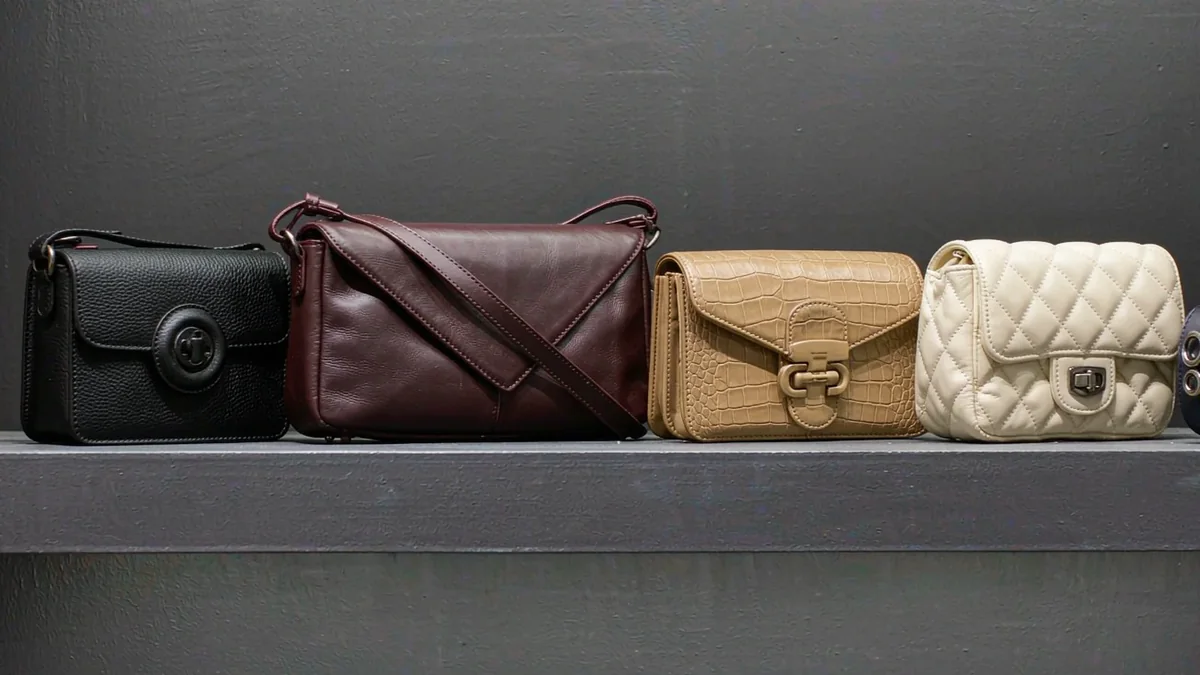
Where the Unit Price Actually Comes From
A unit price is five lines added together, and no luxury handbag quotation can be understood without seeing all five. The dominant line is material, which on a structured top-handle bag accounts for about 52 percent of the figure, and the second is bench time at about 28 percent. Hardware holds 11 percent, presentation 6 percent, and inspection together with overhead 3 percent. A brand that negotiates only the largest line is negotiating one limited lever.
| Cost line | Share of unit figure | What moves it | Tier sensitivity |
|---|---|---|---|
| Material | About 52 percent | Leather grade and thickness, tannery, dye lot size | High; the largest single lever |
| Bench time | About 28 percent | Hours per piece, hand operations, stitch density | Highest; it separates the three tiers |
| Hardware | About 11 percent | Base metal, plating thickness, tooling | Medium; plating is the swing factor |
| Presentation | About 6 percent | Box construction, dust bag weight, printed cards | Medium; it also moves freight |
| Inspection and overhead | About 3 percent | Inspection level, third-party fees, documentation | Low; it does not change with the tier |
The Three Tiers at a Glance
The three tiers are separated by hours, not by markup. A bag that takes 1.4 hours at the bench and a bag that takes 2.8 hours are different products even when they share a silhouette, because the second has been through twice as many hand operations. The table below sets the tiers side by side on the four variables that produce those hours.
| Variable | Entry tier | Maison tier | Atelier tier |
|---|---|---|---|
| Leather | Full-grain calfskin 1.0-1.2 mm | Full-grain calfskin 1.2-1.4 mm | Full-grain calfskin 1.4-1.6 mm or exotic |
| Stitch density | 6-7 stitches per inch, machine | 8-9 stitches per inch, machine with hand-finished joins | 9 stitches per inch, saddle-stitched by hand |
| Edge finish | 2 coats, 0.8 mm | 3 coats, 0.9 mm | 4 coats hand-burnished, 1.0 mm |
| Hardware | Standard zamak, 0.15 micrometres plating | Brass, 0.2 micrometres palladium under lacquer | Solid brass, 0.25 micrometres palladium, hand-polished |
| Presentation | Cotton dust bag | Dust bag plus rigid box | Rigid box, certificate card, numbered tab |
| Bench time | 1.4 hours | 2.1 hours | 2.8 hours |
Tier One: What the Entry Luxury Tier Buys
The entry tier buys correct construction in good leather and nothing more. A full-grain calfskin at 1.0-1.2 mm is a genuine hide rather than a corrected one, the structure holds its shape, and the bag is machine-stitched at 6-7 stitches per inch with edge paint in 2 coats at 0.8 mm. It is the right tier for a first drop, for a boutique exclusive and for any brand whose price architecture cannot yet carry two hours of bench time.
What the entry tier gives up is visible at arm's length rather than across a room. Machine stitching at 6-7 per inch reads slightly coarse against the 8-9 of the maison tier, a 2-coat edge is flatter than a 3-coat one, and standard zamak hardware with 0.15 micrometres of plating will show wear at the corners sooner. None of those are defects, and for a brand selling at the lower end of the luxury range they are the correct trade. The mistake is presenting them as atelier work.
Tier Two: What the Maison Tier Adds
The maison tier spends its extra 0.7 hours on the two things a customer touches: the edge and the join. Leather moves to a full-grain calfskin at 1.2-1.4 mm, stitching to 8-9 per inch, and the edge to 3 coats finished at 0.9 mm, which is the thickness at which an edge stops reading as a seam and starts reading as a line. Hardware becomes brass with 0.2 micrometres of palladium under a 0.15-0.3 micrometre lacquer, which holds its colour under shop lighting.
Skiving discipline
Joins are skived to 0.7-0.9 mm and backed before stitching, so the panel edge does not print through the lining or the outer surface.
Finish verified
Finish adhesion is held to 4 N per 10 mm under ISO 11644 and tensile to 12 N/mm2 under ISO 3376, tested on a cut sample from the crate.
Presentation included
A dust bag plus a rigid box is built into the tier, because presentation at this level is a material line rather than an optional extra.
Tier Three: What the Atelier Tier Adds
The atelier tier spends 2.8 hours, and it spends them on operations that cannot be done faster. Hand saddle-stitching at 9 stitches per inch replaces machine work on the gussets and the handle attachment, the edge is built in 4 coats and hand-burnished between each to finish at 1.0 mm, and the hardware is solid brass hand-polished before plating. Presentation becomes a rigid box with a certificate card and, where the drop is numbered, a foil-stamped interior tab.
This tier is also where exotic skins become viable, and where the documents arrive with them. A crocodile front panel is tiled and mirror-matched within 1.5 mm, skived to 0.7-0.9 mm at every join, and finished to the same ISO 11644 adhesion figure as calfskin. Because a CITES re-export permit takes 4-6 weeks, this tier carries a document calendar as well as a bench one, and that calendar is the reason most brands do not use the atelier tier for a first drop.
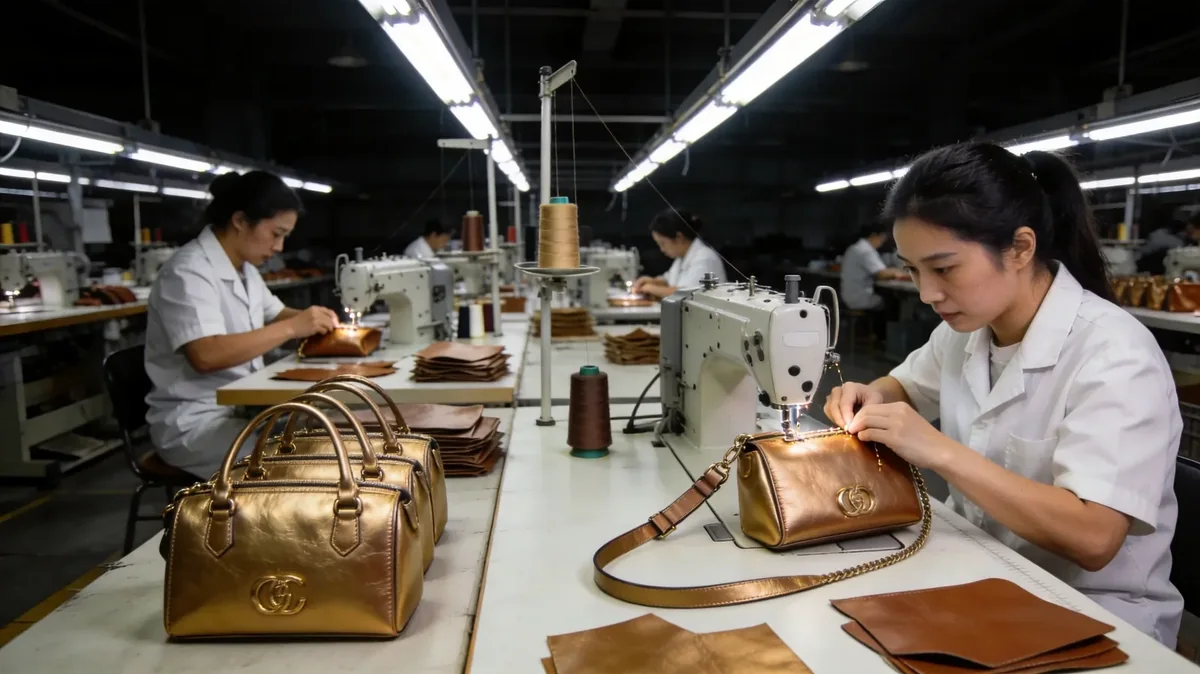
The Six Variables That Move a Quotation
Six variables move a quotation once the tier is chosen, and they are the ones a brand should expect to be asked about. The most frequently overlooked is the colourway count, because each colourway is a separate dye lot and a separate cutting plan, and the second is presentation, which moves the figure twice, once in the packaging and once in freight. The list below is the order in which we cost them.
- Leather: grade, thickness and tannery. A named tannery costs more and documents better.
- Bench hours: every hand operation added to the specification adds hours to the piece.
- Hardware: base metal and plating thickness, plus any bespoke tooling for the lock.
- Colourway count: each colourway is a separate dye lot at the tannery and on the bench.
- Presentation: box construction, dust bag weight and printed cards, which also move freight.
- Order size: setup costs spread over 500 or over 2,000 pieces, a fourfold difference.
What Order Size Does to the Unit Figure
Order size changes the unit figure through setup rather than through material. Pattern development, the hardware tooling, the printed cards and the inspection are fixed costs, and they are identical whether the run is 500 or 2,000. Spread over 500 pieces they are a meaningful line; spread over 2,000 they fall to a quarter of it, without a single change to the leather or the stitch density.
- Entry tier bench time
- 1.4 hours per piece
- Maison tier bench time
- 2.1 hours per piece
- Atelier tier bench time
- 2.8 hours per piece
- Material share
- About 52 percent of the unit figure
- Bench share
- About 28 percent of the unit figure
- Setup spread
- Identical cost across 500 or 2,000 pieces
- Minimum
- 500 pcs per style and colourway
Reading a Quotation Line by Line
A quotation worth comparing names its variables. If a figure arrives without the leather thickness, the plating thickness, the stitch density and the edge specification, it is not comparable to one that carries them, and no amount of arithmetic between the two will make it so. The trade term matters too: quotations are issued FOB Xiamen, with CIF and DDP available where a brand wants a landed figure, and a comparison between an FOB figure and a landed one is a comparison between different things.
- Confirm the leather by type, thickness and tannery, not by colour name alone.
- Confirm the plating thickness in micrometres and the base metal beneath it.
- Confirm the stitch density in stitches per inch and which operations are done by hand.
- Confirm the edge specification by number of coats and final thickness.
- Confirm the trade term and whether presentation and inspection are inside the figure or beside it.
Two further lines deserve a direct question. Ask whether the figure holds if the tannery changes, because a material substitution mid-season is the most common cause of a quotation that no longer matches the sample. And ask what the sampling clock is: a structured piece runs 6-10 working days and a complex or exotic piece 12-15, and a tier decision taken without those dates will not survive a launch calendar.
Where a Tier Stops Making Sense
Each tier has a point at which it stops being the right answer, and they are worth naming. The entry tier stops making sense the moment a brand sells above a price at which customers inspect the edge, because at that price the 2-coat edge will be noticed. The atelier tier stops making sense on a silhouette that is not yet proven, because 2.8 hours per piece across 500 units is a large exposure on a shape nobody has carried.
The maison tier is therefore the one we recommend most often, and for a practical reason rather than an aesthetic one. It absorbs the two upgrades customers can actually feel, an 8-9 stitch edge and a 3-coat hand-finished edge, while its 2.1 hours of bench time keep the exposure on a first drop to a figure most designer labels can carry. A brand can then move up or down by a tier on the reorder, when the sell-through data has told it which of the three it should have chosen.
The tier test
- Choose the tier by the price you intend to sell at, not by the one you hope to sell at. A bag retailing at the entry of the luxury range will be compared with other entry pieces, and atelier finishing on it will not be recovered in the price. Match the tier to the price architecture and the finishing will pay for itself.
There is a second test that applies to the atelier tier alone, and it concerns the retail channel rather than the price. Atelier finishing only reads as intended where a customer can inspect the piece closely, which means a boutique or an appointment rather than a browsing shelf. Where the same bag will be sold through a channel in which it is handled briefly, the extra 1.4 hours of bench time is largely invisible, and the maison tier will do the same commercial work for less exposure.
Handled at USD 4.80 per piece and credited against the bulk order, sample handling across three tiers of the same silhouette covers a development set that lets a brand compare them on the bench before committing to one.
Comparing tiers on a real silhouette?
Send the silhouette, the target retail price and the volume. We will return the three tier specifications with the bench hours and the material lines named. Reach the programme team at contact-quote.
Frequently Asked Questions
What is the biggest cost line in a luxury handbag?
Material, at about 52 percent of the unit figure on a structured top-handle bag. Bench time is second at about 28 percent. Because the material line is dominated by leather grade and thickness, a change from 1.0-1.2 mm to 1.4-1.6 mm moves the figure more than most brands expect.
How do the three tiers differ in practice?
Mainly in bench hours: 1.4 hours at the entry tier, 2.1 at the maison tier and 2.8 at the atelier tier. Those hours buy denser stitching, more edge coats and hand operations, plus heavier hardware and fuller presentation as the tier rises.
Which tier should a first drop use?
The maison tier in most cases. It absorbs the two upgrades a customer can feel, an 8-9 stitch edge and a 3-coat hand-finished edge, while 2.1 hours of bench time keeps the exposure on an unproven silhouette manageable. It can then be moved up or down on the reorder, once sell-through data has shown which of the three it should have been.
When does the entry tier stop making sense?
When the retail price is high enough that customers inspect the edge. A 2-coat edge at 0.8 mm is correct at the entry of the luxury range and noticeable above it, which is the point at which the maison tier becomes the honest choice.
When does the atelier tier stop making sense?
On a silhouette that has not sold yet. At 2.8 hours per piece across 500 units, it is a large exposure on a shape nobody has carried. It also needs a 4-6 week document calendar if exotic skins are involved. Two seasons of data should come first, and the tier can be raised on the reorder.
Does a larger order reduce the unit figure?
Yes, through setup. Pattern development, hardware tooling, printed cards and inspection are fixed costs, identical across 500 and 2,000 pieces. Spread over four times the quantity, they fall to a quarter of the per-piece share with no material change. The four fixed costs are identical at 500 and at 2,000; only their per-piece share differs.
How much does a colourway add?
Each colourway is a separate dye lot and a separate cutting plan, and the minimum applies per style and colourway. Two colourways reading as a range on a shelf is the least costly way to add apparent width, since one silhouette in two colours shares a single pattern.
What plating thickness should I specify?
At the maison tier, 0.2 micrometres of palladium under 0.15-0.3 micrometres of lacquer on a brass base. At the atelier tier, 0.25 micrometres on solid brass, hand-polished before plating. Naming the thickness is what makes two quotations comparable. Gold is not a specification, and a colour name alone cannot be verified at inspection.
Is presentation included in the unit figure?
It depends on the tier, and it should always be confirmed. At the maison tier a dust bag plus a rigid box is inside the tier; at the entry tier a cotton dust bag alone. Presentation also moves freight, so ask for it as a separate line.
What trade terms are quotations issued on?
FOB Xiamen as standard, with CIF and DDP available where a brand wants a landed figure. Comparing an FOB figure with a landed one is a comparison between different things, so confirm the term before comparing two quotations. Presentation and inspection should be confirmed as inside the figure or beside it.
What is the sample handling charge?
Sample handling is charged at USD 4.80 per piece and credited against the bulk order. Across three tiers of one silhouette it covers a development set that lets a brand compare the tiers physically rather than on a spreadsheet. Three tiers of one silhouette make a development set worth more than a single sample does.
What quality standard applies at every tier?
Release is at AQL 2.5 under ISO 2859-1 in all three tiers. Leather is checked to ISO 11644 for finish adhesion at 4 N per 10 mm and to ISO 3376 for tensile at 12 N/mm2, tested on a cut sample from the delivery rather than on a swatch card.
People Also Ask
Why is luxury handbag pricing hard to compare?
Because quotations often omit the variables. Without leather thickness, plating thickness, stitch density and edge specification, two figures for the same silhouette are not comparable, whatever the arithmetic says. Ask for the variables first.
What is bench time in handbag work?
The hours of skilled work a piece consumes: 1.4 hours at the entry tier, 2.1 at the maison tier and 2.8 at the atelier tier for the same structured silhouette.
Does a bigger order lower the material cost?
Slightly, through larger dye lots and better cutting yield, but the main saving is in setup costs. Material remains the largest line at about 52 percent regardless of volume. Volume changes the setup share, not the material line.
What does a hand-finished edge mean?
Edge paint applied in three or four coats, sanded or burnished between each, finishing at 0.9 to 1.0 mm. It reads as a single line rather than as a stack of coats.
Should I ask for packaging as a separate quotation line?
Yes. Presentation is about 6 percent of the unit figure and it moves freight twice, so a separate line makes both the comparison and the freight plan accurate. A rigid box adds volume to every carton.
Sources and further reading
Every figure on this page is either our own programme data or attributed below. Open the originals before you write them into a specification.
- Leather Working GroupLeather Working Group Tannery audit protocol behind the leather grade and tannery line in every tier.
- ISO Online Browsing PlatformInternational Organization for Standardization Catalogue for ISO 11644 finish adhesion, ISO 3376 tensile and ISO 2859-1 sampling.
- ECHAEuropean Chemicals Agency Authority behind REACH Annex XVII restrictions affecting plating and adhesive choices.
- Business of FashionBusiness of Fashion Reporting on luxury pricing architecture and tiering across designer accessories.