Luxury Handbag OEM Onboarding Mistakes to Avoid: Seven Comparison Points Before You Sign
Most luxury handbag programmes are delayed in the first fortnight, not on the bench. The comparison below puts each common onboarding shortcut next to the disciplined route: a 14-line bill of materials against a 5-line one, a physical swatch approved under D65 light against a screen approval, and an AQL 2.5 inspection booked before packing against a visual check booked after it. Each shortcut saves an email and costs a season. Sample handling is charged at USD 4.80 per piece and credited against the bulk order, and the minimum is 500 pcs per style and colourway.
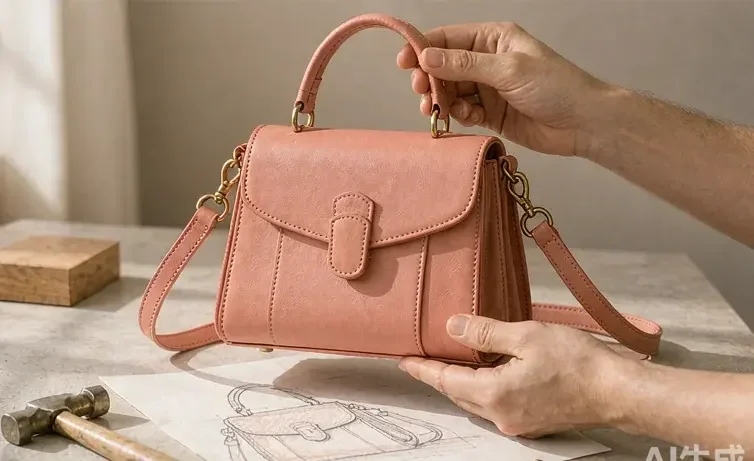
Why Onboarding Fails Before It Reaches the Bench
Onboarding fails in the document stage because that is where the specification is decided, and every shortcut taken there is paid for twice later. A programme that arrives with a complete bill of materials and a physical swatch reaches approval in two sampling rounds; the same silhouette arriving with a mood board and a screenshot needs four, and each extra round consumes 6-10 working days plus courier time in both directions. The bench is rarely the bottleneck. The inbox is.
This is not a matter of discipline for its own sake. Luxury work carries tolerances that cannot be inferred: stitch density, edge thickness, hardware plating, skiving thickness at the joins. When those are absent from the first email, the sample is built to a guess, and the first conversation between brand and atelier becomes an argument about whose guess was right. The seven comparisons below cover where that happens most often, in the order the decisions are usually made.
Mistake 1: A Five-Line Spec Instead of a Fourteen-Line One
A five-line specification moves the decision to the sample, and the sample is the most expensive place to make a decision. The three intake routes below are the ones we see most often, and they differ mainly in how much is settled before the first pattern is cut. The atelier route is slower in week one and faster by week six, which is the trade every serious brand eventually accepts.
| Intake route | What arrives | Sampling rounds | Best for |
|---|---|---|---|
| Sketch and reference photo | Silhouette reference, size note, no material call | 4-5 rounds, 8-10 weeks elapsed | Concept exploration when no launch date is fixed |
| Standard tech pack | Sketch, dimensions, main leather, hardware finish, stitch density | 2-3 rounds, 4-6 weeks elapsed | Collections with a fixed launch window |
| Atelier intake | 14-line bill of materials, physical swatch, tolerance notes, packing spec | 1-2 rounds, 3-4 weeks elapsed | Programmes with a retail drop date already booked |
Mistake 2: Approving Colour on a Screen Instead of a Swatch
A screen approval is not a colour approval, because the screen emits light and the leather reflects it. The disciplined route is a physical swatch approved under a light box with D65 as the primary source and TL84 plus horizon light as spill checks, then held to a tolerance rather than to memory. On dyed calfskin we work to a Delta E target of 1.0 or under against the approved standard, and we record the AATCC grey scale grade for colour change on every dyed lot.
- Approve on physical leather, not on a printout, a phone screen or a Pantone chip alone; chips are printed on paper, not dyed through a hide.
- Name the primary light source. D65 for daylight, then check under TL84 for store lighting and under horizon light for window displays.
- Set a numeric tolerance instead of a verbal one. Delta E of 1.0 or under is workable on smooth calfskin; embossed and suede surfaces need a wider band.
- Keep one sealed reference swatch in the file and one at the bench. Two references that disagree are the usual cause of a disputed bulk lot.
- Re-approve after any change to the tannery, the dye recipe or the finish, because a finish change shifts the reading even when the dye does not.
Mistake 3: Treating the First Sample as the Final One
The first sample is a fit and proportion instrument, not a finished product, and treating it as final produces the wrong correction. A brand that reacts to a first prototype by changing the leather, the hardware and the silhouette at once will never learn which of the three caused the problem it saw. The disciplined route separates the rounds: round one settles geometry, round two settles material and finish, round three confirms packing.
Separate the variables
- Change one variable per sampling round. If a bag sits badly, adjust the gusset and the internal structure before changing the leather, because a structure change is free to reverse in week two and expensive to reverse in week eight. One variable per round keeps the approval log readable and keeps the 6-10 working day window honest.
Mistake 4: Skipping the Pre-Production Meeting
Skipping the pre-production meeting hands the bulk run to an assumption. The meeting is short and it exists to convert an approved sample into a written bulk instruction: which approved sample is the reference, what the sealed swatch is, what the tolerance list says and who signs a deviation. Without it, the bench works from the sample that happens to be on the desk, and the bulk follows that sample rather than the approved one.
- Name the golden sample by its number and its date, and keep it sealed for the duration of the run.
- Confirm the reference swatch and the light source it was approved under.
- Walk the tolerance list line by line: stitch density, edge thickness, hardware finish, skiving thickness, logo position.
- Agree what counts as a deviation and who authorises one in writing.
- Book the AQL 2.5 inspection date and the third-party inspector before the run starts, not after packing.
Mistake 5: Asking for a Price Before Locking the Spec
A price requested before the specification is locked is a placeholder, and placeholders become arguments. Two brands can ask for the same top-handle bag and receive quotations that differ by a wide margin, because one has named a 1.2-1.4 mm full-grain calfskin with a 0.2 micrometre palladium-plated lock and the other has said leather and hardware. Lock the spec, then compare quotations. The reverse order produces a number that no one can defend later.
- Name the leather by type, by thickness and by tannery, or accept that the quotation is indicative only.
- Name the hardware by finish and plating thickness, not by colour alone; gold is not a specification.
- Fix the stitch density in stitches per inch and the thread thickness in millimetres.
- Fix the edge finish: number of coats and final edge thickness.
- Fix the packing specification, because presentation is a material line in a luxury quotation, not an afterthought.
There is a second reason to lock the specification first, and it concerns the tannery and the hardware house rather than the bench. A tannery will not hold a dyed lot against a verbal request, and a hardware finish on a long lead time has to be ordered before the sample that approves it. Once the specification is written, those bookings can be made in parallel with sampling instead of after it, which is where the calendar is genuinely won. Locking the specification is therefore not bureaucracy; it is what allows material and bench work to overlap.
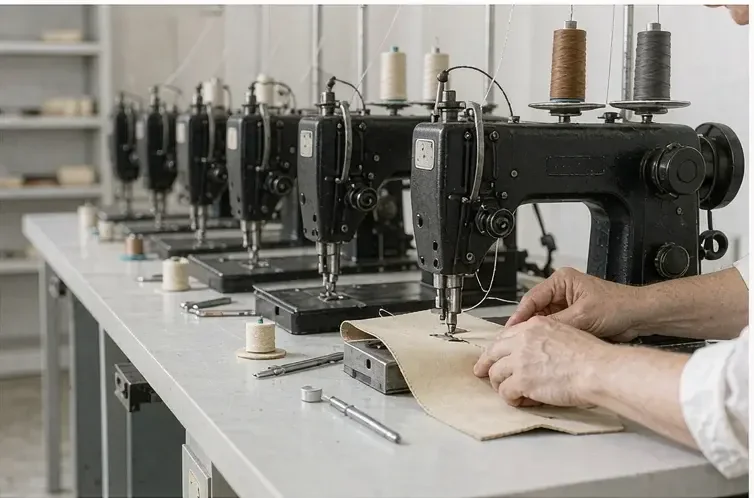
Mistake 6: Ordering Three Colourways Instead of One
Splitting the first drop across three colourways triples the exposure before the silhouette has been tested. The minimum is 500 pcs per style and colourway, so three colours on a first run is 1,500 pieces of a shape nobody has sold yet. The disciplined route is one colourway on the first drop, a second on the reorder once sell-through data exists, and a third only when the shape has proved itself.
First drop
One colourway at 500 pcs. The aim is to learn whether the silhouette sells, not to cover the market.
Second drop
Add the second colourway on the reorder, when the bench already holds the pattern and the tooling is paid for.
Third drop
Only after two seasons of data. By then the bulk window of 35-50 days can be planned around real demand.
The counter-argument we hear is that boutiques want to see a colour range on the shelf, and that a single colourway looks thin. It is a fair point in a shop and a weak one in a warehouse. A two-colour first drop can be defended when the shape is a repeat of a silhouette already carried, because the selling risk then sits in the colour and not in the geometry. On a new shape, the range can be presented as a colour card at the counter while the stock stays single.
Mistake 7: Booking Inspection After Packing
Inspection booked after packing catches defects at the least useful moment, because the cartons are closed and the remedy is a rework run. AQL 2.5 under ISO 2859-1 is a sampling plan, and it needs to be applied while the goods are still accessible on the bench so a defect found can be corrected in the same run. Booking it at the pre-production meeting costs nothing and preserves the option to fix.
| Approach | When it happens | What a defect costs | Verdict |
|---|---|---|---|
| Visual check at packing | After cartons are closed | Rework run plus a second freight movement | Use only for a repeat order with a clean history |
| In-house AQL 2.5 before packing | During the run, goods on the bench | Correction inside the same run, no freight impact | Default for new programmes |
| Third-party AQL 2.5 before packing | During the run, independent inspector | Correction inside the run plus a report for your retail file | Recommended for the first three orders |
The Onboarding Scorecard We Use With New Brands
We score a new programme on seven points before it enters the sampling calendar. The scorecard is not a gate to make things difficult; it is a list of the questions that will be asked by the bench, the tannery and the inspector later, gathered into one conversation at the start. A brand that scores seven can be quoted accurately and sampled in 6-10 working days. A brand that scores two needs more meetings than samples.
- Bill of materials
- 14 lines, from silhouette to carton specification
- Colour reference
- Physical swatch approved under D65, Delta E 1.0 or under
- Stitch density
- 8-9 stitches per inch on structured leather
- Edge finish
- 3 coats, final edge thickness 0.9 mm
- Hardware plating
- 0.2 micrometres palladium under 0.15-0.3 micrometres lacquer
- Inspection
- AQL 2.5 under ISO 2859-1, booked before packing
- Order minimum
- 500 pcs per style and colourway
Two points on the scorecard are worth arguing about, because they are the ones brands most often want to soften. The minimum of 500 pcs per style and colourway is defended per colourway rather than per style, since a colourway is a separate dye lot and a separate cutting plan. And the inspection booking is defended before packing rather than at it, because a sampling plan applied to sealed cartons can only produce a pass or a fail, whereas the same plan applied on the bench produces a corrected run.
If the specification cannot be printed on one page with a number on every line, it is not ready to be sampled. Numbers are what make a sample comparable to the next one, and comparability is what turns four rounds into two.
Starting a new handbag programme?
Send the sketch, the material call and the launch date. We will return the seven-point scorecard with the gaps marked before you commit to a deposit. Reach the programme team at contact-quote.
Frequently Asked Questions
What is the most common onboarding mistake in luxury handbag work?
Asking for a price before the specification is locked. A quotation built on a sketch can be 30 percent away from the real number once leather thickness, hardware plating and edge finish are named. Lock the bill of materials first, then compare like with like.
How many lines should a handbag bill of materials have?
Fourteen is the working target: silhouette, dimensions, leather type and thickness, lining, hardware list with finish codes, thread, stitch density, edge finish, skiving thickness, logo method, interior structure, packing specification, carton specification and tolerance notes. Presentation and carton lines are included because a pack agreed late is the most common cause of a bulk delay.
How many sampling rounds should I plan for?
With a complete specification, plan two: one for geometry and one for material and finish. With a mood board, plan four or five. Each standard round runs 6-10 working days, and complex pieces with carved or exotic elements run 12-15. Approvals given inside 48 hours at each gate are what keep two rounds from becoming four.
Why does colour have to be approved on a physical swatch?
Screens emit light and leather reflects it, so a colour that matches on a display often shifts under store lighting. Approve on the hide under D65, then check under TL84 and horizon light. Record a Delta E target of 1.0 or under and a grey scale grade.
Should the first drop cover more than one colourway?
No. The minimum is 500 pcs per style and colourway, so three colours on a first run is 1,500 pieces of an untested shape. Launch one, reorder the second on real sell-through data, and hold the third for a later season. One silhouette in two colourways is 1,000 pcs and gives the same shelf presence for half the exposure.
When should the AQL 2.5 inspection be booked?
At the pre-production meeting, before the run starts. AQL 2.5 under ISO 2859-1 is a sampling plan that works best while goods are still on the bench, because a defect found then can be corrected inside the same run instead of after packing. The inspector works from the tolerance list, so the level can be verified rather than taken on trust.
What is the sample handling charge?
Sample handling is charged at USD 4.80 per piece and credited against the bulk order once it is placed. It covers the pattern, the material pull and the bench time, and it is the reason a serious specification saves money rather than costing it.
What stitch density do you work to on structured leather?
We work to 8-9 stitches per inch with a 0.45 mm waxed linen thread on structured calfskin. Finer counts read as machine work on a luxury piece, and coarser ones leave a visible gap at the corners where the panel turns. A 0.45 mm waxed linen thread is used with that count, and the two are specified together.
Do I need a third-party inspector on the first order?
It is worth it on the first three orders. An independent AQL 2.5 report gives your retail partners and your compliance file a document they recognise, and it settles any disagreement about acceptance before the goods leave the bench. An in-house inspection at the same level is the alternative, and it costs less on a repeat order.
How long does bulk take after sample approval?
Bulk runs 35-50 days from approval and confirmed materials, measured from the day the pre-production meeting is signed. Exotic skins, plated hardware on a long lead time and hand-finished edges sit at the upper end of that window. Plated hardware on a long lead time is usually the item that pushes a run to the upper end.
Can I change the material after the sample is approved?
Yes, but it restarts the relevant round. A leather change needs a new swatch approval and a new fit check, because the hand of the hide changes how the panel drapes. Change materials between round one and round two, not after approval. A hardware finish change is cheaper at that point, because the plating has not been ordered yet.
What trade terms do you quote on?
Quotations are issued FOB Xiamen, with CIF and DDP available where a brand wants a landed figure. The trade term matters because it decides who carries the freight risk and who handles customs documentation on arrival. CIF and DDP are available where a brand prefers a landed figure to an FOB one.
People Also Ask
What is a tech pack in handbag development?
A tech pack is the written specification a bench builds from: sketch, dimensions, materials, hardware, thread, stitch density, edge finish, logo method and packing. Without it, the sample is built to a guess.
How do I approve a leather colour properly?
Approve on a physical swatch cut from the production hide, under D65 primary light, then verify under TL84. Set a numeric tolerance such as Delta E 1.0 and keep a sealed reference at the bench.
What does AQL 2.5 mean?
AQL 2.5 is the acceptable quality limit in a sampling plan under ISO 2859-1. It sets how many minor and major defects permit a lot to pass, based on a sample drawn to a defined size.
Why is my handbag sample late?
Usually because the specification changed between rounds. Each change restarts the relevant approval, and four rounds at 6-10 working days each plus courier time is more than a season's worth of delay.
Should a new brand launch one colour or several?
One. A single colourway at the minimum order keeps cash and warehouse risk on a shape that has not yet sold, and the reorder is faster because the pattern and tooling already exist.
Sources and further reading
Every figure on this page is either our own programme data or attributed below. Open the originals before you write them into a specification.
- ISO Online Browsing PlatformInternational Organization for Standardization Catalogue entry point for ISO 2859-1 sampling procedures and ISO 105 colour fastness test methods.
- AATCCAmerican Association of Textile Chemists and Colorists Source of the grey scale for colour change and standard light box viewing conditions used in colour approval.
- amfori BSCIamfori Social compliance framework referenced in our programme documentation for brand audits.
- ECHAEuropean Chemicals Agency Authority behind REACH Annex XVII restrictions on substances used in leather and hardware finishing.