Luxury Handbag Care Card Content Guide: What to Print and What to Leave Out
What should a luxury handbag care card say? It should name the material in one line, give the conditioning interval, state the storage humidity range, list the three things never to do, and carry the compliance line the destination market requires. Four of those five are decided by the material rather than by the house, which is why a card written once for a whole collection is usually wrong for half of it.
Three Card Formats Compared
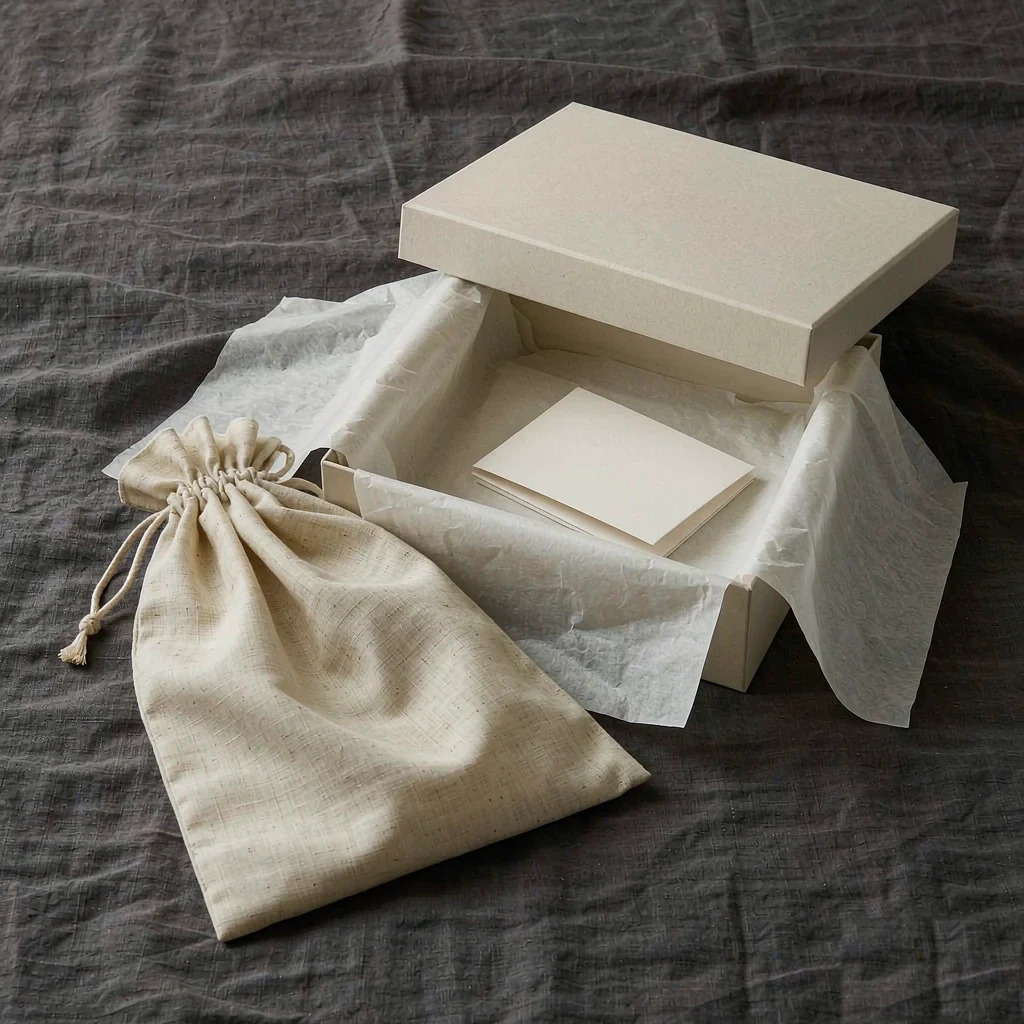
There are three ways a house writes a care card, and the choice is a cost-versus-accuracy trade rather than a design one. A material-specific card is printed per leather family and re-set each run. A universal card is printed once and covers everything vaguely. A linked card prints a short core and carries the rest behind a code. Compare them line by line before choosing, because the differences show up in complaints rather than in the print invoice.
Why Care Cards Fail: The Five Usual Gaps
A care card fails in five repeatable ways. It names the material wrongly, so the advice is wrong for the piece in the box. It gives no interval, so the owner conditions either never or monthly. It omits the storage range, which is where most long-term damage actually starts. It lists nothing to avoid, so the piece meets hand sanitiser and a radiator. And it carries no compliance line, which stops a shipment at the border.
Format A: The Material-Specific Card
A material-specific card names the exact leather: full-grain calfskin, vegetable-tanned panel, suede, or an exotic that needs a different approach entirely. That single line makes every following instruction correct, because conditioning interval, cleaning method and storage range all follow from it. The cost is administrative: the card has to be re-set when the collection changes, and a mis-match between card and piece is worse than no card.
- Full-grain calfskin: condition every 6 months, wipe with a dry cloth, never soak.
- Vegetable-tanned panel: expect colour movement, condition every 4-6 months, avoid prolonged sun.
- Suede: brush with a crepe brush, never water, condition annually at most.
- Exotic: follow the species-specific note; most need only a dry cloth and a stable humidity.
Format B: The Universal Card
A universal card says leather, avoids specifics and is printed once for the whole line. It is inexpensive, it is always in stock, and it is nearly useless as advice, because the only correct answer for most care questions depends on the finish. It does satisfy one real need: the compliance line. A market that requires a chemical notice can be served with a single universal card regardless of the material.
Where a universal card does real damage is on mixed-material pieces. A canvas body with calfskin trim, a suede panel with a painted edge, or a laminated calfskin with a wax topcoat each need different handling, and generic copy that says wipe with a damp cloth will eventually be followed on a piece that cannot take it. If a house must use one card, the safest wording is the shortest: name the dominant material, state the storage range, and refer everything else to the house.
Format C: The Linked Card With a Printed Core
A linked card prints four or five lines of material-specific core and carries the full instructions behind a code. The printed core stays correct if the code is never scanned; the code carries the detail, the language set and any later correction. Print the code at 20 by 20 mm with a 4 mm quiet zone, because the most common reason a code will not read is that the artwork put a pattern too close to it.
The Comparison Matrix: Eight Lines
Read the matrix by line rather than by column. Where the three formats differ, the difference is a decision about who holds the risk: the house holds it with a material-specific card, the owner holds it with a universal one, and the link carries it in the middle.
| Line | Material-specific | Universal | Linked card |
|---|---|---|---|
| Material naming | Exact: full-grain calfskin | Generic: leather | Exact, with a link to detail |
| Care interval | 6 months | As needed | 6 months, with reminders |
| Storage range | 45-55% RH, 15-25 °C | Cool, dry place | 45-55% RH, 15-25 °C |
| Prohibitions | Material-specific three | Generic three | Material-specific three |
| Languages | 5-7 printed | 5-7 printed | 2 printed, rest online |
| Compliance line | Market-specific | Market-specific | Market-specific |
| Update cycle | Reprint each run | Reprint rarely | Correction online only |
| Stock and size | 300 gsm, 90 x 130 mm | 250 gsm, 90 x 130 mm | 300 gsm, 105 x 148 mm |
Section One: Identifying the Material
The first line of a care card is the material, written the way a specialist would write it rather than the way a marketing team would. Full-grain calfskin, corrected-grain calfskin, lambskin, suede, canvas with leather trim, and each exotic by species. The line matters because almost every instruction that follows is decided by the finish rather than by the silhouette.
Where a piece mixes materials, name them in descending order of area and say which one governs the care. A canvas body with calfskin trim is cared for as canvas, with the trim noted separately, because the trim is the part that will mark first. A house that states that explicitly removes the most common cause of a care complaint.
Section Two: The Care Cycle and Its Intervals
Conditioning is specified as an interval, not as a suggestion. Six months for full-grain calfskin in a temperate climate, four to six for a vegetable-tanned panel that is seeing regular daylight, and no more than annually for suede. State the interval and the method together, because a conditioner applied too often does more harm than none at all.
- Card size
- 90 x 130 mm, or 105 x 148 mm for a linked card
- Stock
- 300 gsm uncoated card, 250 gsm for a universal card
- Body type size
- 8 pt minimum, 7 pt only for the compliance line
- Code size
- 20 x 20 mm with a 4 mm quiet zone
- Conditioning interval
- 6 months full-grain, 4-6 months vegetable-tanned
- Language count
- 5-7 printed, or 2 printed with the rest online
- Presentation cost
- About USD 4.80 per unit for the full pack
The interval should also carry a climate qualifier, because the same piece behaves differently in a dry continental winter and a humid coastal summer. State the temperate interval as the default and add one line for dry heated interiors, where the gap can shorten to four months. A card that gives a season-aware interval gets followed; one that gives a bare number gets ignored after the first year.
Section Three: Storage, Heat and Light
Storage is where most long-term damage begins, and it is the section most often reduced to a single line. Give the range: 45-55% relative humidity at 15-25 °C, away from direct sun, stuffed lightly so the body keeps its shape, and never in a polythene bag. The humidity figure matters more than the temperature one, because leather loses and gains moisture faster than it responds to heat.
Too dry
Below about 40% relative humidity the finish loses moisture, the fibre structure tightens, and hairline cracking appears along the fold. The damage is permanent and shows first at the edge coating.
Too damp
Above about 65% relative humidity, held for weeks, mould becomes a realistic risk on a vegetable-tanned panel. A bloom is surface and can be lifted; mould has rooted and cannot.
Too warm
Near a radiator or a window, the adhesive line softens and the edge coating creeps. The piece looks tired rather than damaged, which is why the cause is rarely identified.
Section Four: The Three Prohibitions
Every card should carry three explicit prohibitions, chosen for the material and written as instructions rather than warnings. Three is the number that gets read; a list of eight is a list nobody finishes. State what not to do and what happens if it is done, because the consequence is what makes the line stick.
- Never soak or machine wash: water drives the finish off the grain and the body loses its blocked shape.
- Never use solvent, alcohol or hand sanitiser: these strip the finish and leave a permanent dull patch.
- Never dry with heat: a radiator or a hairdryer shrinks the leather and cracks the edge coating along the fold.
The prohibitions are also the section where legal and practical advice meet. A line that says never use water on a suede piece is correct and will be followed. A line that says avoid contact with oils and cosmetics is correct but too vague to act on, because the owner cannot tell which products those are. Write the specific product categories that cause the damage: hand sanitiser, sunscreen, hairspray and perfume.
Section Five: Compliance and Market Lines
The compliance section is not brand copy and should not be written by the brand team. In the European Union, REACH Annex XVII restricts the substances that may be present in finished leather and in the finishes applied to it. In California, Proposition 65 requires a clear and reasonable warning where a listed substance is present. In the United States, fibre content on a mixed-material piece is governed by labelling rules that name the fibre by its legal designation.
Name the regulation the piece is placed against and keep the test report on file. A card that prints a certificate number the house cannot produce is a liability rather than a reassurance.
How Long the Copy Should Be, and What to Cut
A care card works best at roughly ninety to a hundred and twenty printed words across its five sections, set at 8 pt. That is enough for the material line, the interval, the storage range, the three prohibitions and the compliance notice, and not enough for anything that reads as brand copy. The constraint is physical: a card that folds, or that drops below 8 pt to fit, will not be read at all.
Cut in this order when the copy is too long. Remove any sentence that praises the house, because the owner skips it. Remove any instruction that applies to all materials, because the owner already assumes it. Remove adjectives, which carry no instruction. Keep the numbers: intervals, humidity ranges, temperatures and the three named product categories to keep away from the piece.
Programme Figures and How Cards Are Specified
Our programme runs through our validated partner factory Quanzhou Yingming Bags, an SGS-validated site with 7 production lines and roughly 200,000 pcs per month of capacity, holding export experience since 2014. Sampling takes 6-10 working days, or 12-15 on a complex build; bulk occupies 35-50 days; minimums sit at 500 pcs per style and colourway; and shipments leave FOB Xiamen with FOB, CIF and DDP terms all available.
Care cards are specified with the rest of the presentation pack so that print, stock and folding are all settled before the run rather than after it. The full presentation specification is set out on the luxury packaging page, and the behaviour of each finish is described on luxury materials.
Have the care card written before the run, not after
Send the material, finish, hardware direction, destination market and quantity per colourway. You will receive card copy naming material, interval, storage range and compliance line. Request a quote.
Frequently Asked Questions
What should a luxury handbag care card say?
Five things in order: the exact material, the conditioning interval, the storage humidity and temperature range, three explicit prohibitions with their consequences, and the compliance line the destination market requires. Four of the five follow from the finish rather than from the house, so the material line has to be right first.
How often should a calfskin handbag be conditioned?
Every six months for full-grain calfskin in a temperate climate, and four to six months for a vegetable-tanned panel seeing regular daylight. Suede needs brushing rather than conditioning and should not be treated more than once a year. Over-conditioning softens the body more than neglect does.
What humidity should a handbag be stored at?
Between 45% and 55% relative humidity at 15-25 °C. Below about 40% the finish loses moisture and hairlines appear along the fold; above about 65% held for weeks, mould becomes realistic on vegetable-tanned material. The humidity figure moves faster than the temperature one.
Should a care card be printed per material or once for the collection?
Per material, where the collection mixes finishes. A universal card is inexpensive and always in stock, but the only correct answer to most care questions depends on the finish, so generic advice is wrong for part of every line. Exotics should always carry their own note.
What size and stock suits a care card?
About 90 by 130 mm on 300 gsm uncoated card, rising to 105 by 148 mm where the card carries a code. Uncoated stock is chosen deliberately: a gloss laminate reflects light at the reading angle and makes 8 pt type harder to read than it looks on screen.
What is the smallest readable type size on a care card?
Eight point for body text, with seven point permitted only for the compliance line. Below that, the card fails on a boutique counter under warm light, and the owner reads the wrong line. Test the artwork in print rather than on a monitor before release.
What should the prohibitions section cover?
Three lines, chosen for the material, each written as an instruction with its consequence: never soak, because water drives the finish off the grain; never use solvent or alcohol, because it strips the finish; never dry with heat, because it cracks the edge coating.
How many languages should a care card carry?
Five to seven printed, which covers most European and Asian retail distribution without forcing the type below 8 pt. Where more are needed, print two on the card and carry the rest online behind a code, which also allows a correction without a reprint.
What is a quiet zone and why does it matter?
The clear margin around a printed code, held at about 4 mm. Codes fail to scan far more often because decoration was placed inside that margin than because of print quality. Keep branding outside the quiet zone and test the code on a mid-range phone.
Which regulations affect care card wording?
REACH Annex XVII governs restricted substances in finished leather and its finishes across the European Union. California Proposition 65 requires a clear warning where a listed substance is present. Fibre content on a mixed-material piece must use the legal fibre designation for the market.
Should a certificate number be printed on the card?
Only one the house can produce on request. Print the name of the regulation the piece was placed against and keep the test report on file. An invented or expired number turns a reassurance into a liability the moment anyone checks it.
How much does a printed care card add per unit?
Very little in absolute terms, because it is one printed card inside a presentation pack that typically lands near USD 4.80 per unit. The larger cost is administrative: a card re-set late in the schedule risks a reprint or a mis-match with the piece.
People Also Ask
Should a care card mention repair as well as care?
Yes. One line stating that the house will assess repair rather than replace is the highest-value sentence on the card, because it changes how the owner behaves in the first week of damage.
Do exotics need a separate care card?
They do. Species differ in how they respond to moisture and light, and a generic leather card can advise something that permanently damages the scale or grain pattern.
Should the card be folded or single-panel?
Single-panel wherever it fits. A fold adds a crease that sits against the leather and can print into a soft panel during a long crossing.
Is it worth printing the material origin on the card?
Yes, where the tannery is known and audited. It is one of the few lines on a care card that a buyer reads twice and remembers.
Should the care card carry the collection name?
Only if the collection runs for more than one season. A dated card makes the piece feel like last year the moment the next collection lands.
Sources and further reading
Every figure on this page is either our own programme data or attributed below. Open the originals before you write them into a specification.
- GINETEX - International Association for Textile Care LabellingGINETEX Owner of the care labelling symbol system published as ISO 3758, used for the care codes printed on presentation cards.
- ISO - International Organization for StandardizationISO Publisher of ISO 3758 for care labelling codes and ISO 11644 for leather finish adhesion testing.
- European Chemicals AgencyECHA Regulator for REACH, whose Annex XVII restrictions govern substances in finished leather and applied finishes.
- Office of Environmental Health Hazard AssessmentOEHHA California body administering Proposition 65, which sets the clear and reasonable warning requirement for listed substances.