Luxury Bag Silhouette Fit Testing Explained: The Worn-Fit Checklist
Fit is not size. A piece can measure exactly to the tech pack, pass every flat check on the bench and still be wrong the moment a body is involved. Worn-fit testing closes that gap with six checks run on a sample loaded to 3 kg: loaded drop within ±3 mm, carry balance across a room, stance within 5 degrees empty, one-handed reach, full recovery within 24 hours of compression, and silence under movement. Each takes minutes and none requires equipment beyond a tape, a weight and a level.
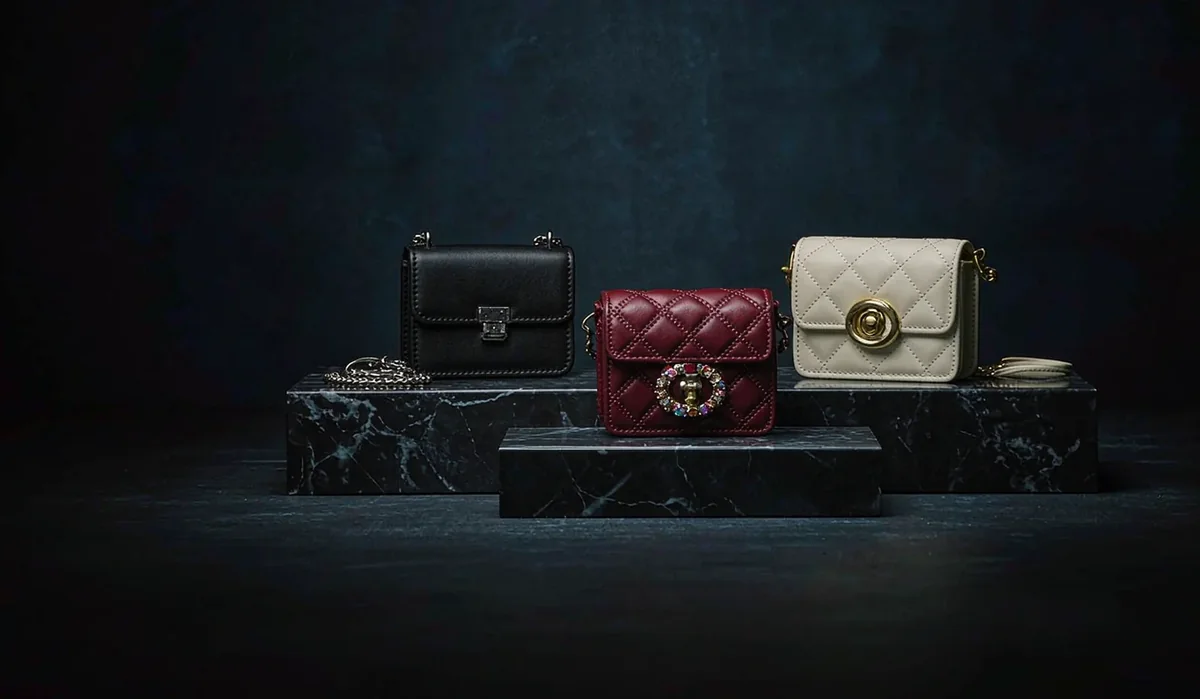
The Sample That Passed Everything Except the Wearer
A programme arrived with a top-handle piece that had passed every check anyone had thought to run. Panel dimensions sat inside tolerance. Seam density measured 8-9 SPI. The closure cycled cleanly. Photographed on a bench under studio light it was exactly what the drawing promised, and it was approved on that evidence.
Then somebody carried it. At a working load the handles elongated just enough to change where the piece hung, the base swung forward on the walk, and the mouth, which had seemed generous, closed to a gap that made retrieval a two-handed operation. Nothing was defective. Every measurement was correct. The piece simply had never been tested in the condition it would actually be used in, and eight weeks of bulk had been committed before anyone noticed.
That failure is common enough to be worth a name and a procedure. Fit testing is the discipline of measuring a piece while it is doing the job, rather than while it is standing still. The six checks below take about an hour in total, need no laboratory, and would have caught every one of the problems in that programme before a single hide was cut for bulk.
Why Flat Measurement Misses Fit
A bench measurement is taken on a piece at rest, empty, with gravity acting on it in only one direction and nothing pulling at any single point. Use is the opposite of all three. Contents load the base and the seams, the strap or handle takes the whole weight at two attachment points, and the body introduces motion that turns a static load into a cycling one.
Three behaviours change under those conditions and none is visible on a bench. Leather creeps, so a strap or handle lengthens under sustained load. Assemblies settle, so a seam that was tight when built finds a small amount of ease. And centres of mass move, so a piece that balanced empty swings once loaded. Fit testing exists to measure those three rather than to infer them.
- Working load
- 3 kg for a daily body; 1.5 kg for an occasional piece
- Handle drop
- 22-28 cm shoulder; 45-55 cm crossbody on a stated body height
- Drop variance
- ±3 mm between paired handles after loading
- Stance
- Structured piece upright within 5 degrees when empty
- Creep limit
- Strap elongation no more than 2 percent after 168 hours loaded
- Recovery
- Full return within 24 hours of release from compression
- Closure cycles
- 200 open and close cycles, roughly one season of use
- Foot clearance
- 3 mm, so the base sits on its feet and not on its seam
Check One: The Loaded Drop Test
Load the sample to its working weight, hang it on a stand or a shoulder form, and leave it for 168 hours. Measure the drop at the start and at the end. The figure that matters is not the absolute drop but whether it has moved, and by how much: anything beyond about 2 percent elongation means the strap or handle is creeping and will keep creeping in a customer's hands.
Also measure the two handles against each other. A variance of more than ±3 mm after loading reads as a fault even when both are nominally correct, because the eye is very good at asymmetry and very poor at absolute distance. Pair this check with the attachment: most creep happens where the strap enters the panel, not along its length.
Check Two: The Carry Test Across a Room
This is the check that caught the swinging base in the programme above, and it cannot be done by photographing a piece. Load it, carry it twenty metres at a normal pace, then set it down and look. Does it swing forward or backward, does it rotate away from the hip, does the strap slide, does the hardware knock against the body?
Record what happens rather than what you think of it. Swing direction tells you where the centre of mass sits relative to the suspension points, which is usually a pocket or lining placement decision rather than a silhouette one. Rotation tells you the strap attachment points are too close together. Both cost little to correct at the sample stage and effectively nothing short of a rework afterwards.
Check Three: The Lean and Stance Check
Set the empty sample on a level surface and measure its lean. For a structured piece the figure to hold is within 5 degrees of vertical; a soft piece may lean freely, but it should lean consistently rather than unpredictably from one unit to the next. Then repeat the measurement loaded, because a piece that stands empty and tips when full has a base that is too narrow for its contents.
Confirm the feet while you are there. A base should sit on its feet with 3 mm of clearance so that the seam is not bearing the weight. Feet that are too short put the seam on the ground, which wears through in weeks; feet that are too proud make the piece rock, which reads as poor construction even where nothing else is wrong.
Check Four: The Access and Reach Check
Load the piece and retrieve a phone-sized object with one hand, without setting it down, ten times in a row. Time it informally and note how often the mouth has to be held open with the other hand. This is the check most often skipped and the one customers complain about most, because access is experienced dozens of times a day while silhouette is experienced once.
The usual causes are predictable. A mouth that closes under load because there is no stiffening at the top edge. An interior pocket placed where contents push against it. A lining cut too tight, which effectively reduces the usable volume below the specified one. All three are pattern corrections, and all three are invisible until something is inside.
Check Five: The Recovery Check
Compress the empty piece to roughly two thirds of its packed volume, hold it for twenty-four hours, release it, and measure return within a further day. This matters most for soft and semi-structured work, where the hide is the structure. A piece that has taken a set in transit will arrive looking damaged even when nothing is broken, and returns of that kind are notoriously difficult to argue.
Recovery should be tested before bulk, not assumed from a first sample, and it should be tested on a piece that has already been through transit if one is available. Temperature matters: a container that has sat hot will hold a compression set far longer than a piece compressed in a studio, so the test is worth running warm if the route is known to be.
| Check | Condition | Figure to hold |
|---|---|---|
| Loaded drop | 3 kg for 168 hours | No more than 2 percent elongation |
| Handle pairing | After loading | Within ±3 mm left to right |
| Carry | Twenty metres at working load | No forward swing or rotation from the hip |
| Stance | Empty, level surface | Within 5 degrees on structured work |
| Foot clearance | Loaded and empty | 3 mm at the base |
| Access | One-handed retrieval, ten times | Mouth stays open without being held |
| Recovery | Two thirds volume for 24 hours | Full return within a further day |
| Closure | 200 cycles | Smooth throughout, no visible wear |
Check Six: The Sound and Movement Check
Walk with the loaded piece in a quiet room and listen. Rattle comes from hardware with clearance, squeak from hide rubbing hide at a seam or a strap entry, and a dull knock from contents moving against an unsupported base. None of these appear in any written specification and all of them are noticed by the wearer, usually without being consciously identified.
The corrections are small. A washer or a backing plate behind hardware removes most rattle. A slightly wider strap entry removes most squeak. An internal base insert, or simply a lining cut to hold contents closer, removes the knock. Fitting these at sample stage costs very little; doing it after bulk has shipped costs the whole run.
The Worn-Fit Checklist in One Page
Run these six in order, on the third sample built in production tooling, and write the result beside each. First samples flatter a specification because they are built by the most experienced hands with time no repeated piece will get. A third sample is the first honest evidence of what a run will actually do once a wearer is involved.
- Load to 3 kg and hang for 168 hours; record drop at the start and at the end.
- Measure both handles against each other and hold the variance inside ±3 mm.
- Carry twenty metres loaded and record swing, rotation and strap slide.
- Set empty on a level surface; hold structured stance within 5 degrees.
- Confirm 3 mm of foot clearance with the base loaded and empty.
- Retrieve a phone-sized object one-handed ten times without setting the piece down.
- Compress to two thirds of volume for a day and confirm recovery within another.
- Cycle the closure 200 times and check for wear at the contact points.
- Walk in a quiet room loaded and note any rattle, squeak or knock.
Recording Fit Results So They Survive to Bulk
A fit result that lives in someone's memory is a fit result that will be re-argued at bulk. Write each figure into the tech pack as a range with the date it was measured, photograph the sample in the tested condition, and keep the retained reference beside the bench. Three months later, when a shipment is disputed, that folder settles the question in minutes.
It also gives an inspection team something concrete. A tolerance written as a range can be checked; an impression cannot. This is the step that turns fit testing from a development exercise into a production control, and it is the one most often omitted once a programme is running late.
First samples are built by the best hands with time no repeated piece receives. Only a sample made in production tooling shows what the run will do once a wearer is involved.
How Fit Testing Changes the Specification
Fit results rarely reject a shape outright; they adjust it. A typical round produces three corrections. Attachment reinforcement where a strap has crept. A pocket moved, or a lining eased, where access failed. And a foot height or base insert changed where stance or a knock was recorded.
Each of those corrections costs bench time, and the honest figure is 5-10 percent on a piece that needed all three. That is worth paying at sample stage, where it buys a shape that behaves, and worth refusing to pay at bulk, where the same three corrections become a rework line and a delayed shipment.
Attachment correction
Where a strap has crept beyond 2 percent, reinforce the entry with a backing panel and re-test for the full 168 hours rather than assuming the change worked.
Access correction
Where one-handed retrieval failed, stiffen the top edge or ease the lining. Both are pattern changes and both are invisible until something is inside the piece.
Base correction
Where stance or knock was recorded, set a 0.8-1.2 mm insert and confirm 3 mm foot clearance. This one also improves transit behaviour, so it often pays twice.
Programme Figures for Fit-Tested Shapes
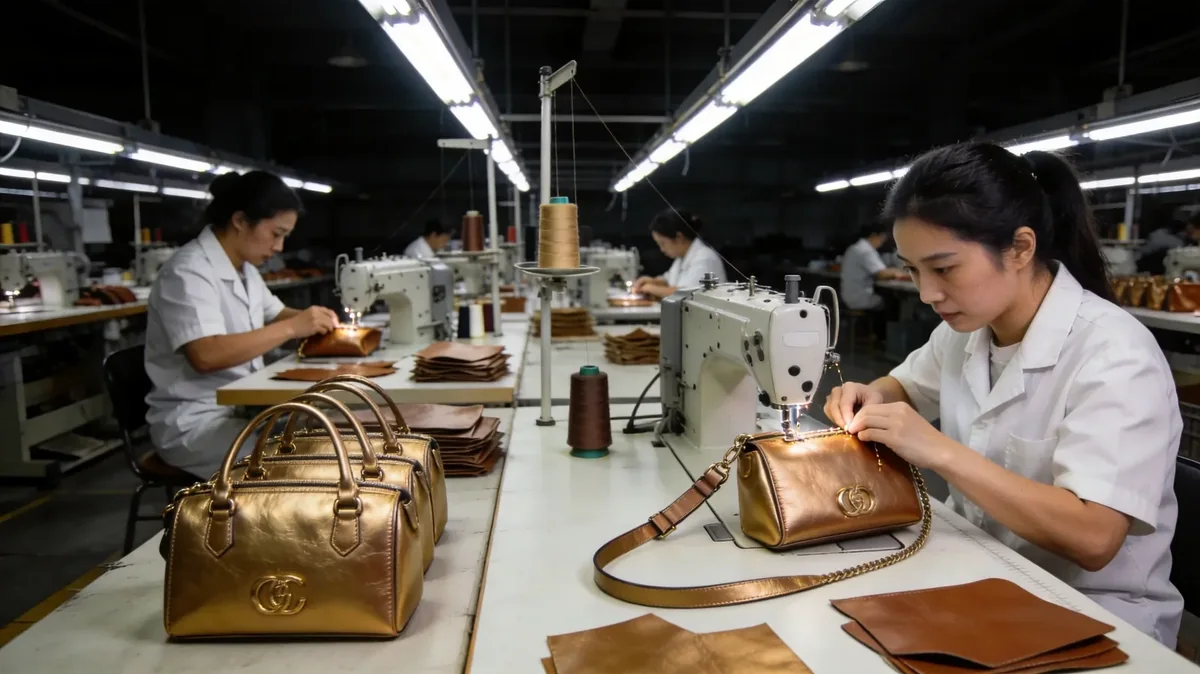
Fit testing runs through our validated partner factory Quanzhou Yingming Bags, an SGS-validated site with 7 production lines and roughly 200,000 pcs per month of capacity, holding export experience since 2014. A first sample takes 6-10 working days, rising to 12-15 where an insert, a die or a changed attachment has to be developed; bulk occupies 35-50 days; and minimums sit at 500 pcs per style and colourway leaving FOB Xiamen.
Every run is drawn at AQL 2.5 under ISO 2859-1 and read against the retained reference rather than against memory. Hide and temper behaviour under load sits on luxury materials, the construction detail behind each correction on craftsmanship, and the approval sequence on luxury sampling.
Have your shape tested the way it will be worn
Send the intended working weight, how the piece is carried and what it has to hold. You will receive the six worn-fit results with every figure recorded against a retained reference. Request a quote.
Frequently Asked Questions
What is worn-fit testing on a handbag?
Measuring a piece while it is doing its job rather than while it stands still. It covers how a shape behaves at working weight, how it carries, whether it stands, whether it can be used one-handed, and whether it recovers after compression. Each check takes minutes and none needs a laboratory.
Why does a piece pass flat measurement and still fit badly?
Because bench measurement is taken at rest, empty and with gravity acting in one direction only. Use is the opposite: contents load the base, suspension takes the whole weight at two points, and motion turns a static load into a cycling one that makes leather creep.
What working load should fit testing use?
3 kg for a piece carried daily and 1.5 kg for an occasional one. The number matters less than using the same one every time, since the point is to compare a start measurement with an end measurement rather than to establish an absolute figure.
How much should a handle or strap stretch under load?
No more than about 2 percent after 168 hours at working weight. Leather creeps, so some movement is expected; the concern is continued movement, which means the strap will keep lengthening in a customer's hands rather than settling.
Why measure both handles against each other?
Because the eye detects asymmetry far more readily than absolute distance. A variance beyond ±3 mm after loading reads as a fault even where both handles are nominally correct, and most of that creep happens where the strap enters the panel.
How far should a piece be carried during testing?
About twenty metres at a normal pace, loaded to working weight. Swing direction indicates where the centre of mass sits relative to the suspension, and rotation indicates that the attachment points are too close together. Both cost little to correct at sample stage.
What stance figure should a structured piece hold?
Within 5 degrees of vertical when set empty on a level surface. A soft piece may lean freely, but it should lean consistently rather than unpredictably from one unit to the next. Repeat the measurement loaded, since a narrow base will tip once filled.
Why does foot clearance matter?
Feet that are too short put the base seam on the ground, which wears through in weeks. Feet that are too proud make the piece rock, which reads as poor construction even where nothing else is wrong. About 3 mm of clearance suits most work.
How is access properly tested?
Load the piece and retrieve a phone-sized object with one hand, without setting it down, ten times in a row. Note how often the mouth has to be held open. Access is experienced dozens of times a day, while silhouette is experienced once.
How long should a piece take to recover from compression?
Full return within about twenty-four hours of release, after being held at roughly two thirds of packed volume for a day. Test it before bulk, and test it warm if the shipping route is known to sit hot, since heat holds a compression set longer.
What causes rattle and squeak in a finished piece?
Rattle comes from hardware with clearance, squeak from hide rubbing hide at a seam or a strap entry, and a dull knock from contents moving against an unsupported base. None appear in a written specification and all are noticed by the wearer.
Which sample should be fit tested?
The third one, built in production tooling and cut on production dies. First samples are made by the most experienced hands with time no repeated piece receives, so they flatter the specification and hide the drift that bulk will show.
What are the programme figures for fit testing?
Sampling takes 6-10 working days, rising to 12-15 where an insert, a die or a changed attachment has to be developed. Bulk occupies 35-50 days with minimums at 500 pcs per style and colourway leaving FOB Xiamen, inspected at AQL 2.5 under ISO 2859-1.
People Also Ask
Can fit testing be done without a laboratory?
Yes. A tape, a level and a 3 kg weight will run every check described here. The discipline is in recording the figures and repeating them on the same sample after an interval, not in the precision of the equipment used.
Does fit testing change the unit cost?
A round that produces all three typical corrections adds roughly 5-10 percent of bench time. That is worth paying at sample stage, where it buys a shape that behaves, and worth refusing at bulk, where the same corrections become a rework line.
Should fit results be written into the tech pack?
Yes, as ranges with the date measured, alongside a photograph of the sample in the tested condition. A result held only in memory will be re-argued at bulk, and a tolerance written as a range is the only kind an inspection team can actually check.
Is recovery testing only for soft bags?
It matters most for soft and semi-structured work, where the hide is the structure, but structured pieces benefit too. A piece that has taken a set in transit arrives looking damaged even when nothing is broken, whatever its construction.
How often should fit testing be repeated?
On every shape change, every hide change and every hardware change. Temper behaves like a structural component, so a hide 0.2 mm thicker can move a fit result just as much as a pattern change would.
Sources and further reading
Every figure on this page is either our own programme data or attributed below. Open the originals before you write them into a specification.
- ISO - International Organization for StandardizationISO Publisher of ISO 2859-1 for attribute sampling and the ISO 3376 series covering tensile behaviour of leather.
- ASTM International standardsASTM International Publisher of test methods covering seam strength, abrasion resistance and dimensional stability of assemblies.
- Leather Working GroupLeather Working Group Environmental auditing programme for tanneries, referenced when assessing hide provenance and temper consistency.
- SGS - Inspection and verificationSGS Third-party validation and goods-in inspection body referenced for site validation and pre-shipment checks.