Hobo vs Bucket Luxury Bag Silhouettes: A Costed Comparison
Both shapes slouch, both read relaxed, and both are frequently specified as though they cost the same to build. They do not. A hobo carries 8-12 pattern pieces and roughly 2.6-3.2 m of seam, yields 55-65 percent from a skin and nests three or four to a carton. A bucket carries 14-18 pieces and 3.4-4.1 m of seam, yields 45-55 percent, needs a drawcord channel and a set base, and takes 20-30 percent more bench time. Every one of those gaps is a cost line.
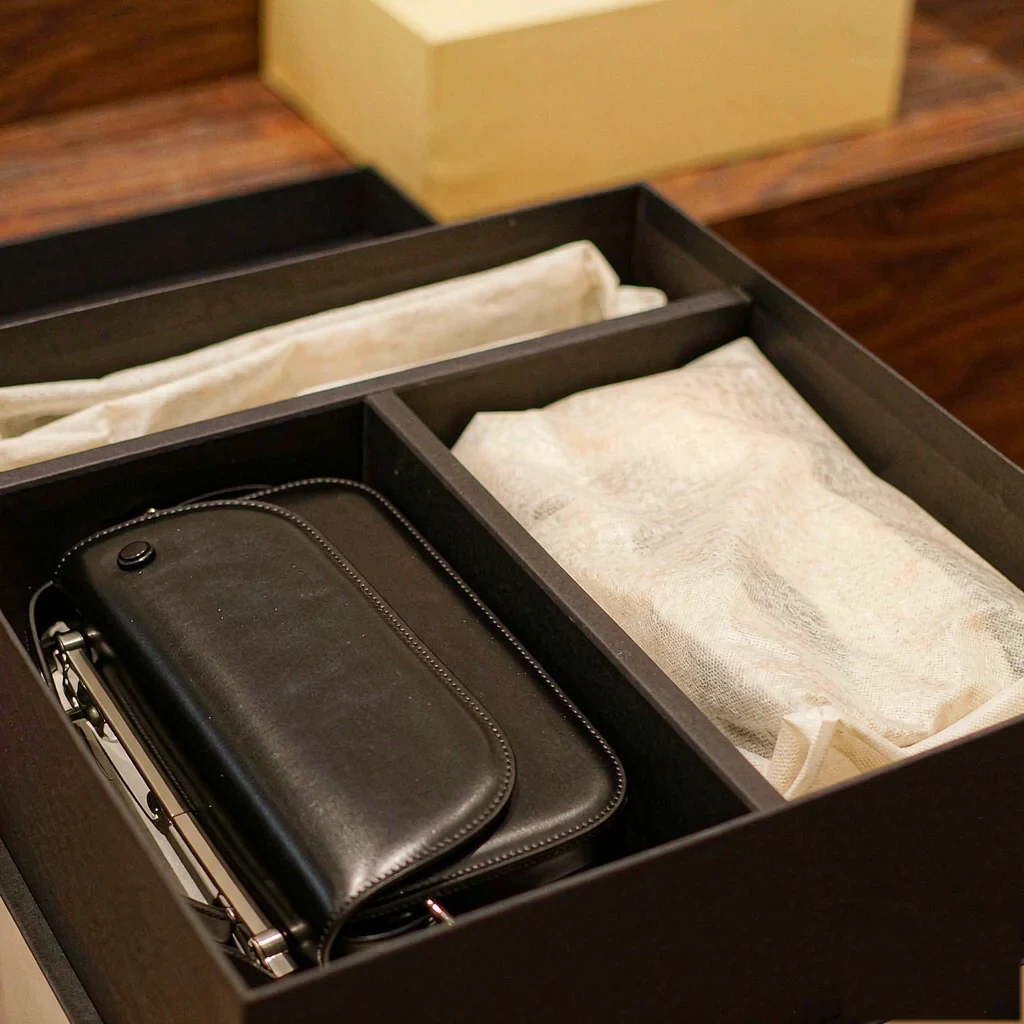
What Separates the Two Shapes
A hobo is built from one dominant panel that wraps and folds, with a shoulder drop long enough for the piece to sit under the arm. Its shape comes from the hide and gravity, and it has no base to speak of. A bucket is built around a defined, usually circular or oval base, with a body rising from it and a mouth that closes by drawcord, and its shape comes from the base and the mouth working against each other.
That single structural difference propagates through every cost line. The hobo asks the hide to do structural work and therefore needs very good hide. The bucket asks the construction to do it and therefore needs more operations. Neither is inherently more expensive, but each is expensive in a different place, and a team that costs them on hide alone will consistently choose wrongly between them.
Counting the Pattern: Pieces and Seams
Start with piece count, because it predicts nearly everything else. A hobo typically resolves to 8-12 pattern pieces: a wrap body, a facing, a strap, a pocket or two and a lining. A bucket typically resolves to 14-18: a base, a base facing, a body panel, a drawcord channel, a facing, grommets or eyelets, a cord, a toggle or stopper, a strap, pockets and a lining.
Seam length follows, and it is the better predictor of labour. The hobo runs roughly 2.6-3.2 m of seam on a mid-sized body; the bucket runs 3.4-4.1 m, mostly because the base seam and the channel each add length that has to be sewn, turned and finished. At 8-9 stitches per inch, that difference is not trivial: it is roughly 300-400 stitches per piece, each one placed by hand.
- Pattern pieces
- Hobo 8-12; bucket 14-18 on an equivalent body
- Seam length
- Hobo 2.6-3.2 m; bucket 3.4-4.1 m
- Stitch density
- 8-9 SPI on both; 7-8 SPI where the channel and base meet
- Hide yield from a skin
- Hobo 55-65 percent; bucket 45-55 percent
- Base treatment
- Hobo none; bucket 0.8-1.2 mm insert with a facing
- Closure
- Hobo zip of #5 at 45-55 cm; bucket drawcord of 800-1,000 mm
- Bench time
- Bucket 20-30 percent longer at equal quality
- Transit nesting
- Hobo three or four per carton; bucket one or two with support
Hide Yield: Where the Money Actually Goes
Yield is the cost line most often omitted from a comparison and the one most often decisive. A hobo uses one dominant panel, and a large single panel is exactly what a skin supplies least efficiently; yet the wrap construction tolerates some shaping, so yields typically land at 55-65 percent. A bucket uses a circle or an oval that must be cut clean, plus a rectangular body, and the base disc in particular is wasteful to nest.
The practical consequence is that the bucket consumes more hide for a piece of similar apparent size, typically 10-18 percent more by area. On a body hide at 1.2-1.4 mm that is a visible line in the costing, and it widens further where the hide is graded, because a base disc needs clean centre hide while a wrap panel can accept more of the flank. Yield should be quoted by the house before a shape is chosen, not discovered at bulk.
Bench Time and the Cost of Each Operation
Bench time is the largest single difference and it is not close. Setting a base disc, sewing and turning a drawcord channel, seating grommets, threading and stopping a cord, and finishing the mouth where three layers meet all take minutes that accumulate. The usual figure is 20-30 percent more bench time for the bucket at equivalent quality, and most of that sits in operations the customer never sees.
The hobo spends its time differently: less assembly, far more selection. Because the hide is doing the structural work, panel selection has to be near perfect, and any variation in temper across the wrap shows immediately as a ripple or a flat. That time is spent before the needle moves, which makes it invisible in a costing that measures only stitching minutes.
| Cost line | Hobo | Bucket |
|---|---|---|
| Pattern pieces | 8-12 | 14-18 |
| Seam length | 2.6-3.2 m | 3.4-4.1 m |
| Hide yield | 55-65 percent | 45-55 percent |
| Hide consumed | Baseline | 10-18 percent more by area |
| Bench time | Baseline | 20-30 percent longer |
| Hide selection time | High; temper must be uniform | Moderate; reinforcement absorbs variation |
| Hardware and trim | One zip, strap fittings | Cord, grommets, toggle, feet, strap fittings |
| Transit nesting | Three or four per carton | One or two with internal support |
Closure: The Hidden Cost Line
Closure is where these two shapes diverge most and where specifications are thinnest. A hobo closes with a zip, typically a #5 metal or a fine coil at 45-55 cm, which is a single bought component with a known cycle life and a predictable failure mode. A bucket closes with a drawcord, usually 800-1,000 mm, running through a channel of 12-16 mm, and the cord, the channel and the stopper each have to be specified separately.
The cord is the part that fails, and it fails in a way a zip does not: it frays, it stretches, and it loses its ability to gather smoothly long before it breaks. Specify the cord by construction and diameter rather than by feel, require 500 open and close cycles on the third sample, and set the channel width generously enough that the cord does not bind against the hide after a season of dust.
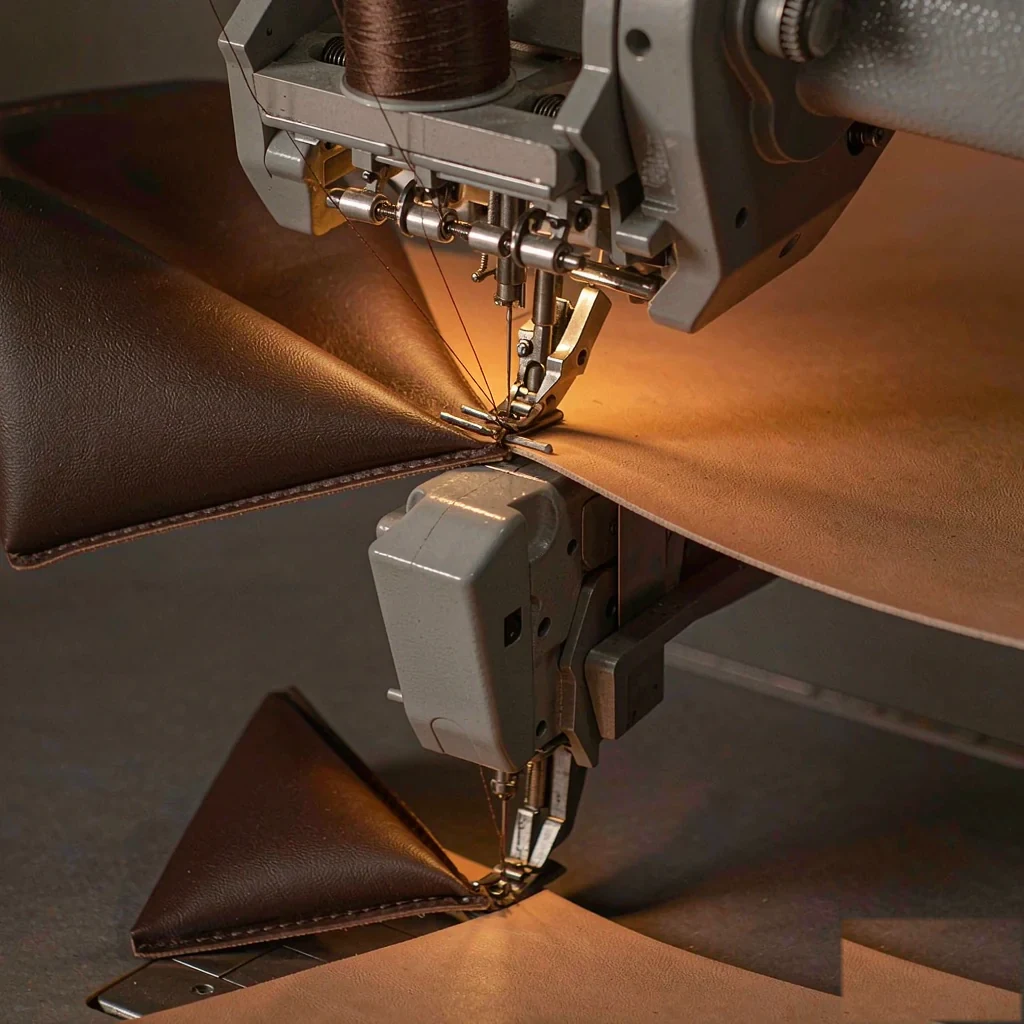
Hardware and Trim Sets Compared
Count the trim, because trim is where small programmes are surprised. A hobo needs a zip, two strap fittings, perhaps a magnetic tab and, if it stands at all, four feet. A bucket needs a cord, a pair of grommets or eyelets, a toggle or stopper, two strap fittings, four base feet and often an internal organiser to stop small items settling at the bottom of a deep body.
A trim set of that kind comes to roughly USD 4.80 per piece in parts before the hand work that fits them is counted. The difference between the two shapes is not the money so much as the coordination: every additional bought part is another item with its own finish tolerance, another plating batch to match and another line item that can delay a run when it is short.
Freight, Nesting and Landed Cost
Freight is the difference that arrives last and hurts most. A hobo nests, and three or four will sit in a carton that holds one or two buckets, because the bucket's base keeps its volume whether or not anything is inside it. On a full container that changes landed cost per piece by a margin larger than most of the hide differences discussed above.
Storage follows the same arithmetic. Hobo pieces tolerate stacking provided nothing heavy rests on them for months; bucket pieces need shelf height and should not be stacked above about three levels without risk to the base insert. Any comparison that stops at unit cost rather than landed cost will reach the wrong answer, and that is worth insisting on before the shape is settled.
A hobo nests three or four to a carton where a bucket holds one or two. On a full container that gap outweighs most of the hide and labour differences between the two shapes.
Which Shape Carries the Better Margin
The hobo carries the better margin where hide is good and stable, because its construction is short and its freight is favourable. It is the shape to choose when the programme has secured consistent temper and wants a piece that packs and ships economically. Its weakness is exposure: with no reinforcement to hide behind, a poor hide becomes a visible fault rather than an internal note.
The bucket carries the better margin where hide is variable, because its base and channel absorb variation that a wrap panel would show. It also photographs with more presence on a shelf, since a defined base gives it a stance a slouched piece lacks. Its weakness is operational: more parts, more operations, more freight, and a closure that needs specifying in more detail than most tech packs give it.
Choose the hobo when
Hide temper is consistent, freight and storage need to be economical, and the collection wants a piece that reads relaxed and tactile rather than architectural.
Choose the bucket when
Hide varies across the run, shelf presence matters more than pack density, and the programme can carry 20-30 percent more bench time and a longer trim list.
Choose both when
The collection needs a relaxed range with one piece that stands. Run them on shared hardware finishes so plating batches match and the two read as one family.
Testing Either Shape Before Bulk
Three tests, run on the third sample built in production tooling. For the hobo, compress to two thirds of packed volume for twenty-four hours and confirm recovery within a further day, since a wrap panel that has taken a set will never drape correctly again. Load both to working weight for a week and measure sag at the strap.
For the bucket, cycle the cord five hundred times and check that it still gathers smoothly against a dusty channel, then confirm the base still sits flat with 3 mm of foot clearance after a week loaded. Both shapes should then be set empty on a level surface: the hobo may lean freely, but the bucket should stand within about 5 degrees.
How Each Shape Ages With a Customer
The hobo ages visibly and, if sold correctly, desirably. It develops slouch and patina together, darkening first at the point where it meets the body. That should be stated at the point of sale, because a customer who expected a shape to hold will report as wear what the hide was always going to do.
The bucket ages more slowly and more predictably, because its base holds the outline even as the body relaxes. Its failure, when it comes, is usually at the cord or at the mouth where three layers meet, and both are replaceable. A programme that offers a cord replacement has turned the bucket's main weakness into a service moment rather than a complaint.
Programme Figures for Either Shape
Both shapes run through our validated partner factory Quanzhou Yingming Bags, an SGS-validated site with 7 production lines and roughly 200,000 pcs per month of capacity, holding export experience since 2014. Sampling takes 6-10 working days, or 12-15 where a base insert, cord channel or custom die has to be developed; bulk occupies 35-50 days; and minimums sit at 500 pcs per style and colourway leaving FOB Xiamen.
Every run is drawn at AQL 2.5 under ISO 2859-1 and read against a retained reference. Hide and temper selection for each shape sits on luxury materials, the construction detail behind both on craftsmanship, and the approval sequence on luxury sampling.
Cost both shapes before choosing one
Send the intended size, the hide you have available and how the piece will ship. You will receive a costed comparison naming piece count, yield, bench time, trim and landed freight for each shape. Request a quote.
Frequently Asked Questions
What is the structural difference between a hobo and a bucket?
A hobo is built from one dominant wrap panel and takes its shape from the hide and gravity, with no defined base. A bucket is built around a circular or oval base with a body rising from it and a mouth that gathers, and its shape comes from base and mouth working against each other.
Which shape uses more pattern pieces?
The bucket, at 14-18 against 8-12 for a hobo of equivalent size. The extra pieces are mostly the base disc and its facing plus the drawcord channel, each of which adds seam length that has to be sewn, turned and finished by hand.
How much more seam does a bucket require?
Roughly 3.4-4.1 m against 2.6-3.2 m on a comparable hobo. At 8-9 stitches per inch that is about 300-400 additional stitches per piece, which is where most of the 20-30 percent bench time gap comes from.
Which shape gets better yield from a hide?
The hobo, typically 55-65 percent against 45-55 percent for a bucket. A base disc has to be cut clean from centre hide and nests poorly, while a wrap panel can accept more of the flank, so the bucket consumes 10-18 percent more hide by area.
Why does a bucket take longer at the bench?
Setting a base disc, sewing and turning a drawcord channel, seating grommets, threading and stopping a cord and finishing a mouth where three layers meet each add minutes. Together they account for 20-30 percent more bench time at equal quality.
Where does a hobo spend its time instead?
In selection rather than assembly. Because the hide does the structural work, panel selection has to be near uniform in temper, and any variation shows as a ripple or a flat. That time is spent before the needle moves, so it is invisible in a costing that measures only stitching minutes.
What closure should each shape use?
A hobo suits a #5 zip at 45-55 cm, a single bought component with a known cycle life. A bucket needs a drawcord of 800-1,000 mm through a channel of 12-16 mm, plus grommets and a stopper, and each of those three has to be specified separately.
How long should a drawcord last?
Require 500 open and close cycles on the third sample built in production tooling. A cord rarely breaks; it frays, stretches and loses its ability to gather smoothly, so the test should check gathering against a dusty channel rather than simply checking for breakage.
How much does trim cost on either shape?
A full trim set comes to roughly USD 4.80 per piece in parts before fitting labour. The difference between the shapes is less the money than the coordination, since every extra bought part brings its own finish tolerance and its own plating batch to match.
Which shape ships more economically?
The hobo. Three or four nest in a carton that holds one or two buckets, because the bucket's base keeps its volume whether or not anything is inside. Across a full container that gap outweighs most of the hide and labour differences.
Which shape suits variable hide?
The bucket, because its base and channel absorb variation in temper that a wrap panel would show immediately. A hobo with nothing behind the face turns any inconsistency into a visible fault rather than an internal note on a grading sheet.
How should each shape be tested before bulk?
For the hobo, compress to two thirds of packed volume for a day and confirm recovery within another. For the bucket, cycle the cord five hundred times and confirm the base still sits flat with 3 mm of foot clearance after a week loaded to working weight.
What are the programme minimums for either shape?
500 pcs per style and colourway, with sampling at 6-10 working days rising to 12-15 where a base insert, cord channel or custom die has to be developed. Bulk occupies 35-50 days leaving FOB Xiamen, inspected at AQL 2.5 under ISO 2859-1.
People Also Ask
Is a bucket bag harder to build than a hobo?
Yes, in operations. It carries more pattern pieces, roughly 0.8 m more seam, a base insert and a drawcord channel, which together add 20-30 percent bench time. The hobo is harder in selection instead, since its hide must be uniform in temper.
Can a bucket be made without a drawcord?
Yes, with a zip or a magnetic tab across the mouth, but the gathered top is what gives the shape its character. Replacing it usually means adding a facing and stiffening, which moves the bucket's cost closer to a structured piece.
Do hobo bags lose their shape over time?
They change shape, which is different. A wrap panel develops slouch and patina together and darkens where it meets the body. That should be stated at the point of sale, or a customer will report as wear what the hide was always going to do.
Which shape stacks better in storage?
The hobo, provided nothing heavy rests on it for months. Bucket pieces need shelf height and should not be stacked above about three levels, since prolonged load eventually deforms the base insert and the piece will no longer stand.
Can both shapes share hardware?
Yes, and they should. Running a hobo and a bucket on shared finishes means one plating batch to match and a family resemblance on the shelf. It also reduces the number of trim lines that can delay a run when a single item is short.
Sources and further reading
Every figure on this page is either our own programme data or attributed below. Open the originals before you write them into a specification.
- ISO - International Organization for StandardizationISO Publisher of ISO 2859-1 for attribute sampling and the ISO 105 series covering colour fastness of leather and trim.
- ASTM International standardsASTM International Publisher of test methods covering seam strength, abrasion resistance and dimensional stability of assemblies.
- Leather Working GroupLeather Working Group Environmental auditing programme for tanneries, referenced when assessing hide provenance and temper consistency.
- SGS - Inspection and verificationSGS Third-party validation and goods-in inspection body referenced for site validation and pre-shipment checks.