Launching a Luxury Bag Silhouette Collection: How One Capsule Becomes Three Bodies Without Three Corrections
How do you launch a new luxury bag silhouette collection without spending three seasons correcting it? A capsule succeeds when three bodies are drawn from one silhouette language and built on a shared pattern family, then proved over two sampling rounds before any tooling is committed. Working figures: MOQ 500 pcs per style and colourway, sampling at 6-10 working days and 12-15 for a complex construction, bulk at 35-50 days on FOB Xiamen terms, inspected to AQL 2.5 under ISO 2859-1.
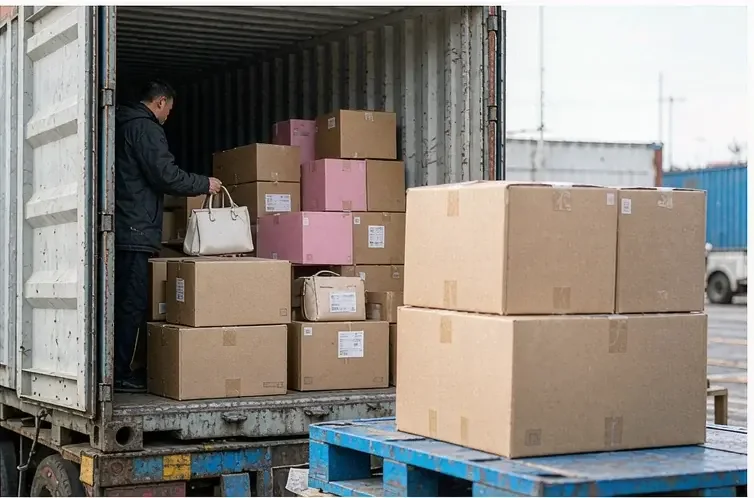
One Capsule, Three Bodies: What the Buyer Actually Approved
A maison that arrives with a line sheet of nine bodies is asking for nine development cycles. The opening move that works is smaller: three bodies drawn from one silhouette language — a structured day body, a relaxed version of the same panel set, and a crossbody at the smallest size — sharing one pattern family, one hardware set and one leather selection.
That structure is what makes a first capsule within reach and, more importantly, correctable. When the shoulder line of the relaxed version is wrong, the correction lands once on the shared set rather than three times across three independent bodies, and the re-order keeps whatever was learned.
A first capsule succeeds when three bodies share one pattern family, one hardware set and one leather selection, because then every correction is made once instead of three times. The rule applies beyond the launch season: a shared panel set lets a fourth body join the line later without reopening drawn patterns, re-cut dies or re-approved leather.
The decision is usually made in a buying meeting that lasts under an hour. Three bodies read as a statement; nine read as a spreadsheet. Which is why the capsule, rather than the full collection, is the unit of work that gets approved and funded.
Why a Three-Piece Launch Beats a Nine-Piece Line Sheet
Nine bodies cost nine times the pattern development, nine times the sampling rounds, and nine chances for one weak construction to reach a booked order. Three bodies concentrate the same attention where the mistake would be most visible.
The counter-argument is range: nine bodies give a buyer something to choose from at market. In practice the choice narrows anyway, and capsules are the unit that re-orders. A second capsule can be built on the corrected first set, which is faster and safer than nine simultaneous gambles.
- Development spend is concentrated on the bodies most likely to re-order.
- Pattern corrections propagate across the family in a single revision.
- Hardware tooling is shared, so one die serves three bodies rather than one.
- Leather buying consolidates into fewer hides with better cutting yield.
- Quality defects cluster and become diagnosable instead of anecdotal.
The Shared Pattern Set: One Correction, Three Bodies
The shared set is a front panel, a back panel, a gusset and a base that appear on all three bodies, with only the length, depth and strap attachment changed between sizes. Everything else is carry-over.
Grade between sizes in even steps and keep those steps written down: 25 mm in width and 20 mm in height is a stable step for a day body, small enough that hardware placement does not have to move proportionally at every size, which is what keeps the look consistent across the capsule. Seam allowance stays at 8 mm throughout so that no size gets a different internal finish.
| Dimension | Petit | Moyen | Grand | Grade step |
|---|---|---|---|---|
| Body width | 230 mm | 255 mm | 280 mm | 25 mm per size |
| Body height | 200 mm | 220 mm | 240 mm | 20 mm per size |
| Base depth | 80 mm | 95 mm | 110 mm | 15 mm per size |
| Handle drop | 90 mm | 100 mm | 110 mm | 10 mm per size |
| Target loaded mass | about 480 g | about 640 g | about 810 g | set at costing |
| Strap length | 1,100 mm | 1,180 mm | 1,260 mm | 80 mm per size |
Handle Geometry: The 20 mm Gap That Carries the Style
Nothing in a capsule is argued about more than the handle, because the handle is what the hand meets first and what photographs read as the whole silhouette. Write the geometry rather than the adjective.
A 90 mm drop sits under the forearm against the body; 110 mm lets the same body be carried in the hand at arm's length, which reads as a different gait in photographs even though the panel set is identical. That 20 mm band covers most of the disagreement, and it should be resolved on the sample rather than at costing.
- Handle drop
- 90 mm hand carry, 110 mm over the forearm
- Handle width
- 12 mm flat, folded over a 3 mm core
- Handle core
- 3 mm rolled leather over a synthetic former
- Clearance at the top edge
- minimum 55 mm for a full hand
- Stitch line
- 8 stitches per inch, Tex 40 thread
- Reinforcement
- 0.8 mm non-woven interlining under the tab
- Tab length into the body
- 18 mm below the stitch line
- Pull test on the handle assembly
- 150-250 N on a sample body
Carry-Over Hardware and the Single Signature Component
Costing a capsule with nine bespoke components is how a small launch becomes an expensive one. The workable split is carry-over plus one signature piece: standard feet, standard D-rings and a standard zipper across all three bodies, with a single custom closure developed once and used throughout.
Carry-over feet and D-rings
Bought to catalogue dimensions and used at every size without change. There is no cost reason to develop a bespoke foot, and there is a maintenance reason not to: a stock part can be replaced in a repair programme years later.
One signature closure
Developed once, costed across the whole capsule. A turn-lock with a 2.8 mm cam travel and a machined brass body is the usual choice, since the same component reads correctly at all three sizes.
A shared zipper specification
Number 5 metal teeth in a matched plating bath, so a replacement slider years later still matches. Specified once and held across the family rather than re-quoted per body.
Nothing bespoke in hidden places
Magnetic housings, internal rivets and base fixings stay standard. Money spent where nobody sees it does not survive a second costing round.
The single signature piece is also what makes the capsule recognisable, which is the reason to spend there rather than on the hidden parts. Recognition comes from one component drawn deliberately, not from nine drawn quickly.
What It Costs Before Any Tooling Is Cut
Two numbers decide whether a capsule gets made: tooling committed before approval, and rework paid after it. Both are avoidable with the right sequencing, and both are usually discovered late.
Reworking one closure on a returned piece costs around USD 4.80 in parts and bench time before any freight is counted. Spread across a first lot, that is the difference between a launch that funds the second capsule and one that needs explaining to a buying office.
- MOQ
- 500 pcs per style and colourway
- Sampling
- 6-10 working days, 12-15 for a complex construction
- Bulk production
- 35-50 days from approved sample
- Inspection standard
- AQL 2.5 under ISO 2859-1
- Trade terms
- FOB Xiamen, with CIF and DDP available
- Colourways per style
- usually 2-3 on a first capsule
- Rework on a returned closure
- about USD 4.80 per piece
- Capacity behind the programme
- 7 production lines, about 200,000 pcs per month
Sampling Runs Twice, and Each Round Has One Job
A capsule is approved over two rounds, and conflating them is what puts rework on the invoice later. Round one is about geometry and proportion; round two is about finish and repeatability. Nothing about costing belongs in round one.
- Issue the tech pack with every graded dimension written, not drawn to scale alone.
- Build round one in the intended leather at the intended skiving thickness.
- Photograph round one on a body and against a ruler, not on a table.
- Approve geometry, then freeze the pattern; no further shape change after this point.
- Build round two as two identical pieces rather than one.
- Compare the two round-two pieces to each other before comparing either to a reference.
- Measure edge build-up, stitch density and hardware alignment across both pieces.
- Retain one piece as the reference for bulk intake and for the first re-order.
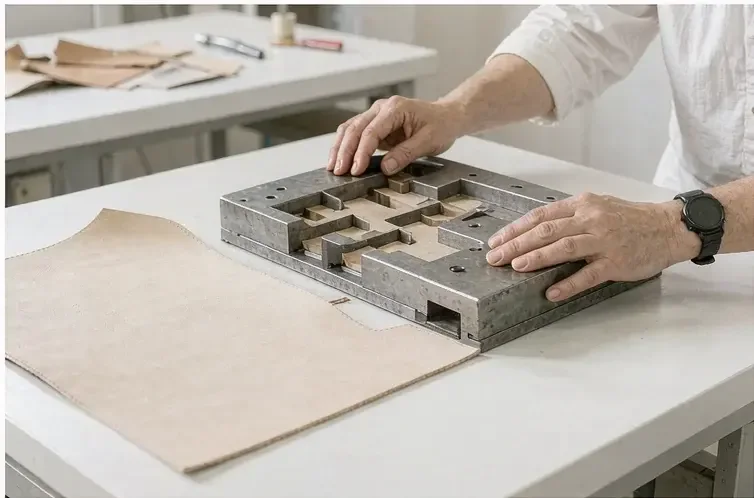
Step five is the one most often skipped, and it is the least costly defect detector available. A single sample can be made right once by a skilled pair of hands; two identical samples made a day apart tell you whether the line can repeat the result.
The 120 Day Line From Drop Plan to Booking
Working backwards from the delivery window is the only way a first capsule lands on time. Sampling is not the long part; leather buying and approval loops are, which is why the calendar starts before a single pattern is cut.
| Day | Milestone | Who decides | What can slip |
|---|---|---|---|
| Day 0 | Drop plan and three bodies agreed | Design and buying | Everything downstream |
| Day 10 | Tech pack issued with graded dimensions | Technical design | Sampling start |
| Day 25 | Round one samples built and photographed | The bench | Approval date |
| Day 35 | Geometry approved, pattern frozen | Design director | Tooling and leather ordering |
| Day 50 | Round two built as two identical pieces | The bench | Bulk slot |
| Day 60 | Finish approved, leather released | Buying office | Nothing without a new slot |
| Day 105 | Bulk delivered, inspected to AQL 2.5 | Quality team | Shipment booking |
| Day 120 | Shipped on FOB Xiamen terms | Logistics | Delivery window |
Day 35 is the one worth defending. Once leather is released against a frozen pattern, changing the shape of a gusset costs the hide, the slot and three weeks, which is a different conversation from changing it at day 25.
Compliance, Labelling and What Ships With the First Lot
A first capsule ships into markets whose labelling rules differ, and the differences are usually discovered by somebody else. EU Regulation 1007/2011 governs textile fibre names and labelling in Europe, REACH Annex XVII restricts certain substances in articles placed on that market, and California Prop 65 governs warnings in that state.
- State the leather designation and the coating construction on the label, not simply the word leather.
- Test nickel release on any metal component in prolonged skin contact.
- Keep the test report per lot and check the article described matches what shipped.
- Confirm the lining composition before the label artwork is printed.
- Agree care-card wording before the delivery date rather than after the first return.
Eight lines before a capsule leaves the drop plan
- Three bodies on one panel family, with the shared parts named explicitly.
- Grade steps written for width, height and depth, not drawn to scale alone.
- Handle drop resolved on a sample rather than at costing.
- One signature component; everything else carried over from standard parts.
- Two sampling rounds with separate jobs and a frozen pattern between them.
- Leather released only after the pattern is frozen.
- Inspection to AQL 2.5 under ISO 2859-1 with a retained reference piece.
- Labelling and compliance agreed before the first lot ships.
Our programme works to MOQ 500 pcs per style and colourway, with sampling at 6-10 working days and 12-15 for a complex construction, bulk at 35-50 days on FOB Xiamen terms, inspected to AQL 2.5 under ISO 2859-1. It runs across 7 production lines with about 200,000 pcs per month of capacity and export experience since 2014, delivered through our validated partner factory Quanzhou Yingming Bags, an SGS-validated site. The development route sits under luxury sampling and the construction standard under craftsmanship.
Bring us the drop plan and we will cost the capsule
Tell us how many bodies you are launching, the sizes and the leather direction. We will return a graded pattern proposal, a shared hardware list, the costing sheet and a sampling calendar within two working days. Request a quote.
Frequently Asked Questions
How many bodies should a first luxury bag capsule contain?
Three is the practical number: one structured body, one relaxed version of the same panel set, and one small crossbody. Three concentrate development spend, let one correction fix all three, and share hardware tooling. Nine bodies cost nine development cycles and rarely all nine survive to a second season.
What MOQ applies to a launch capsule?
MOQ 500 pcs per style and colourway, counted per style rather than across the capsule. On a three-body capsule with two colourways each, that is six lots of 500. Splitting one style across three colourways below the figure usually costs more per unit than the extra colourway is worth at launch.
How long does sampling take for a new silhouette?
Sampling runs 6-10 working days for a standard construction and 12-15 for a complex one, per round. Plan two rounds, since round one settles geometry and round two proves repeatability. Two identical pieces should be built in round two so the comparison is between pieces rather than against a reference.
When should leather be ordered for a first launch?
After the pattern is frozen, which on a 120 day capsule is around day 35. Leather released against an unfrozen pattern risks the whole hide if the gusset or base dimension moves, and the replacement cost lands before any selling has happened.
What grade step should a capsule use between sizes?
25 mm in width, 20 mm in height and 15 mm in depth is a stable step for a day body, small enough that hardware placement keeps the same proportion at every size. Write the step against each dimension in the tech pack rather than scaling a drawing.
Should a capsule use bespoke hardware throughout?
No. Standard feet, D-rings and zippers with one bespoke closure is the usual split. A bespoke closure developed once reads across all sizes; bespoke hidden parts cost money that cannot be recovered and complicate repair years later.
How much does rework cost if something ships wrong?
Reworking one closure on a returned piece costs around USD 4.80 in parts and bench time before freight. Across a first lot that is considerable, which is why two sampling rounds and a retained reference piece are cheaper than a late concession.
What handle drop works for a day body?
90 mm carries under the forearm close to the body; 110 mm carries in the hand at arm's length and reads differently in photographs even with identical panels. Resolve it on a sample with a minimum 55 mm clearance at the top edge, tested with an actual hand rather than a measurement.
Why build two identical samples in the second round?
One sample can be made right by a skilled pair of hands; two identical pieces made a day apart show whether the line repeats the result. Differences in edge build-up, stitch density and hardware alignment appear only when the pieces are compared to each other.
What inspection standard applies to the first lot?
AQL 2.5 under ISO 2859-1, with the acceptance and rejection criteria agreed before inspection rather than after. Third-party inspection is available. Keep one approved sample as the retained reference so a re-order can be checked against the same piece the first lot was approved on.
Which labelling rules affect a launch?
EU Regulation 1007/2011 governs textile fibre names and labelling in Europe, REACH Annex XVII restricts certain substances in articles on that market including nickel release, and California Prop 65 governs warnings in that state. Agree the wording before the label artwork is printed.
How long from drop plan to delivery?
Around 120 days: roughly 10 to the tech pack, 25 to round one, 35 to the frozen pattern, 60 to finish approval and leather release, then 35-50 days of bulk production before shipment. Leather buying and approval loops take longer than sampling, which surprises first-time teams.
People Also Ask
What is a bag capsule collection?
A small group of bodies built on one pattern family, sharing hardware and leather. Three bodies is typical. The advantage is correctability: one revision of the shared panel set fixes all three instead of requiring separate corrections.
How many sizes should a launch include?
Two to three sizes on one graded set. Two gives a choice without doubling development; three lets the largest take the evening or travel role. Beyond three, the size range becomes a second capsule rather than a grade of the first.
Why do first samples differ from bulk?
First samples are usually made by the most skilled hands on the bench, not by the line that will run the order. Building two identical samples in the second round and showing them to the line closes most of that gap.
Should colourways be launched all at once?
Two or three is usual at 500 pcs each. More colourways spread the first lot thin and complicate leather buying, since each colourway is a separate purchase against the hide rather than a variation of one.
When is a silhouette ready to repeat next season?
When the retained reference piece, the graded tech pack and the hardware list together describe it fully. If any one of the three is missing, the second season becomes a second development rather than a re-order.
Sources and further reading
Every figure on this page is either our own programme data or attributed below. Open the originals before you write them into a specification.
- ISO — International Organization for StandardizationISO Publisher of ISO 2859-1, the sampling procedure used for AQL 2.5 inspection at intake.
- Leather Working GroupLeather Working Group Environmental auditing protocol for leather tanneries, referenced when selecting hides for a launch capsule.
- ECHA — European Chemicals AgencyEuropean Chemicals Agency Administrator of REACH, including the Annex XVII restrictions applied to components and finishes.
- Office of Environmental Health Hazard AssessmentOEHHA The California agency administering Proposition 65 and its labelling requirements for articles sold in that state.
- SGS — Testing, Inspection and CertificationSGS Third-party testing and inspection body referenced for lot testing and optional pre-shipment inspection.