Launching a Designer Handbag Brand: A Production Strategy Checklist From First Sketch to First Shipment
What production strategy does a new designer handbag brand need? Start with three styles at MOQ 500 pcs per style and colourway, not six, and treat the first capsule as a development exercise with a commercial deadline. Sampling takes 6-10 working days per style, bulk 35-50 days, and the whole first run should fit a twelve-to-sixteen week board with four buffers. Below is the checklist founders actually need, in the order the decisions have to be taken, with the cost of getting each one wrong.
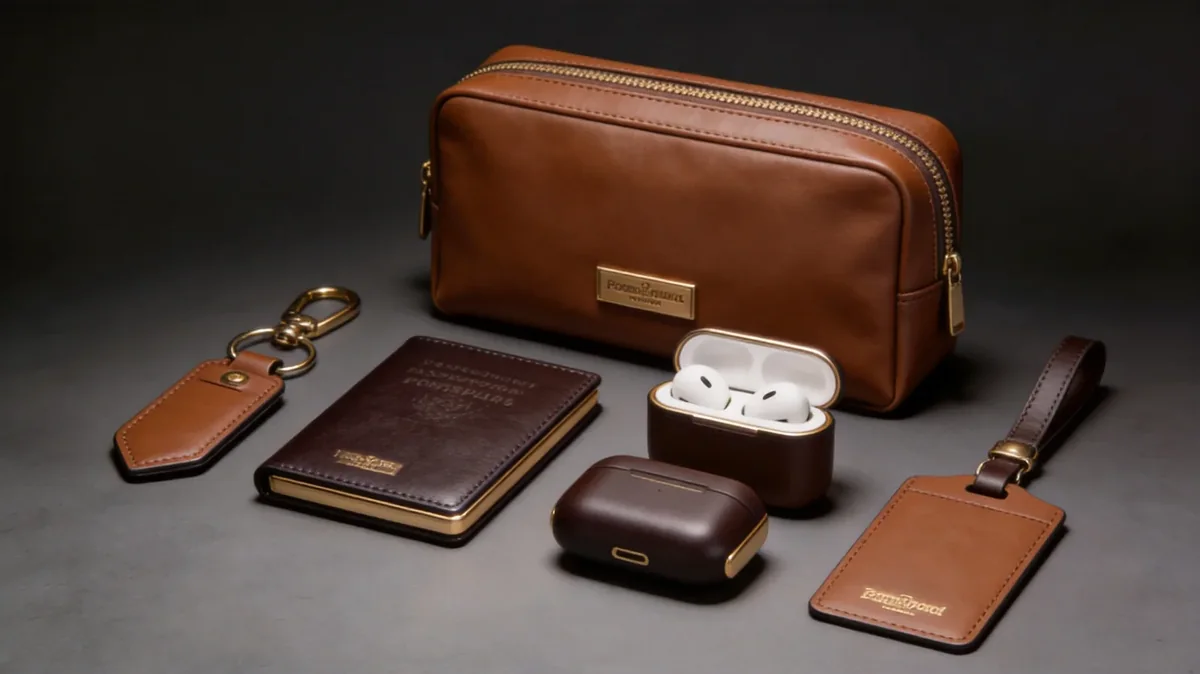
Twelve Items to Settle Before Development Starts
Most launch delays trace back to one of twelve decisions that could have been taken in week one. None of them requires a partner, a pattern or a hide; all of them require a founder to decide something and write it down.
Pre-launch decision checklist
- Capsule size: three styles, not six, at MOQ 500 pcs per style and colourway.
- Silhouette mix: one structured, one soft, one small, so no two compete for the same use.
- Material direction: one leather family and two colourways, held as a single reserved lot.
- Hardware: stock finishes for the first run, bespoke reserved for the second season.
- Launch date: one immovable date, written down, with the board built backwards from it.
- Markets: named, because compliance testing is booked per lot for each one.
- Packaging: dust bag, carton and care card specified before bulk, not after it.
- Inspection: AQL 2.5 under ISO 2859-1, agreed before the run begins.
- Approver: one named person available during the sampling window.
- Trade terms: FOB Xiamen, with CIF and DDP considered before quotation.
- Re-order plan: which lot or pattern will be held for season two.
- Contingency: four buffers totalling about two weeks inside the board.
The checklist is deliberately ordered by consequence rather than by chronology. Capsule size first, because it drives the material commitment; packaging tenth, because it is the item almost everyone schedules last and regrets latest.
Decide the Capsule on Paper Before You Draw It
A first capsule should contain three styles: one structured body, one soft body and one small piece. That mix covers three use cases without asking a new brand to fund six development cycles, and it is the smallest number that reads as a collection rather than as a single bag.
- Structured: a top-handle or frame body in full-grain calfskin at 1.2-1.4 mm, the piece that carries the brand's identity.
- Soft: a shoulder or hobo shape at 0.9-1.1 mm, the piece that gets used daily and generates re-orders.
- Small: an evening bag, a minaudière or a card case in the same leather, the piece that introduces the brand at a lower entry point.
- Avoid: two structured bodies in the same size, which compete for the same customer and the same hide area.
The discipline is subtraction. Founders who launch six styles usually discover that two of them sell and four of them sit, while the four that sit have consumed the same development attention as the two that did not.
Fix the Quantity Arithmetic Before Anything Else
MOQ 500 pcs applies per style and per colourway, not per style. Three styles in two colourways is therefore six lots of 500, or 3,000 pieces, and that number should be committed deliberately rather than discovered at quotation.
- Three styles, one colourway
- 1,500 pcs total, three lots of 500
- Three styles, two colourways
- 3,000 pcs total, six lots of 500, ideally one reserved hide lot
- Two styles, two colourways
- 2,000 pcs total, the common first capsule for a founder-funded launch
- Re-order threshold
- Plan season two at the same 500 per combination, on a held lot and a frozen pattern
- Sampling rounds included
- One first unit plus one corrected round, 6-10 working days per style
Where the arithmetic feels heavy, reduce colourways before reducing styles. Two colourways of three styles gives the line more visual range than three colourways of two styles, and it halves the number of lots you have to reserve, test and track.
Freeze the Material Direction Early, But Not Too Early
Reserve the hide lot as soon as the shade is settled, and freeze the full specification once the first approved sample exists. Those are two different moments, and conflating them is a common and expensive error.
- Settle the shade and reserve the lot: this opens a 15-20 working day window while drawings are still moving.
- Specify substance and finish: 1.2-1.4 mm full-grain for structured panels, 0.8 mm interlining on load panels.
- Test the lot before cutting: ISO 3376, ISO 11644 and ISO 105, plus REACH and Prop 65 declarations per market.
- Freeze the specification at the approved sample, then update the pack to match what was actually made.
Swatch card sets are billed at USD 4.80 and credited against the first bulk order. Ordering them early settles a shade question in days rather than in the fortnight a late lot reservation costs, and it is the least costly correction available at this stage.
Build the Twelve-Week Board Backwards
A first capsule fits a twelve-week board if the leather is calfskin and the hardware is stock. Build it backwards from the landing date, subtracting freight first, because that block is the least negotiable.
| Week | What happens | What you owe |
|---|---|---|
| Week 1 | Brief received, drawings reviewed, lot reservation opened | Drawings, quantity, markets, date |
| Weeks 1-3 | Hide lot arrival and laboratory reports against it | Shade approval, nothing else |
| Week 3 | Pattern and toile, then first sample built | Availability for a decision on the toile |
| Week 4 | Sampling completes, 6-10 working days, corrections written | Signed approval within two days |
| Weeks 5-10 | Bulk, 35-50 days from intake | Nothing, unless the pack changes |
| Week 11 | AQL 2.5 inspection, correction, packing | Acceptance of the inspection record |
| Week 12 | Handover on FOB Xiamen terms and booking | Freight instruction and documents |
Notice how much of the board sits in the third column. The production side is largely fixed; what varies is how quickly a founder answers, and that is the single variable most within your control.
Treat the First Sample as a Diagnostic, Not a Verdict
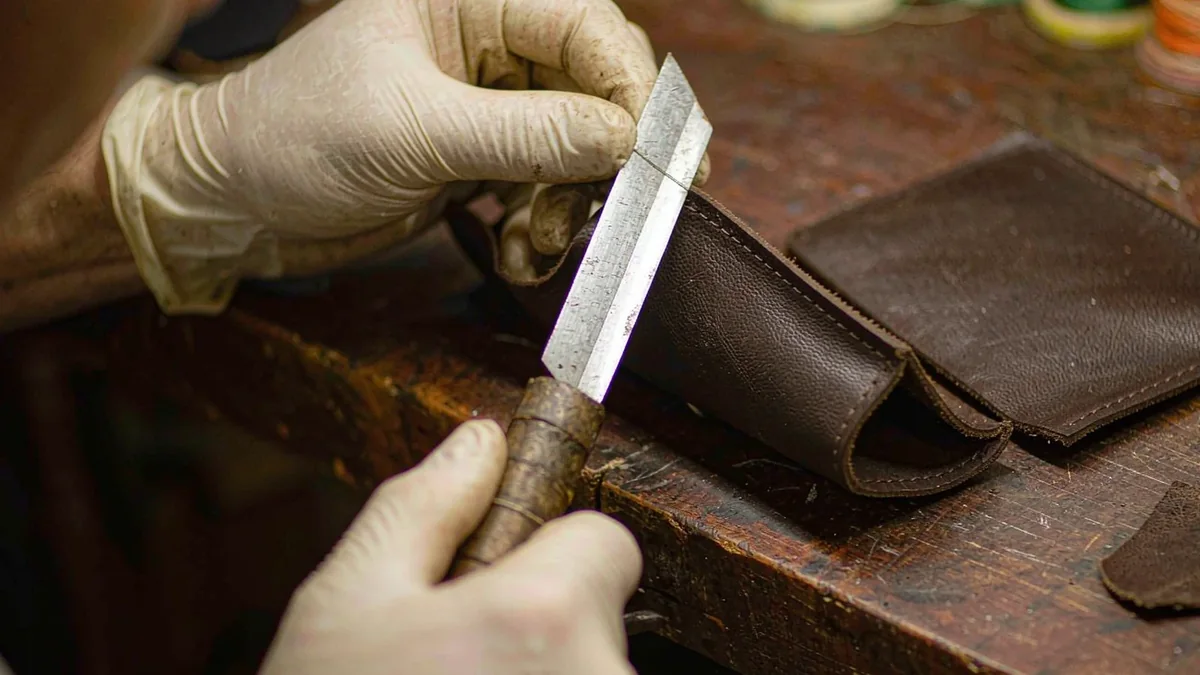
The first unit will be wrong in small ways, and that is its job. It exists to reveal what the drawing could not: how the leather behaves at a turn-in, whether the base sits flat, whether the closure needs more tolerance.
What the sample tells you
Whether skiving at 0.6-0.7 mm leaves a ridge, whether 8-9 stitches per inch reads correctly on this leather, and whether the base needs a 0.8 mm board.
What to correct
Write a list, rank it by visibility, and correct only what a customer would notice at arm's length. Perfection at sampling delays bulk by more than it improves the bag.
What to freeze
Freeze geometry and structure first. Colour and hardware finish can move a little later; a change to the body after the freeze re-opens the whole calendar.
The ranking discipline matters. Founders who correct fifteen items at sampling add a second round and two weeks; those who correct the four a customer would see keep the board intact and improve the same bag.
Compliance and Labelling: The Items Founders Miss
Compliance is booked per lot, per market, and it is the most commonly forgotten line in a launch plan. Two regimes catch most brands out, and a third applies where a children's line is involved.
- REACH Annex XVII: restricts certain substances in articles placed on the European Union market, answered with a per-lot declaration.
- California Prop 65: requires a warning where a listed substance exceeds a threshold, relevant for any United States distribution.
- CPSIA: applies where a piece is intended for children, adding testing and tracking label requirements.
- EU Regulation 1007/2011: governs textile fibre names and labelling, relevant to linings and any textile content.
- CITES: permit documents for listed skins, issued by an authority on its own timetable, typically 30-45 working days.
Two practical consequences follow. Name your markets before quotation, and never substitute a material after the reports are written, because substitution invalidates them and re-testing is booked on the laboratory's timetable rather than yours.
Packaging: The Gate That Schedules Last and Bites First
Packaging is specified after bulk in most launch plans and needed before it in every one. A dust bag, a carton specification and a care card must be ordered while bulk runs, or the finished units wait in the building.
- Dust bag
- Ordered with bulk, sized to the largest piece in the capsule
- Inner carton
- Board grade and print specified before bulk week four
- Export carton
- Quantity per carton agreed before inspection, since counting happens at packing
- Care card and insert
- Printed to match the approved material and compliance wording
- Barcode and labelling
- Assigned before packing, not at the port
Presentation is also the least costly brand equity in a launch. A capsule that arrives in a considered dust bag with a correct care card reads as a house; the same bag in a plain poly bag reads as a sample, whatever the leather cost.
Pricing the First Run Without Guessing
Price the first run on its true unit cost, which includes material, hardware, sampling amortisation, compliance testing and freight, and then apply your retail multiple. Working backwards from a target retail price produces a specification that cannot be made.
- Material and hardware: the largest single block, and the one a locked lot protects from variation.
- Sampling and development: amortise across the first run, and again across season two where the pattern is reused.
- Compliance testing: a fixed cost per lot, per market, which is why reducing colourways saves real money.
- Freight and duty: calculated on the chosen trade term, FOB Xiamen or otherwise, not assumed.
- Re-work allowance: a small reserve against correction at inspection, which is unavoidable on a first run.
The third line is the one founders most often omit. Testing is charged per lot, so six lots cost roughly twice what three do, which is another argument for fewer colourways at launch rather than fewer styles.
Six Launch Mistakes, Ranked by What They Cost
Six mistakes account for most of the pain in a first capsule. Ranked by cost rather than by frequency, they read as follows.
- Changing geometry after the freeze: re-opens sampling and pushes bulk, the most expensive single action available.
- Launching six styles instead of three: doubles development attention and halves the attention each one receives.
- Substituting a material after testing: invalidates the reports and re-books the laboratory on its timetable.
- Bespoke hardware on a first capsule: adds 30-40 working days of tooling to the critical path.
- Specifying packaging after bulk: finished units wait in the building while cartons are printed.
- No named approver during sampling: three or four days lost to a signature, at the worst possible moment.
Write every decision down at the moment it is taken, and date it. Four of the six mistakes above are not errors of judgement but errors of record: a version that nobody wrote down, so nobody knew it had changed.
Our programme runs across 7 production lines with about 200,000 pcs per month of capacity and has held export experience since 2014, carried out through our validated partner factory Quanzhou Yingming Bags, an SGS-validated site. Inspection is drawn at AQL 2.5 under ISO 2859-1 and handover is on FOB Xiamen terms. Packaging detail sits under luxury packaging, and the full route on the designer handbag production page.
What to Send for a First-Capsule Quotation
A first-capsule quotation can be returned in two working days from four items. Send them together, and the number you get back will be a plan rather than an estimate.
- Dimensioned drawings or reference pieces, with the intended structure of each style described in a line.
- Quantity per style and colourway, remembering that MOQ 500 pcs applies per combination.
- Material direction, hardware finish and destination markets.
- The immovable launch date, so the board can be built backwards from it.
Plan your first capsule on a real board
Send your three styles, quantity and launch date. You will receive a week-by-week board with every obligation you owe marked, plus a quotation with material, hardware, testing and packaging itemised. Request a quote.
Frequently Asked Questions
How many styles should a new handbag brand launch with?
Three: one structured body, one soft body and one small piece. That mix covers three use cases, reads as a collection rather than as a single bag, and keeps development attention concentrated. Six styles usually means two sell and four sit, while all six consumed equal attention.
What is the minimum quantity for a first capsule?
MOQ 500 pcs per style and colourway. Three styles in two colourways is six lots of 500, or 3,000 pieces. Where that feels heavy, reduce colourways before styles, because two colourways of three styles gives more visual range than three colourways of two.
How long does a first capsule take from brief to shipment?
Twelve weeks for calfskin with stock hardware, assuming the hide lot is reserved when the shade is settled and an approver is available during sampling. Sampling takes 6-10 working days per style and bulk 35-50 days, with freight subtracted first when the board is built backwards.
Should a new brand use bespoke hardware on the first run?
Usually not. Bespoke tooling and bench proving add 30-40 working days to the critical path, which is a large share of a twelve-week board. Stock plated finishes at 0.15-0.3 µm look correct, and a bespoke closure is better introduced on season two.
When should the leather lot be reserved?
As soon as the shade is settled, before the drawings are finished if possible. Reserving a lot carries no design risk and opens a 15-20 working day window that would otherwise sit unused at the front of the board. Freeze the full specification later, at the approved sample.
What compliance applies to a first handbag launch?
REACH Annex XVII declarations for the European Union, California Prop 65 for United States distribution, CPSIA where a piece is intended for children, and CITES permits for listed skins. All are handled per lot, which is why markets must be named before quotation.
How should the first sample be judged?
As a diagnostic rather than a verdict. It exists to reveal what a drawing cannot: how the leather behaves at a turn-in skived to 0.6-0.7 mm, whether the base sits flat, whether the closure needs more tolerance. Write a correction list ranked by what a customer would notice.
How many corrections should be made at sampling?
Only the ones visible at arm's length, typically three to five items. Correcting fifteen adds a second round and about two weeks to the board while improving the bag far less than it delays the launch. Freeze geometry first; colour and finish can move later.
Why does packaging need specifying before bulk?
Because dust bags, cartons, care cards and barcodes are ordered while bulk runs. Specified afterwards, finished units wait in the building for printed cartons. Presentation is also the least costly brand equity in a launch, so it deserves a line in the plan early.
How should the first run be priced?
On true unit cost: material, hardware, sampling amortisation, compliance testing per lot and freight, then apply your retail multiple. Working backwards from a target retail price produces a specification that cannot be made, and testing is charged per lot, so fewer colourways saves real money.
What is the most expensive mistake a founder can make?
Changing geometry after the specification freeze. It re-opens sampling, shifts bulk and cascades through the whole board. The four related mistakes are launching too many styles, substituting a material after testing, adding bespoke hardware, and leaving packaging unspecified until bulk ends.
What inspection standard applies to a first run?
AQL 2.5 under ISO 2859-1, agreed before bulk begins. On a 500 pcs lot at general inspection level II that is code letter H: 50 units drawn, accept 3, reject 4. Packing follows only once corrections close, and third-party inspection can be added alongside the internal audit.
How much buffer should a first capsule carry?
About two weeks in total: two days between approval and bulk intake, three days for correction and re-check, five days on a newly named material lot, and around four days of freight slack. A board quoted to the day has usually spent its own buffers already.
What should I send to get a first-capsule quotation?
Dimensioned drawings or reference pieces with the intended structure of each style, quantity per style and colourway, the material direction with hardware finish and destination markets, and the immovable launch date. With those four, a scoped quotation returns within two working days.
People Also Ask
How do you start a designer handbag brand?
Decide a three-style capsule, reserve one hide lot when the shade is settled, sample in 6-10 working days per style, then run bulk for 35-50 days on a twelve-week board built backwards from your launch date.
How much does it cost to launch a handbag line?
Costs concentrate in material and hardware, then sampling amortisation, then compliance testing charged per lot and per market. Fewer colourways reduces both testing and lot reservation, which is why the recommendation is two colourways of three styles.
What is the hardest part of launching a bag brand?
Freezing decisions. Changing geometry after the specification freeze re-opens sampling and cascades through the board. Writing every decision down when it is taken prevents most of the delays founders experience.
How many units should a first handbag order be?
MOQ 500 pcs per style and colourway. A typical founder-funded capsule is two styles in two colourways, or 2,000 pieces. Three styles in two colourways is 3,000, and re-orders should be planned at the same 500 per combination.
Do new handbag brands need compliance testing?
Yes, per lot and per market: REACH Annex XVII for the European Union, California Prop 65 for the United States, CPSIA for children's pieces and CITES permits for listed skins. Substituting material after testing invalidates the reports.
Sources and further reading
Every figure on this page is either our own programme data or attributed below. Open the originals before you write them into a specification.
- European Chemicals AgencyECHA Administrator of REACH, including the Annex XVII restrictions that require a per-lot declaration for goods placed on the European Union market.
- California Office of Environmental Health Hazard AssessmentOEHHA The authority behind California Proposition 65, which governs warning requirements for listed substances in products sold in that state.
- U.S. CPSCU.S. Consumer Product Safety Commission Administrator of CPSIA, which adds testing and tracking label requirements where a piece is intended for children.
- ISO — International Organization for StandardizationISO Publisher of ISO 2859-1, the standard behind the AQL 2.5 sampling plan, code letters and accept and reject numbers used at inspection.
- CITES — Convention on International Trade in Endangered SpeciesCITES Appendix listings determine which permit documents must accompany listed skins, adding 30-45 working days to a launch board.