Iconic Luxury Bag Shapes: What Makes Them Last
A handbag shape survives for thirty years when five numbers stay right: a height-to-width ratio of 0.75-0.85, a carry drop that suits the human body, a frame that holds geometry when the bag is empty, a stitch density of 8-9 stitches per inch, and an edge finished in 3 coats. Trends change around those five figures and the shape stays recognisable. This guide breaks the numbers down first, then compares six silhouettes that have lasted, and shows what longevity adds to a programme in cost and calendar time.
The Numbers Behind a Shape That Lasts
Longevity in handbag design is not a matter of taste; it is a matter of proportion and tolerance. A shape that reads as balanced in one decade reads as balanced in the next because the human body does not change. The handle still has to clear the hand, the shoulder strap still has to clear the elbow, and the base still has to sit flat on a table. Everything a designer can change sits on top of those fixed facts.
Five numbers carry a shape across decades. The height-to-width ratio of 0.75-0.85 keeps the silhouette balanced at any size. A carry drop of 9-15 cm for a hand-carried piece and 25-60 cm for a strap keeps it usable. A frame that deflects under 2 mm at 2 kg keeps it standing. A stitch density of 8-9 per inch keeps the seams from opening. An edge finished in 3 coats keeps the corners from cracking.
Six Shapes, Six Sets of Numbers
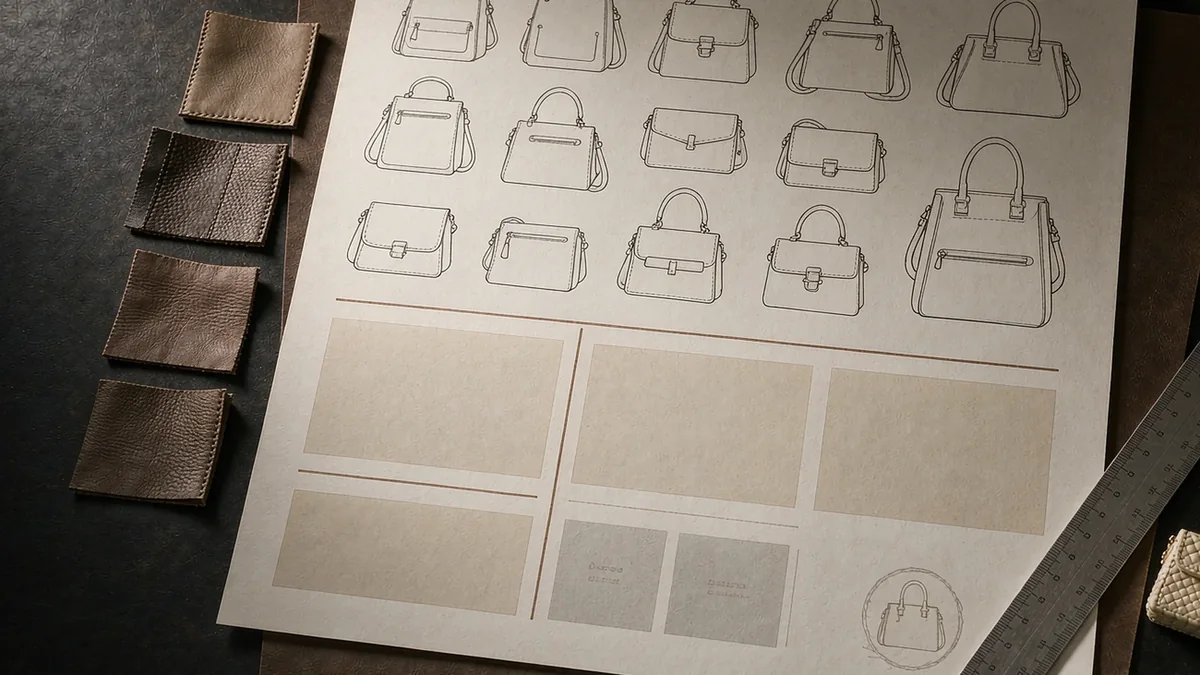
The six silhouettes below have all survived multiple trend cycles, and each one survives for the same reason: it solves a carrying problem with a proportion that does not date. Read the table as a specification reference rather than as a style list, because each row is a set of numbers that can be put straight onto a tech pack.
| Shape | Proportion | Carry drop | Construction | Why it lasts |
|---|---|---|---|---|
| Top handle satchel | 0.80 ratio, 24 cm high | 9-11 cm handle | Blocked frame | Sits flat and stands empty |
| Flap shoulder bag | 0.78 ratio, 22 cm high | 25-30 cm strap | Semi-structured base plate | Clears the elbow, hands free |
| Bowling shape | 0.70 ratio, 20 cm high | 13-15 cm handle | Soft body, reinforced base | Rounded ends resist wear |
| Bucket | 1.05 ratio, 26 cm high | 25-30 cm strap | Soft body, drawcord top | Capacity without a frame |
| Hobo | 0.68 ratio, 28 cm high | 20-25 cm strap | Soft body, no frame | Drapes to the body it is worn on |
| Frame evening piece | 0.85 ratio, 18 cm high | 9-11 cm handle | Slim metal frame | Reads as jewellery, not capacity |
Proportion: The Ratio That Never Dates
Proportion is the first number a lasting shape gets right, and it is simply body height divided by body width. Between 0.75 and 0.85 the silhouette reads as balanced at any scale, which is why the same proportion appears on an 18 cm evening piece and on a 30 cm city bag. Below 0.6 the shape reads as a tray, above 1.1 it reads as a satchel, and both of those readings belong to a moment rather than to a decade.
- 0.75-0.85: the balanced band, and the one almost every lasting shape sits inside.
- 0.68-0.72: a wide low read, correct for a hobo or a bowling shape and wrong for a frame piece.
- 0.90-1.10: a tall narrow read, correct for a bucket or a satchel and heavy on a shoulder strap.
- Scale independence: the same ratio reads correctly at 18 cm and at 30 cm body height.
Carry Drop: The Number That Decides Wear
Drop decides whether a bag gets used, and a bag that is not used is not remembered. A hand-carried drop of 9-11 cm puts the bag in the hand and reads as formal; 13-15 cm lets it sit in the crook of the arm and reads as relaxed. A shoulder strap at 25-30 cm clears the elbow. A crossbody strap at 50-60 cm sits at the hip. Every lasting shape has settled on one of those four bands, and none of them has moved in thirty years.
9-11 cm
Carried in the hand. The satchel and the frame evening piece both sit here, and both read as formal.
13-15 cm
Carried in the crook of the arm. The bowling shape sits here, and it reads as relaxed rather than formal.
25-30 cm
Shoulder carry that clears the elbow. The flap shoulder bag and the bucket both sit in this band.
50-60 cm
Crossbody carry at the hip. Added to existing shapes rather than defining a new one.
Construction Depth and What It Costs
A lasting shape usually carries more construction than a trend shape, because structure is what lets the piece stand empty on a dressing table and still look like itself. A blocked and laminated frame adds a lamination step, a heated form and an inspection gate. A cast brass closure costs multiples of a stamped zamak one. A three-coat edge is three passes rather than one. Specified programmes begin at USD 4.80 per unit, and those three lines are what move the figure up.
- Blocked frame
- 1.2-1.4 mm calfskin on a 0.8 mm board, adds four operations
- Semi-structured
- Concealed base plate plus reinforcement tape, adds one operation
- Soft body
- Cut, skived, closed and edge-finished, the shortest route
- Closure
- Cast brass plated to 0.15-0.3 micrometres, or stamped zamak
- Entry unit cost
- USD 4.80, rising with frame, hardware and leather grade
Material Grade and Longevity
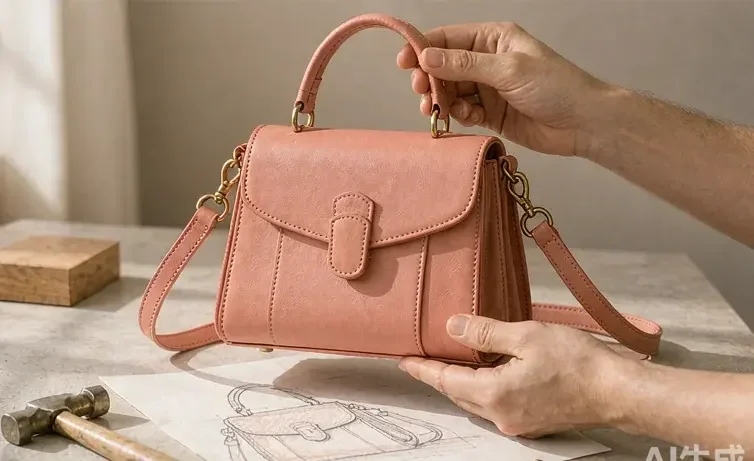
Material grade decides how a shape ages, and ageing is what a heritage customer is actually buying. Full-grain calfskin at 1.2-1.4 mm develops a patina rather than a wear patch, which is why it appears on almost every lasting silhouette. Grained calf at 1.4-1.6 mm hides daily abrasion and suits a bag that will be used hard. Lambskin at 0.8-1.0 mm drapes beautifully and is the choice when the shape is meant to look soft from the first day.
- Full-grain calfskin at 1.2-1.4 mm: develops patina, the default on a lasting shape.
- Grained calf at 1.4-1.6 mm: hides abrasion on a bag carried daily.
- Lambskin at 0.8-1.0 mm: drapes, and needs reinforcement to hold a frame.
- Hardware: brass and zamak plated to 0.15-0.3 micrometres, verified at 24 h salt spray.
Why Shapes Die: The Four Failure Numbers
Shapes do not die because they stop being fashionable; they die because a number was wrong and the piece stopped being comfortable or stopped holding its geometry. Four numbers account for most of the failures we see when a brand brings us a shape that has stopped selling. Each one is measurable on an existing bag, which means each one can be diagnosed before the next run.
- Drop too short: the hand will not pass through the handle, so the bag is carried by the frame and the frame distorts.
- Ratio outside the band: the shape reads as a tray or a satchel, and it dates within two seasons.
- Frame deflection above 2.5 mm at 2 kg: the bag slumps empty and looks tired on the shelf.
- Stitch density below 7.5 SPI: the anchor creeps, the handle leans, and the shape reads as broken.
Cost and Time: What Longevity Adds to a Programme
Longevity costs calendar time at the front and saves it afterwards. A first article with a blocked frame takes 12-15 working days rather than 6-10, because the frame has to be blocked, cooled and measured before the gusset can be set. Bulk runs 35-50 days from an approved sample and every shipment is offered FOB Xiamen. The saving arrives on the reorder: a frozen tolerance sheet means the second run matches the first without a new sampling round.
Our validated partner factory Quanzhou Yingming Bags has run heritage programmes since 2014 on 7 production lines with a monthly output of about 200,000 pcs. Minimum order quantity is 500 pcs per style / colourway, and every shipment is audited at AQL 2.5 (ISO 2859-1) on a sample pulled from the cartons rather than on a hand-picked first article.
How to Test a Shape Before You Commit
Four tests tell a brand whether a shape will last, and none of them requires a season of sales data. Stand the empty bag on a table and see whether it holds its geometry. Carry it loaded for an hour and see whether the drop still suits the body. Cycle the closure 5,000 times and see whether the alignment holds. Flex the edge 20 times and inspect it under a 10x loupe for a hairline.
| Test | Method | Pass condition | What it predicts |
|---|---|---|---|
| Empty stand | Set the bag down empty on a flat surface | Holds geometry, no slump | Frame deflection under 2 mm at 2 kg |
| Loaded carry | Carry the bag loaded for one hour | Drop still suits the body | Whether the piece gets used at all |
| Closure cycle | 5,000 open and close cycles loaded | Alignment unchanged | Hardware and anchor life |
| Edge flex | 20 flexes at 20 degrees Celsius | No hairline under a 10x loupe | Edge paint specification |
Building a Shape That Outlives the Season
The practical route is to take one of the six shapes, set the five numbers, and freeze them as a tolerance sheet. The shape then becomes a repeatable asset rather than a seasonal bet, and a reorder two seasons later matches the original unit for unit. A brand that does this three times owns a small archive, which is exactly what a customer learns to recognise as a house style, and what turns a first order into a repeat relationship.
Request a heritage shape review
Send us a shape and we will return the five numbers it needs, a tolerance sheet and a costed specification within one working day. Start your heritage programme
Frequently Asked Questions
What makes a handbag shape timeless?
Five numbers: a height-to-width ratio of 0.75-0.85, a carry drop inside a fixed band, a frame that deflects under 2 mm at 2 kg, a stitch density of 8-9 per inch and an edge finished in 3 coats. Shapes that hold those figures stay balanced and usable while the trend language around them changes.
Why does proportion matter more than size?
Because the eye reads ratio, not centimetres. A 0.80 height-to-width ratio reads as balanced on an 18 cm evening piece and on a 30 cm city bag, while a bag with a broken ratio reads as wrong at any size. That is why the same proportion recurs across decades.
Which carry drop is the most enduring?
Twenty-five to thirty centimetres for a shoulder strap, because it clears the elbow and leaves the hands free. Next is 9-11 cm for a hand-carried piece. Every lasting silhouette in the category sits inside one of those bands, and none of the bands has moved in thirty years.
Does a structured bag last longer than a soft one?
It holds its appearance longer, because a blocked frame keeps geometry when the bag is empty. A soft body slumps by design and relies on the leather to recover. If the shape is meant to stand on a shelf and look like itself, specify a frame; if drape is the point, specify a soft body.
How much does extra construction add to the unit cost?
A blocked and laminated frame adds four operations, a form and an inspection gate, which is the largest single move on the sheet. Cast brass hardware costs multiples of stamped zamak, and a three-coat edge is three passes instead of one. Specified programmes begin at USD 4.80 per unit.
How long does a heritage silhouette take to sample?
Twelve to fifteen working days when the shape carries a blocked frame, and six to ten working days for a soft or semi-structured body. Bulk production then runs 35-50 days from an approved sample, offered FOB Xiamen. The extra sampling days buy a frame that holds geometry.
What leather ages best on a classic shape?
Full-grain calfskin at 1.2-1.4 mm, because it develops patina rather than a wear patch, which is exactly what a heritage customer is buying. Grained calf at 1.4-1.6 mm hides abrasion on a bag carried daily, and lambskin at 0.8-1.0 mm drapes when softness is the point.
How do you test whether a shape will last?
Four tests: stand the bag empty and see whether it holds geometry, carry it loaded for an hour, cycle the closure 5,000 times and check alignment, and flex the edge 20 times under a 10x loupe. None of them needs a season of sales data.
Why do some shapes stop selling after two seasons?
Because a number was wrong rather than because the look dated. A drop too short means the bag is carried by the frame and distorts. A ratio outside the band reads as a tray or a satchel. A stitch density below 7.5 per inch lets the handle lean.
Can a brand create a new iconic shape?
Yes, but it is cheaper to refine one of the six proven silhouettes. Take a top handle satchel or a flap shoulder bag, set the five numbers, change the hardware language and the leather, and freeze the result as a tolerance sheet. The shape becomes a repeatable asset.
What is the minimum order quantity for a heritage programme?
Five hundred pieces per style and colourway. The threshold covers the frame tooling, the hardware setup and the pattern planning, and it is the same for a first capsule and for a reorder. Three colourways of one shape count as three qualifying runs.
How do you keep a reorder identical to the original run?
Freeze the shape as a tolerance sheet covering body dimensions, drop, stitch density, plating thickness and edge coats, and keep the approved first article as the physical standard. The reorder is then measured against that sample at AQL 2.5 (ISO 2859-1) rather than against a drawing.
Does hardware choice affect how long a shape lasts?
Yes. A cast brass closure plated to 0.15-0.3 micrometres holds alignment through 5,000 cycles and passes a 24 h salt-spray test, while thin plating corrodes and a drift in alignment makes the closure read as broken. Hardware is the most visible ageing signal after the leather.
Should an iconic shape be offered in more than one size?
Yes, and it is the simplest way to extend one shape. Keep the ratio and the drop band fixed and scale the body: 18 cm, 24 cm and 30 cm heights of the same satchel read as a family. The frame tooling changes, so each size is its own qualifying run.
People Also Ask
What handbag shapes are considered timeless?
Six silhouettes recur across decades: the top handle satchel, the flap shoulder bag, the bowling shape, the bucket, the hobo and the frame evening piece. Each solves a carrying problem with a proportion between 0.75 and 0.85 and a drop inside a fixed band.
Why does the top handle satchel keep coming back?
Because it stands flat, holds geometry when empty and carries in the hand at a 9-11 cm drop. Those three facts do not change, so the satchel reads as current in any decade while only its hardware and leather language move.
How do you make a bag shape look expensive?
Hold the ratio at 0.75-0.85, keep stitch density at 8-9 per inch, finish the edge in 3 coats and plate the hardware to 0.15-0.3 micrometres. Those four specifications read as quality at any price band and any size.
Do bucket bags go out of style?
Less than most shapes, because a bucket solves capacity without a frame and carries at a 25-30 cm drop. What changes is the leather and the drawcord detail rather than the proportion, which is why the shape keeps returning.
What size handbag is the most versatile?
A body height of 22-24 cm with an 8 cm gusset. It sits inside the 0.75-0.85 ratio, carries a phone and a small leather goods case, and reads correctly on both a handle and a strap, which is why it is the most repeated order in the category.
Sources and further reading
Every figure on this page is either our own programme data or attributed below. Open the originals before you write them into a specification.
- Business of Fashion industry reportingBusiness of Fashion Used to track which handbag silhouettes return across successive seasons.
- WWD accessories and handbag coverageWWD Referenced for how heritage shapes are reissued by established maisons.
- ISO 2859-1 sampling procedures for inspection by attributesInternational Organization for Standardization The sampling standard behind the AQL 2.5 audit applied to reorders.
- Leather Working Group audit protocolsLeather Working Group Referenced for traceability on the full-grain calfskin used in heritage programmes.
A shape lasts because its numbers are right, not because its look is fashionable. Set the five figures, freeze them as a tolerance sheet, and the silhouette becomes an asset a brand can reorder for years.
Send us a shape and a target price band and we will return the five numbers it needs, a tolerance sheet and a costed specification within one working day. Request a heritage shape review