How to Vet a Handbag Maison Before You Commit: One Buyer, Four Checks, Nine Rules
How do you vet a handbag maison before committing? Spend 90 minutes on the bench and 30 minutes in the records, and hand the house one correction to make before you sign. A buyer preparing a first capsule asked for a single extra week, ran four checks inside it, and withdrew from a partnership that had looked excellent on paper. This article opens with what those checks found, then sets out the nine-point list and the two rounds of questions that reach the same conclusion without needing a crisis.
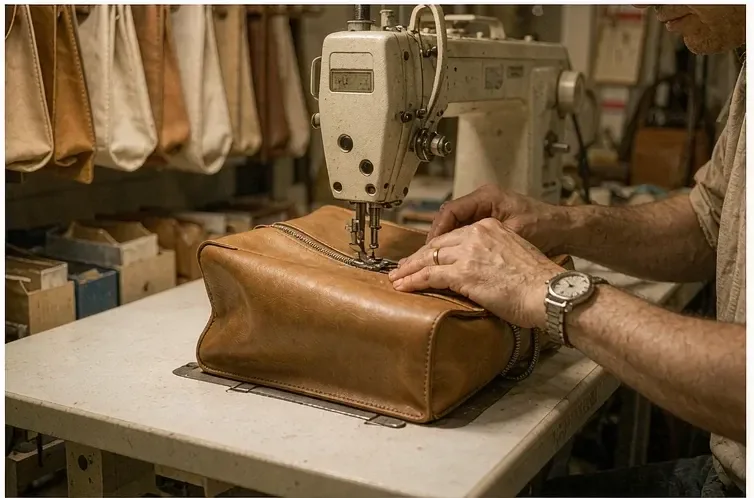
The Buyer Who Asked for One Extra Week
A London label with a three-person team was preparing its first capsule: 500 pcs of one structured body in two colourways, a bespoke turn-lock, and a launch date fixed around a buying appointment. Two houses had quoted within 4% of each other. On paper they were indistinguishable, and the team was about to choose on price.
Instead they asked for a week, and spent it running four checks rather than comparing quotations. The first was a request for the graded pattern block and correction list from a comparable style made two seasons earlier. The second was a lot trace-back on a finished piece. The third was a remake of one unit to a written correction. The fourth was a question about what, concretely, would be different about a second season.
Three of the four came back inside the week, and they were enough. The pattern arrived with a correction list written in the same hand that had made the piece. The trace-back named the tannery and the plating batch within a day. The remake came back four days later with the strap drop corrected to within 3 mm. The house under review produced a presentation for the fourth question and nothing at all for the first.
The buyer signed with the house that answered three questions with documents and one with a presentation. What follows is the general version of those four checks, expanded to nine, with the two rounds of questions that produce the same evidence in a fortnight rather than a season.
Rule One: Judge the Bench, Not the Showroom
Vet the bench where the work happens rather than the room where it is presented. A showroom is designed to answer the questions you thought to ask; a bench answers the ones you did not, usually within minutes of standing beside it.
Ninety minutes is enough if you know what to look at. Watch one operation end to end, watch the check that follows it, and ask the person performing it what would make them stop. The answer to that last question tells you more than any certificate, because it reveals whether the operation is governed by a specification or by habit.
- Ask to watch one complete operation, from panel to finished part, without an escort narrating it.
- Look for the check that follows each operation, and whether its result is recorded anywhere.
- Ask the bench hand what would make them stop the line, and listen for a parameter rather than a feeling.
- Count the stitch density over 25 mm: 8-9 stitches per inch is the range a premium body should hold.
- Look at the edge on a rejected piece: three thin passes should be visible, not one heavy one.
Do that fourth check yourself rather than asking about it. Counting stitches over 25 mm takes fifteen seconds, cannot be answered with an adjective, and is the fastest read on specification discipline at that bench.
Rule Two: Give the House a Correction to Make
The most informative thing you can do before signing is to hand over a written correction and see what comes back. A house that can take a measurement, apply it and return a corrected unit in four to six days has demonstrated almost everything a first capsule will require of it.
Make the correction real but small. Ask for a strap drop moved by a defined amount, an edge paint colour corrected to a named reference, or a gusset depth reduced by 3 mm. What you are testing is not the correction itself but the loop: written instruction, applied change, measured result, and a record that the change was confirmed.
- Write the correction as a measurement with a tolerance, never as an impression.
- Ask for the corrected unit plus a written note of what was changed and how it was verified.
- Ask when it will arrive, and note whether the date given is met without a reminder.
- Compare the corrected unit against the original on the same surface under the same light.
- Ask what the correction changed in the specification, not only in the sample.
The last question is the discriminating one. A house that adjusts the sample but not the specification will produce the same defect again in bulk, because nothing in the file tells the next bench hand what was learned.
Rule Three: Trace One Document Backwards
Pick a finished piece from a previous run and ask to trace it back to its tannery, its plating batch and its inspection result. A house with real documentary discipline answers within a working day; one without it eventually produces a certificate issued for a different lot.
- Trace-back request
- Name the tannery, lot reference and finish for a run from two seasons ago
- Expected response time
- Within one working day, with the record attached rather than described
- Hardware trace
- Plating batch and the salt spray result recorded against it
- Colour reference
- A retained piece, compared under D65 lighting to a tolerance of ΔE 1.5 or better
- Inspection record
- AQL 2.5 result under ISO 2859-1 for that specific run
- Compliance file
- REACH and California Prop 65 reports matched to the lot, not to a previous one
The D65 comparison is worth requesting specifically. Colour matched under showroom lighting and colour matched under a standardised daylight source are different results, and a house that keeps a retained reference for the second kind is telling you something concrete about its discipline.
Notice the pattern across the rules so far. Each asks for a document or a measurement rather than an assurance, and each can be answered in a day. Vetting works when the questions cost little to answer well and are awkward to answer badly.
Rule Four: Ask What a Second Season Changes
Ask the house what, specifically, will be different about your second season. The answer you want names retained tooling, held lots and existing test reports. The answer you should be wary of is goodwill, which is not an asset a programme can draw on eighteen months later.
An answer that compounds
Your dies are retained, the pattern is frozen, the lot can be held and the test reports already cover the material. Season two starts shorter and lower because season one was documented rather than merely completed.
An answer that flatters
A promise of better pricing next time, offered without reference to tooling, lots or reports. Pricing goodwill is real but fragile, and it is not the same as accumulated capability.
An answer that deflects
A change of subject toward the current capsule. A house that cannot describe your second season has told you it is not planning for one.
Ask how long graded pattern blocks and test reports are retained. Ten years is a reasonable expectation, and it is the horizon that makes a re-order a re-order rather than a fresh development.
Rule Five: Price a Failure Before a Success
Before signing, ask what happens if the run fails inspection, and ask it in numbers rather than in spirit. The answer reveals more about a house than any success story, because everyone handles a good run well.
| Question to ask | Answer that reassures | Answer that should worry you |
|---|---|---|
| What happens if inspection reaches the reject number? | Corrections made and re-checked inside a three-day buffer, at the house's cost | A discussion about what is commercially reasonable |
| Who pays for a correction made after bulk intake? | Stated in writing before the run begins | Left for the moment it happens |
| What is the handle attachment tested to? | 15 kg static load held for 60 seconds, recorded | A claim that it is very strong |
| What is the plating tested to? | 48 hours of salt spray on the batch, with a result | A statement that it does not tarnish |
| How is colour drift between lots handled? | Reserved against a retained reference, compared under D65 | Matched by eye at the bench |
| What if a lot cannot be supplied? | Two substitutes presented with test implications, agreed jointly | A replacement applied and mentioned later |
The 15 kg and 48-hour figures are not arbitrary. A handle that carries a loaded bag in daily use needs a defined static load test with a recorded result, and a plated component shipped into a humid market needs a salt spray result attached to its batch rather than to its reputation.
The Nine-Point Vetting List
Condensed into one list, the nine checks below can be run in a fortnight and answered almost entirely from your desk. Each has a pass condition written as a number, a document or a retained object.
- Graded pattern block and correction list from a comparable style, produced rather than described.
- Ninety minutes on the bench, watching one operation and the check that follows it.
- Stitch density counted over 25 mm, landing at 8-9 stitches per inch.
- One written correction issued and returned in four to six days with a verified measurement.
- Lot trace-back to tannery and plating batch within one working day.
- Colour compared under D65 lighting to a tolerance of ΔE 1.5 or better.
- Handle attachment tested to 15 kg static load held for 60 seconds, with the result recorded.
- Plating tested to 48 hours of salt spray against the batch used.
- A concrete description of what your second season changes, naming tooling, lots and reports.

Seven of nine is a reasonable bar for a first capsule. Nine of nine is rare, and a house claiming it deserves the same scepticism as one answering everything with an adjective.
Score each item zero, one or two as before: zero for an adjectival answer, one for a document without a parameter behind it, two for a parameter with a record. The distribution across nine items is a better read than any single response.
Round One and Round Two: What to Ask in Each
Split the vetting into two rounds. The first is documentary and can be completed from your desk in a week; the second is physical and needs either a visit or a paid sample. Running them in that order means the second round is spent on a shortlist rather than on hope.
Round one: documents, one week, from your desk
- Pattern block and correction list from a comparable style.
- Lot trace-back for a run from two seasons ago.
- Test reports matched to the lot, not to a previous one.
- Inspection plan written as AQL 2.5 under ISO 2859-1 with sample size and accept numbers.
- A written description of what a second season changes.
Round two is where the physical evidence is produced, and it is worth paying for. A paid sample tells you how the house behaves when there is no deal yet at stake, which is a better predictor than any reference.
Round two: physical, two to three weeks, worth paying for
- A paid sample built to your pack, measured against it and returned with a correction log.
- One written correction issued and returned within four to six days.
- Bench visit of 90 minutes, or a photographed walk-through where travel is not possible.
- Colour comparison under D65 against a retained reference.
- Load and salt spray results for the components used in your construction.
Signals That Do Not Improve With Time
Some signals in vetting are temporary shortcomings and others are permanent characteristics. The distinction matters, because the second kind does not improve once you have signed, and hoping otherwise is how a one-capsule mistake becomes a three-season one.
- A correction applied to the sample but not to the specification, which returns in every subsequent run.
- A test report issued for a different lot, presented as though the distinction were pedantry.
- A substitution mentioned after the event rather than proposed before it.
- Dates given without a named owner, which is how a commitment becomes a hope.
- An inability to say what a second season changes, eighteen months of goodwill notwithstanding.
The first is the most damaging precisely because it is the smallest. A house that fixes the piece in front of it and leaves the file untouched will produce the same defect in every run, and each recurrence will be treated as a fresh surprise.
The piece tells you what the house can do once. The file tells you what it will do repeatedly. Vetting exists to predict the second of those, which is why the documentary checks come first and the physical ones confirm rather than decide.
What the Vetting Returns
Two weeks of vetting returns three things: a decision you can defend, a specification you already agree on, and a working relationship that begins with a correction rather than with a crisis.
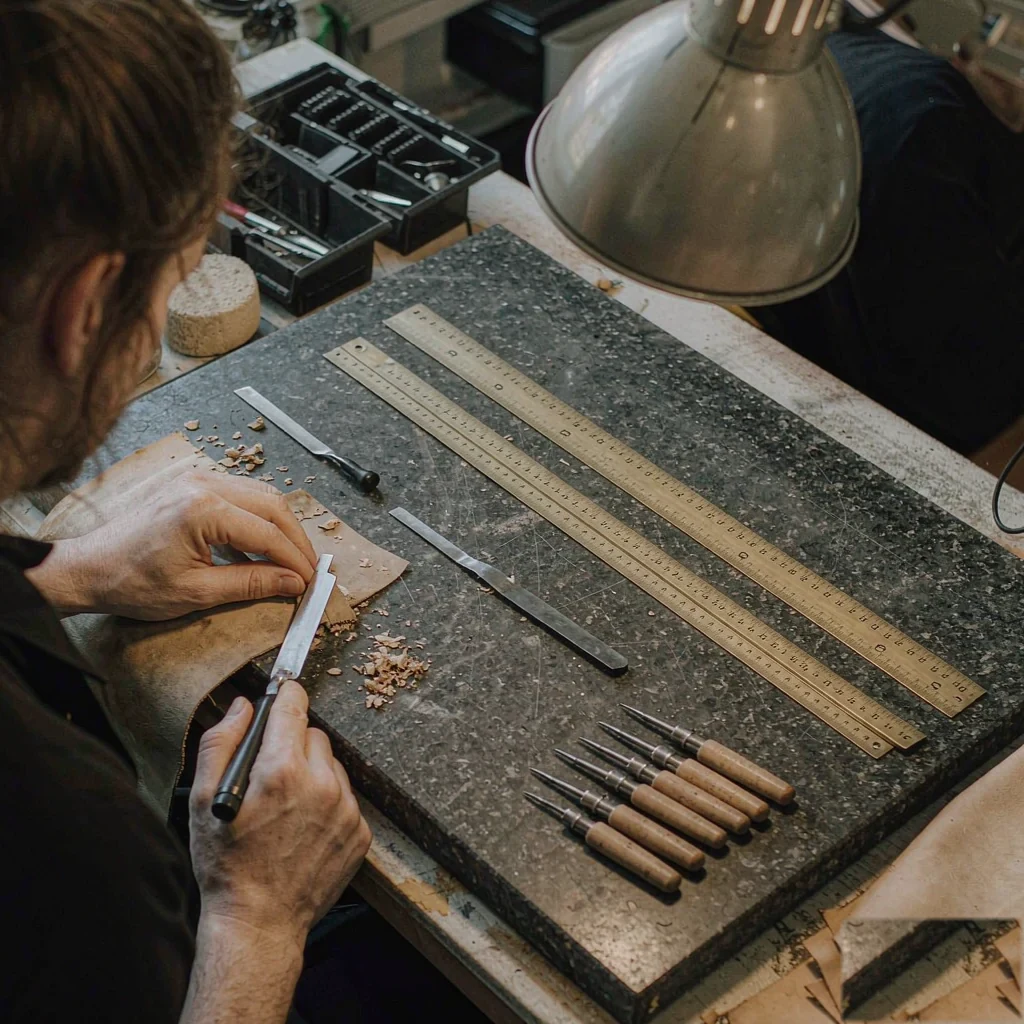
The second of those is the one buyers underestimate. By the time nine checks have been answered, the technical pack has usually been discussed in enough detail that sampling starts closer to the mark, which removes a round from the calendar before it has begun.
Our programme works to MOQ 500 pcs per style and colourway, with sampling at 6-10 working days and bulk at 35-50 days on FOB Xiamen terms, inspected to AQL 2.5 under ISO 2859-1. It runs across 7 production lines with about 200,000 pcs per month of capacity and export experience since 2014, delivered through our validated partner factory Quanzhou Yingming Bags, an SGS-validated site.
Run the nine checks against us
Ask for a pattern block from a comparable style, a lot trace-back, and a paid sample with a written correction. You will receive documents within a week and the corrected unit within six days. Request a quote.
Frequently Asked Questions
How long should vetting a handbag maison take?
Two to three weeks is realistic and sufficient. The first week is documentary and can be completed from your desk; the second and third cover a paid sample and a bench visit. Anything faster usually means the documentary checks were skipped. Documents first, then the bench.
Why is a bench visit better than a showroom meeting?
A showroom answers the questions you thought to ask, while a bench answers the ones you did not. Ninety minutes watching one operation end to end reveals whether the work is governed by a written specification or by habit. The bench answers unasked questions. Watch.
What is the single most informative check before signing?
Hand over a written correction and ask for a corrected unit in four to six days. That one request tests written instruction, applied change, measured result and recorded confirmation, which is the same loop an entire capsule runs through. Test the loop, not the sample.
What stitch density should a premium handbag body hold?
Eight to nine stitches per inch, which is roughly nine to eleven stitches counted over 25 mm. Counting it yourself takes fifteen seconds, cannot be answered with an adjective, and is the fastest read on specification discipline at a bench. Count it over 25 mm yourself.
Why compare colour under D65 lighting?
Because colour matched under showroom lighting and colour matched under a standardised daylight source are different results. A tolerance of ΔE 1.5 or better against a retained reference is what keeps a re-order consistent with the approved piece. Ask for the reference piece and keep it. Store it for the re-order.
How is plated hardware vetted?
Ask for the salt spray result recorded against the plating batch used, with 48 hours as a sensible proving figure, and a finishing layer of 0.15-0.3 µm on brass. A result attached to a reputation rather than a batch is not a result.
What is the difference between a temporary shortcoming and a permanent one?
A temporary shortcoming is a late document or an unfinished record. A permanent one is a correction applied to the sample but not to the specification, because that returns in every subsequent run and is treated as a fresh surprise each time. The first is a nuisance; the second is permanent.
Should I pay for a sample during vetting?
Yes. A paid sample shows how the house behaves when no deal is yet at stake, which predicts the working relationship better than any reference. It also means the sampling loop is tested before the calendar is committed. Pay for the sample and keep the record.
How should inspection be written into an agreement?
At AQL 2.5 under ISO 2859-1, with the sample size and the accept and reject numbers agreed before bulk. For a 500 pcs lot at general inspection level II the plan uses code letter H: 50 units drawn, accept 3, reject 4. Agree it before bulk begins.
What should I ask about a second season?
Ask what concretely changes: retained tooling, held lots and existing test reports. Then ask how long patterns and reports are retained, where ten years is a reasonable expectation and the horizon that makes a re-order genuinely shorter. Ask for the evidence in writing, then check it.
People Also Ask
How do you vet a handbag production partner?
Run two rounds: one documentary week from your desk covering patterns, trace-backs and test reports, then a physical round with a paid sample and a bench visit of 90 minutes.
Is a paid sample worth it during vetting?
Yes. It reveals how the house behaves before any deal is at stake, tests the full sampling loop, and usually shortens the first capsule by removing a development round.
What are red flags when choosing a bag house?
Corrections applied to a sample but not to the specification, test reports issued for a different lot, substitutions mentioned after the event, and dates given without a named owner.
How do I verify quality without visiting?
Request a live photographed walk-through against a shot list you write, a paid sample built to your pack, and the load and salt spray results for the components used in your construction.
Sources and further reading
Every figure on this page is either our own programme data or attributed below. Open the originals before you write them into a specification.
- ISO — International Organization for StandardizationISO Publisher of ISO 2859-1, which sets the sampling plans, code letters and accept and reject numbers used in the inspection check described here.
- Leather Working GroupLeather Working Group Tannery audit protocol referenced when tracing a lot back to its source and when a substitute is proposed.
- ECHA — European Chemicals AgencyEuropean Chemicals Agency Administrator of REACH, whose restricted substance list is the basis of the per-lot reports requested in round one of vetting.
- OEHHA — California Proposition 65Office of Environmental Health Hazard Assessment California authority administering Prop 65, which applies to handbag shipments entering the state and is tested per material lot.
- Sourcing JournalSourcing Journal Reporting on sourcing due diligence, audit practice and material traceability expectations across the luxury leather goods sector.