How a Top Handle Luxury Bag Is Constructed
A top handle luxury bag is assembled in nine controlled stages: frame preparation, gusset setting, handle anchoring, closure fitting, lining insertion, edge finishing, hardware verification, dimensional inspection and a final AQL 2.5 (ISO 2859-1) audit. The silhouette stands or collapses on three tolerances: frame deflection below 2 mm at 2 kg, handle stitch density of 8-9 stitches per inch, and edge paint applied in 3 coats. At QUANZHOU JUNYUAN BAGS the construction sequence is fixed, measured and signed off at each gate before the next stage opens. This guide walks through every stage, the numbers a designer brand should specify, and the checks that protect the shape through a full season of use.
What Defines a Top Handle Luxury Bag
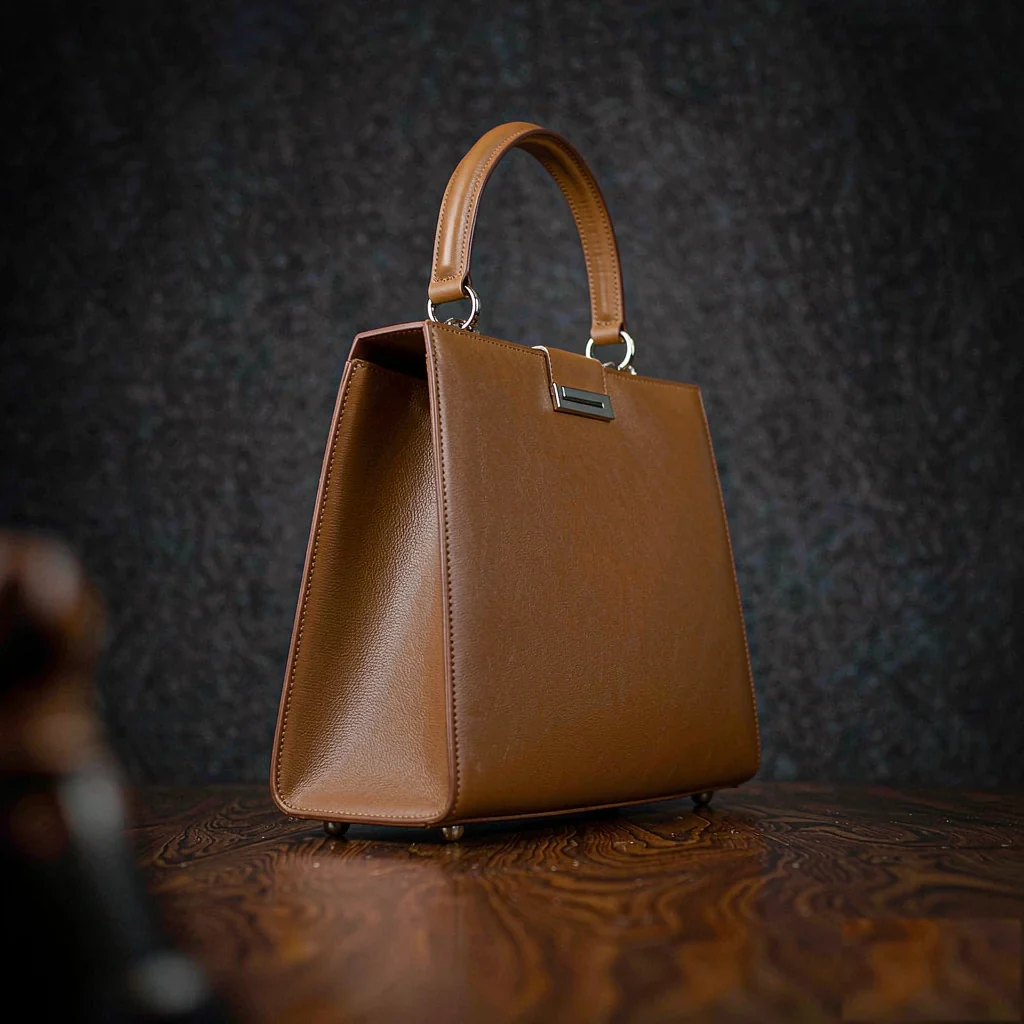
A top handle luxury bag is defined by three structural decisions that a shoulder or crossbody shape never has to make: the frame must hold its geometry when the bag is set down empty, the handle must carry the entire load without stretching, and the closure must align within a tolerance measured in tenths of a millimetre after the panel is filled. Because the handle is lifted rather than slung, the load path runs from the handle anchor, through the frame, and into the gusset seams.
That load path is why top handle programmes are specified as engineered assemblies rather than as soft panels with a strap attached. From a construction standpoint the silhouette succeeds or fails on three measurable tolerances: frame deflection below 2 mm at a 2 kg load, handle stitch density of 8-9 stitches per inch, and edge paint applied in 3 controlled coats. Everything else, including leather selection, hardware finish and lining weave, is a finish decision layered on top of those three numbers. A maison that specifies the tolerances up front receives a bag that keeps its geometry through a full season; one that specifies only a drawing receives a bag that slumps.
Specification anchors for this silhouette
- Specify the frame, the handle anchor and the edge finish as numbers, not adjectives: frame deflection under 2 mm at 2 kg, 8-9 stitches per inch on the handle, 3 coats of edge paint, and hardware plating of 0.15-0.3 micrometres verified by a 24 h neutral salt-spray test. Those four lines are what we audit against at AQL 2.5 (ISO 2859-1) before any carton leaves.
The Nine-Stage Construction Sequence
Every top handle bag that leaves our atelier network follows the same nine gates. The sequence is fixed because each stage creates a datum for the next one: the gusset cannot be set before the frame is blocked, and the edge cannot be painted before the lining is closed. Skipping a gate does not save time, it relocates the error to a stage where it costs more to correct.
- Hide selection and cutting: panels are graded, and the frame panels are cut from the firmest section of the hide so the bag holds its geometry.
- Skiving and reinforcement: panel edges are skived to 0.8 mm and backed with a 0.8 mm reinforcement tape at every stress point.
- Frame blocking: the front and back panels are blocked over a heated form so the curvature is set before any seam is closed.
- Gusset setting: the gusset is eased into the frame with a 1.2-1.4 mm leather body, and the corner radius is trimmed to a fixed template.
- Handle anchoring: the handle is set into the frame with a 0.45 mm thread at 8-9 stitches per inch over a hidden reinforcement plate.
- Closure fitting: the turn-lock, clasp or magnetic bridge is fitted, and the alignment is checked with the bag filled.
- Lining insertion: the lining is cut 2 mm short of the shell and set in by hand so it never pulls the silhouette out of shape.
- Edge finishing: 3 coats of edge paint are applied, each one sanded before the next, then the edge is burnished at 60 degrees Celsius.
- Final audit: dimensions, hardware function and cosmetic grade are checked against AQL 2.5 (ISO 2859-1) before packing.
Frame, Gusset and Volume Control
The frame is the skeleton. On a structured top handle bag the front and back panels are laminated to a 0.8 mm reinforcement board, then blocked over a heated form so the curvature becomes permanent rather than incidental. On a semi-structured piece the same result is achieved with a 1.2-1.4 mm full-grain body and a concealed base plate. Volume is controlled by the gusset: a narrow gusset reads as a day bag, a wider one reads as a small travel piece, and each step of gusset width adds measurable weight and material to the finished bag.
- Frame panels: 1.2-1.4 mm full-grain calfskin laminated to a 0.8 mm reinforcement board.
- Corner radius: cut to a fixed acrylic template so every unit in the run shares the same geometry.
- Gusset width: 6 cm for a day silhouette, 8 cm for a city bag, 9 cm for a small travel piece.
- Base: a concealed base plate is set under the lining so the bag does not dish when it is filled.
- Seam allowance: 8 mm on shell seams and 6 mm on lining seams, both skived before closing.
Handle Engineering: Load Path and Comfort
The handle carries every gram of the bag. A top handle is cut from a single strip, folded over a 3 mm core, and skived at both ends so the anchor sits flush against the frame rather than standing proud of it. The anchor is then reinforced with a hidden plate and closed with a 0.45 mm bonded nylon thread at 8-9 stitches per inch. Below 8 stitches per inch the anchor creeps; above 9 the leather perforates and tear resistance falls. The drop, measured from the top of the handle to the top of the bag, is specified at 9-11 cm for a hand-carried piece and 13-15 cm for a piece meant to sit in the crook of the arm.
Handle core
A 3 mm core keeps the handle round under load and stops the folded leather from flattening after a season of daily use.
Anchor plate
A hidden reinforcement plate spreads the load across the frame so the stitch line is not the only element holding the bag up.
Drop height
9-11 cm for a hand-carried silhouette, or 13-15 cm when the piece is designed to be worn in the crook of the arm.
Grip radius
The underside is sanded to a 4 mm radius so the handle sits comfortably in the palm without a hard folded edge.
Closure, Hardware and Plating Specification
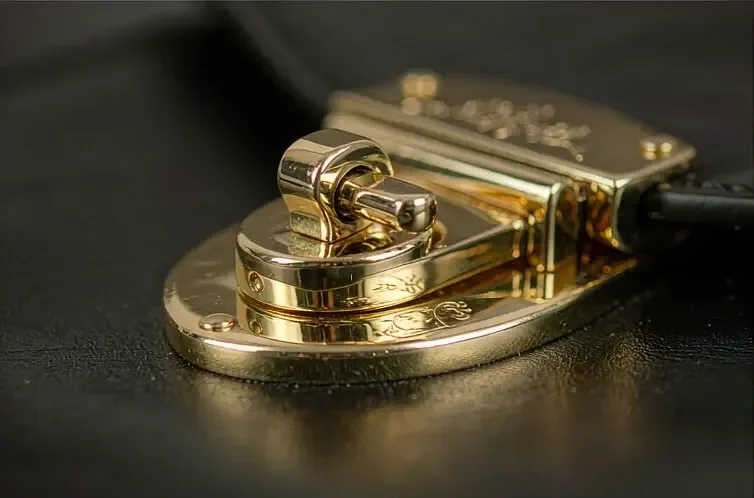
A closure is a moving part, and moving parts are where a luxury bag earns or loses its reputation. A turn-lock, a clasp or a magnetic bridge must engage with the bag filled and empty, and the engagement must not drift after 5,000 open-and-close cycles. Every hardware component we specify is cast in brass or zamak, plated to 0.15-0.3 micrometres, and verified by a 24 h neutral salt-spray test. Pieces destined for resort or coastal assortments sit at the top of that band and are tested for 48 h instead.
- Base metal: brass for load-bearing closures, zamak for decorative plates and feet.
- Plating thickness: 0.15-0.3 micrometres, verified by X-ray fluorescence on the first article of every run.
- Salt-spray resistance: 24 h as standard, extended to 48 h for resort and coastal assortments.
- Cycle test: 5,000 open-and-close cycles with the bag loaded to its specified weight.
- Feet: four or five studs set on the base line so the bag stands without rocking.
Lining and Interior Architecture
The lining is cut 2 mm short of the shell so that it never pulls the silhouette out of shape, and it is set in by hand rather than machine-closed to the shell seam. A top handle bag typically carries one zip pocket, two slip pockets and a card slot, and each pocket is bar-tacked at both ends. Interior leather is specified at 0.8-1.0 mm so it adds structure without bulk, which is what makes an interior read as deliberate architecture rather than as an empty cavity.
- Pocket set: one zip pocket, two slip pockets and one card slot as the standard interior configuration.
- Bar-tacks: every pocket end is bar-tacked with a 12 mm bartack in a thread matched to the shell.
- Lining weight: 0.8-1.0 mm split suede, or a 120 gsm jacquard weave for a lighter hand.
- Set-in method: hand-set so the lining floats inside the shell and never telegraphs a seam.
- Zip specification: a number 5 zip with a matched tape and a branded puller on the interior pocket.
Edge Finishing: The Three-Coat Standard
Edge paint is the most visible signal of how a bag was made. A single thick coat cracks, while three thin coats, each sanded before the next is applied, flex with the leather instead of fighting it. Our standard is 3 coats with a final burnish at 60 degrees Celsius, after which the edge is flexed 20 times at room temperature and inspected under a 10x loupe. An edge that passes reads as a continuous line; one that fails shows a hairline at the corner radius within a week of daily use.
- Coat one: a thin sealing coat applied at 0.1 mm, dried for 20 minutes, then sanded flush.
- Coat two: the body coat, applied at 0.15 mm, dried for 30 minutes, then sanded with 600-grit paper.
- Coat three: the finishing coat, applied at 0.1 mm, dried for 40 minutes before burnishing.
- Burnish: the edge is worked at 60 degrees Celsius with a wooden slicker so the finish flows into the grain.
- Flex test: 20 flexes at 20 degrees Celsius, then inspection under a 10x loupe for hairline cracking.
Tolerance Table for a Top Handle Bag
The table below is the specification sheet issued with every first article. Each line is measurable and each line has a rejection threshold, so a brand can audit a shipment without arguing about adjectives.
| Element | Specification | Tolerance | Failure threshold |
|---|---|---|---|
| Frame panel | 1.2-1.4 mm full-grain calfskin | plus or minus 0.1 mm | Below 1.1 mm or above 1.5 mm |
| Reinforcement board | 0.8 mm | plus or minus 0.05 mm | Visible telegraphing through the grain |
| Handle core | 3 mm | plus or minus 0.2 mm | Handle flattens under a 2 kg load |
| Stitch density | 8-9 stitches per inch | plus or minus 0.5 SPI | Below 7.5 or above 9.5 SPI |
| Thread | 0.45 mm bonded nylon | plus or minus 0.02 mm | Break load below 4 kg |
| Edge paint | 3 coats | No fewer than 3 | Any hairline after 20 flexes |
| Hardware plating | 0.15-0.3 micrometres | plus or minus 0.02 micrometres | Failure at 24 h salt spray |
| Frame deflection | Under 2 mm at 2 kg | plus or minus 0.3 mm | Above 2.5 mm at 2 kg |
| Handle drop | 9-11 cm or 13-15 cm | plus or minus 3 mm | Outside the specified band |
| Zip | Number 5 coil or metal | No substitution | Tape colour drift against the standard |
Sampling, MOQ and Production Timeline
A first article for a standard top handle bag takes 6-10 working days from a confirmed tech pack; a complex piece with a custom frame, a hand-set closure or a mixed-media panel takes 12-15 working days. Minimum order quantity is 500 pcs per style / colourway. Bulk production runs 35-50 days from an approved sample, and every shipment is offered FOB Xiamen. Our validated partner factory Quanzhou Yingming Bags has been building structured silhouettes since 2014, runs 7 production lines, and carries a monthly output of about 200,000 pcs across all programmes.
- MOQ
- 500 pcs per style / colourway
- Sampling
- 6-10 working days, or 12-15 for complex builds
- Bulk lead time
- 35-50 days from approved sample
- Inspection standard
- AQL 2.5 (ISO 2859-1)
- Trade terms
- FOB Xiamen
- Operating since
- 2014
- Production lines
- 7
- Monthly output
- about 200,000 pcs
Those numbers are fixed, and they are identical for a maison ordering a first capsule and for a designer brand scaling a repeat. What changes between the two is not the timeline but the depth of the tech pack: the tighter the pack, the fewer the correction rounds, and the faster the programme reaches a bulk order.
Quality Control and the AQL 2.5 Protocol
Every shipment is audited against AQL 2.5 (ISO 2859-1) before it is released. The audit is dimensional first, with frame, gusset, handle drop and closure alignment measured on a sample pulled from the cartons. It is cosmetic second, under D65 lighting at a fixed distance. Hardware function is tested on the same sample: every closure is cycled, every zip is run, and every foot is checked for level contact. The full audit protocol is documented on our luxury quality control page.
- Dimensional audit: frame, gusset, handle drop and closure alignment measured on the pulled sample.
- Cosmetic audit: grain, edge and stitch inspected under D65 lighting at a fixed 60 cm distance.
- Functional audit: every closure cycled, every zip run, every foot checked for level contact.
- Hardware audit: plating thickness verified by X-ray fluorescence on the first article of each run.
- Drop test: a filled bag is dropped from 30 cm onto a hard surface and re-inspected.
- Carton audit: carton weight, unit count and packing method checked against the shipping specification.
Cost Drivers Behind the Silhouette
Frame construction is the single largest cost driver on a top handle bag, followed by hardware and then edge finishing. A blocked frame adds an operation, a form and an inspection gate; a cast brass turn-lock costs multiples of a stamped zamak one; and a three-coat edge is three passes rather than one. Leather selection moves the number most of all, because a full-grain calfskin at 1.2-1.4 mm costs materially more per panel than a corrected grain at the same thickness, and it is the one input a luxury customer feels immediately.
- Frame: a blocked and laminated frame adds one operation, one form and one inspection gate.
- Hardware: cast brass costs multiples of stamped zamak, and plating thickness moves the number again.
- Edge: 3 coats mean three passes, two sanding operations and one burnish.
- Leather: full-grain calfskin at 1.2-1.4 mm is the largest single material line on the cost sheet.
- Interior: a 120 gsm jacquard lining is lighter and less costly than a split suede lining.
- Entry pricing: specified programmes begin at USD 4.80 per unit, with the final number driven by frame and hardware choice.
Pre-Production Checklist for Brand Buyers
Use this checklist before releasing a tech pack. Every line is a question a brand can answer from a specification sheet; if a line cannot be answered, the programme is not ready to sample.
- Frame thickness specified in millimetres rather than described as firm or soft.
- Gusset width fixed to a number and drawn on the tech pack with a dimension line.
- Handle drop specified as a band, with the intended carry method stated.
- Stitch density stated as a range in stitches per inch for both the handle and the shell.
- Thread diameter and colour specified, with a physical standard attached to the pack.
- Hardware base metal, plating thickness and salt-spray duration written into the specification.
- Closure cycle-test count agreed before sampling begins.
- Edge paint coat count stated, with the sanding and burnish method described.
- Interior set defined: pocket count, zip number and bar-tack width.
- Colour standard named, with the lighting condition noted as D65.
- MOQ accepted at 500 pcs per style / colourway.
- Inspection level agreed as AQL 2.5 (ISO 2859-1) before the bulk order is placed.
How to Brief a Top Handle Programme
A complete brief is a drawing, a tolerance sheet and a colour standard. Brands that send all three receive a first article in 6-10 working days and a bulk run in 35-50 days; brands that send only a drawing spend the same calendar time in correction rounds. The construction detail lives on our craftsmanship page, the material grades sit on luxury materials, and the audit protocol is documented under luxury quality control. Sampling is booked through luxury sampling.
Request a top handle construction review
Send us your drawing and we will return a tolerance sheet, a sampling plan and a costed specification within one working day. Start your top handle programme
Frequently Asked Questions
How long does it take to build a top handle luxury bag?
From a confirmed tech pack, a first article for a standard top handle bag takes 6-10 working days. A complex build with a custom frame, a hand-set closure or a mixed-media panel takes 12-15 working days. Bulk production runs 35-50 days from an approved sample, offered FOB Xiamen. That timeline assumes the tech pack is complete, because an incomplete pack spends the same calendar time in correction rounds.
What is the minimum order quantity for a top handle programme?
Minimum order quantity is 500 pcs per style / colourway. That threshold exists because a blocked frame requires a dedicated form and a custom closure requires a tooling setup, and both are amortised across the run. A brand ordering three colourways of one silhouette places three qualifying runs. The threshold is identical for a first capsule and for a repeat order.
Why does the handle need a higher stitch density than the shell?
The handle carries the entire load of the bag, while the shell carries only its own weight. We close handle anchors at 8-9 stitches per inch with a 0.45 mm bonded nylon thread over a hidden reinforcement plate. Below 8 stitches per inch the anchor creeps under load; above 9 the leather perforates and tear resistance falls. The shell is closed at the same density but without the plate.
What leather thickness is right for a structured top handle bag?
We specify 1.2-1.4 mm full-grain calfskin for the frame panels of a structured top handle bag, laminated to a 0.8 mm reinforcement board. Semi-structured pieces can run a 1.0-1.2 mm body without the board. Thinner leather dishes when the bag is filled, and thicker leather resists the corner radius and produces a bulky turn where the gusset meets the frame.
How many coats of edge paint should a luxury bag have?
Three. A single thick coat cracks because it cannot flex with the leather, while three thin coats sanded between applications move with the panel instead of fighting it. Our standard is a 0.1 mm sealing coat, a 0.15 mm body coat and a 0.1 mm finishing coat, followed by a burnish at 60 degrees Celsius and a 20-cycle flex test inspected under a 10x loupe.
What plating thickness should be specified for bag hardware?
Specify 0.15-0.3 micrometres and verify it by X-ray fluorescence on the first article of every run. Thinner plating fails a 24 h neutral salt-spray test, and thicker plating looks glassy and can flake at the edges. Pieces destined for resort or coastal assortments should sit at the top of that band and be tested for 48 h rather than 24 h.
How is frame deflection measured and what is acceptable?
Frame deflection is measured by loading the bag to 2 kg and reading the change in the centre line of the front panel against an unloaded datum. We accept deflection under 2 mm and reject above 2.5 mm. The measurement is taken on a sample pulled from the cartons under AQL 2.5 (ISO 2859-1), not on a hand-picked first article, so the reading reflects the whole run.
What inspection standard applies before shipment?
Every shipment is audited against AQL 2.5 (ISO 2859-1). The audit runs dimensional first, cosmetic second under D65 lighting, then functional: every closure is cycled, every zip is run and every foot is checked for level contact. Hardware plating is verified separately by X-ray fluorescence on the first article of each production run.
Can a top handle bag also be carried on the shoulder?
A true top handle silhouette is designed to be hand-carried or worn in the crook of the arm, with a drop of 9-11 cm or 13-15 cm. Adding a shoulder carry requires a longer strap, a different anchor and a reinforced frame, which is effectively a new style rather than a variation, so we build it as a separate specification with its own sampling round.
What interior set should a top handle bag carry?
The standard interior set is one zip pocket, two slip pockets and one card slot, each bar-tacked at both ends with a 12 mm bartack. The lining is cut 2 mm short of the shell and set in by hand so it never pulls the silhouette out of shape. Interior leather runs 0.8-1.0 mm, or a 120 gsm jacquard weave for a lighter hand.
Why is the lining cut shorter than the shell?
A lining cut to the same dimension as the shell pulls the silhouette inward as soon as the bag is filled, telegraphing a seam through the outer leather and rounding the corner radius. Cutting the lining 2 mm short and setting it in by hand lets it float inside the shell, so the geometry of the bag is controlled entirely by the frame and the gusset.
What is the cost entry point for a specified top handle programme?
Specified programmes begin at USD 4.80 per unit, with the final number driven by the frame construction, the hardware specification and the leather grade. A blocked laminated frame adds an operation and a form, a cast brass turn-lock costs multiples of a stamped zamak one, and a full-grain calfskin panel is the largest single material line.
How does a maison protect a top handle silhouette across a season?
By specifying tolerances rather than adjectives: frame thickness in millimetres, handle drop as a band, stitch density in stitches per inch, plating in micrometres and edge coats as a count. Those five numbers are what we audit against at AQL 2.5 (ISO 2859-1), and they are what keep a silhouette identical between the first article and the last carton.
People Also Ask
What makes a top handle bag structured?
Structure comes from the frame: 1.2-1.4 mm full-grain calfskin laminated to a 0.8 mm reinforcement board and blocked over a heated form so the curvature is permanent. A concealed base plate and a 6-9 cm gusset hold the volume. Without those elements the panel behaves as a soft body and the silhouette slumps when the bag is set down empty.
How much weight should a luxury top handle bag carry?
A top handle bag should carry its specified load with the handle anchor showing no creep. We test the anchor at 2 kg and read frame deflection against an unloaded datum, accepting under 2 mm. A day bag is typically loaded to 1.5-2 kg in daily use and a small travel piece to 3 kg, which is why the anchor plate is specified separately.
What is the difference between a blocked frame and a soft body?
A blocked frame is laminated, heated over a form and set into a permanent curvature, so it holds geometry when the bag is empty. A soft body relies on the leather itself and slumps slightly by design. The blocked route adds one operation, one form and one inspection gate to the build.
How do you test hardware on a luxury bag?
Hardware is tested four ways: plating thickness by X-ray fluorescence, corrosion by a 24 h neutral salt-spray test extended to 48 h for coastal assortments, function by 5,000 open-and-close cycles with the bag loaded, and colour by matching a physical standard under D65 lighting rather than a screen image.
What should a tech pack include for a top handle bag?
A complete tech pack includes a dimensioned drawing, a tolerance sheet covering frame thickness, handle drop, stitch density, plating and edge coats, and a physical colour standard. With all three we return a first article in 6-10 working days; with a drawing alone the same calendar time is spent in correction rounds.
Sources and further reading
Every figure on this page is either our own programme data or attributed below. Open the originals before you write them into a specification.
- ISO 2859-1 sampling procedures for inspection by attributesInternational Organization for Standardization The sampling standard referenced by the AQL 2.5 pre-shipment audit described above.
- Leather Working Group audit protocolsLeather Working Group Referenced for leather traceability and tannery audit expectations on full-grain calfskin.
- CITES Appendices on trade in animal speciesCITES Checked before any exotic skin is specified on a luxury handbag programme.
- REACH restricted substances guidanceEuropean Chemicals Agency Used as the chemical baseline for leather, thread, adhesive and edge finishes.
A top handle luxury bag is a structural object that happens to be beautiful. Specify the frame, the handle anchor and the edge as numbers and the silhouette will survive a full season; describe them as adjectives and it will not. Our validated partner factory Quanzhou Yingming Bags has built structured silhouettes since 2014 across 7 production lines, with a monthly output of about 200,000 pcs.
Send a drawing and a target price band and we will return a tolerance sheet, a sampling plan and a costed specification within one working day. Request a construction review