How Sustainability Shapes Luxury Bag Buying: Six Specification Choices, What Each One Costs, and the Claims That Survive Review
How does sustainability actually change what gets specified on a luxury bag? It changes six lines: the tanning route, the lining content, the substances permitted in the finish, whether hardware can be replaced, what the piece ships in, and how long any claim is expected to hold. Each has a cost and most have a calendar effect — metal-free tanning alone can add 10-15 days at the tannery before the hide even reaches us.
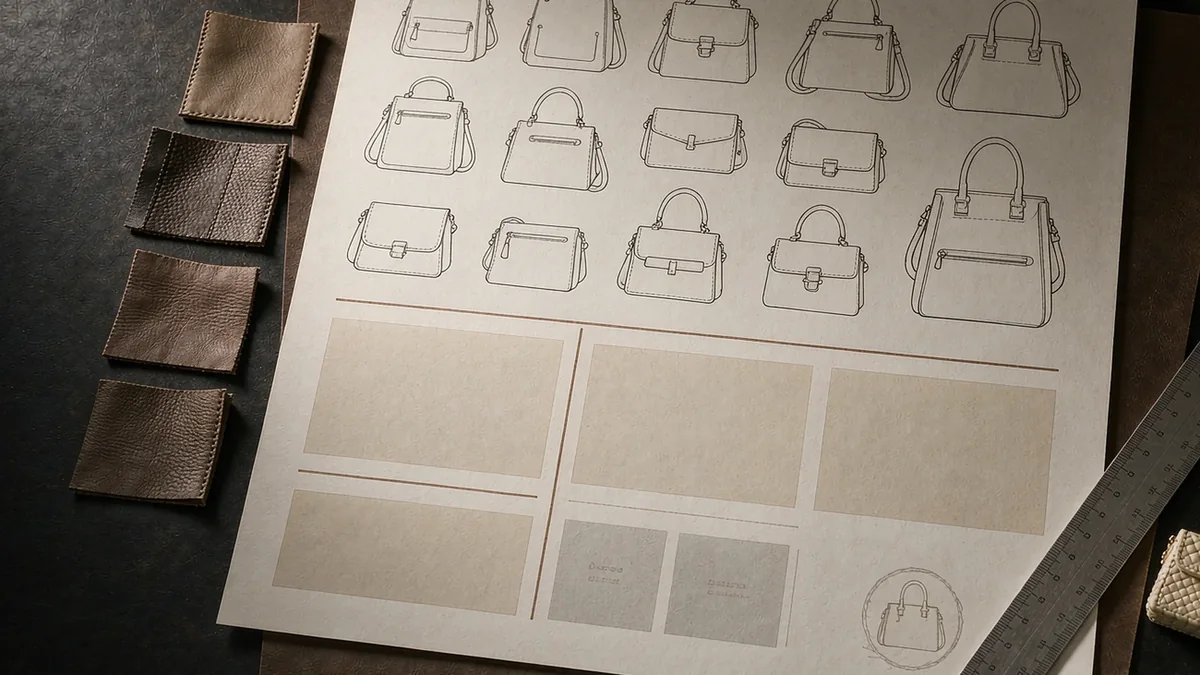
A checklist in the order decisions are really made
Sustainability enters a specification at six points, and it enters in a fixed order because each choice constrains the ones after it. Start with the tanning route, since it governs what finishes and hardware can follow. Then set lining content, then permitted substances, then repairability, then presentation, and only last write the claim. Teams that draft the claim first spend the rest of development trying to make reality match a sentence.
This page is built as a checklist rather than an argument. Each item is short, each carries the reason it matters, and the two things worth knowing about every item are what it costs and how much calendar it consumes. Nothing here asks a label to be more ambitious than it intends to be.
Checklist one: the tanning route and what it commits you to
- Choose chrome-tanned, metal-free or vegetable-tanned deliberately, because the route fixes hand, colour range and finishing time rather than just chemistry.
- Ask the tannery this season how much stock they hold in the route you chose, since a mid-development switch usually restarts selection.
- Confirm the Leather Working Group rating and its audit date together; a rating quoted without a date cannot be checked by anyone.
- Expect metal-free articles to add roughly 10-15 days at the tannery, which sits ahead of everything else in the calendar.
- Accept that some finishes behave differently on metal-free articles and may need a fresh adhesion result rather than an inherited one.
The calendar point is the one that gets missed. Tannery time is not part of our own quoted durations, so it does not appear in the 6-10 working days of sampling or the 35-50 days of bulk. It arrives before either, which is why a switch late in development is felt as a delay that nobody scheduled.
There is also a quality argument hiding in that first checklist. A route chosen for a lower environmental load tends to come from a tannery that documents its inputs carefully, and tanneries that keep good records are generally the ones whose hides arrive consistent from lot to lot. The commercial benefit of asking those questions early shows up as a smaller spread between sample and production.
Checklist two: linings, interlinings and claimed content
- Decide whether the lining carries claimed recycled content, and if it does, plan for paperwork rather than purchasing.
- Ask for the chain-of-custody documentation against the specific consignment; programme certificates are issued per shipment, not per year.
- Record the percentage together with its base — percent of what — because that single detail decides whether a claim survives review.
- Check that the hand and drape still suit the silhouette, since some recycled contents behave more stiffly than a conventional lining.
- Confirm colour fastness on the actual lining under ISO 105 rather than assuming that laboratory behaviour carries across articles.
A useful habit is to treat every content claim as though it will be printed on the exterior of the box. Not because regulation requires it, but because printing forces precision. Claims that were never written precisely tend to be the ones that quietly overstate what the materials support.
Checklist three: substances, testing and the papers that travel
- Restricted substances, Europe
- REACH Annex XVII sets restrictions that material declarations must answer for the European market
- Warnings, United States
- California Prop 65 obligations depend on what is present and are settled by screening rather than assumption
- Children's products
- CPSIA reporting applies where an item is designed or intended for children, which occasionally catches small silhouettes
- Finish adhesion
- ISO 11644 reports adhesion of finish under stated conditioning, comparable only when those conditions are quoted
- Colour fastness
- ISO 105 covers rub, light and perspiration behaviour separately, so one good result does not cover another
- Documentation habit
- Keep results against the batch rather than the style, since a style frequently spans more than one batch
Two practical rules follow from that table. Test the production material, not the development material, because they are frequently not the same article by the time a second cosmetic round has happened. And file against the batch, because the question that eventually arrives is always about a batch rather than a style number.
Checklist four: repairability is the most underrated design choice
The single measure with the largest effect on how long a piece stays in use is whether its most stressed parts can be replaced. A bag designed so that a strap can be removed with the original fittings, rather than cut and reassembled, is repairable by any competent bench. That matters more than any material certificate in the file.
- Specify strap attachment through accessible fittings rather than permanent bonding, so the strap is a component and not a wound.
- Choose standard fastener sizes where possible; an unusual fitting becomes unrepairable the moment its tooling stops running.
- Keep spare stock of the closure rather than its drawing: one hundred spare turn-locks solve more problems than any service promise.
- Write the repair sequence in the same document as the specification, since it also tells an owner how to care for the piece.
- Avoid constructions that require the piece to be turned inside out to reach a fitting, because that is where repair costs escalate.
Holding spares is the least costly item on that list and the one most often cut at the last minute. A hundred replacement turn-locks and a hundred strap ends fit in one carton, cost very little against a season, and turn a damaged closure from an unsellable return into a two-hour bench job. Set them aside at the same time as the first drop and the option exists five years later.
Repairability also has a second payoff that rarely appears in sustainability documents: it protects resale value. A piece that can be serviced keeps its figure on the secondary market, and that figure is increasingly used as the reference price when someone decides whether the primary price is fair.
Checklist five: presentation, packing and the unboxing argument
Outer board
Specify certified paper stock with a stated recycled content and its base. Board is the heaviest single line in presentation and the easiest to change without touching the product.
Void fill and trays
Moulded pulp or paper-based trays replace formed foam with something that behaves nearly identically under drop testing, so the substitution is rarely a performance compromise.
Print and finishes
Mineral-oil-free or vegetable-based inks with aqueous coating keep the board recyclable. Foil blocking is acceptable in small areas and problematic across the whole surface.
Protection and transport
Dust bags in cotton or recycled nonwoven outlast promotional fleece, and right-sizing the carton reduces both material and freight without any visible change.
Care card content
Print the repair and care advice rather than a marketing note. One card that explains the closure and the strap is worth more than a paragraph of intent.
Despatch
Consolidating a season into fewer shipments usually removes more emissions than substituting any single material, and it also lowers landed cost.
The last card deserves emphasis because it is the least glamorous and the largest. Freight consolidation is boring, contractual and effective. A specification can spend a hundred thousand words avoiding plastic while a badly consolidated shipping schedule undoes the difference several times over.
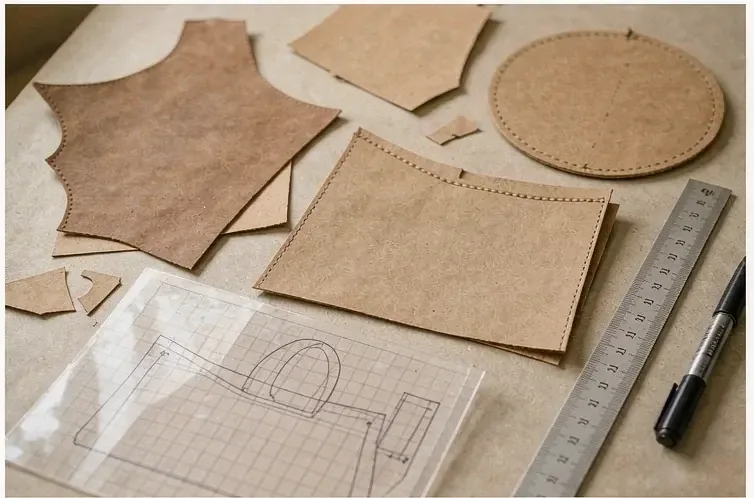
What each choice costs, honestly stated
| Choice | Effect on unit cost | Effect on calendar | Where it bites |
|---|---|---|---|
| Metal-free tanning route | Higher hide cost, narrower colour range | +10-15 days at the tannery, ahead of sampling | Selection is finite, so late switches restart it |
| Claimed recycled lining | Modest increase per metre | Paperwork rather than time | Documentation must match the shipped consignment |
| Documented batch testing | Screening cost per material | Usually parallel to development | Re-testing is needed if the material changes |
| Repairable strap attachment | Small increase in fittings count | None once designed in | Cannot be added after the first bulk |
| Recycled board and pulp trays | Near parity at volume | Tooling time for trays | Minimum run applies to formed trays |
| Consolidated despatch | Reduces landed cost | Requires earlier planning | Last-minute re-splits undo the gain |
Read that table by column rather than by row. The third column is the useful one: notice how few items actually extend our quoted calendar. Sampling stays at 6-10 working days, 12-15 for complex pieces, bulk stays at 35-50 days, and inspection stays agreed at AQL 2.5 under ISO 2859-1 before the line starts. Almost every cost sits outside those numbers, in selection and paperwork, which is another reason this work belongs early rather than late: the parts of it that touch the calendar are the parts nobody thinks to schedule.
Claims that survive review, and claims that do not
- Survives: a named material with a stated percentage and the certificate that covers the shipped consignment.
- Survives: a tannery named alongside its Leather Working Group rating and the audit date on which that rating was issued.
- Survives: a repair instruction printed on the care card, because it describes what a piece does rather than what it means.
- Survives: an honest boundary statement about which components are documented and which are still being reconciled.
- Does not survive: adjectives with no method behind them, particularly when they appear more than once on a page.
- Does not survive: any percentage quoted without its base, which is the first thing a technical reviewer tests.
- Does not survive: a claim carried over from a previous season's materials, since materials change more often than documents do.
Draft claim language after the specification is settled and only ever describe what the file supports. A sentence written first tends to grow adjectives as it meets reality, and the adjectives are exactly what gets challenged later.
How far one season can realistically go
Pick one lever per season rather than four. A label that gets the substance file right in its first drop usually gets it right every drop afterwards, because the fixture is paperwork rather than tooling. That dried-long remediation costs nothing to repeat, whereas attempting everything at once tends to produce six half-finished documentation projects.
A reasonable two-season route looks like this: first the tanning route and its textile certificates, then the presentation set, then the repairability redesign in a later drop where the pattern changes anyway. It is a slower sequence than most briefs ask for and substantially faster than nothing at all, because each step survives contact with a buyer without a second project to support it.
One caution on sequencing. Do not start with the part that photographs best. Presentation changes are visible and satisfying, and they tend to consume the attention a season had available for the less photogenic work of getting the material file straight. Reverse that order and the visible improvements in year two rest on something a reviewer can actually check, which is when they stop being decoration and start being durable.
Build the specification and the claim together
Send us the material route you want and we will return what we can document — tanning source, lining certificates, testing methods and the batch records, in writing — before your next development round starts. Request a quote.
Frequently Asked Questions
How does sustainability change what a luxury bag is made of?
It changes six specification lines: tanning route, lining content, permitted substances, repairability, presentation and shipping. Most of those decisions are made in writing rather than on the bench, and the largest effect is on calendar rather than cost. The material itself often changes less than the documentation around it.
Which choice has the largest effect on the calendar?
The tanning route, because it is decided before anything else can be selected and it carries its own tannery lead time. Metal-free articles can add 10-15 days before the hide arrives with us, and that sits ahead of the 6-10 working days of sampling rather than inside it.
Does sustainable always mean more expensive per unit?
Not across the board. Certified board and pulp trays approach cost parity at volume, and fewer shipments reduce landed cost. The genuine increases sit in tanning routes and in screening, both of which are modest beside the price of getting the calendar wrong on a seasonal drop.
What paperwork normally travels with claimed recycled content?
A chain-of-custody certificate issued against the specific consignment, together with the percentage and its stated base. Programme documentation is issued per shipment rather than annually, so an old certificate never covers a new delivery, which is a common and avoidable error at despatch. Ask for these documents when the order is placed rather than when it is ready to ship.
How should a claim be worded to survive review?
Name the material, state the percentage with its base, cite the method, and attach the certificate for the shipped consignment. Then stop. Every additional adjective beyond what the file supports becomes the thing a reviewer examines, and adjectives are far easier to challenge than numbers.
Is repairability really part of sustainability?
Yes, and it is usually the largest contributor available. Extending service life avoids a replacement purchase entirely, and nothing else on the list comes close. Specifying accessible strap fittings, standard fasteners and held spares costs little at development and cannot be retrofitted after the first bulk run.
Do vegetable-tanned leathers behave differently?
They do. Colour range, rate of patina development and finishing time all differ from chrome-tanned articles, and some finishes need a fresh adhesion result rather than an inherited one. Trials should be run early, because the route also limits what colours are achievable in a given hide selection.
What should change first in a presentation set?
Board specification and void fill. They are the heaviest lines, they are usually the easiest to substitute without touching performance, and they are decided by paperwork rather than tooling. Formed trays need tooling time and carry minimum runs, so plan those a development round earlier than the rest.
How often should materials be re-tested?
Whenever the material changes and at least once per season of supply, with results filed against the batch. A style can span several batches from different lots, and a result that covers last season's material answers a question about nobody's actual bag. Screening takes days rather than weeks, so the cost of testing early is small.
Can a small label realistically do all of this?
Yes, but one lever per season rather than all six. Documentation is the least costly to start and nothing to repeat. Then take presentation, then repairability in whichever drop changes its pattern anyway. Attempting everything at once characteristically produces six partially finished files, none of which answers a question properly when asked.
People Also Ask
What is the most effective sustainability change a small label can make?
Designing straps and closures that can be replaced with ordinary tools. It costs almost nothing at development, it cannot be added later, and extending service life avoids a replacement purchase altogether, which outweighs any single material substitution available.
Does responsible sourcing slow down sampling?
Seldom. Sampling stays at 6-10 working days and complex pieces at 12-15. What slows a season is a late change of tanning route, because selection restarts and the tannery time sits ahead of everything we quote, rather than inside it.
How do I check whether a material claim is genuine?
Ask for the certificate, the batch or consignment it covers, and the date and programme behind it. Then check whether the percentage has a stated base. Genuine claims survive those four questions comfortably; weak ones tend to answer them with adjectives instead.
Are recycled linings lower quality?
Not necessarily, but they can behave differently. Some recycled contents handle more stiffly, which changes how a lining drapes inside a structured body. Always make and inspect a trial piece rather than transferring the specification from a softer, unstructured silhouette.
What belongs on a care card?
The repair sequence and honest storage advice: how to release the strap, which closure needs attention, how to avoid crushing the shape. One card that teaches someone to keep a piece in service does more for longevity than any amount of marketing language.
Sources and further reading
Every figure on this page is either our own programme data or attributed below. Open the originals before you write them into a specification.
- Leather Working GroupLeather Working Group Runs the tannery environmental audit protocol and publishes the rating levels and validity period that should accompany any tannery reference in a specification.
- ECHA — REACH Annex XVIIEuropean Chemicals Agency Maintains the restrictions on substances in articles placed on the European market, which material declarations are written to answer.
- ISO — standards catalogueInternational Organization for Standardization Publisher of ISO 11644 finish adhesion, ISO 105 colour fastness, ISO 3376 tensile strength and ISO 2859-1 inspection sampling.
- CPSCU.S. Consumer Product Safety Commission Administers CPSIA requirements and third-party testing expectations for children's products, which occasionally catches very small bag formats.
- Textile ExchangeTextile Exchange Steward of recycled content standards and the chain-of-custody documentation issued per consignment rather than per year.