How Small Luxury Bag Brands Compete on Craft: Six Specification Choices, Answered in the Order a Buyer Notices Them
Small luxury bag brands compete on craft by specifying what larger houses standardise away: substance in millimetres, stitch density in stitches per inch, edge coats counted, substrate named rather than finished. Six specification choices carry most of the difference a client can feel, and none of them requires volume to achieve — only a written tolerance. This guide works through them as six questions, in the order a buyer notices them, and closes with the time a craft-led programme actually takes from brief to shipment.
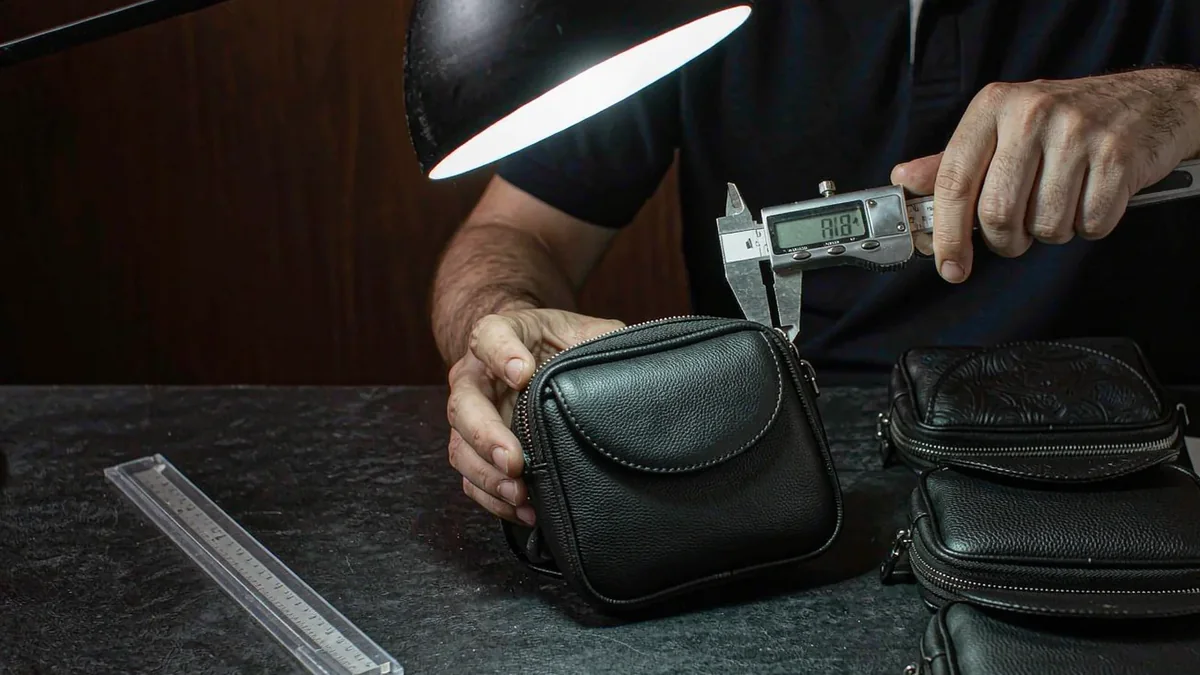
What Does Competing on Craft Actually Mean?
Competing on craft means specifying the things a client can feel and a photograph cannot show: the resistance of a closure, the weight distribution of a handle, the way an edge feels under a thumb. It is a specification strategy rather than a marketing one, and it is available to a small line because none of the six choices depends on volume.
The alternative is competing on recognition, which needs archive depth a young house does not yet have, or on price, which a small line cannot win against scale. Craft is the one axis where the advantage sits with whoever writes the tighter tolerance, and a small house can write a tighter tolerance than a large one can police across seven lines at once.
That is the whole argument, and it is worth stating plainly because it is often dressed up as something more romantic. The six choices below are ordinary specification decisions. Written tightly and held at inspection, they produce the impression clients describe as expensive without being able to name a single component.
Which Specification Shows First in the Hand?
Weight distribution shows first, within about two seconds of lifting the piece, and it is decided by handle substance and attachment rather than by the leather. A handle carrying 2 kg repeatedly needs 1.4 mm substance, a folded or turned edge, and a reinforcement panel behind the leather where it meets the body.
Most handle complaints trace back to substance rather than to stitching, which is why the specification should state it as a number. A handle that feels right on a sample bench will feel right on a shoulder, and a handle that feels thin will not be rescued by a better thread or a denser seam.
- Handle substance at 1.4 mm for a mid-size piece, rising with the target contents rather than with the silhouette.
- Folded or turned edge on the handle, never a raw painted edge, because the grip is the highest-contact point on the bag.
- Reinforcement panel behind the attachment, so load spreads into the body instead of pulling at two stitches.
- Attachment fittings in solid brass wherever the handle is load-bearing, not a plated casting.
- Drop measured from the handle apex to the top edge of the body in centimetres, with a stated tolerance.
- Weight recorded on the approved sample and held as the reference for the bulk run.
How Does Stitch Density Read as Quality?
Stitch density reads as quality because it is the most legible sign of how long a seam took. Eight to nine stitches per inch with 0.45 mm bonded nylon 69 is the range most fine work sits in. Below seven, the seam line loosens visually and the fold wears earlier, and buyers notice both.
Density alone is not enough. Tension has to match on both faces, or the seam puckers on one side and the piece reads as machine-set even at nine stitches per inch. The tolerance is therefore a pair rather than a figure: density plus tension, checked together against the approved sample.
This is also the specification a buyer finds first when they turn a bag over, which makes it the least costly item on this list to get right and the most expensive to get wrong.
Why Does Edge Work Separate Small Houses From Large Ones?
Edge work separates houses because it is the slowest operation on the bench and the first place a schedule gets squeezed. Four coats, each flashed off at 60 °C for 8 minutes, with 320-grit sanding between coats two and three, takes time that a large seasonal calendar rarely allows.
The result is predictable. Two coats look acceptable under studio light, pass a quick visual check, and then chip at the corner where the gusset folds. A chipped corner undoes the work of a good panel, and no amount of marketing puts it back.
| Edge stage | What it does | What skipping it costs |
|---|---|---|
| Coat one | Seals the fibre and raises the nap | The edge drinks paint and never fills |
| Coat two | Builds the body of the edge | The fibre line shows through the gloss |
| Sanding | 320-grit between coats two and three | Every later coat magnifies the previous ridge |
| Coat three | Levels the surface to the panel | The edge sits proud and catches on fabric |
| Coat four | Brings the edge to final gloss | The finish dulls within weeks of handling |
| Final seal | Applied after inspection, not before | Inspection approves a finish the client never gets |
Can a Small Line Specify Hardware the Way a Large One Does?
A small line can specify hardware just as tightly, and usually should, because hardware is the component a client touches most often. The constraint is not the specification but the tooling: a custom plate or clasp carries a cost that has to be spread across a run before it makes sense.
The working answer is to specify tightly on catalogued components and reserve custom work for the one or two pieces that carry the line's identity. Everything else can be held to a written standard without a tooling commitment.
- Substrate
- Brass bar stock against zamac die-cast, decided per component rather than per style.
- Plating thickness
- Read by XRF and recorded in micrometres, commonly 0.15-0.3 µm over a nickel barrier.
- Corrosion
- Neutral salt spray to ISO 9227: 24 hours standard, 48 hours for antique finishes.
- Cycle floor
- 5,000 open-close operations written into the pack for every load-bearing closure.
- Chemical limits
- Nickel release under REACH Annex XVII entry 27; lead under CPSIA for the US.
- Tone match
- Clasp, feet and slides agreed against one master sample under retail lighting.
Two components repay the tightest specification: the closure and the feet. The closure because a client operates it every single day, and the feet because they absorb the contact the base panel should never have to meet. Everything else tolerates a wider band without a buyer noticing, which is why specification effort is best concentrated rather than spread evenly across the piece.
Where Does Structure Come From When Volume Is Low?
Structure at low volume comes from specification rather than from tooling, because a small line cannot amortise a mould across fifty thousand units. The panel substance, the interlining and the way the gusset is set do the work instead, and all three are written decisions rather than capital commitments.
Panel substance
Full-grain calf at 1.2-1.4 mm holds a crease without help. Below 1.0 mm the panel needs reinforcement, and the piece starts to read as lined rather than built.
Interlining
Named by product and weight, not substituted on the bench. This single line prevents more structural complaints than any other item in the pack.
Gusset setting
Skived and stitched into the panel rather than folded, so the corner sits flat without bulk and the base keeps its line.
Base board
Removable and covered in the lining leather. It carries the load of the contents and can be replaced without opening the shell.
Protective feet
Four brass feet at 6 mm diameter, fitted as replaceable components because they are meant to wear first.
Weight reference
Recorded on the approved sample and held for bulk, so a substitution shows up as a number rather than an argument.
A piece assembled this way survives a decade because it can be taken apart. That is the structural advantage a small line can build without any volume at all, and it is the one most often traded away for a slightly faster assembly.
How Much Does the Interior Matter?
The interior matters more than its cost suggests, because it is the part a client sees every time they open the bag and the part that shows contact first. A heavy, simply laid-out interior reads as considered; a light synthetic one reads as an afterthought within a month.
Four interior lines worth writing
- Specify lining at 0.6-0.8 mm in lambskin or dense cotton twill. Keep the pocket count low, one slip pocket to the back panel plus a zipped section if clients expect one. Choose the lining tone deliberately, because dark suede hides a decade of contact and pale kid shows it in weeks. Set the lining as a separate assembly that lifts out, so it can be replaced without destroying the shell.
None of these lines are expensive, and all of them are visible the first time a client opens the piece. The interior is where a small house either confirms or quietly undoes the impression the exterior worked to build.
What Does a Craft-Led Programme Cost in Time?
A craft-led programme costs less time than its reputation suggests, provided the specification is written before sampling starts. Most of the delay attributed to fine work is really delay caused by decisions that were left open and then argued about on the bench.
- Sampling, straightforward piece
- 6-10 working days from confirmed tech pack
- Sampling, with custom-cut frame, clasp or plate
- 12-15 working days
- Bulk production
- 35-50 days from approved sample and confirmed materials
- Minimum per style
- 500 pcs per style / colourway
- Inspection standard
- AQL 2.5 (ISO 2859-1); third-party inspection available
- Shipment terms
- FOB Xiamen, with CIF and DDP available
- Programme reference
- Export experience since 2014, 7 production lines, about 200,000 pcs per month
The variables that move those figures are material confirmation and hardware tooling, in that order. A programme that confirms its tannery lot before sampling rarely needs a third round; one that leaves the lot open until the last week usually does.
How Is Craft Verified Before a Run Ships?
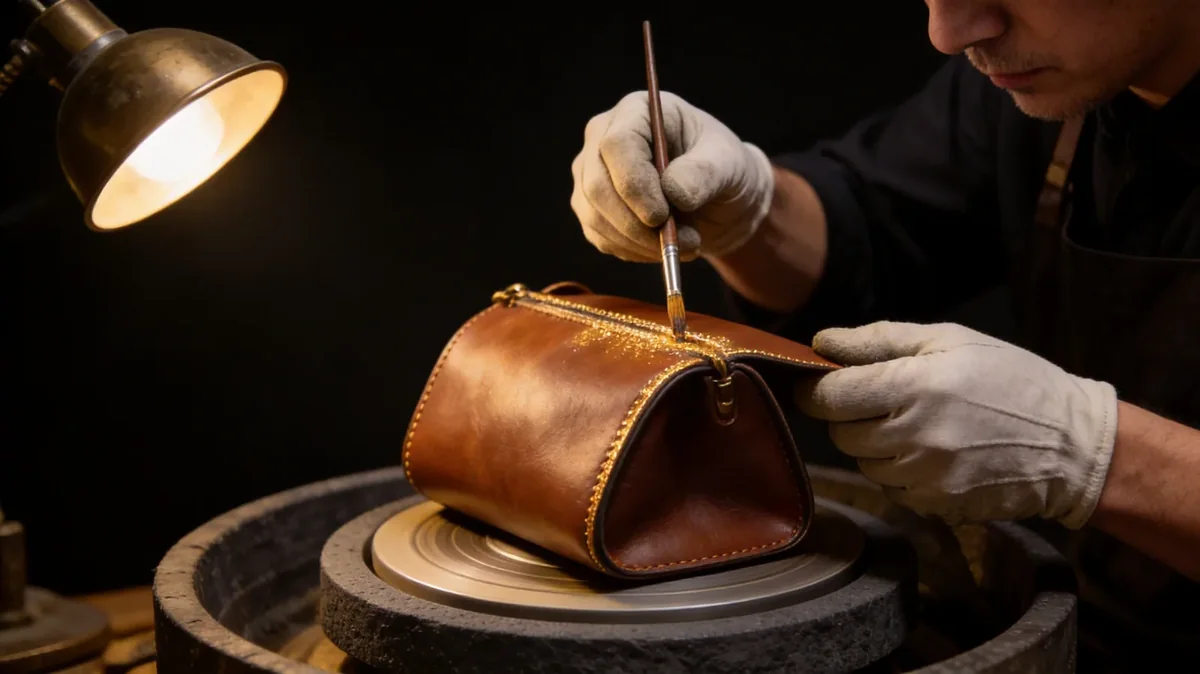
A craft claim is only as strong as the inspection that enforces it, and inspection is arithmetic too. The baseline is AQL 2.5 under ISO 2859-1 applied to every run; a craft-led line then adds its own checkpoints on top, because the standard catches the defects that would fail any bag and says nothing about the tolerances that make this one feel expensive. The two layers answer different questions, and a house that publishes only the first is publishing a quality policy rather than a specification.
- Seam tension checked on both faces against the approved sample, not stitch density counted on one.
- Edge gloss read under a raking light at the angle where a skipped sanding stage shows as a ridge.
- Plating thickness pulled by XRF on each hardware lot, with the reading filed beside the micrometre figure in the pack.
- Unit weight compared against the recorded reference, since a substituted interlining shows up as a number before it shows up as a crease.
- Closure resistance tested at the bench and by cycle count on the sample: 5,000 open-close operations for every load-bearing piece.
- Photographs of the approved sample and the bulk sample side by side under the same lamp, kept with the run record.
Those six lines are what a client is actually buying when the word craft appears on a page, and they are also the least costly lines in the programme: none adds a component, and each one replaces an argument after delivery with a measurement before it. When a small house is asked why its inspection record runs longer than a competitor's, the honest answer is that the competitor is inspecting for failure while this house is inspecting for the specification — and only one of those two records can be handed to a buyer who asks to see it.
When Does Competing on Craft Stop Working?
Competing on craft stops working when the specification is tighter than the price position can carry. Four coats, solid brass and a removable board are defensible at a certain retail tier and indefensible at another, and a small house that ignores that arithmetic ends up with a beautiful piece nobody can afford to repeat.
It also stops working when craft becomes a substitute for identity. A well-made anonymous bag competes with every other well-made anonymous bag, and the contest then turns on price, which is the outcome the craft strategy was supposed to avoid. The Luxury Market & Trends hub follows how buyers are weighing construction against identity this season, and the sampling route page sets out where the rounds actually go.
Building a craft-led line at 500 pcs per style?
Send the silhouette, the material and the retail position, and we will return a specification with substrate, edge build and inspection plan, plus a 6-10 working days of sampling window and a 35-50 day bulk timeline. Start at /contact-quote/.
Frequently Asked Questions
What does competing on craft mean for a small luxury bag brand?
It means specifying the things a client can feel and a photograph cannot show: closure resistance, handle weight distribution, edge feel. It is a specification strategy rather than a marketing one, and it is open to a small line because none of the six choices depends on volume.
Which specification does a client notice first?
Weight distribution, within about two seconds of lifting the piece. It is decided by handle substance and attachment rather than by the leather, which is why a 1.4 mm handle with a folded edge and a reinforcement panel outperforms a denser seam on a thinner handle.
Why does stitch density matter so much to buyers?
Because it is the most legible sign of how long a seam took. Eight to nine stitches per inch with 0.45 mm bonded nylon 69 is where fine work sits. Below seven, the seam line loosens visually and the fold wears earlier, and buyers read both as machine-set.
How many coats of edge paint should a fine bag have?
Four, each flashed off at 60 °C for 8 minutes, with 320-grit sanding between coats two and three. Two coats look acceptable under studio light and then chip at the corner where the gusset folds, which is the first place a buyer looks.
Can a low-volume line specify hardware tightly?
Yes, and it should, because hardware is the most-touched component. The constraint is tooling, not specification. Specify tightly on catalogued components and reserve custom plates and clasps for the pieces that carry the line's identity.
Where does structure come from without high volume?
From specification rather than tooling: panel substance at 1.2-1.4 mm, interlining named by product and weight, a skived gusset and a removable base board. All four are written decisions rather than capital commitments.
How much does the interior affect perceived quality?
More than its cost implies. It is the part a client sees every time they open the bag and the part that shows contact first. Heavy lambskin or dense twill at 0.6-0.8 mm reads as considered; light synthetic abrades within a month.
Does a craft-led programme take longer to produce?
Less than its reputation suggests. Sampling runs 6-10 working days for a straightforward piece and 12-15 where a frame, clasp or plate is custom-cut. Most delay blamed on fine work comes from decisions left open and argued about on the bench.
What is the minimum for a craft-led first run?
500 pcs per style / colourway. That covers pattern setting and any tooling while keeping the run small enough to protect scarcity. Bulk then runs 35-50 days from approved sample and confirmed materials.
When should a small house not compete on craft?
When the specification is tighter than the price position can carry, or when craft becomes a substitute for identity. A well-made anonymous bag competes on price, which is the outcome the strategy was meant to avoid.
What does solid brass add to the unit cost?
Machining a closure and frame from brass bar stock rather than casting in zamac typically adds around USD 4.80 to the unit cost of a mid-size bag, before plating specification. The return appears in weight, closure sound, wear pattern and later retention.
People Also Ask
How can a small brand compete with luxury houses?
By specifying what large houses standardise away: substance, stitch density, edge coats, substrate. Craft is the one axis where a small line can write a tighter tolerance than a large one can police.
What makes a bag feel expensive?
Weight distribution in the handle, the resistance of a machined closure, and an edge built in four coats. All three are specification decisions rather than styling decisions.
Do clients really check stitch density?
Yes, usually by turning the piece over. It is the most legible sign of how long a seam took, and it is the least costly specification on the pack to get right.
Is custom hardware worth it for a small line?
For the one or two pieces carrying the line's identity, yes. For everything else, hold catalogued components to a written standard instead of a tooling commitment.
How important is the lining in a luxury bag?
Very. It is seen every time the bag is opened and shows contact first. Heavy lambskin or dense twill at 0.6-0.8 mm reads as considered for a decade.
Sources and further reading
Every figure on this page is either our own programme data or attributed below. Open the originals before you write them into a specification.
- ISO — International Organization for StandardizationISO Publisher of ISO 2859-1 sampling procedures used in inspection plans, plus ISO 3376 for tensile strength and ISO 11644 for finish adhesion of leather.
- European Chemicals AgencyECHA Administrator of REACH, including Annex XVII entry 27 on nickel release from metal components in prolonged contact with skin.
- CPSCU.S. Consumer Product Safety Commission The authority behind CPSIA limits on lead in substrates and coatings for consumer products sold into the United States.
- California Office of Environmental Health Hazard AssessmentOEHHA The authority behind California Proposition 65, which governs warning requirements for listed substances in leather, lining and metal components.
- Sourcing JournalSourcing Journal Trade reporting on material sourcing, tannery audits and the cost structure behind premium leather goods programmes.