Why Heritage Luxury Bag Silhouettes Still Sell: Five Construction Reasons, Compared Line by Line With Seasonal Shapes
Heritage bag silhouettes still sell because they were engineered around a load path that has not changed: the same few items, carried the same way, in the same hand. Five construction reasons explain their durability in the market — settled proportion, repairable assembly, honest material, load-bearing hardware and a patina that reads as age rather than damage. This guide compares a permanent silhouette against a seasonal shape line by line, then sets out which kind of programme each approach actually suits.
Why a Settled Silhouette Outlives a Seasonal One
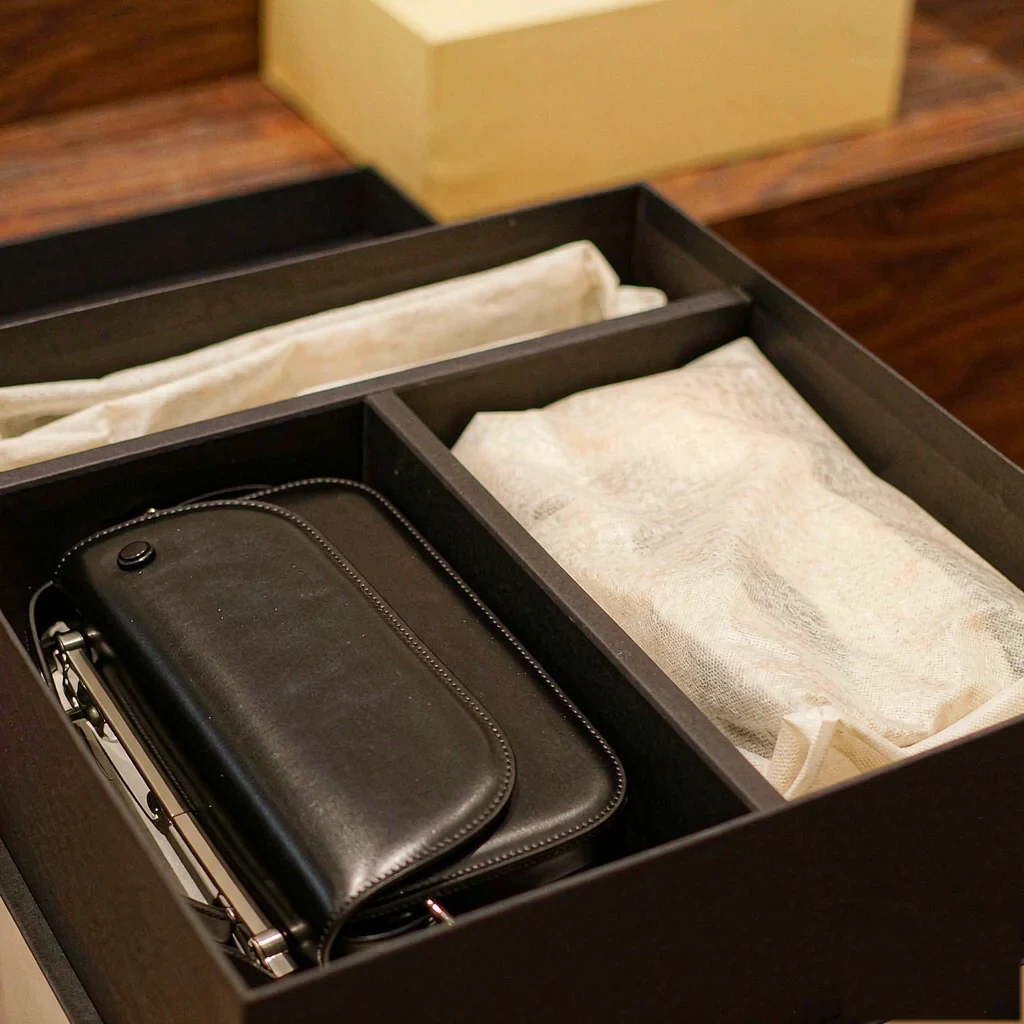
A heritage silhouette keeps selling because its proportion was solved once and then left alone. The width, the depth and the handle drop were tuned against real use over years, not against a forecasting meeting, and the pattern that resulted carries load in a way a client recognises without being able to describe it.
A seasonal shape is engineered against a different constraint: novelty inside a fixed development window. That constraint is legitimate, but it rewards the drawings that photograph well rather than the ones that carry well. Over a decade the two design logics diverge, and the divergence shows up first in how the piece looks after it has been used.
The commercial consequence is that a permanent silhouette can be re-cut season after season with the same patterns, the same tooling and the same inspection plan. A seasonal shape has to be re-engineered every time, which is where the hidden cost of trend-led lines accumulates.
Permanent Shape Against Seasonal Shape, Line by Line
The comparison below is not an argument against seasonal work. Plenty of houses need both. It is an argument for knowing which line you are running, because the specification, the tooling and the inspection plan differ in ways that only become visible after approval.
| Decision line | Permanent silhouette | Seasonal shape | What it changes |
|---|---|---|---|
| Development | One pattern, refined across seasons | New pattern and new setting each drop | Tooling is amortised once rather than rebuilt each cycle |
| Material | Full-grain at 1.2-1.4 mm, lot held | Whatever the mood board wants, often thinner | Thinner panels need interlining, and patina suffers |
| Hardware | Solid brass, substrate named, thickness recorded | Cast, catalogued, finish named only | Load path and wear pattern differ within a season |
| Edge | Four coats, flash-off at 60 °C | Two to three coats to hold the calendar | Corners round earlier and chip at the gusset fold |
| Inspection | One AQL 2.5 plan reused each run | New plan, new failure modes each drop | Learning does not accumulate between seasons |
| Repair | Removable board, screwed plates | Bonded interiors, riveted plates | The piece either gets repaired or ends |
Read the last column. The pattern that emerges is that a permanent silhouette accumulates learning, while a seasonal one spends it, and the difference compounds quietly over several years rather than showing up in a single season's numbers.
There is a second pattern in the table that is easy to miss. Every row where the seasonal column looks faster is a row where the permanent column looks cheaper three years later. Speed and cost are not opposites here; they are the same decision read over different horizons, which is why the two lines need separate calendars rather than a shared one.
Reason One: Proportion That Was Solved Once
Proportion is the first reason. A settled silhouette carries a width, a depth and a handle drop that were arrived at against real use, and the three figures sit in a relationship that a client reads as correct before they have thought about it at all.
The figures themselves are unremarkable. A mid-size structured bag tends to settle around 26-28 cm at the base, 9-11 cm in depth and a handle drop of 10-12 cm. What matters is that the three were tuned together, over years, by people who handled the returns.
A new shape has to discover that relationship in a single development cycle, and usually discovers it after the first delivery rather than before it. This is why so many first-season shapes get quietly re-proportioned in their second run, and why the second run is almost always better to carry.
Reason Two: An Assembly a Bench Can Open Again
The second reason is repairability, and it is the one that most directly determines whether a piece survives into a second life on the secondary market. A bag built with a removable base board, a screwed closure plate and a turned rather than bonded gusset can be opened and put back together by any competent bench.
- Base board removable and covered in the lining leather, so the interior can be replaced without destroying the shell.
- Closure plates screwed rather than riveted, which is the single decision that makes a worn closure replaceable.
- Gusset turned and stitched into the panel rather than bonded, so a failed seam can be unpicked and re-set.
- Handles attached with a reinforcement panel behind the leather, because the handle is the highest-load point on the bag.
- Lining set as a separate assembly that lifts out, rather than glued directly to the outer shell.
- Feet fitted as replaceable components, since they are designed to wear and should not take the base with them.
None of these add meaningfully to unit cost. Together they decide whether a bag worth keeping can be kept, which is the precondition for any resale value at all. A piece that cannot be opened is a piece that gets replaced.
The trade-off is real, though. A removable board and a screwed plate take longer to assemble than a glued interior and a riveted fitting, and on a short seasonal run that extra time is difficult to defend. This is precisely why the repairability decision belongs with the programme decision and not with the individual style.
Reason Three: Material Honest About Its Age
The third reason is material honesty, by which we mean leather that ages in a way the brief predicted. Vegetable-tanned shoulder at 1.4 mm darkens along the handle and the fold within roughly 12 months of regular use; chrome-tanned calf at 1.1 mm holds its tone far longer and then cracks rather than softens.
Both are legitimate. What destroys value is a brief that asks for the vegetable-tanned look and accepts a chrome-tanned panel, because the client then experiences the difference as a defect rather than as ageing. The specification has to name the tannage and the substance, and the retained panel has to prove it.
- Name the tannage in the pack, not the finish colour, because the colour says nothing about how the panel ages.
- Write substance in millimetres with a tolerance the bench cannot stretch: 1.2-1.4 mm, not 'about 1.3'.
- Require one sealed retained panel per lot, held 24 months, for comparison under the same light.
- File the tannery audit reference with the lot, naming the site, the audit date, the status and the expiry.
- Record substance at goods-in, before hides are released to cutting, never reconstructed afterwards from memory.
Reason Four: Hardware That Carries Load
The fourth reason is hardware, and specifically whether substrate and process are named or only the finish. A closure machined from brass bar stock and a closure cast in zamac can carry the same finish name and the same plating specification, and behave entirely differently under ten years of daily opening.
- Substrate
- Brass bar stock against zamac die-cast, decided per component rather than per style.
- Plating thickness
- Read by XRF and recorded in micrometres, commonly 0.15-0.3 µm of gold tone over a nickel barrier.
- Corrosion
- Neutral salt spray to ISO 9227: 24 hours as standard, 48 hours for antique finishes.
- Cycle test
- A floor of 5,000 open-close operations written into the pack for every load-bearing closure.
- Chemical limits
- Nickel release under REACH Annex XVII entry 27; lead under CPSIA for the United States.
- Tone match
- Clasp, feet and strap slides agreed against one master sample under retail lighting.
Heritage pieces almost always specified substrate by name, because the options were limited and the consequences were visible. That habit is worth recovering, and it costs a line of text in a specification.
Reason Five: Patina That Reads as Age
The fifth reason is patina, which is not a finish but a consequence. A panel that darkens along the fold, a handle that softens under the grip and a brass clasp that loses its lacquer in the right places all read as age. The same effects in the wrong places read as damage.
Where ageing helps
The grip of a handle, the fold of a gusset, the contact face of a closure. These are the points a client touches, and softening there reads as use rather than wear.
Where ageing hurts
The base panel, the corners of a gusset and the edge paint. These are the points a bag rests on, and wear there reads as neglect rather than character.
The edge question
Four coats with an 8 minute flash-off at 60 °C produces an edge that ages with the panel. Two coats chip early, and a chipped corner undoes the work of a good panel.
The lining question
Dark suede or dense twill hides contact for a decade. Pale kid shows it within a month, which is why so many archive pieces look better lined in suede.
The hardware question
Unlacquered brass patinates faster than the leather around it. Specify the lacquer explicitly, or accept that the two will age out of step.
The repair question
Age only becomes character if the piece survives it. Removable boards and screwed plates are what turn ten years of use into a story instead of a bin.
Which Programme Each Approach Suits
A permanent silhouette suits a house building equity: patterns that improve each season, inspection plans that get reused, and a resale story that strengthens the launch price. A seasonal shape suits a house buying attention, which is a real commercial purpose, but it should be specified knowingly rather than by default.
If the line has to carry equity across five years, specify permanent: full-grain at 1.2-1.4 mm, solid brass with recorded thickness, four-coat edges and a removable base board. If the line has to carry a moment, seasonal work is fine, but keep the tooling separable so a trend does not become a permanent fixture of the programme.
Most houses end up running both, and the practical answer is to keep them on separate calendars. A permanent silhouette re-cut each season needs one sampling round; a seasonal shape needs two. Mixing them on one calendar is how the permanent line starts missing its own delivery window.
Running a Permanent Silhouette as a Production Programme
The operational difference is that a re-cut permanent silhouette can be sampled in 6-10 working days from a confirmed pack, while a genuinely new shape needs the full window plus a second round. Bulk for either runs 35-50 days from approved sample and confirmed materials, with inspection to AQL 2.5 (ISO 2859-1) and shipment on FOB Xiamen.
Quantity is the other variable. 500 pcs per style / colourway is the working threshold, and it is also the point at which a permanent silhouette starts to pay for its tooling across seasons rather than within one. The Luxury Market & Trends hub tracks how long-running shapes are being read by buyers this season, and the quality standards page sets out what inspection holds at volume.
The two specifications most often left vague are the same two that decide the outcome: interlining and plating thickness. Naming the interlining by product and weight takes one line. Recording plating thickness in micrometres takes one reading. Together they remove most of the disagreement that otherwise surfaces at final inspection.
Building a permanent silhouette for your line?
Send the reference, the target dimensions and the material, and we will return a specification with substrate, edge build and inspection plan, plus a 6-10 working days of sampling window and a bulk timeline at 500 pcs per style. Start at /contact-quote/.
Frequently Asked Questions
Why do heritage luxury bag silhouettes keep selling?
Because their proportion was solved once and then left alone. Width, depth and handle drop were tuned against years of real use rather than a forecasting meeting, so the pattern carries load in a way clients recognise without being able to describe it.
What is the construction difference between permanent and seasonal shapes?
A permanent silhouette reuses one refined pattern and one inspection plan across seasons. A seasonal shape needs a new pattern, new setting and new inspection plan each drop, which is where hidden development cost and new failure modes accumulate.
How much does material substance affect a bag's second life?
A great deal. Full-grain calf at 1.2-1.4 mm holds a crease without interlining and ages predictably. Below 1.0 mm the panel needs reinforcement, corners round earlier, and the patina the brief asked for never really develops.
Why should a closure plate be screwed rather than riveted?
Because a screwed plate can be replaced. The closure is the component that touches the client every single time the bag is opened, and it is the first thing to wear. A riveted plate turns a five-minute repair into a write-off.
Does a permanent silhouette cost less to develop each season?
Yes, after the first run. Tooling is amortised once, the inspection plan is reused, and learning accumulates. A seasonal shape re-spends all three, which only becomes visible when you compare several years rather than one season.
How should a house decide between the two approaches?
Choose by purpose, not taste. If the line has to carry equity across five years, specify permanent. If it has to carry a moment, seasonal work is legitimate, but keep the tooling separable so a trend does not become permanent.
What inspection standard applies to a re-cut silhouette?
AQL 2.5 under ISO 2859-1, with the same plan reused each run so results are comparable season to season. Third-party inspection is available where a retail partner wants an independent report rather than an internal one.
How many sampling rounds does a re-cut shape need?
Usually one, because the pattern is settled and the tolerances are known. A genuinely new shape needs two: the first settles proportion and hand, the second settles closure seating and edge finishing.
What quantity makes a permanent silhouette practical?
500 pcs per style / colourway. That covers pattern setting and any frame or clasp tooling, and it is the point where a shape re-cut across seasons starts paying its tooling back rather than absorbing it once.
How does repairability affect secondary-market value?
It is the precondition rather than a bonus. A piece that can be opened, relined and re-closed gets kept and eventually re-listed. A bonded assembly that cannot be opened ends its life at the first serious failure.
What does solid brass hardware add to unit cost?
Machining a closure and frame from brass bar stock rather than casting in zamac typically adds around USD 4.80 to the unit cost of a mid-size bag, before plating specification. The return shows up in weight, closure sound, wear pattern and, later, retention.
People Also Ask
What is a heritage bag silhouette?
A shape whose proportion was settled through years of real use and then kept in the collection across seasons, rather than redrawn to match a seasonal mood board.
Do classic bag shapes resell better than trend shapes?
Generally yes, because recognition supports demand and settled patterns carry fewer failure modes. The upper band of the secondary market is mostly permanent shapes.
Why do some bags age well and others look worn?
Tannage, edge build and lining tone. Leather that softens at the grip and darkens at the fold reads as character; wear at the base and corners reads as neglect.
Should a new label open with a permanent shape?
Usually. It gives the pattern time to improve, the inspection plan time to settle, and the line a resale story by the second season rather than the fifth.
How long does it take to re-cut an existing silhouette?
Around 6-10 working days from a confirmed tech pack, compared with the full window plus a second round for a genuinely new shape.
Sources and further reading
Every figure on this page is either our own programme data or attributed below. Open the originals before you write them into a specification.
- ISO — International Organization for StandardizationISO Publisher of ISO 2859-1 sampling procedures used in inspection plans, plus ISO 3376 for tensile strength of leather and ISO 9227 for salt spray corrosion testing.
- European Chemicals AgencyECHA Administrator of REACH, including Annex XVII entry 27 on nickel release from metal components in prolonged contact with skin.
- CPSCU.S. Consumer Product Safety Commission The authority behind CPSIA limits on lead in substrates and coatings for consumer products sold into the United States.
- Leather Working GroupLeather Working Group Tannery audit protocol whose reference, naming site, audit date and expiry, is filed per lot for traceability.
- Business of FashionBusiness of Fashion Trade coverage of luxury pricing, permanent collections and the commercial logic behind long-running silhouettes.