How Moisture and Climate Affect Luxury Bag QC: Humidity, Container Heat and the Faults They Create
How do moisture and climate affect luxury bag QC? They change what the inspector sees: leather held above 70 percent relative humidity for 72 hours grows mould, hardware shows plating failure only after 24 to 48 hours of salt spray, and adhesive bonds tested hot behave nothing like the same bonds tested cold. Conditioning the lot for 24 hours at 45-55 percent relative humidity and 18-22 degrees Celsius before the count removes most of the climate noise from the result and prevents the argument that follows it.
Why Climate Belongs Inside a QC Plan
Climate belongs in a QC plan because leather, adhesive, plating and board are all hygroscopic or reactive, so a piece measured in one condition can read differently in another without anything having changed about how it was made.
The practical consequence is a class of defects that appear and disappear. A dull bloom on hardware, a slightly stiff handle, a lifted edge at a fold: each can be real, or each can be the room. Without a conditioning rule, the inspector is asked to judge a material and a climate at the same time.
Two rules settle it. Fix the condition before the count, and write the condition on the report. Neither costs anything and the second one is what makes the first one defensible later.
Three Exposures and What Each One Does
Three exposures account for nearly all climate-driven faults: humid sea freight, dry heated retail, and cold winter transit ending in a warm room.
| Exposure | What it does to leather | What it does to hardware and trim | Fault the inspector then sees |
|---|---|---|---|
| Humid sea freight, 30-40 days above 70% RH | Moisture content rises past 14%, grain swells, finish turns tacky | Plating blooms, brass darkens, zinc fittings show white corrosion | Mould spots, bloom on fittings, tacky surface that picks up dust |
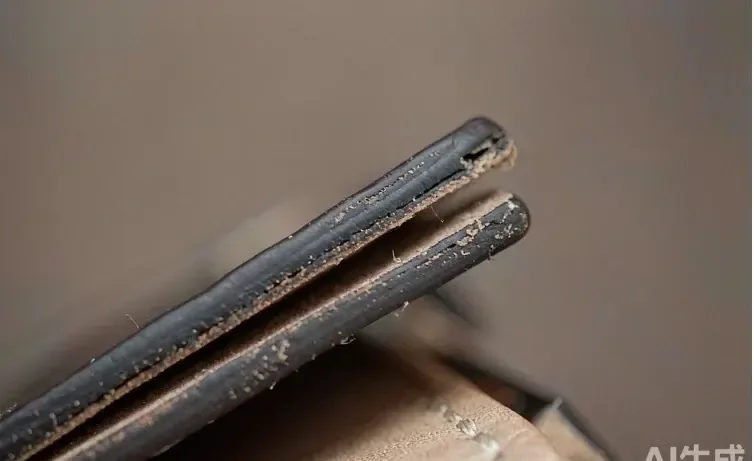
| Dry heated retail, below 35% RH | Moisture falls under 8%, handle stiffens, grain flattens | No metal effect, but thread and edge finish embrittle | Edge paint crazing at folds, stiff handle, visible crease memory |
| Cold transit into a warm room | Condensation forms on the cold surface as the piece warms | Water sits in recesses around settings and feet | Water spotting, ring marks on the base, adhesion loss at a fold |
Read the third row carefully, because it is the one that surprises people. Condensation from cold transit into a warm room produces faults that look like workmanship faults and are not, and they are almost always blamed on the bench.
Leather: Moisture Content and the Equilibrium Band
Chrome-tanned bovine leather sits comfortably at roughly 8 to 14 percent moisture content, and faults cluster at both ends of that band rather than in the middle of it.
- Comfortable moisture content
- About 8-14% for chrome-tanned bovine hides
- Storage condition used before inspection
- 45-55% relative humidity at 18-22 degrees Celsius
- Mould risk threshold
- Above about 70% relative humidity sustained beyond 72 hours
- Damp heat conditioning test
- 48 hours at 40 degrees Celsius and 90% relative humidity
- Conditioning time before the count
- 24 hours in the stated band, cartons opened and pieces separated
- Reference for coating adhesion
- ISO 11644, assessed after conditioning rather than before it
The 72-hour figure is the one worth remembering. Short humidity spikes are survivable because the material re-equilibrates; a sustained exposure is not, because mould roots into the finish rather than sitting on it.
Hardware: Salt Spray, Plating and Condensation
Hardware corrosion is the easiest climate fault to test for and the easiest to misread, because a fitting can look sound at handover and fail within a month of arriving in a coastal market.
- Neutral salt spray exposure of 24 hours screens a decorative finish; 48 hours screens one intended for coastal or humid markets.
- Plating in the 0.15-0.3 micron band survives 24 hours comfortably and usually survives 48; a flash finish often does not.
- Brass darkens rather than corrodes, so a colour change on brass is a patina question and a colour change on zinc is a failure question.
- Water sits in the recess around a setting and under a foot, which is why corrosion starts there rather than on the flat face.
- Condensation from cold transit into a warm room produces spotting that mimics plating failure and disappears on re-conditioning.
Ask for the salt spray hours on the declaration rather than for a word like resistant. Twenty-four hours and forty-eight hours are very different specifications, and only one of them is appropriate for a bag that will spend August in a humid city.
Adhesives and Edge Finish Under Heat
Adhesive bonds and edge finish are the two places where heat shows first, and both are tested rather than inspected, because neither failure is visible in a static piece.
A bond that holds at twenty degrees can creep at fifty, and a container that reaches sixty degrees internally will find any bond that was marginal at the bench. Edge finish behaves in the mirror image: it crazes when cold and softens when hot, so a fold is examined after conditioning at both ends of the range rather than at room temperature alone.
Three coats applied thin is the specification we hold, because a single thick coat looks perfect at handover and cracks at the first fold in a cold market. The difference only shows after the piece has been conditioned cold and flexed.

The Carton, the Container and Container Rain
Most climate damage arrives through the carton rather than through the bag, which is odd given how rarely the carton is specified in any detail. A bag can be packed perfectly and still arrive spoiled, and the piece of paper that decides which is the carton specification rather than the inspection report.
- Container rain: moisture condensing on the steel roof and dripping onto cartons during a day-night temperature swing.
- Board moisture: a moisture meter reading above about 14 percent on the carton means the board has already taken up water.
- Stacking in a humid hold compresses board that has softened, so the bottom carton fails first and fails visibly.
- Desiccant at roughly 5 grams per carton absorbs what gets in; it cannot dry a carton that was packed wet.
- A poly liner inside the carton costs very little and is the lowest-cost protection against container rain.
The last two lines are the whole argument. Desiccant is not a remedy for a wet carton, and the carton is where the exposure happens, so the specification belongs there rather than on the bag.
Measuring Instead of Guessing
Three instruments turn climate from an opinion into a number, and all three are inexpensive enough that there is no reason to argue without them.
Thermo-hygrometer data logger
Placed inside one carton per container, set to log at hourly intervals, and downloaded on arrival. It answers whether the exposure happened rather than whether it might have, and it is the only evidence a freight claim will accept.
Pin moisture meter for board
Reads carton moisture directly in percent. A reading above about 14 percent at destination means the board took water in transit, which shifts the conversation from the bag to the shipment.
Conditioned inspection room
A room held at 45-55 percent relative humidity and 18-22 degrees, with the logger visible on the wall and the reading written onto the report. Without it, every sensory judgement is suspect.
One logger per container is the whole cost. Downloaded on arrival it produces a curve that either supports a claim or ends one, and it is the difference between a conversation about evidence and a conversation about recollection.
Conditioning Before the Count: 24 Hours That Settle Arguments
Conditioning is the rule that a lot rests in the stated band for 24 hours with cartons opened and pieces separated before any piece is examined, and it removes most climate noise from the result.
The conditioning rule in six lines
- Hold the lot at 45-55% relative humidity and 18-22 degrees Celsius for 24 hours before inspection.
- Open the cartons and separate the pieces; a stacked lot conditions unevenly and slowly.
- Record the reading on the report, so the condition the count was made in is part of the evidence.
- Examine edges and folds after conditioning at both the cold and the warm end of the range.
- Log one carton per container hourly, and download the curve on arrival at destination.
- Never inspect a lot straight off a truck: it has not equilibrated and the count will not hold.
The last line is the one that gets broken, usually because the calendar is tight. A count made on goods that arrived that morning is a count that will be re-litigated, and the second count never improves on the first.
Reading the Logger Curve on Arrival
A downloaded curve answers three questions in order: did the exposure happen, how long did it last, and did it coincide with anything else in the shipment.
Start with the duration rather than the peak. A single hour at 85 percent relative humidity is noise; thirty consecutive hours is an event, and the 72-hour mould threshold is counted from the start of the sustained period rather than from the highest reading. Then look at the temperature trace on the same axis, because the dangerous moment is not the humid hour but the hour when a warm humid day is followed by a cold night. Plot both on one set of axes and the crossing point is usually where the damage began.
Finally, compare the arrival date on the curve with the arrival date on the cartons. A lot that sat on a quay for four days before collection has a signature, and it is a signature that belongs to the freight file rather than to the bench.
Where the curve shows a sustained exposure, the sensible response is to re-condition and re-count rather than to argue. Twenty-four hours in the band will separate what the climate did from what the construction did, and the count made afterwards is one both sides can accept.
Where Climate Sits in the Rest of the Programme
Climate rules sit inside the inspection clause rather than beside it, because they change what the count concludes and not merely how the goods were stored.
The surrounding terms are unchanged: MOQ 500 pcs per style and colourway, sampling in 6-10 working days and 12-15 for complex constructions, bulk in 35-50 days, inspection at AQL 2.5 under ISO 2859-1, and handover on FOB Xiamen terms. Export experience on this programme runs since 2014 across 7 production lines with about 200,000 pcs per month of capacity, delivered through our validated partner factory Quanzhou Yingming Bags.
The economics are not subtle. Reworking one closure on a piece that has already reached a customer costs around USD 4.80 in parts and bench time before freight, and a returned carton costs considerably more than either, which is why the logger is worth more than the argument it prevents.
Words like moisture resistant and suitable for humid markets cannot be tested. Twenty-four hours of salt spray, 48 hours at 40 degrees and 90 percent relative humidity, and a storage band of 45-55 percent can all be measured, and measured specifications are the only ones that survive a disagreement.
Put the climate clause in writing
Tell us the destination markets and the transit route and we will return the conditioning rule, the salt spray hours and the packing specification before bulk begins. Request a quote.
Frequently Asked Questions
How does humidity affect leather handbag inspection?
Leather takes up and releases moisture, so the same piece reads differently in different conditions. Above roughly 14 percent moisture content the grain swells and the finish turns tacky; below about 8 percent the handle stiffens and edges craze at folds.
What relative humidity should a lot be stored at?
Between 45 and 55 percent, at 18 to 22 degrees Celsius. That band keeps chrome-tanned bovine leather near the middle of its comfortable moisture range and is the condition the inspection report should record.
When does mould become a real risk?
Above about 70 percent relative humidity sustained beyond 72 hours. Short spikes are survivable because the material re-equilibrates, but a sustained exposure lets mould root into the finish rather than sit on the surface.
What is a damp heat conditioning test?
Forty-eight hours at 40 degrees Celsius and 90 percent relative humidity, used to see what a humid transit does to a finished piece before it experiences one. It is a screening test, not a prediction, and it is inexpensive to run on a handful of pieces.
How many hours of salt spray should hardware pass?
Twenty-four hours screens a decorative finish; 48 hours screens one intended for coastal or humid markets. Plating in the 0.15 to 0.3 micron band comfortably survives 24 and usually survives 48, while a flash finish often does not.
Why does hardware corrode in recesses first?
Because water sits there. The recess around a setting and the space under a foot hold condensation long after the flat face has dried, so corrosion begins in exactly the places a visual check is least likely to look.
What is container rain?
Moisture that condenses on the steel roof of a container during a day-night temperature swing and then drips onto the cartons below. It is the most common cause of carton damage that looks like a packing fault and is not one.
Does desiccant solve a wet carton problem?
No. Roughly 5 grams per carton absorbs what gets in during a normal transit, but it cannot dry a carton that was packed wet. The remedy is dry board at packing, a poly liner, and a reading from a moisture meter at destination.
What should a moisture meter read on a carton?
Board is comfortable below about 14 percent. A reading above that on arrival means the carton took water in transit, which moves the conversation from the construction of the bag to the condition of the shipment.
Why inspect edges after conditioning at both ends of the range?
Edge finish crazes when cold and softens when hot, so a fold examined only at room temperature tells you very little. Three thin coats behave well across the range; one thick coat looks perfect until it is cold and flexed.
How long should a lot rest before inspection?
Twenty-four hours at 45 to 55 percent relative humidity and 18 to 22 degrees, with cartons opened and pieces separated. A stacked lot conditions unevenly, and a lot inspected straight off a truck produces a count that will be re-litigated.
Is climate part of the inspection clause or the packing clause?
The inspection clause, because conditioning changes what the count concludes rather than merely how goods were stored. Packing specification covers the carton and liner; conditioning covers the count itself and belongs beside the AQL.
People Also Ask
What humidity damages leather handbags?
Sustained relative humidity above about 70 percent for longer than 72 hours, which lets mould root into the finish. Short spikes are survivable because the material re-equilibrates once conditions return to the band.
Why does a bag pass inspection and fail in store?
Because inspection happened in one condition and the failure happened in another. Cold transit into a warm room produces condensation spotting; dry heated retail embrittles edges that were sound at the bench.
What is the right storage condition before QC?
Roughly 45-55 percent relative humidity at 18-22 degrees Celsius, held for 24 hours with cartons opened. The reading belongs on the inspection report so the condition of the count is part of the evidence.
How is hardware corrosion tested?
By neutral salt spray exposure, commonly 24 hours for a decorative finish and 48 hours for one intended for humid or coastal markets. Plating thickness in the 0.15-0.3 micron band is what typically determines which passes.
Can desiccant prevent moisture damage in transit?
It absorbs what enters a normally packed carton, at roughly 5 grams each, but it cannot dry cartons packed wet. Dry board at packing, a poly liner and a data logger are what actually prevent and prove the outcome.
Sources and further reading
Every figure on this page is either our own programme data or attributed below. Open the originals before you write them into a specification.
- ISO — International Organization for StandardizationISO Publisher of ISO 2859-1 sampling and ISO 11644, the coating adhesion test referenced for finished leather after conditioning.
- Leather Working GroupLeather Working Group Tannery audit protocol behind hide identification and the environmental performance of the leather supply chain.
- ISTAISTA — International Safe Transit Association Transit testing protocols covering the conditioning and drop sequences used to screen packing against real distribution environments.
- SATRASATRA Technology Centre Independent testing organisation for leather, footwear and accessories, including damp heat and flex testing of finished materials.
- FashionUnitedFashionUnited Industry data on returns, freight claims and the commercial cost of climate damage in accessories distribution.