Luxury Bag QC Documentation for Buyers: The Seven Records to Hold Before a Shipment Is Released
What QC documentation should a luxury handbag buyer hold before a shipment is released? Seven records: the AQL 2.5 inspection report, the coded defect library, photographic evidence, the retained sealed reference pieces, the lot traceability record, the material declarations from the tannery, and the signed release note. Most buyers hold four of the seven, and the missing ones are nearly always the same two — the retained reference and the traceability record. Both take minutes to create at the bench and neither can be reconstructed once a container has gone.
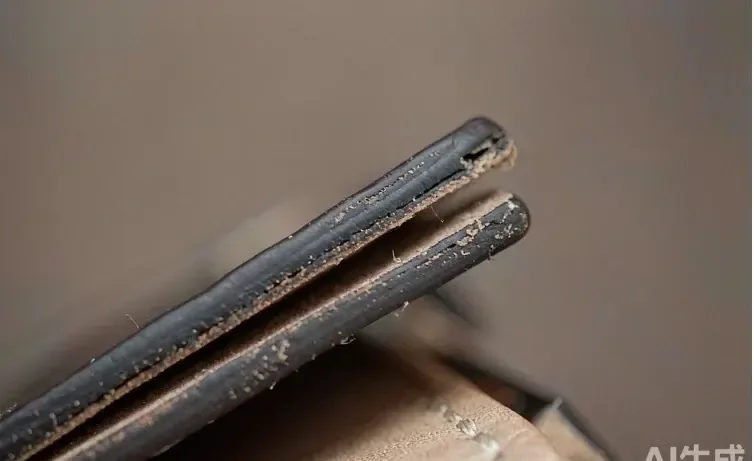
The Seven Records Every Buyer Should Hold
QC documentation is the set of records that lets two parties reconstruct what was made, what was checked and what was agreed, without either of them standing in the room together.
The test for any single record is blunt: if the question is asked eleven months after delivery, can this document answer it? Anything that cannot is filing rather than documentation, and filing is what accumulates in folders while the answer stays missing.
- The AQL 2.5 inspection report, naming the standard, the level, the sample size and the count.
- The coded defect library agreed before bulk, with each named fault assigned a class.
- Photographic evidence, including scale-referenced images of every defect found.
- Retained sealed reference pieces, held by each side, opened only to settle a dispute.
- The lot traceability record, linking a finished piece back to a week and a line.
- Material declarations from the tannery and the hardware finisher, covering restricted substances.
- The signed release or concession note, stating what was accepted and on what basis.
Three of these are produced during inspection, two during development and two at handover. Records produced at development are the ones most often skipped, because at that stage nobody is yet arguing about anything — which is precisely why they are worth generating then.
What an AQL 2.5 Inspection Report Must Contain
An AQL 2.5 inspection report carries evidential weight only if it names the standard, the inspection level, the sample size and the resulting count, because the absence of any one of those makes its conclusion unusable.
- Standard and scheme
- ISO 2859-1, single sampling, normal inspection, written out rather than implied
- Lot and sample size
- Lot quantity stated, code letter given, sample size drawn from the table
- Accept and reject numbers
- At AQL 2.5 on 500 pieces: sample of 50, accept 3, reject 4
- Defect count by class
- Critical, major and minor counted separately, with critical held at zero
- Method of drawing the sample
- Random, from finished packed goods, and recorded as random rather than presented
- Issue timing
- Report issued within 24 hours of the count closing, while the goods are still on the bench
The last two lines are the ones that decide disputes. A sample that was presented rather than drawn carries no statistical meaning, and a report issued a week later is a report written from memory rather than from the goods.
Defect Coding: Turning an Argument Into a Count
A coded defect library assigns a four-digit reference and a class to each named fault, which removes discretion from the count and converts a disagreement about quality into a disagreement about a single number.
The convention we use puts the class in the first digit: 1 for critical, 2 for major, 3 for minor. The remaining three digits identify the fault, so 2007 is a specific plating fault and 2014 a specific edge-finish fault, and neither requires a paragraph of description to discuss.
| Code prefix | Class | Definition used | Action on discovery |
|---|---|---|---|
| 1xxx | Critical | Unsafe or unusable: closure failure, sharp burr, fragment inside the construction | Reject the lot outright, acceptance number zero |
| 2xxx | Major | Visible or functional at roughly 30 cm, or a departure from the sealed reference | Count against AQL 2.5, accept 3 on a sample of 50 |
| 3xxx | Minor | Departure from specification unlikely to be noticed in ordinary use | Count against the looser minor AQL agreed in the clause |
| 9xxx | Unclassified | Observed but not yet assigned, recorded rather than argued about on the day | Assigned within five working days, then recounted under its real class |
The unclassified band is the part most libraries omit and the part that saves the most time. Without it, an inspector who meets something unnamed either ignores it or inflates it, and both errors are permanent.
Photographic Evidence and the Retained Reference
Photographic evidence and retained reference pieces do the same job from two directions: the image records what was seen on the day, while the sealed piece records what the specification actually looked like when it was approved.
- Twelve images minimum per lot, of which at least four are shot with a scale reference in frame.
- Every defect photographed twice: once in context on the piece, once close enough to read the fault.
- Three sealed reference pieces retained per style and colourway, one held by each side and one in escrow.
- Reference pieces sealed at approval, signed across the seal, and opened only in the presence of both parties.
- Images stored against the lot code, not in a folder named after the season, so they can be found later.
Shade disputes are the reason this matters. Leather is a natural material, and a written description of a colour will never resolve a disagreement about whether the delivered hide matches the approved one. A sealed piece in a box does, in about ninety seconds.

Traceability: One Bag Back to One Week
Traceability is the record that connects a single finished piece to the week it was made, the line it came off and the hide batch it was cut from, and it is the record that turns a recall into a withdrawal of one week rather than of a season.
- Style code: the permanent reference for the silhouette, unchanged across seasons and colourways.
- Colourway code: three characters, so that black, cognac and greige never sit in one lot record.
- Week number: the production week in ISO format, which is what narrows any later action.
- Line identifier: which of the 7 production lines the piece was finished on.
- Hide batch: the tannery batch reference, which is what any material question ultimately traces to.
Assembled, the code reads like SS26-114-BLK-W32-L4-B1178: style, colourway, week, line, hide batch. It looks cumbersome and it takes about fifteen seconds to write, which is roughly one tenth of the time saved the first time it is needed.
On our programme the lot code is printed on the carton label and recorded on the inspection report, so the two documents that travel with the goods already agree with each other before anyone thinks to compare them.
Declarations That Sit Beside the Report
An inspection report counts faults in a sample and says nothing about what the bag is made of, which is why three declarations sit alongside it rather than inside it.
Tannery declaration
States the substance restrictions the hide complies with, the tannery identification used by the Leather Working Group audit protocol, and the batch references covered. Renewable annually and worth requesting per delivery rather than per season.
Hardware finish declaration
Records the plating thickness, the substrate beneath it and the nickel release position where the market requires one. Plating in the 0.15-0.3 micron band behaves very differently in wear than a flash finish, and only the declaration says which was applied.
Restricted substance statement
Covers REACH Annex XVII entries and California Prop 65 for the markets named on the order. A statement that names the markets is checkable; one that says compliant with all applicable regulations is not.
Keep the declarations in the same file as the report and reference them in it by number. When a market authority asks a question, the answer is a single folder rather than a search through correspondence.

How Long the File Is Kept, and Who Owns It
Retention is three years from final delivery on our programme, which is long enough to cover a market authority question and short enough that the file stays findable rather than becoming an archive nobody opens.
Retention rules that keep the file useful
- Keep everything three years from final delivery, then review rather than delete automatically.
- Store digitally against the lot code, with the physical reference pieces held separately and logged.
- Name an owner on each side: one person who can produce the file within one working day.
- Keep the sealed reference pieces for the life of the style, not the life of the season.
- Record every concession in writing at the time, because an unrecorded concession becomes a precedent.
- Review the defect library after each season, since a fault seen twice deserves its own code.
Ownership is the clause that is never written down and always matters. A file that two people believe the other one is keeping is a file that will not be produced on the day it is needed.
The Five Gaps Buyers Discover Too Late
Five gaps account for most documentation failures, and all five are visible in advance to anyone who looks at the file before the goods ship rather than after.
- No sealed reference piece, so a shade dispute has nothing to resolve it against.
- A report that names a conclusion but not a sample size, which cannot be checked by anyone.
- Declarations held by the tannery rather than by the brand, so they arrive weeks after the question.
- Photographs stored without the lot code, making them unfindable in the only situation that matters.
- A concession agreed by message and never written into the file, so it recurs as a precedent next season.
The cost of any one of these is not the paperwork. It is that the conversation moves from evidence to opinion, and conversations about quality that have moved to opinion are settled by whoever has the least to lose from delay.
Writing the Documentation Clause Before Bulk
A documentation clause is four sentences long: which records are produced, in what form, by whom, and within how many days of the count closing.
Stated against the rest of the programme, it sits on familiar ground: MOQ 500 pcs per style and colourway, sampling in 6-10 working days and 12-15 for complex constructions, bulk in 35-50 days, inspection at AQL 2.5 under ISO 2859-1, and handover on FOB Xiamen terms. Export experience on this programme runs since 2014 across 7 production lines with about 200,000 pcs per month of capacity, delivered through our validated partner factory Quanzhou Yingming Bags.
The arithmetic is worth one line. Reworking a single closure on a piece that has already shipped costs around USD 4.80 in parts and bench time before freight is counted, which is several times the cost of producing the seven records that would have prevented the argument.
The moment to ask for the retained reference pieces and the traceability format is the day the sample is approved. At that point they cost minutes. Asked at handover, they cost a delay, and asked after handover they cannot be produced at all.
Ask for the record set with your quote
Tell us the styles, the quantity and the markets and we will return the inspection plan, the defect library and the record set specification in writing before bulk begins. Request a quote.
Frequently Asked Questions
What QC documentation should a luxury bag buyer hold?
Seven records: the AQL 2.5 inspection report, the coded defect library, photographic evidence, retained sealed reference pieces, the lot traceability record, material declarations from the tannery and hardware finisher, and the signed release note. Most buyers hold four.
What must an AQL 2.5 inspection report contain?
The standard and scheme under ISO 2859-1, the lot quantity, the code letter and sample size, the accept and reject numbers, the defect count by class, confirmation that the sample was drawn at random from packed goods, and the issue date.
How quickly should the inspection report be issued?
Within 24 hours of the count closing, while the goods are still on the bench. A report written a week later is written from memory and from photographs rather than from the pieces, and it is far easier to dispute for exactly that reason.
What is a coded defect library?
A written list of named faults, each assigned a code and a class. We use four digits with the class in the first: 1 for critical, 2 for major, 3 for minor. It converts a disagreement about quality into a disagreement about one number.
Why is there an unclassified band in the defect library?
So that an inspector who meets an unfamiliar fault records it rather than negotiating its class at the bench. Without that band the fault is either ignored or inflated, and both errors are permanent because they change the count.
How many photographs should a lot inspection produce?
Twelve minimum, of which at least four carry a scale reference in frame. Every defect is shot twice: once in context on the piece so its position is clear, and once close enough that the fault itself can be read.
Why retain sealed reference pieces?
Because leather is a natural material and no written description of a colour resolves a shade dispute. Three sealed pieces per style and colourway, one held by each side and one back, settle the question in about ninety seconds.
What goes into a lot traceability code?
Style code, colourway code, production week in ISO format, line identifier and hide batch reference. Written together it reads like SS26-114-BLK-W32-L4-B1178, and it takes about fifteen seconds to record at the bench.
Which declarations sit beside the inspection report?
A tannery declaration covering substance restrictions and batch references, a hardware finish declaration recording plating thickness and substrate, and a restricted substance statement naming the markets covered rather than saying compliant with all applicable regulations.
How long should QC records be kept?
Three years from final delivery is the working answer: long enough to answer a market authority question, short enough that the file stays findable. Reference pieces are kept for the life of the style rather than the life of the season.
Who should own the QC file?
One named person on each side who can produce it within a working day. Ownership is the clause never written down and always matters: a file two people believe the other is keeping will not appear on the day it is needed.
What is the most common documentation gap?
The missing sealed reference piece. It is the least costly record to create, taking minutes at sample approval, and the only one that genuinely cannot be reconstructed later, which is why a shade dispute with no reference becomes a matter of opinion.
People Also Ask
What QC paperwork comes with a luxury handbag order?
Seven records: inspection report, defect library, photographic evidence, sealed reference pieces, traceability record, material declarations and release note. Three are created during inspection, two during development and two at handover.
Why does an inspection report need to name the sample size?
Because a conclusion without a sample size cannot be checked. Naming ISO 2859-1, the code letter and the count lets either party verify the arithmetic rather than argue about whether the conclusion feels reasonable.
What is a retained reference sample?
A piece sealed at approval, signed across the seal, and held by each party. It is the physical definition of the approved specification, opened only in the presence of both sides to settle a dispute about shade, grain or finish.
How do material declarations differ from an inspection report?
The report counts faults in a sample; the declarations record what the piece is made of. Sampling cannot answer a composition question, which is why tannery and hardware declarations sit alongside the report rather than inside it.
When should a buyer ask for QC documentation?
At sample approval. Retained references and the traceability format cost minutes then, cost a delay if requested at handover, and cannot be produced at all once the container has gone.
Sources and further reading
Every figure on this page is either our own programme data or attributed below. Open the originals before you write them into a specification.
- ISO — International Organization for StandardizationISO Publisher of ISO 2859-1, the sampling standard that defines code letters, sample sizes and the accept and reject numbers recorded in an inspection report.
- Leather Working GroupLeather Working Group Tannery audit protocol behind the identification used in hide and batch declarations.
- ECHAEuropean Chemicals Agency Authority behind REACH, including the Annex XVII restrictions referenced in restricted substance statements.
- CPSCU.S. Consumer Product Safety Commission Oversees consumer product safety requirements, the reference behind the critical defect class held at zero acceptance.
- Sourcing JournalSourcing Journal Reporting on inspection practice, documentation requirements and quality disputes across the accessories trade.