How Luxury Bag Brands Price for Aspiration: Ladder, Anchors and the Cost That Defends the Top Tier
Luxury bag brands price for aspiration by building a ladder rather than a single number. Three tiers, one anchor piece above what most customers will buy, and a visible gap between the entry tier and the top that is justified in material and bench time rather than in a name. The mechanism works only when the top tier is genuinely better: a full-grain body at 1.2-1.4 mm, a custom-cast closure plated at 0.15-0.3 µm, an edge built in three coats and shade held at ΔE ≤ 1.0. If the top tier is the same bag with a different ticket, the ladder collapses within two seasons.
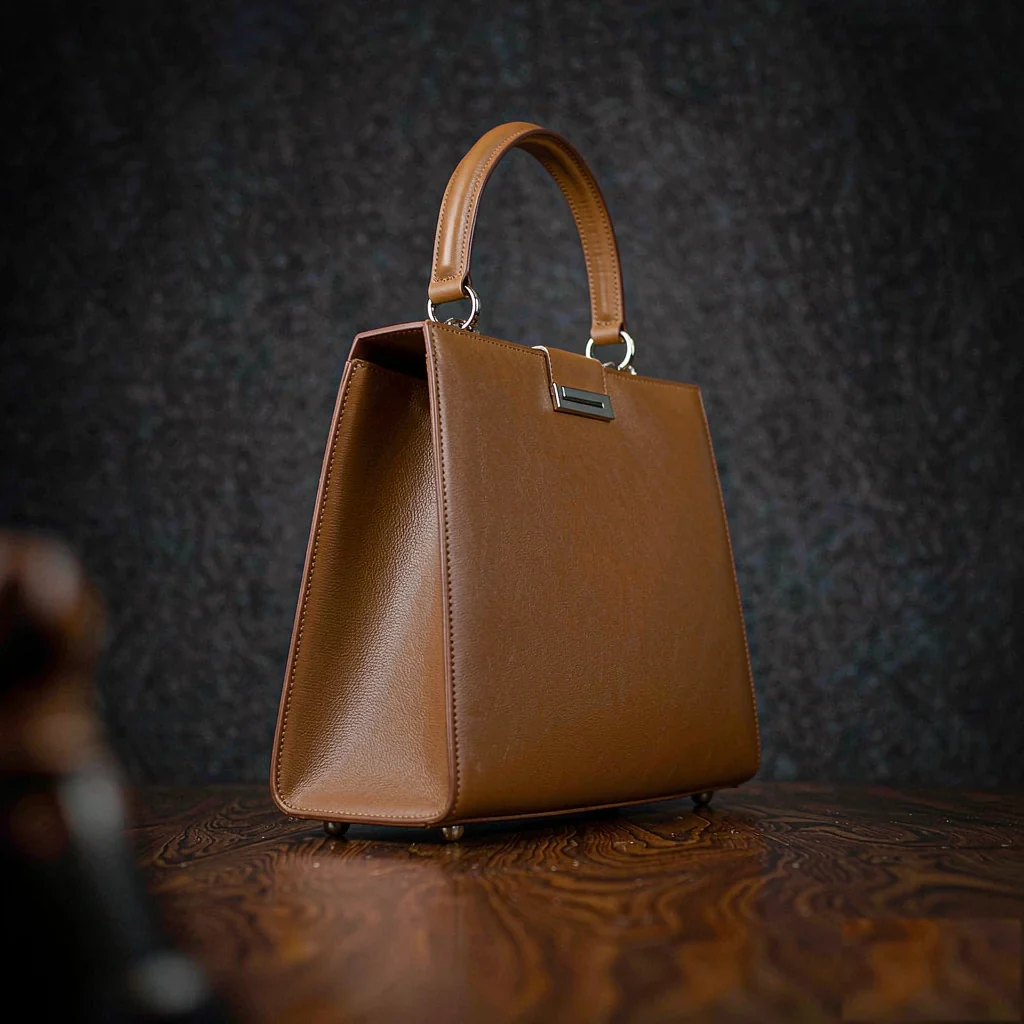
Aspiration Pricing Is a Ladder, Not a Number
Aspiration pricing is the practice of setting a line so that the price a customer pays today is not the price she is aiming at. It requires at least three rungs: an entry piece, a mid piece and an anchor piece that sits above what most buyers will ever spend. The anchor is not expected to sell in volume. Its job is to make the mid tier look considered rather than expensive, and to give the entry tier somewhere to lead.
The failure mode is well known and entirely avoidable. A house builds three tiers at three prices, and the customer discovers that the rungs differ by a lining colour and a strap. Once that is visible, the top price reads as an insult rather than as an ambition, and the whole line is re-priced by the market rather than by the house. Aspiration is a promise about construction, and it has to be kept in the object.
Case: A Five-Style House and Its Missing Middle
A house in northern Europe ran five styles: a small top-handle, a shoulder bag, a structured tote, a soft hobo and a frame evening piece. The top-handle and the frame piece sold well. The shoulder bag, priced in the middle, did not move at all, and the founder spent two seasons assuming the silhouette was wrong.
It was not the silhouette. Placed next to the top-handle, the shoulder bag was made of the same leather with the same hardware, and it cost only slightly less. A customer who wanted the house got the better piece for a modest step up; a customer who wanted a lower price found nothing in the line that spoke to her. The middle rung was not priced wrong, it was built wrong — there was no distance between it and the top.
The Three Corrections That Rebuilt the Ladder
- The shoulder bag was moved to a corrected-grain leather with a catalogue clasp, so the step down from the top-handle was visible in the hand as well as on the ticket.
- The top-handle was upgraded to full-grain calfskin at 1.2-1.4 mm with a custom-cast turn-lock and a lined interior pocket, widening the gap at the top rather than narrowing it.
- A frame piece was added above the top-handle as the anchor, made in a limited run with hand-set hardware, priced deliberately beyond the volume band.
The middle rung began to sell within a season, and the top-handle sold better than it had before. Nothing about the design language changed. What changed was that each rung now differed in something a customer could feel: the grain, the weight of the closure, the build of the edge. The anchor piece sold four units, and it made every other price in the line look reasoned.
The Three Anchors That Hold the Top Tier
Three things carry the top of a ladder, and each of them costs money that has to be visible. The first is material: a better hide, a recorded tannery lot, a finish that ages. The second is construction: more bench time in the edge and the lining, a closure that was made for this house. The third is scarcity: a run small enough that the piece cannot be found everywhere.
Cost Structure Behind an Aspirational Top Tier
What follows is the working comparison for a three-tier line built on one silhouette family. The point of the table is not the arithmetic but the direction: every step up moves money into material, hardware and bench time, and every step down removes it from somewhere a customer can detect.
| Element | Entry tier | Mid tier | Top tier |
|---|---|---|---|
| Body leather | Corrected grain, sprayed finish | Full grain 1.0-1.2 mm | Full grain 1.2-1.4 mm, tannery lot recorded |
| Closure | Catalogue clasp, stock finish | House clasp, plated to spec | Custom-cast turn-lock, mould held for the house |
| Edge build | One machine coat | Two coats, sanded | Three coats, weight formula, hand sanded |
| Lining | Brushed polyester | Cotton twill | Microsuede, matched and piped |
| Hardware trim | Stock feet and rivets | Matched finish lot | Matched lot, XRF reading filed |
| Run size | Open run | Open run | Limited run, announced in advance |
Notice that the hardware column is where the least money moves and the most perception is created. A #5 metal zip, four base feet and a plated trim set come to about USD 4.80 per piece in parts across all three tiers. The difference between the tiers is not the amount spent but whether the parts were specified at all: a stock clasp at that figure reads anonymous, a custom-cast one at the same figure reads as a signature.
Where the Money Goes on an Aspirational Piece
- MOQ per tier
- 500 pcs per style and colourway
- Sampling
- 6-10 working days, 12-15 for frame work
- First bulk
- 35-50 days from approved sample
- Re-order
- 28-35 days against a sealed reference
- Trim bill
- About USD 4.80 per piece for zip, feet and plated trim set
- Plating
- 0.15-0.3 µm from a single recorded bath
- Incoterm
- FOB Xiamen
Building the Entry Tier Without Damaging the Top
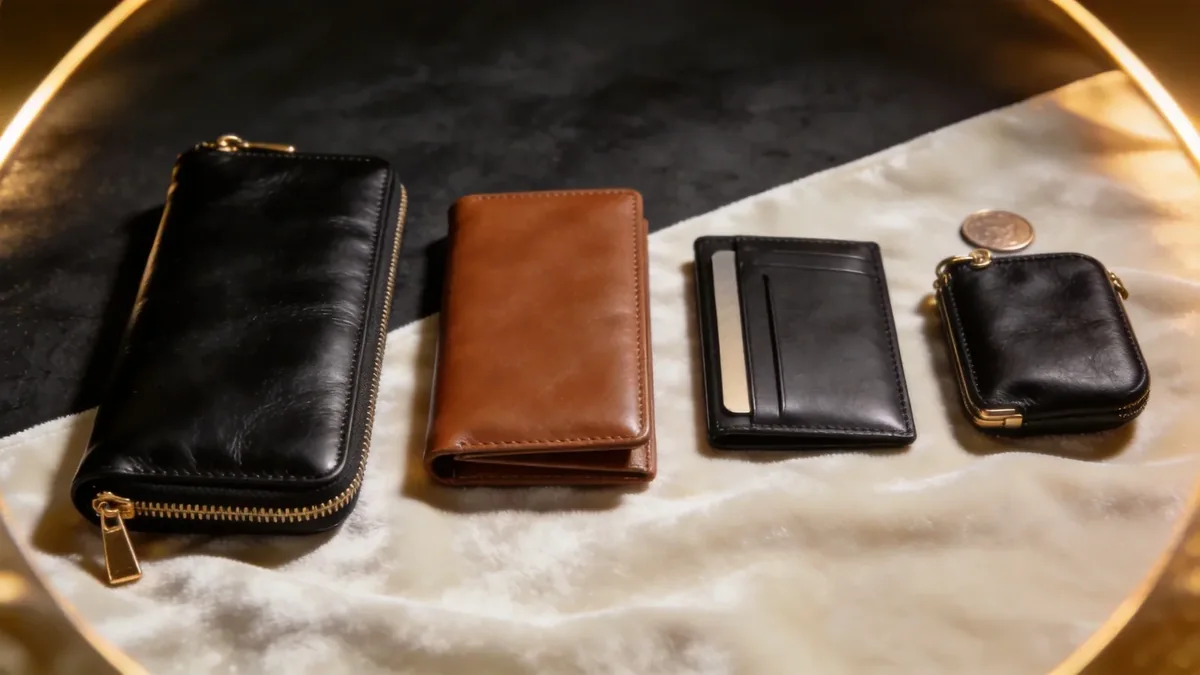
The entry rung is where most houses make their worst decision. Frightened of diluting the brand, they price the entry piece only slightly below the mid tier, which produces exactly the outcome the case study above describes: no one buys it. The entry piece has to be genuinely different, and it has to be honest about being different.
- Change the material story, not just the size: a corrected grain or a coated canvas body reads as a different proposition rather than as a lesser one.
- Keep the closure simple and stock, so the custom-cast part stays exclusive to the upper tiers.
- Hold the quality floor: the edge still gets two coats and the lining still sits flat, because the entry piece is where a first impression is made.
- Never let the entry tier use the same leather and hardware as the top tier at a lower ticket; that is the fastest way to re-price the whole line downwards.
- Inspect every tier at AQL 2.5 under ISO 2859-1, so the standard is a house constant rather than a tier variable.
The Anchor Piece and the Halo Effect
The anchor sits above the volume band and is priced to be talked about rather than bought. It is usually a frame piece, an exotic skin, or a version with hand-set hardware, and it is announced as a limited run. Its commercial function is to define what the house is capable of, which makes every price below it look measured.
Two rules keep an anchor honest. It must be demonstrably harder to make, which at this level means frame construction, hand-worked edges or a skin that requires a longer sampling window of 12-15 working days. And it must be genuinely scarce, which the 500 pcs per colourway floor makes easy to honour: a run of that size, announced once, is scarce by construction rather than by theatre.
Price Increases: Cadence, Justification and Ceiling
An aspirational ladder has to move upwards, because a static top tier stops being aspirational. The question is cadence and justification. Houses that hold a price for three years and then move it fifteen per cent in one step lose customers; houses that move it twice a year by a small amount train them to wait. The working pattern is an annual review tied to a material or construction change, announced with the change rather than on its own.
What the Numbers Look Like at 500 Pcs Per Colourway
At 500 pcs per style and colourway, a three-tier line is a commitment of nine to fifteen colourways depending on how many styles sit in each tier. That is a real inventory decision and it shapes the pricing: scarcity at the top is achieved by running fewer colourways there rather than by making fewer bags in each. The sampling window of 6-10 working days, extended to 12-15 for the frame anchor, is what allows the top tier to be revised without rewriting the whole line.
Re-order discipline matters as much as first-order discipline. At 28-35 days against a sealed reference, a house can let a colourway sell through and come back into it inside a season, which is how scarcity is maintained without holding stock. Houses that re-order everything immediately find that scarcity was never their problem — visibility was.
A Pricing Review Sequence for a Three-Tier Line
- List every style with its leather, closure, edge build and lining, and mark which of those a customer can detect at arm's length.
- Check that each tier differs from the one above it in at least two detectable ways; if it does not, the ticket gap is not defensible.
- Confirm the anchor is harder to make, not just higher priced: frame work, exotic skin or hand-set hardware.
- Set the annual review date and the change that will justify it, before the season starts rather than after it sells.
- Re-check shade at ΔE ≤ 1.0 and plating at 0.15-0.3 µm so the top tier stays physically better, not just nominally so.
- Announce the run size for the anchor and hold it; a limited run that is quietly extended costs more than the units it sells.
Ask a customer who has just bought the mid tier why she did not buy the entry tier, and then why she did not buy the top. If both answers are about price alone, the rungs are not built differently enough. If both answers mention the leather, the closure or the edge, the ladder is doing its job.
Build a three-tier line that holds its prices
If you are setting a ladder for 2026, send the silhouette family and the tier structure you have in mind. Our team will return a costed specification per tier and a sampling plan through our quotation desk.
What aspirational production looks like in practice
- Across 7 production lines running about 200,000 pcs per month, a three-tier line is built so that each rung differs in something detectable: grain, closure, edge or lining. Shade is held at ΔE ≤ 1.0 under D65 and plating at 0.15-0.3 µm from a recorded bath, so the top tier stays physically better rather than nominally so. Every tier is inspected at AQL 2.5 under ISO 2859-1, with export experience since 2014 and re-orders inside 28-35 days.
Frequently Asked Questions
How do luxury bag brands price for aspiration?
By building a ladder of three tiers with an anchor piece above the volume band, and by making sure each rung differs in something a customer can detect. The top tier carries a recorded tannery lot, a custom-cast closure and a three-coat edge; the entry tier uses simpler material and stock hardware. The gap between them is then justified by the object rather than by the name.
What is an anchor piece and does it need to sell?
An anchor is the piece priced above what most customers will spend, usually a frame bag, an exotic skin or a version with hand-set hardware. It does not need to sell in volume. Its function is to show what the house is capable of, which makes every price below it look measured rather than ambitious.
Why does the middle tier often fail to sell?
Because there is no visible distance between it and the top. When the mid piece uses the same leather and hardware as the top piece at a slightly lower ticket, a customer who wants the house simply steps up. The fix is to build the mid tier differently, not to re-price it: different grain, simpler closure, fewer coats on the edge.
How should the entry tier be built?
It should differ in material story rather than only in size — a corrected-grain or coated body reads as a different proposition, while a smaller version of the top piece reads as a compromise. Keep the quality floor: two coats on the edge, flat lining, inspection at AQL 2.5. Never give the entry tier the top tier's leather and hardware at a lower ticket.
How much does hardware contribute to a price tier?
Far less in money than in perception. A #5 metal zip, four base feet and a plated trim set come to about USD 4.80 per piece across all tiers. What separates the tiers is whether those parts were specified: a stock clasp at that figure reads anonymous, while a custom-cast turn-lock at the same figure reads as a signature held for the house.
How often should a luxury bag brand raise prices?
Once a year, tied to a named material or construction change and announced with it. A single-digit step attached to an improvement lands as craft; the same step announced on its own lands as an increase. Houses that hold a price for three years and then move it sharply lose more customers than houses that move it predictably.
What justifies a price increase on a handbag?
A change the customer can see or feel: a better hide with a recorded tannery lot, a custom-cast closure replacing a stock one, a third coat on the edge, or a piped lining. Material cost alone is a weak justification because customers do not price by input. Construction and finish improvements are the ones that survive a season of scrutiny.
How is scarcity created without holding stock?
By running fewer colourways at the top rather than fewer units in each, and by re-ordering inside a 28-35 day window against a sealed reference. At 500 pcs per style and colourway, a limited run announced once is scarce by construction. Houses that re-order everything at once usually discover that scarcity was never the constraint.
What is the minimum order for building a tiered line?
500 pcs per style and colourway. A three-tier line across three style families therefore commits nine to fifteen colourways, which is a genuine inventory decision. Sampling runs 6-10 working days, extended to 12-15 for a frame anchor, and the first bulk ships 35-50 days from the approved sample, quoted FOB Xiamen.
Does the anchor piece need different tolerances?
It needs tighter ones on the surfaces that carry the argument. Shade held at ΔE ≤ 1.0 under D65, plating at 0.15-0.3 µm from a recorded bath with an X-ray fluorescence reading per lot, and a handle load of 15 kg through 2,000 lift cycles on structured frames. The anchor is the piece a customer will compare against the archive, so it carries the strictest ledger.
How does resale value affect how you set the top price?
The top tier should stay below the resale price of the house's own archive piece. If a three-year-old bag trades above the current top ticket, the ladder is inverted and customers will buy second-hand instead of new. Tracking that gap is one of the few external checks on whether an aspirational ladder is still working.
What is the most common pricing mistake new houses make?
Setting three tickets before building three different bags. The prices are decided first and the specifications are then squeezed to fit them, which produces rungs that differ only in lining colour. The order has to be reversed: decide what each tier is made of, then let the construction set the ticket.
People Also Ask
What is aspiration pricing in luxury?
It is setting a line so the price a customer pays today is not the price she is aiming at. It requires three tiers and one anchor above the volume band, with each rung differing in material, closure or finish rather than only in the number on the ticket.
Why do luxury brands sell bags they do not expect to sell?
The anchor piece is priced to be discussed rather than bought. By showing what the house is capable of at the top, it makes every price below it look considered. Four units sold can re-price an entire ladder upwards.
How many price tiers should a handbag line have?
Three is the working number: an entry tier, a mid tier and an anchor above the volume band. Fewer than three gives aspiration nowhere to point, and more than three usually means the rungs are too close together for a customer to tell apart.
What makes a handbag worth a higher price?
Material with a recorded tannery lot, a closure cast for the house, an edge built in three coats and a lining that sits flat and matches. Those are detectable at arm's length, which is why they defend a price where a name alone increasingly does not.
Should a luxury brand ever lower its prices?
Rarely, and never on a running style. Lowering a live ticket re-prices the archive and tells existing customers that the original number was not honest. Where a line needs to reach further down, add an entry tier with a different material story instead of reducing an existing one.
Sources and further reading
Every figure on this page is either our own programme data or attributed below. Open the originals before you write them into a specification.
- ISO — International StandardsInternational Organization for Standardization Publisher of ISO 2859-1 sampling procedures and the ISO 105-X12 colour fastness method used to check dyed panels across tiers.
- Leather Working GroupLeather Working Group Tannery audit protocol referenced when a tier specifies a hide source that must remain available across consecutive drops.
- Understanding REACHEuropean Chemicals Agency Annex XVII substance restrictions applying to leather finishes, edge coatings and plated hardware on every tier.
- Proposition 65California OEHHA Substance and warning requirements for handbags and metal hardware placed on the California market.