How Kering and LVMH Influence Luxury Bag Sourcing
The two largest luxury groups shape bag sourcing long before any independent house feels it, through five cascades rather than through any single decision: batch traceability expected within 24 hours, restricted-substance testing on every material delivery, capacity booked 90-120 days ahead, a calendar that has moved from two drops a year to four to six, and audit findings that have to be closed inside 30-60 days. This page follows one audit that arrived without warning, then sets each cascade against the numbers an independent house has to hold. Our validated partner factory Quanzhou Yingming Bags, an SGS-validated site with 7 production lines and roughly 200,000 pcs per month of capacity, holding export experience since 2014, works to those figures at 500 pieces per style and colourway.
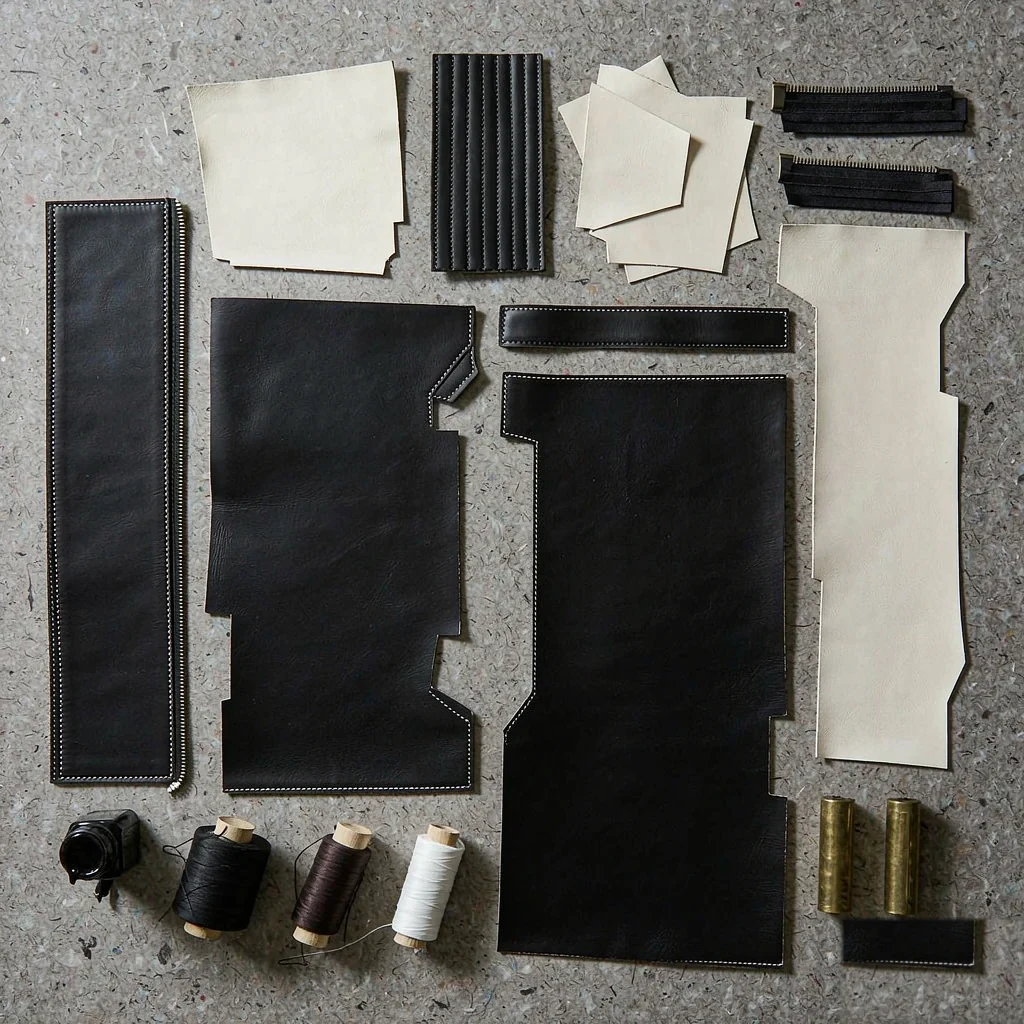
The Audit That Arrived Without Warning
A client rang on a Tuesday to say that an auditor would be at the site on Thursday, and could the batch records be ready by then. The client did not own the site and had not commissioned the audit; the requirement had come down from a group one step further up the chain, which had decided that every house in its supply network would be re-verified that quarter. Nobody had told us because nobody had thought to.
What saved the day was not a scramble. It was a habit: every material delivery is logged against a batch, every batch is linked to the pieces cut from it, and the link is written down rather than remembered. The auditor asked for a traceability path on a finished piece and got it in under twenty minutes. Two other houses in the same network were asked the same question and took three weeks.
That is how group practice reaches independent houses: not through a directive, but through a requirement arriving at the bottom of a chain with a short deadline attached. The houses that hold the record answer in twenty minutes. The houses that do not spend three weeks reconstructing one, and the difference is the whole subject of this page.
How Group Practice Reaches Independent Houses
The largest groups employ, commission and audit at a scale that sets the working assumptions of the entire category. When they adopt a traceability standard, a testing cadence or an audit protocol, it becomes the default expectation for everyone selling into the same market, including houses that will never supply them. Five cascades do most of the work.
None of the five arrive as an announcement. They arrive as a line in a client's questionnaire, a clause in a purchase order, or a request from an auditor who assumes the answer exists. Independent houses experience them as administrative noise until one of them carries a deadline, at which point the house either has the record or does not.
The useful response is to treat all five as standing requirements rather than as client-specific asks. Built once, they cost little to maintain; built under pressure, each one costs a scramble and at least one uncomfortable conversation with a client who is themselves under pressure from above.
Cascade One: Traceability Becomes the Default
Traceability used to be a claim. It is now a test with a time limit: given a finished piece, produce the batch it came from, and produce it quickly. The working target worth setting is traceability within 24 hours of a request, and the tougher internal bar is under one hour, because an auditor standing on the floor is not going to wait a day.
The mechanism is three links: the material delivery is logged against a batch, the cutting record links the batch to the panels, and the assembly record links the panels to the finished piece. None of the three is difficult. All three are usually missing, because each is maintained by a different person and nobody owns the join between them.
Assign the join. One record, one owner, tested once a quarter with a real request rather than a theoretical one. Pick a finished piece at random, ask for its batch, and time the answer. If it takes longer than an hour, the record is not working, and it will not work on the day it is needed either.
Cascade Two: Testing on Every Delivery
Restricted-substance testing has moved from an annual exercise to a per-delivery expectation. A material arrives, it is tested or it carries a valid test report covering the batch, and the result is retained for the life of the product plus a period afterwards. Five years of retention is a defensible rule, and it is the figure most questionnaires are moving toward.
Two details decide whether this is manageable. First, the report has to cover the batch actually delivered, not a generic certificate issued for the tannery years earlier; auditors check the date and the batch reference. Second, the retention period has to be stated somewhere, because a result that is kept until somebody deletes it is not a retention policy.
Then test the assembly and not just the inputs. Leather, lining, adhesive, thread and coating each have their own exposure, and a piece assembled from five compliant inputs can still fail if a process introduces something. Testing the finished piece once per style per season is the least costly way to find that out before an auditor does.
Cascade Three: Capacity Gets Booked Earlier
When the largest groups secure capacity, they secure it months ahead, and the effect is that everyone else has to as well. A house that used to book eight weeks out now books 90-120 days out, not because its own programmes changed but because the line it shares is fuller earlier in the season than it used to be.
The consequence for an independent label is calendar discipline. Sampling at 6-10 working days and bulk at 35-50 days have not changed, but the slot those windows occupy now has to be reserved before the sample is approved rather than after. Houses that wait for approval before booking frequently find the next available slot is a season away.
Say so to clients early. A house that quotes a delivery window contingent on a slot being held is being honest; one that quotes the same window without the slot is setting up the conversation nobody wants to have in month two. Capacity is a fact, and it is better stated as one.
Cascade Four: The Calendar Speeds Up
Collections have moved from two drops a year to four to six, and the cadence has followed the groups rather than the independents. That compresses development: what used to be a season of sampling becomes a window of weeks, and the number of styles a house can develop properly in that window falls unless something changes.
The answer for most houses is fewer styles, developed better. Three styles specified properly inside a compressed calendar beat eight specified loosely, and the discipline that makes it work is the one described on our craftsmanship page: retain the reference, digitise the pattern with version control, and change one variable per revision.
It also argues for a core range that does not enter the calendar at all. Styles that repeat across seasons are specified once and re-run, which frees the compressed window for the genuinely seasonal pieces. A house with a stable core can absorb four to six drops a year; one without it cannot.
Cascade Five: Audit Findings Have Deadlines
An audit that produces a finding produces a deadline, and the deadline is short. Thirty days is common for a minor finding and sixty for a major one, with evidence of closure required rather than a promise. Houses that treat an audit as an event rather than a cycle discover this at exactly the wrong moment.
The management discipline is unglamorous: log every finding, name an owner, date the closure, and keep the evidence. A finding closed with a photograph and a date is closed. A finding closed with an explanation is not, and the second attempt is always more expensive than the first.
Then pre-empt the common ones. Most findings in this category concern records rather than conditions: a missing batch link, an expired test report, an undocumented process change, a training record that was never signed. All four are administrative, all four are preventable, and all four are what an unprepared house fails on.
- Traceability response
- Batch identified within 24 hours, under one hour as an internal bar
- Traceability links
- Delivery to batch, batch to panels, panels to finished piece
- Record owner
- One named person owning the joins between the three links
- Self-test
- Random finished piece traced once a quarter, timed
- Substance testing
- Per material delivery, report covering the batch actually delivered
- Report retention
- Five years from delivery, stated as a policy rather than a habit
- Finished-piece test
- Once per style per season, covering assembly as well as inputs
- Capacity booking
- 90-120 days ahead, slot held before sample approval
- Drop cadence
- Four to six per year for seasonal styles
- Core range
- Styles repeating across seasons, specified once and re-run
- Audit closure
- 30 days minor, 60 days major, with dated evidence
- Sampling window
- 6-10 working days, 12-15 for complex builds
- Bulk window
- 35-50 days from approval, contingent on a held slot
- Cost anchor
- USD 4.80 trim and hardware allowance before material
What an Independent House Has to Hold
Five records, maintained continuously rather than assembled on request. A material delivery log with batch references. A cutting record linking batches to panels. An assembly record linking panels to finished pieces. A test report file with retention dates. And an audit finding log with owners and closure dates. That is the whole list.
None of the five require software, and none require scale. They require one person who owns each and a quarterly check that they still work. Houses that have them describe audits as routine. Houses that do not describe them as disruptive, which is the same observation from two directions.
The point is not compliance for its own sake. A house that can trace a piece in twenty minutes can also answer a customer question in twenty minutes, which is a commercial advantage that appears long before an auditor does. Records kept for compliance turn out to be useful for everything else.
What It Costs
Testing is the visible cost. Per-delivery substance testing on five inputs across a season is a real cost line, and it scales with the number of materials rather than with the number of pieces, which is why a house with a narrow material palette pays less for the same coverage. Narrowing the palette is the least costly compliance move available.
Record-keeping is the invisible cost, and it is bench and office time rather than money. It is also where houses under-invest, because the cost is continuous and the benefit is occasional. Set it against a trim and hardware allowance of USD 4.80 before material and the comparison is clearer: the record is a fraction of the allowance and prevents the failure that costs the most.
The expensive cost is a failed audit that closes a client relationship. That cost does not appear on any sheet, and it is the reason to hold the five records as standing practice rather than as a response to a questionnaire. It is insurance with an unusually clear payout condition.
Where Independent Houses Have an Advantage
There is a counter-current worth noticing. The same cascades that raise the bar also create space at the top of the market for houses that can move faster and take smaller runs. A group programme is designed around volume; an independent house can take 500 pieces per style and colourway and still make the economics work.
Speed is the second advantage. A decision that takes a quarter inside a group structure takes a week in a house where the person who specifies the piece is the person who answers the question. On sampling at 6-10 working days and bulk at 35-50 days, that difference compounds across a season.
The third is candour. A house that can say precisely what it tested, what it measured and what it did not is able to make an argument that a larger organisation cannot make as quickly. Buyers increasingly respond to that, and the shift behind it is described in more depth on our luxury trends page.
| Cascade | What arrives | Internal target | Evidence an auditor accepts |
|---|---|---|---|
| Traceability | A request for a batch path on a finished piece | Under 24 hours, one hour internally | Dated records linking delivery, batch, panels and piece |
| Substance testing | Per-delivery expectation, not annual | Report covering the delivered batch | Test report with batch reference and a stated retention period |
| Capacity booking | Slots filled earlier in the season | 90-120 days ahead | Booking record dated before sample approval |
| Drop cadence | Four to six drops rather than two | Stable core, fewer seasonal styles | Core range specified once and re-run across seasons |
| Audit closure | Finding with a deadline attached | 30 days minor, 60 days major | Dated closure with photographic or documentary evidence |
How We Prepare for Group-Standard Audits
Our validated partner factory Quanzhou Yingming Bags, an SGS-validated site with 7 production lines and roughly 200,000 pcs per month of capacity, holding export experience since 2014, keeps the five records above as standing practice rather than as preparation, and works to 500 pieces per style and colourway with bulk in 35-50 days from approval and shipment on FOB Xiamen terms.
Alongside them, four checks run before shipment with attribute inspection at AQL 2.5 under ISO 2859-1: panels measured against ±1.5 mm, closures cycled about 200 times, hardware matched against the retained finish reference, and the batch link on the finished piece verified. The last one is what turns a traceability claim into a traceability answer.

What to Do Before the Next Questionnaire
Five things, in order, and none of them need a consultant. Write the delivery log with batch references. Link cutting to the batch. Link assembly to the panels. File the test reports with retention dates. Open the finding log with owners and closure dates. Each one is an afternoon of work.
Then test the chain with a real request: pick a finished piece, ask for its batch, and time the answer. If it takes longer than an hour, find out which link failed and fix that one rather than rebuilding all three. Most chains break at the same place, which is the join between cutting and assembly.
Finally, tell clients what you hold before they ask. A house that states its traceability response time, its testing cadence and its retention period in the first reply is answering three questions a client has not yet worked out how to phrase, and that is worth more than any certificate on the wall.
Delivery log, cutting link, assembly link, test report file, finding log. Pick a finished piece at random once a quarter and time the answer. If it takes over an hour, it will not hold on audit day.
Be ready before the questionnaire arrives
Send the styles you plan to run and the markets you sell into. You will receive a written specification covering traceability, testing cadence, capacity booking and inspection, with sampling and bulk windows quoted. Request a quote.
Frequently Asked Questions
How do the largest luxury groups affect independent bag sourcing?
Through five cascades rather than any directive: batch traceability, per-delivery substance testing, capacity booked earlier, a faster drop calendar, and audit findings with deadlines. Each arrives as a line in a questionnaire rather than as an announcement.
What traceability response time should a house target?
Batch identification within 24 hours of a request, with an internal bar of under one hour. An auditor standing on the floor will not wait a day, and the houses that answer in twenty minutes are the ones with the three links written down rather than remembered.
What are the three traceability links?
The material delivery logged against a batch, the cutting record linking the batch to the panels, and the assembly record linking the panels to the finished piece. None is difficult; all three are often missing, because each is maintained by a different person.
How often should restricted-substance testing happen?
Per material delivery, with a report covering the batch actually delivered rather than a generic certificate issued years earlier. Retain results for five years as a stated policy, and test the finished piece once per style per season as well.
Why does capacity have to be booked earlier now?
Because the largest groups secure slots months ahead, so shared lines fill earlier in the season. Ninety to 120 days ahead is the working target, with the slot held before sample approval rather than after it.
How has the drop calendar changed?
From roughly two drops a year to four to six, following the groups rather than the independents. The practical answer is fewer styles developed better, plus a core range that repeats across seasons and never enters the compressed window at all.
How quickly must audit findings be closed?
Thirty days for a minor finding and sixty for a major one, with dated evidence of closure rather than a promise. Log every finding, name an owner and date the closure, since an explanation is not evidence and the second attempt costs more.
What do auditors most often raise findings about?
Records rather than conditions: a missing batch link, an expired test report, an undocumented process change, or an unsigned training record. All four are administrative, all four are preventable, and all four are what an unprepared house fails on.
Does compliance testing cost a lot?
It scales with the number of materials rather than the number of pieces, so narrowing the material palette is the least costly compliance move available. Set against a trim and hardware allowance of USD 4.80 before material, the record-keeping element is a small fraction.
Do independent houses have any advantage here?
Three: they can take 500 pieces per style and colourway and still make the economics work, they decide in a week rather than a quarter, and they can state precisely what was tested and measured. Candour is becoming a commercial asset.
How long do sampling and bulk take under group standards?
Six to ten working days for sampling and twelve to fifteen for a complex build, with bulk at 35-50 days from approval. Those windows have not changed; what has changed is that the slot they occupy must be reserved earlier.
What is the single most useful preparation?
A timed self-test. Pick a finished piece at random once a quarter, ask for its batch and time the answer. If it takes longer than an hour, the chain is broken, usually at the join between the cutting record and the assembly record.
People Also Ask
Why do luxury groups audit production sites?
To verify records rather than conditions. An audit checks that a delivery can be traced to a batch, a batch to panels and panels to a finished piece, that substance reports cover the batch actually delivered, and that process changes are documented. Findings must close in 30 days if minor, 60 if major.
What is traceability in leather sourcing?
It is the ability to walk from a finished piece back to the delivery it came from in three links: delivery logged against a batch, cutting record linking batch to panels, assembly record linking panels to the piece. The working test is batch identification within 24 hours, and under an hour internally.
How does the luxury supply chain work?
It runs in tiers: tanneries and hardware makers provide materials, cutting and assembly happen at specialist sites, and the house controls pattern, specification and final inspection. The largest groups book capacity 90-120 days ahead and run four to six drops a year, which moves the calendar for everyone else.
Do small brands need supply chain audits?
Increasingly yes, because group practice reaches independents as questionnaire lines rather than directives. A small house can meet the same bar inexpensively: log every delivery, link cutting and assembly records, file test reports with retention dates, and trace one random finished piece each quarter against the clock.
How far ahead should production capacity be booked?
A slot should be reserved 90-120 days before the delivery date, and confirmed before the sample is signed off rather than after. Shared lines fill earlier each season as the largest groups commit months in advance, and the 35-50 day bulk window only holds when that slot already exists.
Sources and further reading
Every figure on this page is either our own programme data or attributed below. Open the originals before you write them into a specification.
- ISO - International Organization for StandardizationISO Publisher of ISO 2859-1 for attribute sampling and the ISO 9001 series covering documented quality management systems.
- Leather Working GroupLeather Working Group Industry body setting environmental and traceability audit protocols widely referenced in group supply-chain requirements.
- SGS - Testing, Inspection and CertificationSGS Third-party verification body covering site audits, restricted-substance testing and pre-shipment inspection protocols.
- Organisation for Economic Co-operation and DevelopmentOECD Publisher of due diligence guidance for responsible supply chains, including traceability and record-retention expectations.