How a Handbag Maison Protects Your Brand Identity: Six Surfaces and the Controls That Close Them
How does a handbag maison protect your brand identity? By closing six surfaces in a fixed order: documents, drawings, tooling, physical samples, material lots and finished goods controls. Six places account for nearly every leak we have seen, and each has a control that can be counted rather than promised. Our standard position is concrete: technical packs issued in four numbered copies with holders recorded, patterns and toiles owned by you in writing, counter samples retained for 24 months, and any material substitution logged as a written deviation within 24 hours.
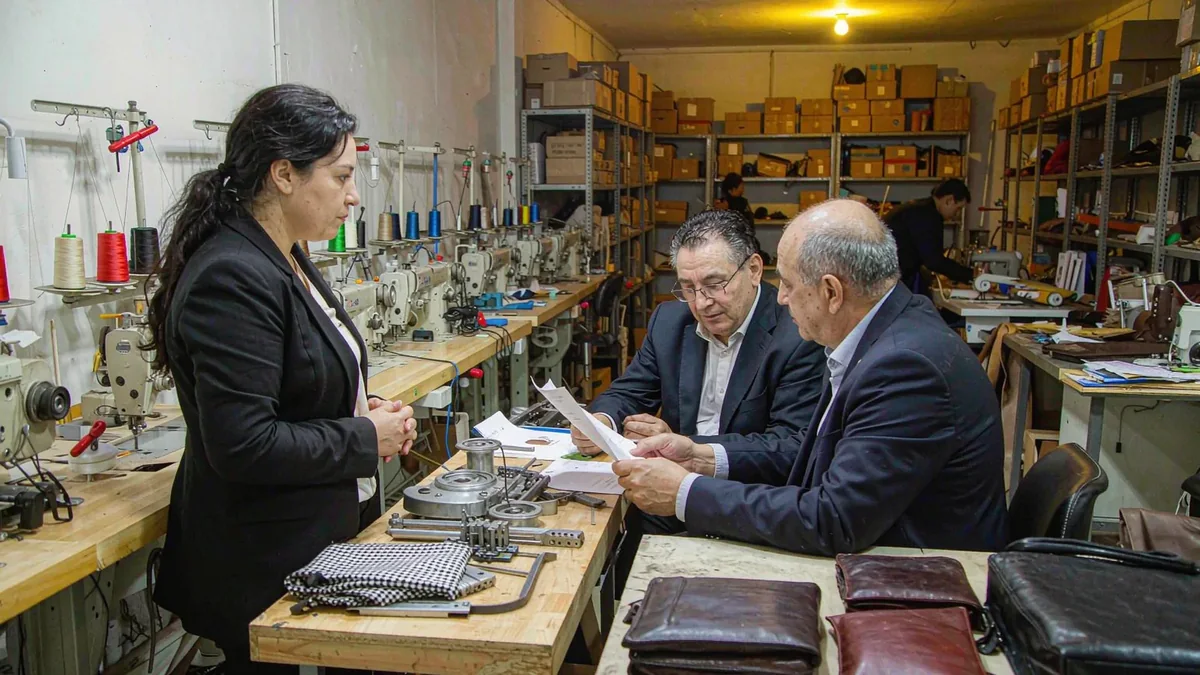
Six Surfaces, Six Controls, One Order
Brand identity leaks through six surfaces, in this order of frequency: uncontrolled documents, drawings held without ownership terms, tooling stored without agreements, samples distributed too widely, material lots substituted quietly, and finished goods drifting from spec. Each has a control, and each control is measurable.
It is worth being candid about one thing first. No house can guarantee that a shape which succeeds will not be reinterpreted somewhere else, and any promise of that kind should be treated with suspicion. What can be guaranteed is far more useful: that your drawings, specifications, lots and tooling are handled under recorded terms rather than under goodwill.
- Documents: numbered copies with named holders and no uncontrolled files.
- Drawings: ownership stated in writing, with return terms at the end of the programme.
- Tooling: dies and plates owned, stored and released under agreed conditions.
- Samples: recorded distribution, with photography restricted until launch.
- Materials: one lot per colourway, logged on both the pack and the invoice.
- Finished goods: retained counter samples and deviation records for every change.
Surface 1 — Documents: What Gets Printed, and by Whom
Every technical pack in our programme is issued as four numbered copies with the holder of each recorded, so there is no such thing as an uncontrolled drawing circulating in a building. Anything additional is logged on request, and anything obsolete is recalled rather than merely superseded.
The practice sounds bureaucratic until the alternative is priced. Uncontrolled drawings are how a silhouette reaches a different line, a different client or a different city, usually without anybody intending harm and always without anybody able to trace it afterwards.
- Document control
- Packs issued in four numbered copies, each holder recorded in the project file
- Access list
- Named individuals per project, reviewed whenever the style changes hands
- Deviation logging
- Any substitution raises a written note within 24 hours before work continues
- Retention schedule
- Counter samples and lot tags held 24 months; development records for the life of the style
- Interior deboss depth
- 0.3-0.5 mm on full-grain calfskin, proven on a test panel first
Numbers matter here because memory does not survive a season. A count of copies, a list of names and a duration in months are all answerable in an afternoon, whereas an assurance that documents are handled carefully cannot be examined by anyone.
Surface 2 — Who Owns the Patterns and the Toile
You own every drawn panel, every graded pattern set and every revised toile produced for your capsule, stated in the development agreement rather than assumed from custom. Ownership should also specify that copies are returned or destroyed on request when the programme ends.
The practical test is simple and worth applying early: ask for the drawings mid-development and note how quickly they arrive. Property is not ownership of a file; ownership means the material reaches you without negotiation, and that happens smoothly under written terms and awkwardly without them.
- Ownership names the drawings, patterns, graded sets, toiles and cutting dies explicitly.
- Return or destruction on request is described, including timing after the last shipment.
- Third parties such as component houses are covered, since dies often leave site for plating.
- Duration matters: specify how long everything is stored after the final season runs.
Surface 3 — Tooling: Ownership, Storage and Release
Tooling is the surface brands forget, because dies and plates are paid for once and then leave the conversation entirely. They should be owned by you, inventoried against your style, stored for an agreed period and released on request, all written down before machining rather than after.
Storage duration deserves a number. Deterioration is rarely the issue for well-kept cutting dies, whereas silence is: a programme that ends without instruction leaves tools in limbo, and a brand that returns three years later discovers the discussion has to start from nothing.
Request a list of every die, plate and mould carrying your identity, with its location and agreed storage end date. It is an ordinary document for a house with discipline, and an unexpectedly difficult one elsewhere.
One further clause is worth including, and it is rarely requested: what happens to tooling if the partner changes. Ownership without portability is partial protection, so specify that dies and plates follow your instruction rather than staying put by default, which keeps the option of moving a proven style genuinely open.
Surface 4 — Samples: Fewer Copies, Recorded Distribution
Sample distribution is where most identity loss happens in practice, because a physical bag is photography waiting to occur. Our position is three sample sets plus retained counter samples, all recorded, with images restricted until an agreed number of days before launch.
The reason is not suspicion of any individual; it is that photographs travel further and faster than agreements. A written embargo period, agreed when the first sample is built, is easier to respect than one introduced when someone asks.
Three sets, plus retained samples
Development, approval and counter sets, each numbered, with the holders recorded alongside them in the project file for the life of the style.
Photography embargo
No external imagery of unlaunched pieces before the agreed date, agreed at development rather than requested once samples exist and people want to share them.
Recorded destruction
Rejected samples from development rounds are recorded as destroyed or returned, so a discarded variation cannot resurface anonymously later.
The same reasoning applies to sampling correspondence. Corrections written as a numbered list keep decisions attached to a style rather than scattered across messages, and a closed list is far easier to reconcile against the retained counter sample three seasons later than a chain of informal notes ever is.
Surface 5 — Material Lots: Identity Lives in Consistency
Brand identity lives in consistency as much as in silhouette, and consistency depends on one tannery lot per colourway being named, reserved and recorded on both the technical pack and the commercial invoice.
Substitution is the quiet failure here. A lot that quietly changes source produces goods whose colour depth differs a little, which customers notice long before they can articulate why. Logging any substitution as a written deviation within 24 hours makes that change visible while it can still be refused.
- Named tannery and lot number recorded in the pack and on the invoice, not merely a grade.
- Any substitution logged as a written deviation before work continues on the affected panels.
- Fresh colour fastness results under ISO 105-X12 for any replacement lot before placement.
- Leather Working Group audit references recorded where an audited tannery was specified.
Surface 6 — Finished Goods: Holding Spec Season to Season
The last surface is drift: units in season four that no longer match the approval sample held in season one. The controls are retained counter samples, a written deviation record for every change, and inspection at AQL 2.5 under ISO 2859-1 before goods leave.
The programme runs across 7 production lines with about 200,000 pcs per month of capacity and has held export experience since 2014, delivered through our validated partner factory Quanzhou Yingming Bags, an SGS-validated site. Retained reference samples are the mechanism that makes drift arguable rather than inevitable.
The Protection Scorecard
The matrix below reduces all six surfaces to something countable. It doubles as a due-diligence document: any house shortlisted by a prestige brand should be able to complete it in one meeting, from documents rather than from memory.
| Surface | Default exposure | Control applied | How it is verified |
|---|---|---|---|
| Documents | Uncontrolled copies circulate freely | Four numbered copies with recorded holders | Request the copy register at any point |
| Drawings and patterns | Ownership implied but never stated | Ownership and return terms in writing | Ask for drawings and see how fast they arrive |
| Tooling | Dies stored with no end date agreed | Register with location and storage term | Ask for the tooling inventory |
| Physical samples | Sets distributed without a record | Three recorded sets plus retained counters | Request the distribution list |
| Material lots | Source substituted without notice | Named lot and 24-hour deviation note | Reconcile invoice against pack |
| Finished goods | Spec drifts across later seasons | Retained references and AQL 2.5 audit | Compare a unit against its counter sample |
Notice that the verification column never asks anyone for reassurance. Each entry requests a document or a comparison, and those either exist or they do not, which is what makes the scorecard useful in a first meeting.
What Confidentiality Honestly Cannot Cover
Confidentiality terms protect your drawings, specifications, lots and launch plans, and they cannot stop the wider trade from noticing a successful silhouette. Separating those two ideas early prevents disappointment later, because the second is a market problem rather than a disclosure failure.
- Artwork, drawings and brand marks are protectable and should be registered by you with local counsel.
- A construction method is rarely exclusive, since techniques circulate across the trade by movement of people.
- Widely available components cannot be ring-fenced, however distinctive the combination looks in your design.
- What remains genuinely defensible is how consistently and how well the thing is made.
That last line is the honest core of brand protection in this trade. Copyable shapes are common; reproducible quality across four seasons is not, and it is also the thing customers return for rather than the shape alone.
There is a commercial argument for saying this plainly at the outset. Brands that understand the difference tend to invest in made-to-measure finishes, named lots and retained references, and those investments are what actually separate their goods from the wider trade once a silhouette has been noticed.
Five Numbers Worth Reviewing Every Season
Five numbers tell you whether identity is holding: the count of issued drawing copies, the number of named holders, the age in months of the newest retained counter sample, the count of logged deviations, and the share of units shipped from the original lot.
Metrics worth keeping visible
- Copies issued: should sit at the agreed count, with obsolete sets recalled rather than superseded.
- Named holders: a short list reviewed whenever the style changes hands or team members move on.
- Age of the newest counter sample: months since approval, ideally under twelve.
- Logged deviations: the number itself matters less than whether each one was written down.
- Share shipped from the original lot: tracks whether the material identity is genuinely intact.
Reviewing those five once a season turns protection from a policy into a habit. None of them requires new software or a new meeting; they require somebody to read the project file and write the numbers down where everyone can see them.
A Protocol You Can Adopt Before the First Sample
Any brand can adopt the following sequence immediately, whether or not the programme is ours, and doing so before the first sample is built costs a single afternoon of correspondence.
- Sign mutual confidentiality terms before sending drawings, naming the individuals covered by them.
- State ownership of patterns, toiles, dies and plates in the development agreement, with return terms.
- Agree the count of physical sample sets, their holders, and the photography embargo period.
- Require the tannery and lot number on both the technical pack and the commercial invoice.
- Require retained counter samples and ask how long they will be stored after the final shipment.
Adopted together, those five steps take roughly half a day and remove most of the ambiguity that later becomes expensive. They also improve the working relationship, because everyone involved knows exactly which records exist and who is holding what when a decision needs reviewing months later.
Put the controls in writing first
Send a brief under mutual confidentiality terms and we will return ownership, tooling and retention clauses with it, before a single panel is drawn. Request a quote.
Frequently Asked Questions
How do I know my handbag designs will not be reused elsewhere?
No house can control how the wider trade responds to a successful silhouette, and any promise otherwise is worth distrusting. What genuinely protects you is recorded terms: numbered document sets, owned drawings, retained counter samples and lot-level traceability that let you prove what was yours.
Should I sign a confidentiality agreement before sending drawings?
Yes, before rather than after. Mutual terms that name the individuals covered should be in place while a sketch is still a sketch, since once files circulate it becomes difficult to establish which copy reached whom, regardless of anyone's intentions.
Who owns the patterns and toiles I pay to develop?
You should, stated explicitly in the development agreement rather than assumed from custom. That includes graded sets and revised toiles, along with return or destruction terms once the programme ends. Ask for drawings mid-development to see how readily ownership is honoured in practice.
What happens to my tooling between seasons?
Every die, plate and mould carrying your identity should appear on a register with its location and agreed storage end date. Agreeing duration up front prevents tools drifting into limbo, and releasing them later becomes a recorded instruction rather than a fresh negotiation.
How many physical samples should exist before launch?
Three recorded sets plus retained counter samples is a workable ceiling: development, approval and one further set, each numbered with holders logged. Anything beyond that increases exposure without adding much practical benefit, particularly once photography begins.
Can I stop sampling rounds being photographed?
You can agree an embargo period, and it is best fixed when the first sample is built rather than requested later. Restricting imagery until an agreed number of days before launch is a normal request, provided it is written into the development terms.
How is material substitution handled?
Any proposed substitution raises a written deviation note within 24 hours, before work continues on the affected panels, and a replacement lot requires fresh colour fastness results under ISO 105-X12. Without that step, two deliveries can differ in colour depth with nothing to arbitrate by.
How do you keep a later season matching an earlier one?
Retained counter samples and lot tags, stored for 24 months, plus a written record of every deviation. Comparing a unit against its original reference is the only reliable way to argue about drift, because memory changes considerably over three seasons.
Is my hardware design protected too?
Component drawings follow the same ownership terms as panels, and dies or moulds sit on the tooling register. Remember that widely available components cannot be ring-fenced even when your combination of them looks distinctive, so register designs locally with your own counsel.
What quality evidence accompanies a shipment?
An inspection drawn at AQL 2.5 under ISO 2859-1, with sample size and accept numbers agreed before bulk begins; a 500-piece lot at general inspection level II uses code letter H, meaning 50 units drawn, accept 3, reject 4. Third-party audit can be added.
How long should development records be kept?
Request 24 months for counter samples and lot tags, with development records retained for the life of the style. Those two durations cover almost every realistic dispute, including re-orders where nobody involved in the original run is still available.
What should I do if a similar bag appears in the market?
Establish whether your protected assets were used, since that is where remedies lie for registered designs and marks. Then consider that most similarity reflects shared technique and common components. Advice from local counsel is better than any assumption either way.
People Also Ask
How do bag brands protect their designs?
Through recorded controls rather than promises: confidentiality terms before drawings are shared, documented ownership of patterns and tooling, limited and numbered sample sets, named material lots, and retained counter samples compared at inspection.
Do I need an NDA before sending sketches?
Yes. Mutual terms should name the individuals covered and be in place while the work is still a sketch, since uncontrolled copies are difficult to trace once files circulate through several hands.
Who typically owns handbag patterns?
The brand, when the development agreement says so explicitly. Ownership should cover drawings, graded sets, toiles, dies and plates, with return or destruction terms once the programme ends.
How many samples should circulate before launch?
Three recorded sets plus retained counter samples is usually sufficient. Each should be numbered with its holder logged, and photography should be embargoed until an agreed date.
What protects consistency between seasons?
Retained counter samples and lot tags held for 24 months, a written record of every deviation, and inspection at AQL 2.5 under ISO 2859-1 before goods leave the bench.
Sources and further reading
Every figure on this page is either our own programme data or attributed below. Open the originals before you write them into a specification.
- ISO — International Organization for StandardizationISO Publisher of ISO 2859-1 for the AQL 2.5 inspection plan and the ISO 105 series used to test replacement lots before placement.
- Leather Working GroupLeather Working Group Tannery audit protocol recorded alongside the named lot, so material identity can be verified rather than asserted between seasons.
- Business of FashionBusiness of Fashion Reporting on design protection, replication debates and how houses respond when a successful silhouette circulates widely.
- WWDWWD — Women's Wear Daily Trade coverage of accessories launches and the embargo practices surrounding pre-season sample handling.
- Sourcing JournalSourcing Journal Coverage of material traceability expectations and lot-level documentation across the accessories trade.