Best Handbag Maison Qualities for Prestige Brands: Seven Traits and How to Verify Each One
What qualities matter most when a prestige brand chooses a handbag maison? The answer has less to do with showroom polish than with evidence: seven traits decide the outcome, namely measured technical thresholds rather than adjectives, material traceability to a named tannery lot, ownership of patterns and tooling, an inspection plan agreed before bulk, capacity that genuinely holds at MOQ 500 pcs per colourway, terms stable enough that season two matches season one, and a habit of writing things down. Each of the seven can be verified in a single afternoon, which is what separates a real shortlist from a plausible one.
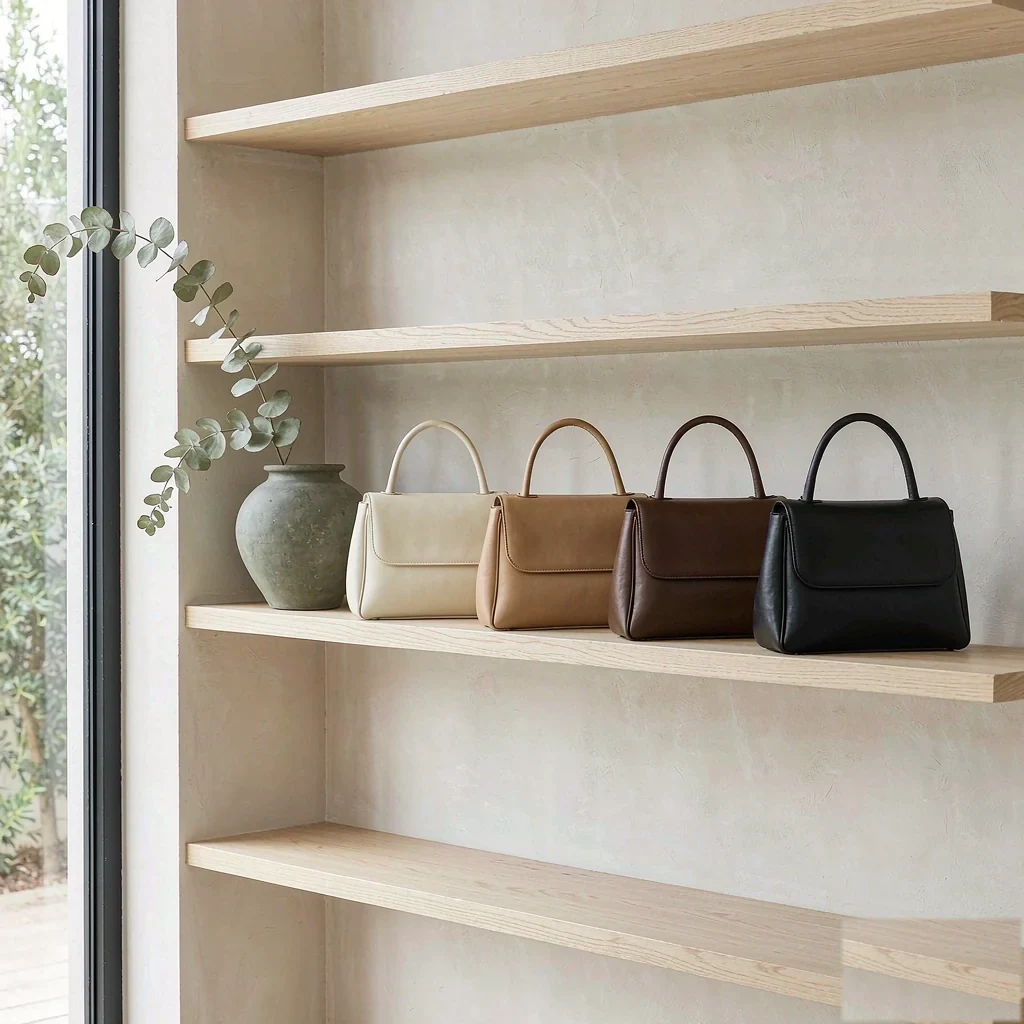
Question 1 — What Is a Prestige Brand Actually Buying?
A prestige brand buys predictability at a modest scale rather than scale itself: a partner able to apply large-house finishing disciplines to 500 pieces per colourway, without asking them to commit to a quantity the market will not absorb, and without letting standards drift because the run is small.
That definition rules out several ordinary assumptions at once. It is not asking for the largest possible output, since output is not the constraint for a first capsule. It is asking whether the same invisible operations will be performed on unit five hundred as were performed on the approval sample, which is a question about process rather than about enthusiasm.
Our own programme sits inside that definition: MOQ 500 pcs per style and colourway, sampling in 6-10 working days, bulk in 35-50 days, inspection at AQL 2.5 under ISO 2859-1, handed over on FOB Xiamen terms. Those five numbers are published because they tell a founder whether the relationship is even structurally possible.
There is also a quieter purchase hiding inside all of that: judgement. A first capsule rarely has the answers built in, and the difference between partners shows up in who notices that a gusset will collapse, that a strap will dig, or that a closure will not survive the load it will actually meet. Judgement cannot be photographed either, but it is predictable from how a house handles an incomplete brief.
Question 2 — How Do You Tell Capability From a Portfolio?
A portfolio proves that someone has photographed good bags. Capability is proven by documents and routine: written specifications, retained counter samples, first-off records and measurement taken during production rather than only at the end.
- Ask to see a specification sheet for a past style, with dimensions, tolerances and tolerances recorded together.
- Ask what happens on the first unit off the bench, and who signs it off before the rest are cut.
- Ask which measurements are taken mid-run, not merely at final inspection, since mid-run checks prevent waste.
- Ask whether they keep a counter sample from every approved lot, because that is what settles later disputes.
Question 3 — Which Numbers Separate Luxury From Merely Competent?
The thresholds below are the ones worth putting in writing, because each describes something visible on the finished bag and each can be measured in minutes. Houses that work at this level will recognise them and, usually, tighten them.
- Colour fastness to rubbing
- ISO 105-X12, minimum grade 4 dry and 3-4 wet on finished leather
- Stitch tear resistance
- Referenced to ISO 23910, tested on both hide and the composite panel
- Handle fatigue
- 5,000 lift cycles at 5 kg with no stitch migration beyond 1 mm
- Panel grain alignment
- Within ±3 mm across front panel, flap and gusset
- Separation between lots
- One tannery lot per colourway, recorded in the pack and on the invoice
Two of those deserve a sentence each. Grain alignment within ±3 mm is what makes a panel suite read as one object rather than as components assembled, and it is invisible until a customer holds the bag at arm's length. A single named lot per colourway is what stops two deliveries arriving with slightly different depths of colour.
Neither threshold costs much to hold. Both do, however, require someone to measure rather than assume, which is really the whole subject of this section. The numbers themselves are ordinary; the discipline of checking them on unit four hundred rather than on unit one is not.
Question 4 — Can Material Claims Be Verified Rather Than Asserted?
Yes, and they should be. A traceable programme names the tannery, records the lot, holds the audit reference and issues compliance reports against that specific lot, so any claim about origin can be followed backwards rather than taken on trust.
- Ask for the tannery name and lot number, not merely a grade description such as full-grain calfskin.
- Ask whether the tannery carries a Leather Working Group audit, and request the reference rather than the logo.
- Ask which standard each report was issued under, notably REACH Annex XVII for European destinations.
- Ask how listed species are documented, since CITES documents must reconcile with the commercial invoice.
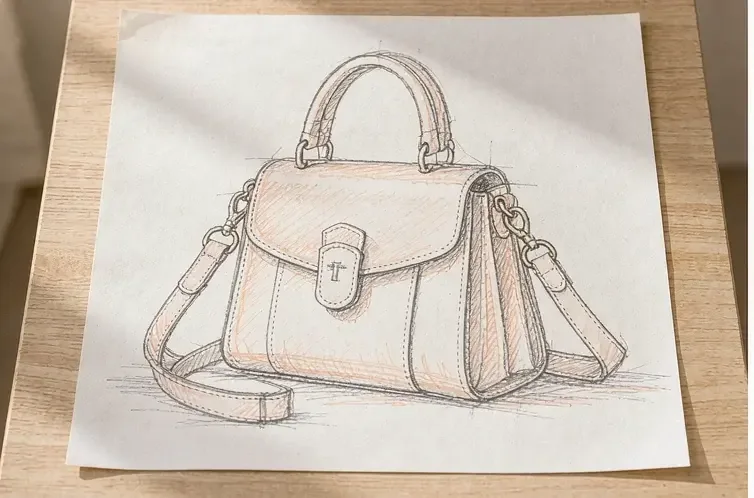
The traceability habit also protects the brand legally. EU Regulation 1007/2011 governs fibre composition labelling for textile elements, and California Prop 65 assessment applies to United States programmes, both of which assume the materials were identified precisely at the start.
Question 5 — Who Owns the Pattern, the Toile and the Tooling?
You do, or you should: every drawn panel, every revised toile, every cutting die and every embossing plate produced for your capsule belongs to your brand, and the agreement should say so rather than leave it to convention.
Tooling ownership, storage duration and return terms are easy to agree before a plate is cut and awkward afterwards. Ask for them in the development agreement, including what happens if the programme moves house.
The same logic applies to the more delicate question of discretion. Designs, patterns and the identity of a launch retailer should be documented as confidential at the outset, while agreeing that no exclusive claim can be made over a construction method used widely across the trade.
Question 6 — Do the Terms Hold Once Volume Arrives?
Terms are where most relationships are honestly tested: whether quantities stay at the agreed minimum, whether lead times hold when two capsules overlap, and whether unit cost quoted against a named lot still applies once that lot is exhausted.
The programme operates across 7 production lines with about 200,000 pcs per month of capacity and has held export experience since 2014, carried out through our validated partner factory Quanzhou Yingming Bags, an SGS-validated site. Capacity figures matter here less as a boast than as a statement about what can be scheduled alongside you.
Ask specifically what happens when two capsules overlap, because that is the moment terms are genuinely tested. A house that books capacity to named programmes can describe its scheduling honestly; one that treats every date as possible will discover the collision in week eight, which is around the point a founder learns to dislike surprises.
The Seven Qualities Scored Side by Side
The matrix below reduces the six questions into seven verifiable traits. It is deliberately written as requests for evidence, because a quality worth paying for is one that can be demonstrated on demand rather than described in a first email.
| Quality | What to ask for | Evidence that satisfies it | Warning sign |
|---|---|---|---|
| Measured thresholds | Stitch density, edge coating counts, tolerances | A written specification with numbers, not adjectives | Descriptions of work as careful or fine |
| Material traceability | Tannery, lot number, audit reference | Lot recorded in the pack and invoice | Generic grade names and no lot record |
| Compliance discipline | Reports by destination market | ISO 105 results and REACH screening against the lot | Certificates offered without test dates |
| Pattern ownership | Who holds drawings, toiles and dies | Ownership stated in the development agreement | Reluctance to release drawings |
| Inspection before agreement | Sampling plan and accept numbers | AQL 2.5 under ISO 2859-1 fixed pre-bulk | Inspection described only as a final check |
| Capacity that holds | Lines, monthly output, overlap handling | Named capacity with a booking process | Vague promises that every date is possible |
| Stable commercial terms | MOQ, sampling and bulk windows in writing | Published figures applied consistently | Numbers that change between two emails |
Six Questions to Ask on the First Call
Six questions, asked in this order, reveal more than a long capability presentation: each asks for something specific that either exists today or does not, and the answer is useful either way.
Questions worth putting in writing
- What written specification will my style be built to, and which tolerances does it record?
- Which tannery and lot will my leather come from, and is that recorded on the invoice?
- Who signs the first unit off the bench, and what measurements are taken mid-run?
- How many units are drawn at inspection, and accept at which numbers for my lot size?
- Who owns the dies and plates, how long are they kept, and what if I move?
- What is your minimum for a second season, and does it rise after the first capsule?
Notice that none of these ask for assurances. They ask for records, and a house with discipline answers them comfortably, usually with documents already prepared for exactly this conversation.
There is a final diagnostic worth naming. Ask each candidate what it would refuse to do on your brief, and listen carefully. A house willing to accept everything has not read the geometry, whereas one that declines a specific detail has usually understood it, and that understanding is what protects your launch.
Red Flags Worth Walking Away From
Three patterns predict disappointment more reliably than any other signal, and each one looks harmless in isolation while a capsule is still being discussed rather than built.
Nothing is written down
Corrections arrive by voice message and no specification sheet exists. What begins as flexibility becomes a dispute about what was agreed, usually after the second sampling round.
Every date is possible
A house that can meet any launch window has not told you how it will. Real calendars name the gates that resist compression and ask you to plan around them.
Lots change quietly
The leather arrives from a different source than the one quoted, with no new test reports. That substitution is invisible until the second delivery, when colour depth differs.
Each of these has the same underlying cause: decision-making happens too late and too informally. None of them indicates bad hands on the bench, which is precisely why they survive first conversations.
Comparing Two Shortlisted Houses in One Afternoon
Shortlists are rarely between a good house and a bad one; they are between two competent houses with different habits. The quickest way to separate them is to give both the same incomplete brief and compare what comes back.
- Send both the identical sketch, target dimensions and quantity per colourway, with the same delivery date.
- Note who asks the clarifying questions first, because the order reveals what they consider the risk.
- Compare the written responses side by side: which one returned numbers rather than adjectives?
- Ask each what would worry them about this brief, then judge which answer was specific.
- Choose the house whose answer you could hand to a colleague without rewriting it.
That final test is more useful than it sounds. The deliverable you actually receive from a maison is not a bag; it is documentation, decisions and records, and eventually those become the asset you take to your next season.
One further observation, from watching this comparison run many times: the house that asks clarifying questions earliest usually finishes earliest.Questions arrive before costing for a reason, and that reason is the same habit that produces a written specification later.
Put these seven questions to us
Send a brief, however incomplete, and we will answer all seven in writing with specifications, tolerances and the evidence behind each. Request a quote.
Frequently Asked Questions
What is the most important quality in a handbag maison partner?
Willingness to write things down. A partner that records dimensions, tolerances, lot numbers and inspection plans gives you something you can hold them to and reuse next season. Adjectives about care cannot be audited, and enthusiasm cannot resolve a dispute about what was agreed.
How can I check whether a bag house really works at luxury level?
Ask for four specific things: a written specification from a past style, the first-off record for that style, the counter sample retained for its lot, and the results of colour fastness testing under ISO 105-X12. Houses working at this level produce all four without preparation.
Why does material traceability matter so much?
Because compliance reports are issued against a specific lot, not against a grade description. If deliveries come from two sources, colour depth and finish can differ between them, and neither party can prove which lot shipped. A named lot recorded on the invoice prevents that argument entirely.
What minimum quantity should prestige brands expect?
Our programme sets MOQ at 500 pcs per style and per colourway, which suits a first capsule of two to four styles. Other houses require considerably more, and asking for less than a programme minimum usually means paying the overhead through unit cost instead.
Should I own the patterns and tooling I pay for?
Yes. Drawings, toiles, cutting dies and embossing plates produced for your capsule should be yours in writing, along with their storage duration and return terms. Agreeing that before machining costs nothing and prevents a difficult conversation later, particularly if the programme moves.
How long does sampling take before I see anything real?
Six to ten working days for a first sample and one corrected round, extending to 12-15 for complex constructions involving framed bodies or bespoke hardware. If two houses quote wildly different windows for the same brief, the shorter one has usually omitted a gate rather than saved time.
What does AQL 2.5 actually mean for my order?
It is a sampling plan drawn under ISO 2859-1, agreed before bulk begins. For a 500-piece lot at general inspection level II the plan uses code letter H: 50 units drawn, with 3 or fewer defects accepted and 4 rejected. Third-party inspection can be added alongside it.
Which testing should a first capsule normally require?
Colour fastness to rubbing under ISO 105-X12, stitch tear resistance referenced to ISO 23910, REACH Annex XVII screening for European destinations, and California Prop 65 assessment for the United States. Exotic skins additionally require CITES documentation.
Is exclusivity over a design realistic to ask for?
Exclusivity over your artwork, drawings and brand marks is normal and straightforward. Exclusivity over a construction method is rarely enforceable, since most techniques circulate across the trade. Ask for exclusivity over what is genuinely yours and document access boundaries instead of making wider claims.
How should I judge two shortlisted houses with similar sample quality?
Send both the identical incomplete brief and compare what returns. Judge the order of their clarifying questions, whether answers contained numbers, and whether their response could be forwarded to a colleague without rewriting. Documentation quality predicts the working relationship better than a beautiful sample.
What protects my designs from appearing elsewhere?
Confidentiality terms at the outset, named individuals with access to your patterns, and a documented division between your designs and generic constructions. Ask which of those three applies before sharing anything, then record the answer in the development agreement rather than in email correspondence alone.
How much lead time should I plan for a first capsule?
From a signed technical pack to FOB Xiamen handover, plan 55-75 working days for calfskin with stock hardware, or 85-105 where exotic skins or bespoke locks are involved. Sacrificing the calico toile to save time usually costs more days later than it saves today.
People Also Ask
What makes a bag house suitable for prestige brands?
Written specifications rather than descriptive claims, traceable materials, ownership of patterns and tooling, agreed inspection plans and terms stable across seasons. Those five are observable in one afternoon of questions, unlike general assurances about quality.
How do I verify a leather handbag partner's claims?
Request specific evidence: the tannery and lot number, its Leather Working Group audit reference, colour fastness results under ISO 105, and compliance reports issued against that named lot rather than against a grade description.
What are the warning signs when choosing a house?
Nothing written down, every requested date described as achievable without explanation, and materials arriving from a source different from the one quoted. Each signals decisions being taken too late and too informally to survive a full capsule.
Why do minimum quantities vary so much between houses?
Because tooling amortisation, material lot sizes and line scheduling differ. A house quoting far below a genuine programme minimum is usually recovering its overhead through unit cost, which becomes visible only once you compare across two seasons.
Is it better to choose a large partner or a specialist one?
For a first capsule, a specialist working at your scale tends to answer faster and keep better records, because your unit count is not a rounding error in its schedule. Very large operations often serve you well at season five rather than season one.
Sources and further reading
Every figure on this page is either our own programme data or attributed below. Open the originals before you write them into a specification.
- ISO — International Organization for StandardizationISO Publisher of ISO 2859-1 for inspection sampling, the ISO 105 series for colour fastness, and ISO 23910 on stitch tear resistance.
- Leather Working GroupLeather Working Group Tannery environmental audit protocol referenced when verifying the origin of a named lot rather than accepting a grade description.
- European Chemicals AgencyECHA Authority for REACH obligations, where Annex XVII restrictions define the substance screening expected for European Union destinations.
- Business of FashionBusiness of Fashion Reporting on prestige brand sourcing practices, including how houses evaluate production partners beyond portfolio imagery.
- WWD — Women's Wear DailyWWD Trade coverage of luxury accessories launches, seasonal calendars and the presentations at which first capsules are usually shown.