How a Designer Handbag Atelier Builds Silhouettes: Five Decisions, Taken in a Fixed Order
How does a designer handbag atelier build a silhouette? By taking five decisions in a fixed order: structure, panel logic, how the piece carries, the closure, then proportion and the final millimetres. The order is not stylistic preference but practical dependency, since each decision constrains the ones that follow and none can be safely reversed. A framed body cannot be decided after the panel logic, and a handle drop measured from a drawing is always different from one measured on a body with 1.2-1.4 mm panels behind it. Below, the sequence is given first as a tree, then each decision is opened in turn with the parameters it settles and the working days it consumes.
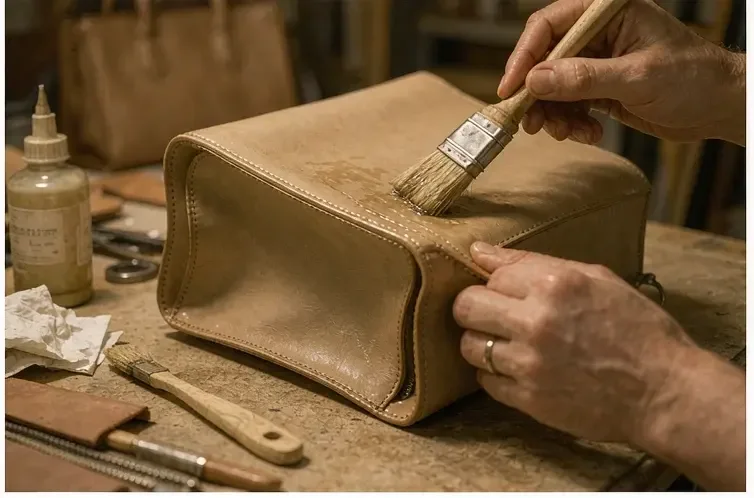
The Five Decisions, in the Order They Must Be Taken
Every silhouette is the result of five decisions, and they are taken in this order because each one removes options from the next. Working through them in a different sequence does not save time; it returns to the same conclusions after one or two discarded samples.
- Structure: soft, semi-structured or framed, which fixes the thickness and reinforcement the body needs.
- Panel logic: how many panels, and the seam sequence that lets the body actually be assembled.
- How it carries: handle, strap or both, with a drop measured on a body and not on paper.
- Closure and opening: the lock or zip, and whether it is stock or developed for the piece.
- Proportion and the final millimetres: the adjustments that turn a correct bag into a resolved one.
The reason the sequence holds is that each decision produces a constraint the following ones must respect. A framed body sets a minimum opening; that opening decides the closure; the closure decides where reinforcement sits; and reinforcement changes the weight the handle has to carry.
Decision 1: How Much Structure the Body Carries
Structure is settled first because it fixes the material thickness and the reinforcement, and everything downstream works to those figures. Three levels are available, and they are genuinely different objects rather than points on a dial.
| Level | What it uses | What it produces |
|---|---|---|
| Soft | 1.0-1.2 mm panels, no interlining | A body that slumps and reads relaxed; fastest to build |
| Semi-structured | 1.2-1.4 mm with 0.8 mm interlining | Holds a fold and a base line; the commonest choice for day bags |
| Framed or fully structured | 1.2-1.4 mm with 0.8 mm interlining and a 1.6 mm base board | Holds its shape empty; slowest, and it earns its own sample round |
Most first capsules land on the middle level, which is a practical judgement rather than a cautious one. A semi-structured body holds a base line and a fold, tolerates ordinary handling, and avoids the additional round that framed work requires.
- Thinner panels cut faster and yield better, but they will not hold a defined base line.
- Interlining at 0.8 mm adds an operation under every reinforced panel.
- A 1.6 mm base board holds the shape empty and needs its own turning operation.
- Structured work rewards a toile, because proportion errors are harder to correct afterwards.
Decision 2: Panel Logic and the Seam Sequence
Panel logic decides how the body is divided and, more importantly, in what order it closes. A three-piece body and a five-piece body can look identical in a drawing and behave completely differently at the bench, because assembly has a sequence and some sequences are impossible.
- Working tolerance on cut panels
- ±1.5 mm, which nesting and skiving have to respect
- Yield on a structured panel set
- 55-65% of purchased hide area reaches the piece
- Skived edges
- Every skived join is an operation before assembly begins
- Gusset construction
- A single folded gusset saves two seams and one skiving pass
- Grain direction
- Held consistent across the panel set, which constrains nesting
The commonest error at this stage is a drawing that cannot be assembled. A body designed front-to-back in the sketch often has to close at the base or the gusset in practice, and discovering that on paper costs a pattern revision while discovering it at the bench costs a round.
Decision 3: How the Piece Carries
Handles and straps are decided after the structure, because the body now has a known weight. A drop of 100 mm reads correctly on a shoulder body and incorrectly on a hand-held one, and the difference is measured on a finished piece, not on a drawing.
- Handle drop of 100 mm is a common shoulder target and 90-110 mm covers most day shapes.
- Strap width of 12 mm suits a light body; 18-20 mm carries weight without cutting.
- Reinforcement at 0.8 mm sits under every load point, including handles and strap anchors.
- Stitch density of 8-9 per inch holds a handle join; fewer stitches per inch will not.
- A removable strap adds two setting operations and a hardware list of its own.
Load is the part that gets forgotten. A handle is not attached to the body but to the reinforcement beneath it, and without that interlining the join is the first thing to fail on a bag that gets used daily.
Decision 4: Closure and Opening
The closure is decided fourth because the opening size is now fixed by the structure and the panel logic. It is also the decision with the largest effect on the calendar, since a bespoke closure runs on its own track.
- Stock brass at 0.15-0.3 µm plating keeps the trim line around USD 4.80 per bag.
- Bespoke locks add tooling and 30-40 working days, plus 48 hours of salt spray proving.
- A #5 metal zip serves a main opening and a #3 an interior pocket.
- Framed bodies need the closure proved on the frame before panels are cut.
- The opening is measured at the zip or frame line, not at the widest point of the body.
Keeping the closure stock is the single most effective way to protect a launch date. The saving is not the trim cost; it is the 30-40 working days of tooling that otherwise sit between an approved body and a shippable one.
Decision 5: Proportion and the Final Millimetres
The last decision is the one designers care about most and schedule least: proportion. It is settled on a toile in 10 oz calico, in one to two days, by moving things a few millimetres and looking again.
What the final decision settles
- Handle drop, moved in 8 mm steps until the piece carries as intended.
- Base depth, which decides whether the bag holds what it was drawn to hold.
- The position of the closure, tested against where the hand actually reaches.
- Panel balance, so a seam does not bisect the body at an awkward height.
- Overall read at full size, which is never the same as the read at sketch scale.
Two passes at the toile are worth more than one, and the difference in cost between them is negligible. Calico at 10 oz is a small fraction of the price of a hide, so the second pass is the least expensive thinking available anywhere in the sequence.
- A second toile confirms the corrections from the first rather than assuming them.
- It can be cut the same day, so it adds almost nothing to the calendar.
- Corrections made there cost a marker stroke, where the same ones later cost a round.
- Proportion read at full size is never the read obtained at sketch scale.
Two millimetres in the wrong place is visible, and it is also the least costly correction available anywhere in the sequence. On a toile it costs a marker stroke; on a leather sample it costs a round.
What Each Decision Costs in Working Days
Decisions are not equally expensive, and the table below shows why the order matters as much as it does. The early decisions are inexpensive to revisit on paper and expensive to revisit later.
| Decision | Working days | Cost of revisiting it later |
|---|---|---|
| 1. Structure | 2-3 days at drawing stage | A new material thickness, a new reinforcement and a fresh toile |
| 2. Panel logic | 2-3 days on the pattern | A re-graded pattern and a changed yield of 55-65% |
| 3. How it carries | 1-2 days on the toile | New reinforcement and possibly a new panel |
| 4. Closure | 1-2 days stock, 30-40 bespoke | Bespoke added late re-dates the whole capsule |
| 5. Proportion | 1-2 days on the toile | A further sample round at 6-10 working days |
The right-hand column is the argument for the sequence. Revisiting structure after the panel logic is settled means redoing the pattern, the reinforcement and the toile, which is four times the work of deciding it first.
Three Silhouettes Walked Through the Tree
The same five decisions produce very different pieces. These three cover the majority of first capsules and show how the sequence resolves in practice.
The soft day tote
Soft structure at 1.0-1.2 mm, a folded single gusset, two handles at 100 mm drop, an open top with a magnetic tab. Fastest through the tree and the most tolerant of late proportion changes.
The semi-structured top handle
1.2-1.4 mm with 0.8 mm interlining, five panels closing at the base, a top handle and an 18-20 mm removable strap. Needs a toile and two leather rounds at 6-10 working days.
The framed evening piece
Framed with a 1.6 mm base board, a proved frame closure and a short handle. The closure runs on its own track; add 30-40 working days and allow 12-15 days for sampling.
The middle case is the one most readers will recognise. Semi-structured, top handle, removable strap: it exercises every decision in the tree without committing the capsule to the bespoke hardware track.
Recording the Silhouette for the Bench
A silhouette only survives contact with bulk if it is recorded. The record is the specification, and it states in numbers what the five decisions produced so the bench can repeat them across 500 pieces.
- Panel dimensions in millimetres with the ±1.5 mm tolerance, and the nesting arrangement.
- Material: 1.2-1.4 mm body, 0.8 mm interlining, 0.8-1.0 mm lining, named as a reserved lot.
- Stitch density 8-9 per inch with 0.45 mm braided polyester thread.
- Edge specification: raw, turned, or three coats with 8-10 minutes of flash time between passes.
- Handle drop, strap width, base feet at 8 mm and every separate trim piece on the list.
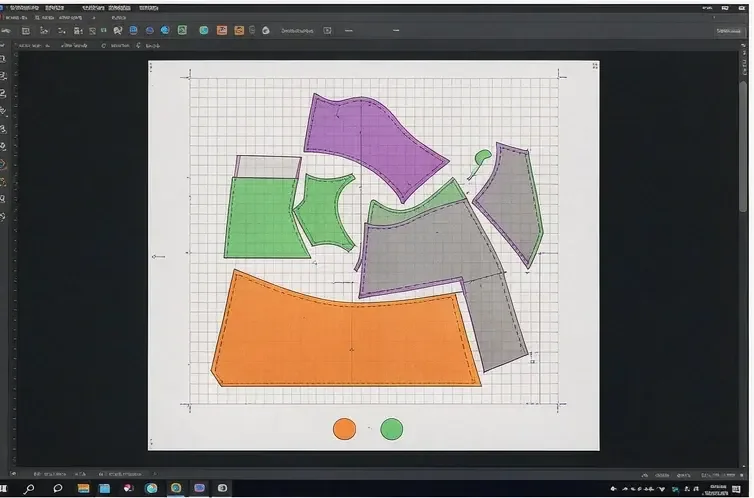
Once recorded, the piece moves to sampling at 6-10 working days, or 12-15 for complex builds, then to bulk at 35-50 days, with each style and colourway committed at MOQ 500 pcs and inspection drawn at AQL 2.5 under ISO 2859-1. Handover is on FOB Xiamen terms. The programme is delivered through our validated partner factory Quanzhou Yingming Bags, an SGS-validated site with 7 production lines and about 200,000 pcs per month of capacity, holding export experience since 2014.
Walk your silhouette through the five decisions
Send your sketch, the intended material and how the piece should carry. You will receive the five decisions answered for your shape with the working days and the record sheet, within two working days. Request a quote.
Frequently Asked Questions
How does an atelier build a handbag silhouette?
By taking five decisions in a fixed order: structure, panel logic, how the piece carries, the closure, then proportion and the final millimetres. The order reflects dependency rather than taste, because each decision removes options from the ones that follow it, and none can be safely reversed once the next has been taken.
Why does structure have to be decided first?
Because it fixes the material thickness and the reinforcement, and everything downstream is designed to those figures. A soft body uses 1.0-1.2 mm panels without interlining, while a semi-structured one uses 1.2-1.4 mm with 0.8 mm interlining behind it. Changing it later means a new pattern and a fresh toile.
What is panel logic in handbag design?
How the body is divided and, more importantly, the order in which it closes. A three-piece and a five-piece body can look identical in a drawing and behave oppositely at the bench, because some assembly sequences turn out to be impossible to execute. Discovering that on paper costs a revision; at the bench it costs a round.
How is the handle drop decided?
On a finished body rather than a drawing. A drop of 100 mm is a common shoulder target and 90-110 mm covers most day shapes, but the figure has to be confirmed once the panels and reinforcement have given the piece its real weight. A drawing can only assert the drop; only a body can show it.
Should a first capsule use a bespoke closure?
Usually not. Stock brass at 0.15-0.3 microns plating holds the trim line around USD 4.80 per bag, whereas bespoke hardware carries tooling and 30-40 working days, which is a long commitment for a shape that has not yet sold. Introduce it on the second capsule instead.
What is a toile and when is it cut?
A full-size test piece in 10 oz calico, cut after the structure and panel logic are settled and before the leather round. It resolves handle drop, base depth, closure position and overall read in one to two days. Two of them are often better than one, and together they cost less than one unnecessary leather round.
How much material does a structured body convert?
A structured panel set converts 55-65% of purchased hide area into usable panels. The shortfall covers nesting constraints, consistent grain direction and keeping the neck and belly away from visible faces. That figure is a property of the lot and the nesting, not of the drawing, so it is measured rather than assumed.
Which decisions are least expensive to revisit?
The later ones. Proportion costs two days on a toile and one further sample round if left late, while revisiting structure after the panel logic is settled means a new pattern, new reinforcement and a fresh toile. The early decisions are the least expensive to make and the most expensive to reopen.
What stitch density holds a handle join?
8-9 per inch, sewn with 0.45 mm braided polyester thread. Fewer stitches per inch will not hold a load point, and the handle is attached to the 0.8 mm interlining beneath the panel rather than to the panel itself. Spreading the load is the entire purpose of the reinforcement.
How long does a silhouette take to develop?
Roughly 9-14 working days for a semi-structured piece: two to three on structure, two to three on the pattern, one to two on the toile, then two leather rounds at 6-10 working days. A framed or bespoke piece adds 12-15 days of sampling, plus 30-40 working days on the hardware track.
How is a silhouette recorded for a full run?
As a specification stating panel dimensions to plus or minus 1.5 mm, material thickness, stitch density of 8-9 per inch, the edge specification, handle drop, strap width, 8 mm base feet and every separate trim piece. Without that record the silhouette cannot be repeated across 500 units.
What happens after the silhouette is approved?
A counter sample is drawn from the frozen specification and retained, bulk runs 35-50 days from intake, and inspection is at AQL 2.5 under ISO 2859-1 with the plan agreed before intake and packing over a further 3-5 days. The counter sample is the reference the whole run is measured against.
People Also Ask
What decisions define a handbag silhouette?
Five, in this order: the level of structure, the panel logic and seam sequence, how the piece carries, the closure and opening, then proportion and the final millimetres. Each one constrains the next.
Why can't a silhouette be designed in any order?
Because the decisions are dependent. A framed body sets a minimum opening, that opening decides the closure, the closure decides where reinforcement sits, and reinforcement changes the load the handle carries.
What is the difference between soft and semi-structured construction?
Soft uses 1.0-1.2 mm panels with no interlining and slumps by design. Semi-structured uses 1.2-1.4 mm panels with 0.8 mm interlining, which lets the body hold a fold and a clean base line.
How are handles attached to a leather body?
To the reinforcement beneath the panel, not the panel itself. The 0.8 mm interlining spreads the load, and the join is sewn at 8-9 stitches per inch to hold under daily use.
How is proportion corrected on a handbag?
On a 10 oz calico toile, in 8 mm steps, before any leather is cut. Two millimetres in the wrong place is visible, and on a toile it costs a marker stroke rather than a six to ten day round.
Sources and further reading
Every figure on this page is either our own programme data or attributed below. Open the originals before you write them into a specification.
- ISO — International Organization for StandardizationISO Publisher of ISO 2859-1 for the AQL 2.5 inspection plan applied to bulk after the silhouette is frozen.
- Leather Working GroupLeather Working Group Tannery audit protocol, relevant when the lots behind a 1.2-1.4 mm semi-structured body need their origin evidenced.
- ISO Online Browsing PlatformISO Public catalogue used to confirm standard names and scopes, including ISO 3376 for tensile strength and ISO 11644 for finish adhesion.
- WWDWWD Reporting on silhouette and trend direction across the European and American accessories market, used for proportion context.
- FashionUnitedFashionUnited Market reporting on the accessories sector, including the launch calendars that the decision sequence is planned against.