How Custom Hardware Defines a Luxury Bag Shape: A Fourteen Line Component Checklist
How does custom hardware define a luxury bag shape? Because every metal component carries a tolerance, a fixing and a load, and those three decide how many panels the body needs, how stiff the gusset has to be and where the hang line falls. Practical figures: MOQ 500 pcs per style and colourway, sampling at 6-10 working days and 12-15 for a complex construction, bulk at 35-50 days on FOB Xiamen terms, inspected to AQL 2.5 under ISO 2859-1.
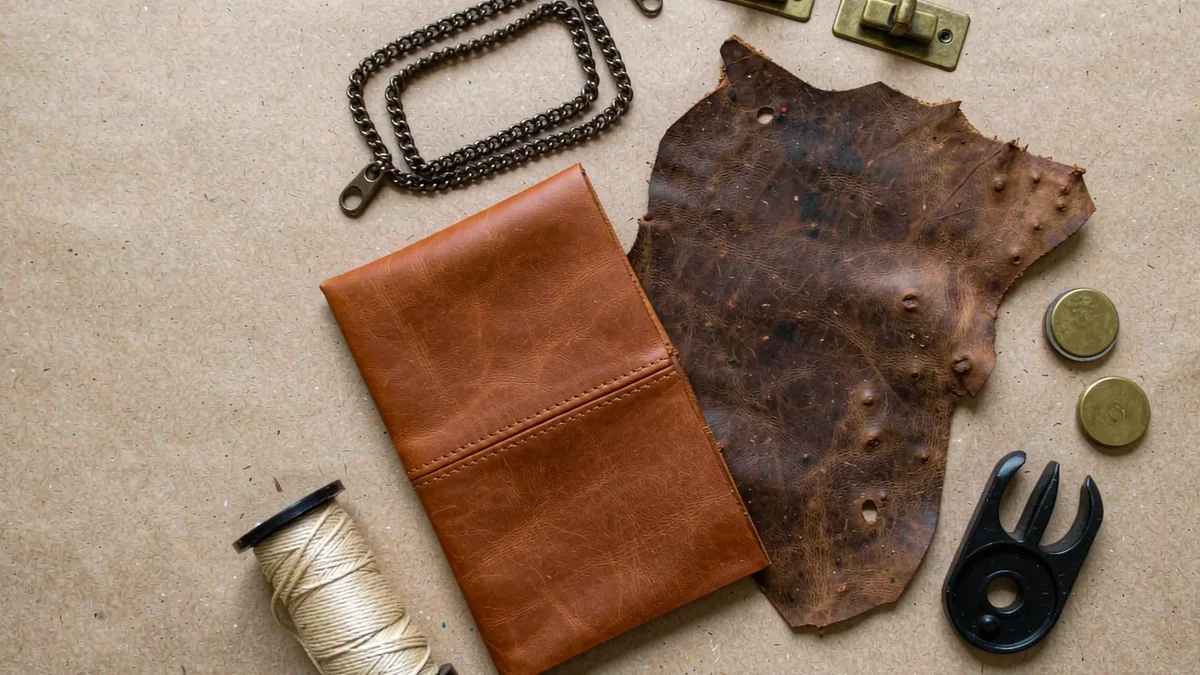
The Fourteen Line Checklist Before Anything Is Cut
Hardware is specified too late, usually after the leather has been chosen and the first toile is already sewn. By then the metal has to fit whatever the pattern can accommodate, which is how a clean silhouette acquires a bulging gusset and a reinforcement nobody wanted.
The alternative is to write the hardware list at the same time as the tech pack. Fourteen lines is enough for almost any body, and each line has a consequence somewhere in the pattern rather than only on the surface.
Custom components set the shape of a body through three mechanisms only: they fix the position of a panel edge, they set a minimum stiffness along that edge, and they carry a load into the leather. Every line below can be traced back to one of those three.
- Component name and the body position it sits on.
- Function: closes, carries, protects, decorates or nothing.
- Base metal, with the alloy reference where one applies.
- Process: machined, forged or die-cast, each with a tolerance.
- Every dimension that touches the pattern, in millimetres.
- Fixing method: rivet, screw, sewn tab or machined housing.
- Reinforcement behind the fixing, with the interlining thickness.
- Plating build: barrier layer and decorative layer, in microns.
- Salt spray hours to ISO 9227, with the acceptance criterion.
- Pull test figure in newtons for anything that carries load.
- Cycle test figure for a closure, usually 1,000 cycles.
- Compliance: low-lead where required, nickel release in contact.
- Tooling: who pays, who owns the die, and what a re-order costs.
- Re-order likelihood, which decides whether a die is worth cutting.
Where Metal Sets the Shape Rather Than Decorating It
A decorative nameplate changes nothing structural. A turn-lock, a frame closure and an adjustable strap slide change the body itself, and they should be drawn before the panel is rather than applied to it.
The mechanism is simple. A machined lock plate needs a flat,stable seat, so the panel behind it gets a reinforcement interlining and the gusset next to it gets a tighter tolerance. A drawstring mouth needs no such seat and collapses on its own. Two bodies can share a silhouette drawing and diverge completely once each meets its closure.
| Component | Pattern consequence | Reinforcement needed | Typical figure |
|---|---|---|---|
| Turn-lock plate | Panel edge must stay flat and square | 0.8 mm non-woven interlining | 32 x 22 mm plate, 4.5 mm boss |
| Frame closure | Entire mouth becomes rigid | Frame channel with a steel core | Mouth tolerance ±0.05 mm |
| Drawstring throat | Mouth collapses, no panel tolerance | Cord channel only | 6 mm cord, 12 mm channel |
| Base feet | Base becomes load bearing | 1.6 mm base board | 8 mm foot, 4 per body |
| Strap slide | Strap must pass without twisting | none beyond the strap itself | 25 mm strap in a 27 mm slide |
| Hidden magnet | Panel stays soft and unlined locally | housing only | N42 grade, about 1,200 gauss |
Closures: How a Lock Decides Panel Count and Stiffness
A closure is a tolerance problem before it is a design problem. A turn-lock with a 2.8 mm cam travel needs the two halves to meet without force across the whole production run, which means the leather thickness at the seat, the skive behind it and the interlining all have to be controlled together.
That control is what makes a structured body expensive. The panel behind a closure is usually skived to 0.9-1.1 mm and backed with interlining to keep total build-up inside the dimension the plate was drawn for. Skip the skive and the lock either will not close or bulges the panel in a way that only photographs well from directly in front.
Turn-lock
A machined cam travelling 2.8 mm into a struck plate. It needs a flat seat, a controlled skive behind it and a panel stiff enough that the closure does not tear under load. The strongest visual signature and the most demanding on tolerance.
Frame closure
Two metal arcs hinged at the ends, with the mouth sewn into a channel. It fixes the mouth into one shape permanently, which removes the slouch from the design entirely and suits an evening body better than a day one.
Hidden magnet
Rated by grade and pull force, commonly N42. It asks nothing of the panel, since the housing carries the strain, which is why it suits a soft hobo where rigid hardware would fight the silhouette.
Drawstring with a metal throat
The most forgiving option. It lets the mouth gather freely, and the only controlled dimension is the channel width against the cord diameter, so tolerance matters less than finish.
Handles and Straps: What Attachment Geometry Does to the Drape
Where a handle attaches is a shape decision disguised as a fitting decision. A riveted tab fixes the attachment point and transfers load into a small area, so the panel above it stiffens locally and the leather beside it hinge-creases. A sewn tab distributes load along a stitch line and lets the same panel relax.
Rivet shank length is the figure that catches teams out. A 3.2 mm shank through leather, interlining and reinforcement allows almost no variation in total build-up; once the stack is thicker than the shank, the rivet either will not set or the head stands proud and catches on clothing.
- Specify total build-up at the attachment, not only each layer.
- A sewn tab needs 18 mm below the stitch line to distribute load.
- A riveted tab needs rivets at least 20 mm apart along the stress line.
- Pull test the assembly on a finished body at 150-250 N, not the rivet alone.
- Write down skiving thickness at every fixing, since it changes total build-up.
Feet, Base Plates and How a Body Stands
Four feet in the right place are the difference between a body that stands and one that leans. Rules of thumb say place them inside 15-20 mm of each corner along the base seam line, which keeps the load off the edge of the leather and off the edge finish.
The base board does the remaining work. A 1.6 mm board behind a 4 mm leather foot distributes point loads across the whole base; without it the feet walk through the leather under load, and the failure shows as four small circles on the underside rather than as anything visible from above.
Tolerance: The Millimetre That Decides Whether It Reads as Handmade
A machined component holds ±0.05 mm and a die-cast one ±0.1 mm, and those figures matter only where two parts must meet. A visible gap of half a millimetre between a lock plate and the leather beside it reads as carelessness at arm's length, while the same gap behind a lining will never be seen.
The economical approach is to spend tolerance where it shows and stop spending it where it does not. Components drawn for the front of a body get machined parts; the same component hidden behind a pocket gets a cast one.
- Machined component tolerance
- ±0.05 mm
- Die-cast component tolerance
- ±0.1 mm
- Lock plate size
- 32 x 22 mm with a 4.5 mm boss
- Cam travel on a turn-lock
- 2.8 mm
- Rivet shank through leather and board
- 3.2 mm
- Foot diameter and count
- 8 mm, four per base
- Pull test on a strap assembly
- 150-250 N on a finished body
- Cycle test on a closure
- 1,000 cycles without failure
- Base board behind feet
- 1.6 mm
- Leather thickness at a closure seat
- 0.9-1.1 mm after skiving
Plating, Wear and What the Third Year Looks Like
A decorative deposit of 0.5-1.0 µm over a proper preparation survives daily handling for years; 0.2-0.3 µm does not, and it wears first at exactly the points the hand touches. Specify both layers, since a quotation naming only the finish has quietly left the thickness to whoever runs the bath.
Wear patterns are also a shape issue. A handle fitting that rotates against the leather polishes an oval into the panel within a season, which is why a rotating joint gets a washer or a leather spacer rather than sitting directly on the skin.
Compliance, and What Gets Tested Per Lot
Components are tested as part of the finished article rather than alone. REACH Annex XVII restricts certain substances in articles placed on the European Union market, including nickel release, and California Prop 65 governs warnings in that state. Both sit alongside ISO 9227 corrosion testing and the ISO 2859-1 sampling plan used at intake.
- Name the alloy, not only the metal, on every hardware line.
- Request low-lead brass in writing for a regulated market.
- Test nickel release on anything in prolonged skin contact.
- Keep the lot report and check the article described matches what shipped.
- Ask for the salt spray result on the component rather than on a coupon.
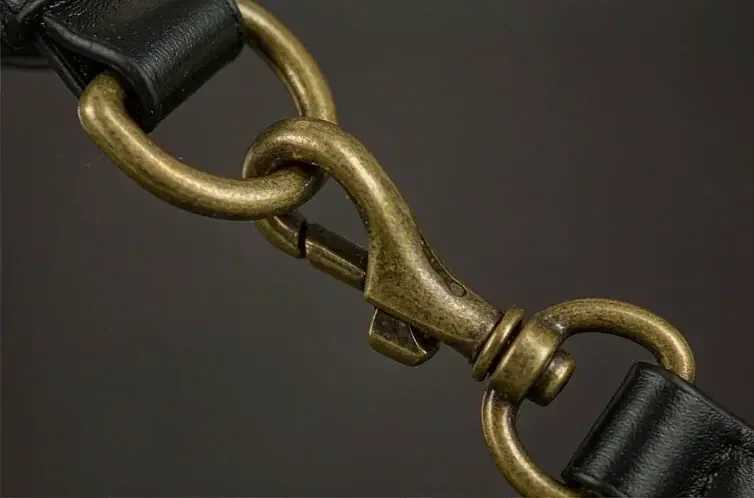
Costing the Checklist Rather Than the Component
Component price is not programme cost. Tooling, re-orders and complaint exposure usually outweigh whatever is saved by choosing the cheaper base metal, which is why the last three lines of the checklist decide more than the first three.
Reworking one closure on a returned piece costs around USD 4.80 in parts and bench time before any freight is counted. Against that, an extra micron of plating is inexpensive and a proper barrier layer beneath it is cheaper still.
Eight lines to check before signing a hardware list
- Every component named with position, base metal and alloy.
- Process and tolerance stated per component, not per style.
- Total build-up at every fixing, so shank length can be chosen.
- Reinforcement thickness behind every load-bearing component.
- Plating build written as barrier layer plus decorative layer.
- Salt spray hours to ISO 9227 with the acceptance criterion stated.
- Pull and cycle figures tested on a finished body, not a coupon.
- Tooling ownership and re-order cost agreed in writing.
Our programme works to MOQ 500 pcs per style and colourway, with sampling at 6-10 working days and 12-15 for a complex construction, bulk at 35-50 days on FOB Xiamen terms, inspected to AQL 2.5 under ISO 2859-1. It runs across 7 production lines with about 200,000 pcs per month of capacity and export experience since 2014, delivered through our validated partner factory Quanzhou Yingming Bags, an SGS-validated site. The metal and finish reference sits under luxury materials and the bench detail under craftsmanship.
Send the component list and we will write it back
Tell us where each component sits, what it carries and the finish you want. We will return metal, process, tolerance, plating build, test figures and a tooling note within two working days. Request a quote.
Frequently Asked Questions
How does custom hardware change a bag silhouette?
Through three mechanisms: it fixes the position of a panel edge, sets a minimum stiffness along that edge, and carries load into the leather. A frame closure removes the slouch from a body permanently; a hidden magnet asks nothing of the panel and lets the same drawing relax.
What tolerance should a machined lock plate be held to?
±0.05 mm machined, against ±0.1 mm for a die-cast part. Tolerance matters where two parts meet without force, so a visible plate and its strike eat up the tighter figure while a component behind a lining can take the looser one without being noticed.
How thick should leather be behind a closure?
Skived to 0.9-1.1 mm, then backed with interlining to keep total build-up inside the dimension the plate was drawn for. Skip the skive and the lock either refuses to close or bulges the panel, which shows immediately in a side-on photograph.
How many cycles should a closure survive?
1,000 cycles without failure is the usual acceptance figure, tested on a finished body rather than on a component alone. Testing in position catches failures that component testing never reaches, because the leather around the fixing changes how the load is carried.
What pull test figure applies to a strap?
150-250 N on a finished sample body, pulled slowly enough that the failure mode is visible. The purpose is not to break the strap but to find where it fails first, since the answer is usually the leather around the fixing rather than the metal.
How thick should plating be on bag hardware?
A decorative layer of 0.5-1.0 µm over a correctly specified barrier layer. Below 0.2-0.3 µm it wears first at the points the hand touches. Specify both layers on the list, since a quotation naming only the finish has left thickness unstated.
Where should base feet be placed?
15-20 mm inside each corner along the base seam line, four per body, over a 1.6 mm base board. The board distributes point loads; without it the feet work through the leather and the failure appears on the underside long before anything is visible from above.
What rivet shank length should I specify?
Whatever the measured total build-up requires, commonly 3.2 mm through leather, interlining and reinforcement. Specify total build-up rather than each layer, because once the stack exceeds the shank the rivet will not set or the head stands proud and catches.
Should one body use one metal throughout?
No. Machined brass at contact points and the closure, cast alloy at decorative plates, stainless steel at hidden housings is a considered specification. Uniformity reads well in a costing meeting and poorly in the third year of service.
How much does a hardware mistake cost downstream?
Reworking one closure on a returned piece costs around USD 4.80 in parts and bench time before freight. Across a booked lot that dwarfs the saving from a thinner plating build, which is why the test figures belong on the component list rather than in an email.
What corrosion testing applies to components?
Salt spray to ISO 9227, generally 24 hours for a standard component and 48 for a premium one, with no base metal corrosion stated as the acceptance criterion. Ask for the result on the component rather than on a test coupon, since coupons say nothing about casting porosity.
Which compliance rules affect metal components?
REACH Annex XVII restricts certain substances in articles placed on the European Union market, including nickel release, and California Prop 65 governs warnings in that state. Request low-lead brass in writing where required, and keep the test report per lot with the article described matching what shipped.
People Also Ask
What is a boss on a lock plate?
The raised collar on the reverse of a plate that passes through the leather into the body. At 4.5 mm it sets how much total build-up the panel may carry, which is why it belongs in the tech pack rather than only on the component drawing.
Do hidden magnets damage leather?
The magnet itself does not, but a poorly housed one does. A nylon or steel housing spreads the pull across a wider area and stops the two halves wearing a ring into the panel where they meet repeatedly.
Why does hardware polish a mark into a panel?
A fitting that rotates against leather abrades it in an oval within a season. Either add a washer, add a leather spacer, or accept the mark as patina and specify a leather that takes it well.
Is cast or machined hardware better for a signature closure?
Machined, where the hand lands and cycles accumulate. Casting holds finer relief at a lower unit price for decorative plates, but machined brass machines to a crisper edge and holds a tighter tolerance where two halves must meet.
When should hardware be specified in development?
At the same time as the tech pack, before the first toile is sewn. Specified later, the metal has to fit whatever the pattern can accommodate, which is how a clean silhouette acquires an unwanted reinforcement.
Sources and further reading
Every figure on this page is either our own programme data or attributed below. Open the originals before you write them into a specification.
- ISO — International Organization for StandardizationISO Publisher of ISO 9227 on salt spray corrosion testing and ISO 2859-1 on sampling plans used at intake.
- ECHA — European Chemicals AgencyEuropean Chemicals Agency Administrator of REACH, including Annex XVII restrictions on nickel release and lead in metal components.
- Office of Environmental Health Hazard AssessmentOEHHA The California agency administering Proposition 65 and its warning requirements for listed substances in articles.
- Institute of Materials, Minerals and MiningIOM3 Reference data on brass and zinc alloy composition, density and mechanical behaviour used when specifying components.
- SGS — Testing, Inspection and CertificationSGS Third-party body referenced for per-lot component testing and optional pre-shipment inspection.