How to Coordinate Packaging With a Luxury Bag Program: Nine Checkpoints in Order
How do you keep packaging on schedule alongside a handbag programme? By giving it nine checkpoints on the same clock as the bag, starting with the specification released alongside the tech pack and ending with the first carton opened before release. Packaging that misses checkpoint two, the artwork freeze, is the single most common cause of a delayed launch, and it is entirely preventable. This article sets out the nine checkpoints, who owns each, and the numbers behind them: sampling 6-10 working days, bulk 35-50 days, AQL 2.5 under ISO 2859-1, FOB Xiamen.
Packaging goes late for a structural reason rather than a careless one. The bag is the object everyone is watching, so the bag gets the timeline, and packaging is asked to fit into whatever space is left at the end of it. Since board, wrap, tissue and fabric each carry their own lead time and any die has to be cut before a set can be assembled, the space left at the end is never enough. The remedy is not to work faster at the end; it is to put packaging on the same clock at the beginning.
Why Packaging Drifts Out of Step With the Bag
Four causes account for almost every slip. The artwork is not frozen when the tech pack is, so print waits on a mark that is still being revised. Materials are ordered when the bag goes into bulk rather than when it goes into sampling, so board arrives after pack-out should have started. Tooling is treated as a detail rather than as a lead-time item. And nobody has written down who approves the first article, so it sits in an inbox for a week.
- Artwork frozen late, so print and tooling both wait on a mark that is still in revision.
- Materials ordered at bulk release rather than at sampling, so board arrives after pack-out should start.
- Tooling treated as a detail rather than as an item with its own lead time.
- No named owner for first-article approval, so the sample waits rather than moves.
- Packing instruction written after the goods arrive rather than with the packers beforehand.
The Nine Checkpoints, in Order
Each checkpoint has an owner, an output and a gate. The output is a document or a physical thing that either exists or does not; the gate is the condition that has to be true before the next checkpoint can start. Nothing on this list requires a meeting. What it requires is that each of the nine is written into the programme plan at the outset, in the same place the bag's milestones are written, rather than being remembered later.
| Checkpoint | Output | Gate to the next stage | Owner |
|---|---|---|---|
| One: specification | Packaging spec released with the tech pack | Board, wrap and fabric grades named | Programme lead |
| Two: artwork freeze | Signed artwork for every printed surface | No further revision without a change note | Design |
| Three: availability | Confirmed material availability and lot date | Mill or converter date in writing | Programme lead |
| Four: tooling | Die or plate cut and proofed | Proof approved on production material | Programme lead |
| Five: first article | One complete set, assembled as production will be | Passes the nine-contact opening trial | Quality |
| Six: bulk materials | Board, wrap, fabric and tissue received and verified | Grammage and moisture within tolerance | Quality |
| Seven: packing instruction | Written instruction with a photograph of each step | Packers have run three sets to the instruction | Packing |
| Eight: first carton | One packed carton opened and graded | No fail on any of the eight opening checks | Quality |
| Nine: release | Run released to pack-out | First carton signed off | Programme lead |
Checkpoint One: Specification Released With the Tech Pack
The packaging specification should be a document that exists on the same day as the tech pack, and it should name board grammage, wrap material, dust bag fabric weight, tissue weight and shipper rating. Naming them is what allows checkpoint three to happen at all, because a mill cannot confirm availability of a grade that has not been specified. Where a programme cannot yet name the wrap, the honest alternative is to name two accepted alternatives and confirm one at checkpoint three.
Checkpoint Two: The Artwork Freeze
The artwork freeze is the checkpoint most often missed and the one that costs the most. Every printed surface, the box wrap, the dust bag, the tissue if printed, the card and the envelope, has to be signed off before a die can be cut or a plate made. A mark revised after the freeze does not just change the artwork; it reopens the tooling, the proof and the first article, which is three checkpoints rather than one.
- Sampling window
- 6-10 working days, 12-15 for complex constructions
- Bulk window
- 35-50 days from release
- Inspection level
- AQL 2.5 under ISO 2859-1
- Handover terms
- FOB Xiamen, with CIF or DDP where required
- Run minimum
- 500 pcs per style and colourway
- Board grammage
- Named at checkpoint one, verified at checkpoint six
- Board moisture
- 8% to 12% at goods-in
- Artwork freeze
- Before any die is cut or plate made
- First carton
- Opened and graded before the run is released
Checkpoint Three: Material Availability Confirmed
Availability is a date, not an assurance. The question to put to the board mill or the converter is what lot the grade is in and when that lot can be called off, and the answer belongs in writing at checkpoint three rather than in a conversation at checkpoint seven. Certified grades in particular are produced in fewer lots, so late confirmation can move a programme onto a different grade or onto the next available lot, either of which is a change rather than a scheduling detail.
Two safeguards make this checkpoint robust. Name an accepted substitute grade in the specification at checkpoint one, so a substitution does not become a re-approval. And confirm the chain of custody documentation at the same time as the lot date, where the destination market requires it, because the certificate code is tied to a specific run and cannot be produced retroactively.
Checkpoint Four: Tooling Cut and Proofed
A deboss die, a foil die and a print plate each have a lead time and each needs a proof on the production material rather than on a substitute. The proof is the deliverable at this checkpoint: a mark applied to the actual wrap or the actual card stock, at the actual deboss depth of 0.3 to 0.5 millimetres or the actual foil dwell. A proof on a substitute stock tells a programme very little, because the whole question is how this material takes this mark.

Checkpoint Five: The First Article
The first article is one complete set assembled exactly as production will assemble it, by the people who will assemble it, and it is then opened. Not inspected, opened. The nine-contact opening trial, carton opened with no tool, box weighed, lid gauged at 250 to 400 grams, reveal timed at eight to twelve seconds, set shaken for silence, scent checked, dust bag pulled fifty times, printed surfaces rubbed, is the gate at this checkpoint and it takes under an hour.
Checkpoint Six: Bulk Materials Received and Verified
Verification at goods-in is four measurements. Board grammage weighed on a cut sample against the order. Board moisture read with a pin meter and held between 8% and 12%, because board outside that band warps and refuses a foil bond. The shipper's edge crush rating read off the maker's stamp. And the dust bag fabric weighed and rub-tested against the production leather finish to confirm it does not shed.
Those four measurements take about twenty minutes and they predict warp, foil bond failure, carton collapse and lint on dark leather better than any visual check. Where a delivery fails one of the four, the decision has to be made at this checkpoint rather than at pack-out, because the alternative is discovering the same failure when the first carton is opened and five hundred sets are already assembled.
Checkpoint Seven: The Packing Instruction
A written instruction is read three different ways by three different packers, which is why the instruction needs a photograph of each step: the tissue fold, the position of the piece in the box, the sheet count, the ribbon tie and the placement of the card. The gate is that packers have run three complete sets to the instruction before the run starts, and that those three sets are the ones used for the first-article trial.
Tissue fold
Photograph the finished fold, not a description of it. Folded tissue reads as wrapping; scrunched tissue reads as filler.
Piece position
Show the clearance, 5 to 10 mm per side, and which way the handles face when the piece is set down.
Ribbon tie
One bow, 25 mm grosgrain, releasing at 3 to 5 N. Photograph the finished bow from above.
Card placement
Show where the envelope sits relative to the dust bag, so every carton opens the same way.
Checkpoint Eight: The First Carton Is Opened
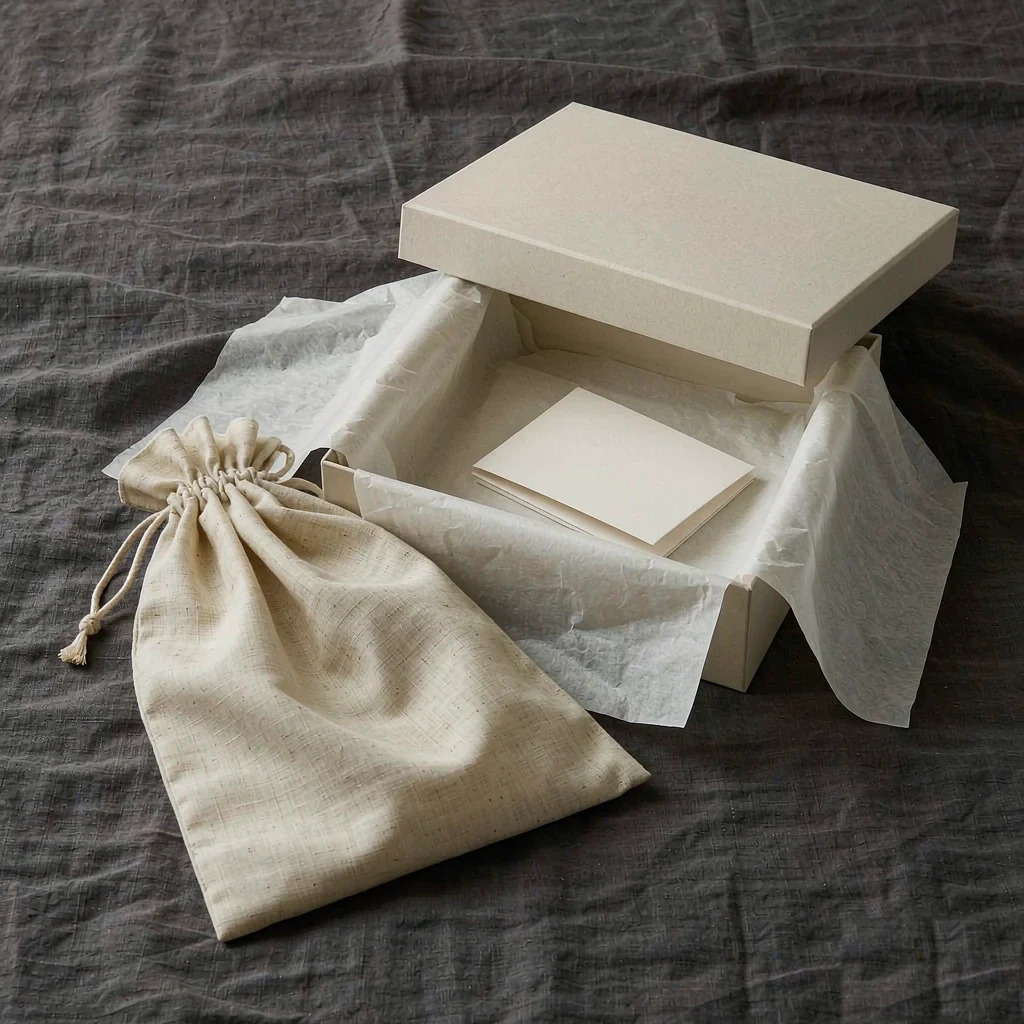
One packed carton, opened as a client would open it, before the rest of the run is assembled. This is the checkpoint that catches everything the previous seven were designed to prevent, and it is the one most often skipped when a programme is behind. Skipping it is a false economy of the most ordinary kind: the carton takes fifteen minutes to open and grade, and the rework it prevents is measured in hundreds of sets.
Checkpoint Nine: Release, and Who Owns It
Release is a signature against the first-carton result, and it belongs to one person rather than to a consensus. The nine checkpoints above each name an owner for the same reason: an output without an owner waits. Where a programme is running several drops in a season, the same nine checkpoints apply to each, but checkpoints one, two and four only need to be repeated when the mark or the material changes.
Freeze the artwork before any die is cut. A mark revised after the freeze does not change one checkpoint, it reopens three: the tooling, the proof and the first article. That is where most packaging schedules are actually lost.
What the nine checkpoints cost is one afternoon of work spread across a programme, and what they prevent is a set discovered at the packing bench. Where a programme runs the same set across a season, the checkpoints compress further: availability, verification, instruction and first carton repeat each drop, and the specification, artwork and tooling hold until something changes. The discipline is in the writing down rather than in the doing, which is why a one-page plan pinned above the bench outperforms a longer document in a folder.
What a Coordinated Timeline Looks Like
Laid on the bag's own clock: specification and tech pack together at day zero, artwork frozen during sampling, availability confirmed and tooling cut during the bulk window, first article approved as bulk completes, materials verified at goods-in, packing instruction written with the packers, first carton opened and graded, then release to pack-out. Sampling takes 6-10 working days and 12-15 for complex constructions, bulk production runs 35-50 days, inspection sits at AQL 2.5 under ISO 2859-1, and handover is on FOB Xiamen terms.
Work runs at 500 pcs per style and colourway through our validated partner factory Quanzhou Yingming Bags, an SGS-validated site operating since 2014 with 7 production lines and capacity of about 200,000 pcs per month. Against a reference unit cost of USD 4.80, a complete set adds 40% to 90%, and the nine checkpoints are what keep that figure from being spent twice. See luxury handbag packaging for the layer specification these checkpoints sit behind.
Take this to the bench
- Write the nine checkpoints into the programme plan on day one, each with an output and a named owner. Freeze the artwork before any die is cut, verify four measurements at goods-in, and never release a run before the first carton has been opened.
Put packaging on your programme clock
Send the silhouette, the launch date and the markets you ship to, and we will map the nine checkpoints against your timeline. Request a quote
Frequently Asked Questions
Why does packaging usually fall behind a handbag programme?
Because the bag gets the timeline and packaging is asked to fit into whatever is left. Board, wrap, tissue and fabric each carry their own lead time and any die must be cut before a set can be assembled, so the space left at the end is never enough. The fix is an earlier start, not faster work.
What are the nine packaging checkpoints?
Specification, artwork freeze, material availability, tooling, first article, bulk materials received and verified, packing instruction, first carton opened, and release. Each has an output that either exists or does not, a gate to the next stage, and a named owner.
When should packaging artwork be frozen?
Before any die is cut or plate made, which in practice means during sampling. A mark revised after the freeze reopens three checkpoints rather than one, the tooling, the proof and the first article, and that is where most packaging schedules are actually lost.
Who should own packaging approval?
One named person per checkpoint, not a consensus. An output without an owner waits, and the first article is the output most often left sitting in an inbox. Naming the owner at checkpoint one costs nothing and prevents the most common form of slippage.
How is a first article different from a sample?
A first article is one complete set assembled exactly as production will assemble it, by the people who will assemble it, and then opened rather than inspected. It passes the nine-contact opening trial, including lid resistance of 250 to 400 grams and a reveal of eight to twelve seconds.
What should be checked when packaging materials arrive?
Four measurements: board grammage weighed against the order, board moisture held at 8% to 12%, the shipper's edge crush rating read off the maker's stamp, and the dust bag fabric weighed and rub-tested against the production leather finish.
Why verify board moisture content?
Board outside 8% to 12% warps and refuses a foil bond, so the mark fails on the production run rather than on the approval sample. The check takes minutes with a pin meter on ten sheets from the delivery and predicts warp and foil failure better than any visual inspection.
How should a packing instruction be written?
With a photograph of each step: the tissue fold, the position of the piece with 5 to 10 mm clearance per side, the sheet count, the ribbon tie and the placement of the card. A written instruction alone is read three different ways by three different packers.
Why open the first carton before releasing the run?
Because it catches everything the previous seven checkpoints were designed to prevent, and it takes fifteen minutes against rework measured in hundreds of sets. It is the checkpoint most often skipped when a programme is behind, and the one least within reach to skip.
Do the nine checkpoints apply to every drop in a season?
They apply to each drop, but checkpoints one, two and four only need repeating when the mark or the material changes. A programme running the same set across three drops repeats the availability, verification, instruction and first-carton checks and keeps the rest.
How do packaging lead times relate to bag lead times?
They run on the same clock: specification with the tech pack, artwork during sampling, tooling during the bulk window, materials before pack-out. Sampling takes 6-10 working days and 12-15 for complex constructions, bulk runs 35-50 days, inspection sits at AQL 2.5 under ISO 2859-1.
What is confirmed at the material availability checkpoint?
Which lot the grade is in and when that lot can be called off, in writing. Certified grades are produced in fewer lots, so late confirmation can move a programme onto a different grade or the next available lot, either of which is a change rather than a scheduling detail.
People Also Ask
How do I keep packaging on schedule?
Give it nine checkpoints on the same clock as the bag, each with an output and a named owner. Start with the specification alongside the tech pack and end with the first carton opened before release.
What is an artwork freeze?
The point at which every printed surface is signed off and no further revision happens without a change note. It must come before any die is cut, because a later revision reopens tooling, proof and first article.
What is a first article in packaging?
One complete set assembled exactly as production will assemble it, then opened rather than inspected. It passes the nine-contact opening trial, including lid gauging and reveal timing, in under an hour.
Why is packaging always the last thing ready?
Because it is specified last and therefore has to run faster than it comfortably can. Materials and tooling have fixed lead times, so the only real remedy is specifying the set at the same time as the tech pack.
How do I check packaging on arrival?
Weigh the board, read moisture with a pin meter and hold it at 8% to 12%, verify the carton's edge crush stamp, and rub-test the dust bag fabric against the production leather finish.
Sources and further reading
Every figure on this page is either our own programme data or attributed below. Open the originals before you write them into a specification.
- ISO standards catalogueInternational Organization for Standardization Reference for ISO 2859-1 sampling procedures applied at packaging goods-in.
- Technical Association of the Pulp and Paper IndustryTAPPI Test methods for grammage, moisture and edge crush used at checkpoint six.
- ASTM standards for packaging and transit testingASTM International Referenced for drop, compression and vibration practice on the first packed carton.
- FSC certification and chain of custodyForest Stewardship Council Chain of custody documentation confirmed at the material availability checkpoint.
- REACH legislationEuropean Chemicals Agency Substance restrictions relevant to inks and coatings declared at specification stage.