How Certificates and Cards Elevate Luxury Bags: A Six-Decision Specification Path
Do certificates and cards actually raise the perceived value of a handbag? Only when they are specified rather than added, and the specification runs in a fixed order: how many pieces, what each has to say, which stock, what size, how the mark is applied, and whether the piece carries a record. Six decisions, taken in that sequence, produce a card set that reads as considered at 300 gsm and 90 by 54 millimetres. This article walks the path and gives the numbers behind each decision, at 500 pcs per style and colourway against a reference unit cost of USD 4.80.
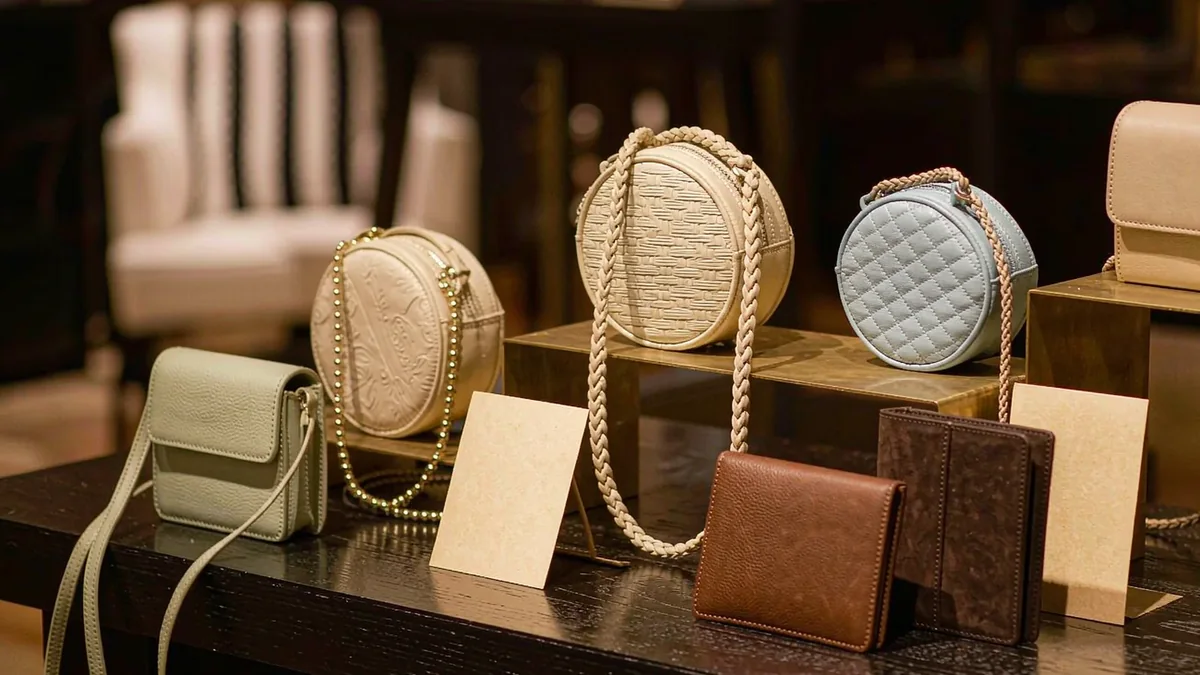
Printed matter is the least costly layer in a presentation set and the one most often padded. A box arrives with a care card, a material card, a card about the house and a small envelope whose contents nobody can remember, and the effect is not richness but noise. What separates a considered card set from a padded one is not how much is spent; it is whether each piece was given a job before it was given a size. The six decisions below assign those jobs in the order that works.
The Decision Order Behind a Card Set
Card specification fails when it starts with artwork. By the time a layout is being discussed, the decisions that actually determine cost, lead time and whether the piece is read at all have already been made by default. The workable order is piece count first, because it sets the cost floor; content second, because it sets the size; stock third; size fourth; print method fifth; and the record question last, because it depends on all five. Working out of order produces the familiar result: a card that has to be re-set twice.
- Piece count: how many items go in the box, and what job each one holds.
- Content: what each piece must say, and what it must not repeat.
- Stock: weight, coating and how the piece behaves in the hand.
- Size: the dimension that follows from the content, not from a template.
- Print method: how the mark is applied, and at what colour count.
- Record: whether the piece carries a serialised or scannable element.
Decision One: How Many Pieces Go in the Box
Two, in the great majority of programmes. One piece carries the care story, which is the information the client actually needs in the first week of ownership; the second carries whatever is specific to the piece, whether that is a material declaration or a record of where the leather came from. A third is justified when a line carries an exotic material requiring documentation, and a fourth almost never is. Every piece added costs money, adds an approval cycle and dilutes the one the client would have read.
| Pieces in the box | What each one does | When it is justified | Read rate |
|---|---|---|---|
| One | Care story only | A clean, single-material line | High |
| Two | Care story plus material declaration | The default for most programmes | High for both |
| Three | Adds provenance or an exotic material document | Where the material requires documentation | Medium for the third |
| Four | Usually duplicates one of the above | Rarely | Low for the third and fourth |
| Envelope | Holds the set and protects the edges | Whenever there are two or more pieces | Held, not read |
Decision Two: What the Card Has to Say
Content sets the size, so it comes before the dimension. A care story that covers cleaning, storage, moisture and what to do about a mark on a pale calfskin runs to roughly 120 to 160 words in two languages, and that fits a two-panel card at a legible size. A material declaration is much shorter, thirty to fifty words, and belongs on the reverse of the same card or on a single-panel piece. The failure mode is writing one long paragraph and then setting it at six point to make it fit.
Legibility is a specification, not a preference. Body text on a care card should sit at eight point or above, with a contrast ratio that holds under the 400 lux of a shop fitting room rather than the 1,000 lux of a studio. Where a programme wants a smaller card, the answer is fewer words, not smaller type. A card that has to be held at arm's length and squinted at has failed at the only job it was given.
Decision Three: Stock, Weight and Finish
Uncoated stock at 300 gsm is the reference for a care card. It holds a fold without cracking at the spine, it takes a blind deboss or a single-colour letterpress mark cleanly, and critically it stays where it is put down, because a gloss laminate on a light card slides off a polished table. Where a programme wants a heavier feel, 350 gsm uncoated is available at modest extra cost and is the point past which the card starts to feel like board rather than paper.
- Care card stock
- 300 gsm uncoated, 350 gsm where a heavier hand is wanted
- Card format
- Two panels, folded, spine scored not creased
- Flat size
- 180 by 54 mm opening to 90 by 54 mm
- Body type size
- 8 pt minimum, tested under 400 lux
- Mark on the card
- Blind deboss or single-colour letterpress
- Envelope
- Uncoated, 100 by 70 mm, unprinted or single-colour
- Colour count
- One, rising to two only where the mark demands it
- Finish
- Uncoated; avoid gloss laminate on light-weight cards
- Record element
- Serialised number or scannable code, where required
Decision Four: Size, and the Envelope That Follows
The 90 by 54 millimetre format is not a style choice; it is the size a client can hold, slip into a card slot and put in a drawer without thinking about it, which is why it survives. Anything larger has to be filed somewhere deliberate and will be lost. Anything smaller cannot carry an eight-point paragraph in two languages. Where a programme wants to signal more substance, the right move is a taller two-panel card at 90 by 110 millimetres rather than a wider one, because width is what stops it fitting anywhere.
The envelope follows the card and is more functional than decorative. Uncoated stock at 100 by 70 millimetres holds a folded two-panel card with 3 to 5 millimetres of ease, which is enough to slide out without a fight and tight enough that it does not rattle. Print the envelope or leave it plain; the argument for printing it is that it is the first printed surface the client lifts after the tissue, and the argument against is that it is one more surface to approve.
Decision Five: How the Mark Is Applied
On uncoated stock the two restrained options are a blind deboss and a single-colour letterpress mark, and both read better at arm's length than a printed logo. Deboss gives depth without colour at 0.3 to 0.5 millimetres and needs a die; letterpress gives a slight bite and a denser ink film and needs type or a plate. Foil is available on uncoated stock but it sits on the surface rather than in it, and it scuffs at the corners of a card that is handled and then put in a drawer.
- Blind deboss: depth 0.3 to 0.5 mm, no colour, needs a brass or magnesium die.
- Single-colour letterpress: a slight bite and a dense ink film, needs a plate.
- Hot foil: a metallic edge that scuffs at the corners of a handled card.
- Litho: full colour, justified only where the card carries imagery.
- Spot coating: a restrained gloss against an uncoated field, used sparingly.
Decision Six: Whether the Card Carries a Record
A record element, whether a serialised number or a scannable code, turns the card from stationery into a document. It is worth doing when the piece itself carries a matching identifier, because the two together are what make a record verifiable; a number on a card with nothing to check it against is decoration. Where a programme does add one, the specification that governs it is the print quality of the code rather than the design of the card.
A scannable symbol is graded, not admired. The applicable print quality standard is ISO/IEC 15416 for linear symbols, and the working acceptance grade in most retail environments is C or better at the point of pack-out, with a quiet zone of at least 2.5 millimetres kept clear of artwork. Cards are graded again after handling, because a code that scans on the press sheet and fails after a week in a drawer has been printed at the wrong contrast or too close to a fold.
Where Card Sets Go Wrong
Four failures repeat. Type set below eight point to fit copy that should have been cut. A gloss laminate on a light card that slides off a polished surface and picks up fingerprints. Four pieces where two would do, which pushes the read rate of all four down. And a code printed too close to a fold or without its quiet zone, which fails at the till or in the client's hands. Each of the four is caught by a five-minute check at approval, and each is expensive to catch at pack-out. The fifth failure is quieter and more common: a card set that was specified once at launch and never revisited, so that by the third season it describes a material the line no longer uses and omits one it does. Printed matter is the least costly layer to correct on paper and one of the more costly to correct once it is packed, so it deserves a review at every artwork freeze rather than only at the first.
Hold the approved card at arm's length under the light the client will actually stand in. If the body type disappears before the mark does, the card has the wrong priorities: the client came for the care story and the house gave them a logo.
What a Card Set Costs Against the Reference Unit
Set against a reference unit cost of USD 4.80, printed matter typically carries 9% to 15% of set cost, and the two variables that move it are piece count and colour count. Cutting from three pieces to two saves more than any change of stock, and cutting from two colours to one saves more than any change of size. That is the useful asymmetry: the decisions that cost the most are the ones least visible to the client, which means they can be reversed without anyone noticing.
Fitting Cards Into the Programme Clock
Cards need artwork approval, a die or plate, and stock on hand before pack-out, which puts them on the same timeline as the rest of the presentation set. Sampling takes 6-10 working days and 12-15 for complex constructions, bulk production runs 35-50 days, inspection sits at AQL 2.5 under ISO 2859-1, and handover is on FOB Xiamen terms. Card artwork approved during sampling rather than at the end of bulk is the single change that prevents the most common packaging delay. See luxury handbag packaging for how the card set sits inside the wider specification.
Take this to the bench
- Decide in order: piece count, content, stock, size, print method, record. Two pieces at 300 gsm uncoated, 90 by 54 millimetres, one colour, eight point minimum, and a code with its quiet zone kept clear.
Specify a card set
Send the silhouette, the material declaration and the languages you need, and we will set the card specification around them. Work runs at 500 pcs per style and colourway through our validated partner factory Quanzhou Yingming Bags, an SGS-validated site operating since 2014 with 7 production lines and capacity of about 200,000 pcs per month. Request a quote
Frequently Asked Questions
How many cards should go in a luxury bag box?
Two, in most programmes: one carrying the care story and one carrying the material declaration. A third is justified where the line uses an exotic material requiring documentation. A fourth almost never is, because it costs money, adds an approval cycle and dilutes the pieces the client would have read.
What weight should a care card be?
Uncoated stock at 300 grams per square metre is the reference. It holds a fold without cracking, takes a blind deboss or single-colour letterpress cleanly, and stays where it is put down. 350 gsm gives a heavier hand, and past that the card starts to feel like board rather than paper.
What size should a luxury bag card be?
Ninety by fifty-four millimetres, because it is the format a client can hold, slip into a card slot and put in a drawer without thinking. Where more substance is wanted, go taller at 90 by 110 millimetres rather than wider, because width is what stops it fitting anywhere.
Why is uncoated stock preferred over a gloss laminate?
Because a gloss laminate on a light card slides off a polished table and shows fingerprints immediately. Uncoated stock stays where it is put, takes a deboss or letterpress mark well, and ages better in a drawer, which is where the card will spend most of its life.
What type size is legible on a care card?
Eight point or above for body text, checked under the 400 lux of a shop fitting room rather than the 1,000 lux of a studio. Where a programme wants a smaller card the correct response is fewer words, not smaller type, because a card that must be squinted at has failed its only job.
Which print method suits an uncoated card?
A blind deboss or a single-colour letterpress mark. Deboss gives depth without colour at 0.3 to 0.5 millimetres and needs a die; letterpress gives a slight bite and a denser ink film. Foil is possible but sits on the surface and scuffs at the corners of a handled card.
Should a card carry a serialised number or a code?
Only when the piece itself carries a matching identifier, because the two together are what make a record verifiable. A number on a card with nothing to check it against is decoration, and it adds an approval cycle and a data-handling obligation for no benefit.
How is a scannable code on a card checked?
It is graded rather than admired. Print quality is assessed against ISO/IEC 15416, with a working acceptance grade of C or better at pack-out and a quiet zone of at least 2.5 millimetres kept clear of artwork. Grade it again after handling, because contrast and proximity to a fold both degrade.
Does an envelope need to be printed?
It is optional. The argument for printing is that the envelope is the first printed surface the client lifts after the tissue; the argument against is one more surface to approve. Uncoated at 100 by 70 millimetres with 3 to 5 millimetres of ease is the functional specification either way.
How much do cards add to packaging cost?
Printed matter typically carries 9% to 15% of set cost. Piece count and colour count move it most: cutting from three pieces to two saves more than any change of stock, and cutting from two colours to one saves more than any change of size.
When should card artwork be approved?
During sampling. Cards need artwork approval, a die or plate, and stock on hand before pack-out, so approving artwork at the end of bulk is the single most common cause of a packaging delay. Sampling takes 6-10 working days, bulk 35-50 days.
What are the four most common card failures?
Type set below eight point to fit copy that should have been cut; a gloss laminate that slides and shows fingerprints; four pieces where two would do; and a code printed too close to a fold or without its quiet zone. All four are caught by a five-minute check at approval.
People Also Ask
What is a care card in luxury packaging?
The printed piece that tells a client how to clean, store and protect the bag in the first weeks of ownership. At 300 gsm uncoated and 90 by 54 millimetres it carries 120 to 160 words in two languages at a legible size.
How do I choose a card stock weight?
Start at 300 gsm uncoated, which holds a fold without cracking and stays where it is put down. Move to 350 gsm for a heavier hand, and stop there, because beyond that the piece reads as board rather than paper.
Does a certificate of authenticity add value?
It adds value only when the piece carries a matching identifier, so the record can be checked. A serialised card with nothing to verify it against is decoration and adds an approval cycle without benefit.
What is ISO/IEC 15416?
The print quality standard used to grade linear barcodes. Most retail environments accept a grade of C or better at pack-out, with a quiet zone of at least 2.5 millimetres kept clear of artwork.
How do cards fit a packaging timeline?
On the same clock as the set: artwork approved during sampling, die or plate cut during the bulk window, stock on hand before pack-out. Approving artwork at the end of bulk is the most common packaging delay.
Sources and further reading
Every figure on this page is either our own programme data or attributed below. Open the originals before you write them into a specification.
- ISO standards catalogueInternational Organization for Standardization Reference for ISO/IEC 15416 barcode print quality grading and ISO 2859-1 inspection.
- Technical Association of the Pulp and Paper IndustryTAPPI Test methods for paper grammage, fold behaviour and surface properties used on card stock.
- FSC certification and chain of custodyForest Stewardship Council Chain of custody reference where the card stock carries a certified claim.
- REACH legislationEuropean Chemicals Agency Substance restrictions relevant to inks and coatings applied to printed matter.
- Leather Working Group audit protocolLeather Working Group Reference used where a material card declares the provenance of the leather.