High-End Handbag Supplier MOQ for Buyers: What 500 pcs per Style and Colourway Really Means
How much do you have to order before a luxury handbag house will open a production slot? For our programme the answer is fixed: MOQ 500 pcs per style / colourway, built on 7 production lines that release about 200,000 pcs per month, with sampling in 6-10 working days and bulk in 35-50 days. This guide compares the four patterns buyers use to reach that floor and shows what each one does to unit cost, lead time and material yield before a brief is ever sent.
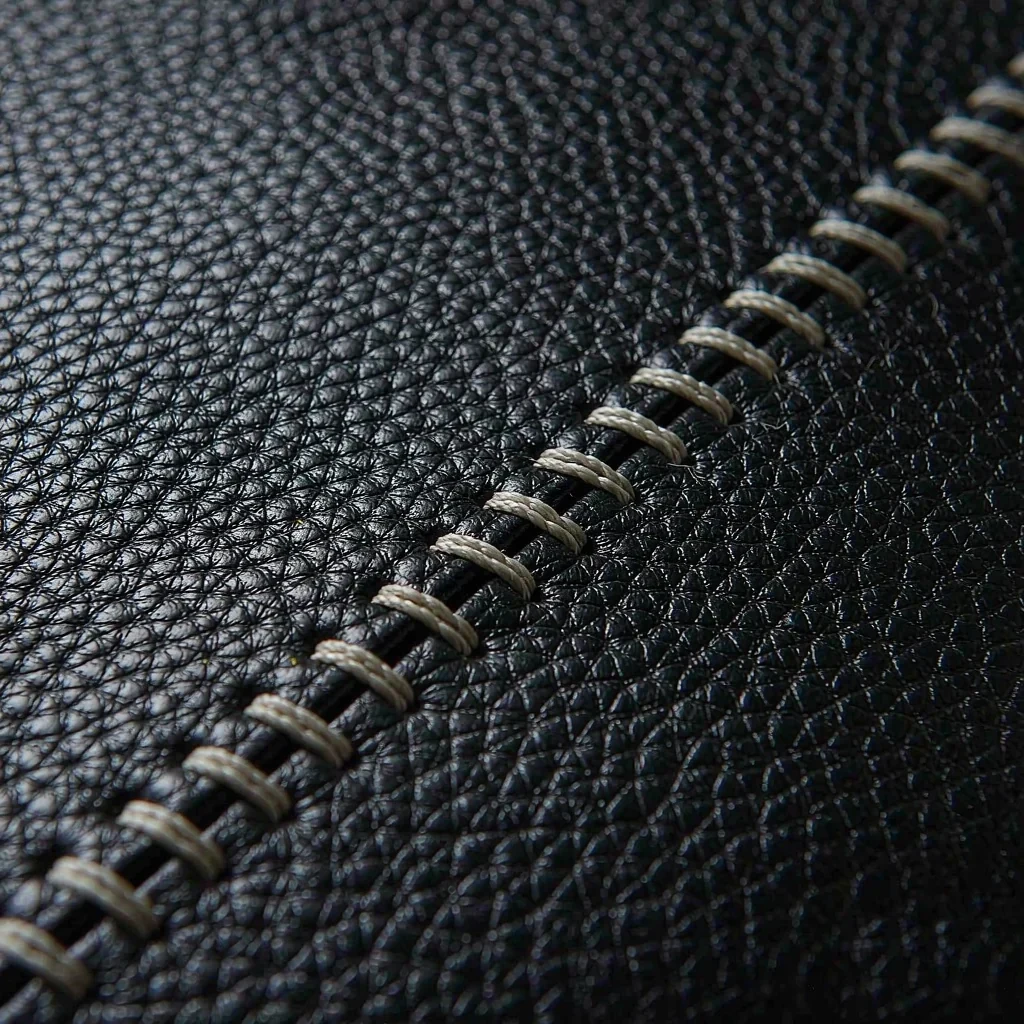
What 500 pcs per style / colourway means in practice
A 500-pcs minimum is not a negotiating posture. It is the point at which a leather cutting nest, a dye lot and a bench setup all become economical. Below that number the same work still has to happen: the same pattern grading, the same clicker dies, the same hardware tooling and the same finishing passes. It is simply spread across too few pieces to hold a stable unit cost. Our programme therefore treats MOQ 500 pcs per style / colourway as a fixed entry point, and every figure in this guide follows from that one rule.
The words per style / colourway carry the weight. One shape in one colour is 500 pieces. The same shape in three colours is 1,500 pieces, because each colourway is its own dye lot and its own cutting nest. Leather absorbs pigment batch by batch, and a tannery cannot reproduce a shade to the letter across a later run. Buyers who read the number as 500 pieces in total routinely discover the gap in the second quotation. Settle the definition at the briefing stage and the rest of the conversation becomes arithmetic.
Programme parameters at a glance
- MOQ
- 500 pcs per style / colourway
- Sampling
- 6-10 working days (12-15 working days for complex constructions)
- Bulk production
- 35-50 days
- Inspection
- AQL 2.5 under ISO 2859-1, third-party inspection optional
- Trade terms
- FOB Xiamen, with FOB / CIF / DDP available on request
- Capacity
- 7 production lines, about 200,000 pcs per month
- Export experience
- since 2014
- Partner facility
- our validated partner factory Quanzhou Yingming Bags
Read those eight rows as one system, not as a list of promises. Sampling at 6-10 working days only holds if the brief arrives with a complete tech pack. Bulk at 35-50 days only holds if the hide lot is booked before the sample is approved. AQL 2.5 only holds if the inspection level is written into the purchase order rather than agreed in an email. Move one row and the others move with it, which is why the most useful thing a buyer can do is decide all eight before asking for a price.
Four ways to reach the 500-pcs floor, compared
| Ordering pattern | How it fills 500 pcs | Unit cost effect | Lead time effect | Best for |
|---|---|---|---|---|
| Single colourway | 500 pcs of one style in one colour | Baseline reference point | 35-50 days bulk, 6-10 working days of sampling | A first collection or a demand test |
| Two colourways | 250 pcs each of one style | Slightly above baseline | Adds 3-5 days for the second dye lot | A core style with two staple colours |
| Size family | 250 pcs of a 32 cm plus 250 pcs of a 26 cm | Moderate, with a shared nest | Adds 2-4 days for the second pattern grade | A day-to-evening capsule |
| Three-style capsule | About 170 pcs across three shapes | Highest of the four | Adds 5-8 days, three bench setups | A boutique launch needing range depth |
That table is the whole menu. Most buyers arrive wanting to mix the patterns, asking for two sizes in three colours at 500 pcs in total, and it is at that point the floor does its work. A 32 cm day bag in black and the same bag in cognac are two dye lots, not one. Before you choose, write down which pattern your own finance team can defend, because the smallest-looking quote is often the one with the widest variance once the hides are graded.
How the pattern you choose moves unit cost
Unit cost in fine leather goods is driven less by labour than by material yield. A full-grain calfskin hide rarely gives more than 55-60% usable cutting area once scars, neck wrinkles and flank stretch are graded out, so the efficient pattern is the one that nests best, not the one with the smallest piece count. Three shapes cut from one shared nest cost less to cut than the same three shapes cut on separate days, even when the total piece count is identical.
Hardware is the second lever. A bespoke zamak turn-lock carrying 0.15-0.3 micrometre gold plating brings a tool-up charge and its own minimum at the plating bath, so a design that shares an existing lock across two or three sizes keeps that charge off the bill entirely. Stitch density is the third: structural seams worked at 8-9 stitches per inch take measurably longer than ones at 6-7, and across 500 pieces the difference shows up as bench hours rather than as thread.
Lead time across the four patterns
- One style, one colourway: 6-10 working days of sampling and 35-50 days bulk, the baseline of the programme.
- Two colourways: add 3-5 days for the second dye lot to be matched, approved and booked.
- Size family: add 2-4 days for the second pattern grade and its clicker die.
- Three-style capsule: add 5-8 days, because three bench setups cannot be run in parallel on one line.
- Complex constructions: framed, hand-stitched or exotic work moves sampling to 12-15 working days and bulk to the top of the 35-50 days band.
None of those additions are padding. They are the calendar cost of a craft process in which a hide has to be graded, a dye lot has to be matched and a bench has to be set up before a single seam is sewn. The programmes that hit their launch dates are the ones that treated these numbers as fixed at the briefing stage and booked the line then, not the ones that negotiated them later.
Why the floor protects leather yield and cutting
Cutting is the first irreversible step in a fine bag, and it is where a small order does the most damage. A clicker die set cut for a 26 cm frame bag costs the same whether it releases 100 panels or 500, and the hide it cuts from is bought whole either way. At 500 pcs the nest can be laid to hit 55-60% yield. At 150 pcs the offcuts are thrown, the same hide is consumed for fewer pieces, and the material cost per piece climbs by roughly the same proportion. That mechanism, not policy, is what the minimum protects.
Where MOQ meets AQL 2.5 inspection
Minimum quantity and inspection level are the same conversation. AQL 2.5 under ISO 2859-1 at general inspection level II on a 500-pcs lot draws a sample of 50 pieces with an accept number of 3 and a reject number of 4. The same AQL applied to a 150-pcs lot draws 32 pieces with an accept number of 2. Buyers sometimes read the smaller sample as tighter control, when in practice it means fewer opportunities to catch a defect before the carton is closed and sealed.
The practical rule is to put the level in the purchase order rather than in an email thread. Write ISO 2859-1, AQL 2.5, general inspection level II, single sampling, and decide in advance whether a third-party pass is required on top of the in-house one. Our validated partner factory Quanzhou Yingming Bags runs the in-house pass on every lot that leaves; whether an external inspector is added is your decision, and it is not one we will decline.
Negotiating space inside a 500-pcs order
Where there is room, and where there is not
- There is room on delivery: 500 pcs can ship in two drops against one order without a second setup.
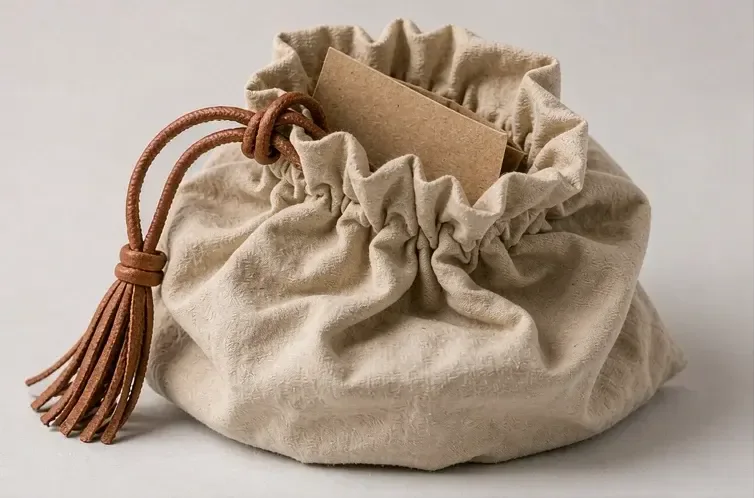
- There is room on packaging: a standard dust bag and box avoids a print tool-up charge.
- There is room on hardware: sharing an existing mould across sizes removes the tool-up entirely.
- There is little room on the floor itself, which is a costing threshold rather than a preference.
- There is no room on finishing: three edge paint coats and 8-9 stitches per inch are not traded downwards.
Negotiate the variables, not the constant. A buyer who accepts a stock lock, takes a two-drop shipment and holds the finishing specification intact will land a better number than a buyer whose only move is to push on quantity. The first buyer is asking us to remove real cost, the second is asking us to remove the reason the cost exists. Only one of those requests has an answer.
Four MOQ mistakes that cost buyers a season
Reading 500 as a total
Three colourways of one style is 1,500 pcs, not 500. Confirm the per-colourway reading before the tech pack leaves your studio.
Booking leather after sampling
Hides are graded and sold in lots. Waiting for sample approval before reserving adds weeks to the 35-50 days bulk window.
Shrinking the inspection sample
A smaller lot draws a smaller AQL sample and fewer chances to catch a defect. Keep general inspection level II on the order.
Changing the grade late
A regrade after the clicker die has been cut reopens the nest and the yield calculation, and the calendar moves with it.
Every one of those four is preventable with a single document. A brief that names the colourway count, the size range, the hardware route and the inspection level returns a costed answer in days, because nothing in it has to be re-asked. The fuller version of that checklist sits on our High-End Handbag Sourcing pillar page, and it is worth reading before you send anything at all.
A brief template that returns a fast quote
- Style and colourway split: one style in one colour, two colourways at 250 each, a size family, or a three-shape capsule.
- Size range: the outer dimensions of each size, including gusset width, handle drop and strap drop.
- Leather and hardware route: the tannery grade, the finish, and whether the lock, feet and zip are stock or bespoke.
- Inspection level: ISO 2859-1, AQL 2.5, general inspection level II, plus whether a third-party pass is required.
- Delivery: your target week, and whether you want the 500 pcs in one drop or two.
Five lines, and the quote comes back complete. Anything missing from that list becomes a round of questions, and each round costs you the thing a launch calendar can least afford, which is time. If you are still choosing between the four patterns, the luxury sampling page sets out what happens between the tech pack and the approved sample in detail.
Send the five lines and receive a costed answer
Name the colourway split, the size range, the leather and hardware route, the inspection level and your target week. We will return a price, a sampling plan and a booked line. Request a quote
Frequently Asked Questions
What is the minimum order quantity for high-end handbag production?
MOQ 500 pcs per style / colourway. One shape in one colour is 500 pieces, and the same shape in three colours is 1,500 pieces, because each colourway is its own dye lot with its own cutting nest. The floor is a costing threshold built on material yield rather than a preference, and it applies the same way across all 7 production lines in the programme.
Can I split 500 pcs across two sizes of the same bag?
Yes, a size family is one of the four accepted patterns. Two sizes at 250 pcs each share the pattern grade, the clicker die logic and the hardware set, so the unit cost sits moderately above the single-colourway baseline rather than far above it. Allow 2-4 additional days for the second grade, and expect both sizes to be inspected together as one lot under AQL 2.5.
Does the MOQ change for exotic leather handbags?
The piece count does not change, but the calendar does. Exotic skins arrive with CITES paperwork that has to be reconciled skin by skin, and usable area per skin is far smaller than for a calf hide, so sampling moves to 12-15 working days and bulk to the upper end of the 35-50 days band. Confirm the appendix status of every species in the brief.
Why is the number 500 pcs rather than 300 pcs?
Because the fixed work does not shrink. A cutting nest, a clicker die set, a hardware tool-up and a bench setup cost the same at 300 pieces as at 500, and a full-grain calf hide still yields only 55-60% of its area as usable panels. Below 500 pcs the same material is consumed for fewer pieces, and unit cost moves by the same proportion.
How long does sampling take before I commit to 500 pcs?
6-10 working days for standard constructions and 12-15 working days for complex ones such as framed, hand-stitched or exotic work. The clock starts when a complete tech pack arrives, not when a sketch does. A sample cut from a substitute leather to save a few days will not tell you how the production hide behaves, so it is a shortcut worth refusing.
What is the bulk lead time after sample approval?
35-50 days, measured from an approved sample and a booked hide lot. The width of that band is driven by how much of the construction is done at the bench rather than on the machine, and by whether the hardware is stock or bespoke. Splitting delivery into two drops against one order does not add to the total, and it is usually the better cash-flow choice.
Which inspection standard applies to a 500-pcs lot?
AQL 2.5 under ISO 2859-1 at general inspection level II, single sampling, with an accept number of 3 and a reject number of 4 on a 50-piece sample. Third-party inspection is optional and available on request. Write the level into the purchase order rather than leaving it to a later conversation, because it changes what can still be caught before the carton closes.
What trade terms do you quote on?
FOB Xiamen is the default, with FOB, CIF and DDP available on request. The Incoterms 2020 rules published by the International Chamber of Commerce define where cost and risk transfer in each case. For a first programme, FOB keeps the freight decision with your own forwarder and makes the landed cost much easier to model at 500 pcs.
Can I reduce the unit price without lowering the quantity?
Three levers work without touching the floor. Use a stock hardware mould instead of a bespoke one, which removes the tool-up charge; accept standard dust bag and box packaging, which removes a print tool-up; and keep one leather route across the colourways so the hides are bought as a single lot. Finishing is not one of the levers.
Do you charge for samples?
Sample charges are credited against the bulk order once the 500-pcs commitment is placed, which is the usual arrangement at this tier of the market. What we will not do is produce a sample in a substitute material, because it misrepresents how the production hide will cut, finish and age. A complex construction may carry a separate pattern-making charge.
How much capacity does the programme hold for a new buyer?
7 production lines releasing about 200,000 pcs per month, with export experience since 2014 and access to third-party social compliance audits. New programmes are scheduled against a named line rather than an anonymous pool, which is why a booked slot matters more than a verbal assurance. Reserve the slot when the tech pack is approved, not when you are ready to ship.
What should a first brief include to get a fast answer?
Four lines are enough to start: the style and colourway split, the size range, the leather and hardware route, and the inspection level you intend to write on the order. Add your target delivery week, and the CITES status if any exotic skin is involved. A brief carrying those five items returns a costed answer in days rather than weeks.
People Also Ask
What does MOQ mean for handbags?
MOQ is the smallest quantity a production partner will accept for one style in one colourway. In our programme it is 500 pcs per style / colourway, set by the fixed cost of the cutting nest, the clicker dies and the bench setup.
Is 500 pcs per colourway negotiable?
Rarely. The floor exists because a full-grain calf hide yields only 55-60% usable area and the setup work does not shrink with the order. What is negotiable is hardware, packaging and delivery split, which move unit cost without lowering the count.
How many pieces should a first collection order?
Enough to cover one style per colourway at 500 pcs each, so a three-colourway launch is 1,500 pcs. Ordering fewer and splitting across colours usually costs more per piece and pushes the drop later.
Does the MOQ include the sample?
No. Samples are made in 6-10 working days for standard work and 12-15 for complex, separately from the 500-pcs commitment. The sample charge is credited against the bulk order once that order is placed.
What is the most efficient way to reach MOQ?
A size family. Two sizes sharing one pattern grade, one hardware set and one hide lot fill 500 pcs at a lower unit cost than three unrelated shapes, because the cutting nest is shared between them.
Sources and further reading
Every figure on this page is either our own programme data or attributed below. Open the originals before you write them into a specification.
- ISO 2859-1 sampling procedures for inspection by attributesInternational Organization for Standardization Defines the AQL 2.5 sample plan, the general inspection level II sample size and the accept and reject numbers used on a 500-pcs lot.
- Incoterms 2020 rulesInternational Chamber of Commerce Sets the point at which cost and risk transfer under FOB, CIF and DDP quotations for a Xiamen shipment.
- Leather Working Group environmental audit protocolLeather Working Group The audit protocol referenced when grading tanneries for the leather route on a luxury handbag programme.
- Sourcing JournalSourcing Journal Trade reporting on lead times, minimums and material costs across the luxury accessories market.