High-End Handbag Sourcing: FOB Xiamen Explained, Line by Line
What does FOB Xiamen actually mean for a handbag order? The house clears the goods for export and places them on board the vessel at Xiamen, and the buyer takes cost and risk from that moment. Add 3-6% of the FOB value for sea freight, 15-20 days of transit to Northern Europe or the east coast of the United States, and duty set at the destination against heading 4202. Below is the whole calculation at 500 pcs per style.
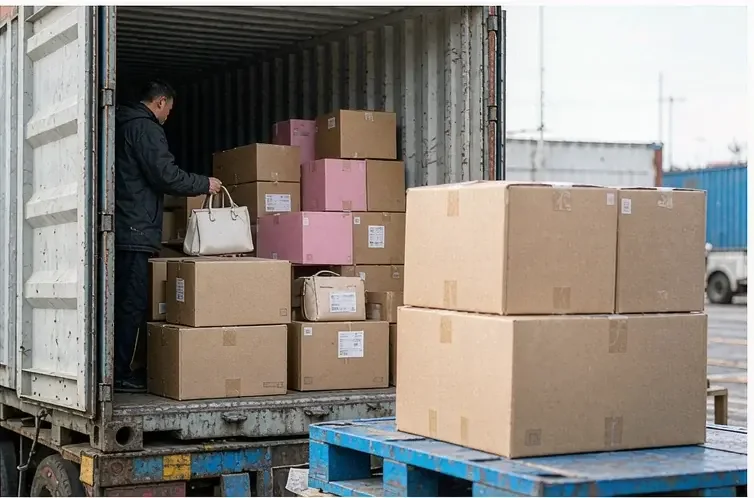
What FOB Xiamen means, in one calculation
FOB means Free On Board, and the word carrying the weight is on board. Under the Incoterms 2020 rules published by the International Chamber of Commerce, the seller clears the goods for export and places them on the vessel nominated by the buyer at Xiamen, and at that point cost and risk pass together. Everything after the rail of the ship is yours: the freight, the insurance you choose, the destination handling and the duty.
The practical consequence is that a FOB price is not a landed price, and the two differ by a known and calculable amount. For a 500-pcs lot of structured calfskin bags, add 3-6% of the FOB value for sea freight, a small percentage for insurance, and whatever the importing authority charges against heading 4202. Against a reference unit of USD 4.80 on the entry tier those additions are small in absolute terms, and they are entirely predictable in advance.
The landed cost, line by line
Write the six lines out before you place the order and the number stops surprising you. The FOB Xiamen unit price comes first. Then sea freight at 3-6% of that value, insurance at whatever cover you choose, destination terminal handling, customs clearance and duty, and finally inland delivery to your warehouse. Six lines, and the middle four are the ones people forget.
There is a seventh line that is not a cost but behaves like one, which is the time. From Xiamen to Northern Europe or the east coast of the United States, 15-20 days on the water is the working figure, and a fortnight of clearance and inland delivery follows it. Put the 35-50 days bulk window and the 6-10 working days of sampling window behind that, and a first order becomes a three-month plan rather than a purchase.
The deposit structure belongs on the same page, because it decides when the money leaves rather than how much. A 30 per cent deposit placed with the order and a 70 per cent balance settled before loading is the usual arrangement in this tier of the market, and it lines up neatly with the moment the goods go on board. Whatever structure is agreed, write it into the order alongside the term rather than settling it afterwards.
What FOB covers and where it stops
Under FOB the seller's obligation ends at the ship's rail, and the list of what sits on the buyer's side of that line is longer than most people expect. Freight, insurance, destination terminal handling, customs clearance, duty and inland delivery are all yours. So is the choice of carrier, which is the useful part: under FOB you appoint your own forwarder rather than inheriting somebody else's.
What the seller keeps is the export side: packing, marking, inland haulage to the port, export clearance and the loading itself. Those costs are inside the FOB figure, and they are the reason a FOB price from a port with good inland logistics can be lower than one from a port without. Xiamen is a deep-water container port with direct mainline services to Europe and North America, which is why it is the port we quote.
The three freight variables that move the total
What makes sea freight move, and by how much
- Volume rather than weight: a 500-pcs lot packs into about 8-10 cubic metres, and freight is charged on the greater of the two.
- Carton efficiency: 25 cartons of 20 pieces on 1,200 by 800 mm pallets freight better than 50 loose cartons.
- Season: rates move with the pre-Lunar New Year and pre-golden-week peaks, which is why the booking is made early.
Those three are the ones a buyer can actually influence. Volume comes from the packing design, which is the reason a 5-ply corrugated carton rated to a 44 edge crush test, packed 20 pieces to a carton and stacked on a 1,200 by 800 millimetre pallet, lands cheaper per piece than the same 500 pcs packed loosely. The packing decision is taken weeks before the freight decision and it is what settles the freight cost.
Xiamen as a port: what the routing looks like
Xiamen sits on the Taiwan Strait in Fujian, and it is one of the deep-water container ports on the Chinese mainland with direct mainline services to both Europe and North America. For a handbag programme the practical consequence is that the goods do not have to be trucked to a distant port to find a mainline vessel, which shortens the inland leg and reduces the number of hands the cartons pass through on the way.
The routing from there is straightforward. To Northern Europe the working transit is 15-20 days; to the east coast of the United States it is of the same order; and to the west coast it is shorter. What varies is not the transit but the cut-off. Carriers close their bookings several days before the vessel sails, and a lot finished on the last day of the bulk window will miss the first available sailing.
Two seasonal peaks matter for anybody shipping out of a Chinese port. The weeks before the Lunar New Year and the weeks before the October golden week both close bookings early and both move rates, and a lot scheduled to finish inside either of those windows will find a carrier list shorter and dearer than the one it was planned against. Moving the finish date a fortnight earlier puts the same goods on the same vessel for less.
FOB, CIF and DDP, side by side
| Line | FOB Xiamen | CIF | DDP |
|---|---|---|---|
| Freight | Buyer appoints and pays | Seller pays to the destination port | Seller pays to the delivery address |
| Insurance | Buyer's choice, usually 110% of invoice value | Seller buys minimum cover | Seller covers it |
| Risk transfers | On board the vessel at Xiamen | On board the vessel at Xiamen | At the delivery address |
| Customs clearance | Buyer, at the destination | Buyer, at the destination | Seller, at the destination |
| Duty | Buyer | Buyer | Seller |
| Best for | A buyer with a forwarder and a landed model | A first order where freight is a nuisance | A buyer who wants one number and no paperwork |
The useful thing about that table is the third row. Under both FOB and CIF the risk passes on board the vessel, so a CIF price buys convenience rather than protection: the seller is arranging the freight on your behalf and the goods are still yours from the moment they are loaded. Only DDP moves the risk all the way to your address, and DDP carries the duty inside its own number.
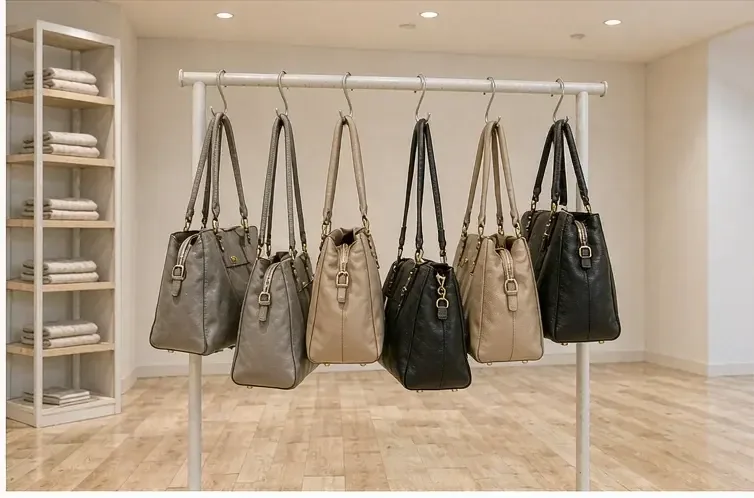
The documents that move with the goods
Four documents travel with every shipment and each one has a job. The commercial invoice states the value that customs will assess. The packing list states the carton count, the contents and the weights, and it is the document a warehouse checks the delivery against. The bill of lading is the document of title. And the certificate of origin, where the destination requires one, supports the duty treatment that is being claimed.
Add two more for a luxury programme and the file is complete. The inspection report at AQL 2.5 under ISO 2859-1 records what was checked before the cartons closed, and the CITES paperwork for any exotic skin tells a customs authority what the species is and where it came from. Missing the second one is how a shipment is held for a month instead of cleared in a morning.
One practical note on the packing list, because it is the document most often wrong. It should list the carton count, the number of pieces in each carton, the net and gross weights and the carton dimensions, and it has to match the marks printed on the outside of the cartons. A warehouse receiving 25 cartons against a list that says 24 will hold the entire delivery, and that delay costs more than the small amount of care that would have avoided it. The luxury packaging page carries the fuller packing specification.
Where the risk transfers, and what that means in practice
The legal moment is the one that matters and the one most often misunderstood. Under FOB, risk passes when the goods are on board the vessel, not when they leave the workshop and not when they arrive. A carton damaged between the packing bench and the port is a seller's problem. The same carton damaged in a storm three days out of Xiamen is yours, which is precisely why insurance is bought by the party who owns the risk.
That is the argument for buying your own cover under FOB rather than relying on somebody else's. A policy written at 110% of the invoice value, naming the goods, the voyage and the warehouse, costs a fraction of one per cent and is the difference between a claim and a loss. Our lots are packed to travel: 5-ply cartons rated to a 44 edge crush test, 20 pieces to a carton, stacked on 1,200 by 800 millimetre pallets.
Five FOB mistakes that cost money
Booking the vessel late
Carriers close bookings several days before sailing. A lot finished on the last day of the bulk window misses the first available vessel.
Assuming FOB is landed
Add 3-6% for freight, then insurance, terminal handling, clearance, duty and inland delivery before comparing anything.
Packing loose
Fifty loose cartons freight worse per piece than 25 cartons of 20 stacked on 1,200 by 800 millimetre pallets.
No insurance
Risk passes on board the vessel under FOB. A policy at 110% of invoice value is the line between a claim and a loss.
Wrong classification
Leather handbags are classified under heading 4202. A wrong entry is reclassified at the destination, at your cost and on your time.
All five are administrative rather than technical, which is the same conclusion the comparison article reaches from the opposite direction. Nobody loses money on a FOB shipment because a seam failed. They lose it because a booking was made three days late or a carton was packed badly. The shipping side of a handbag programme is a paperwork discipline, and it is one that rewards the buyer who starts early.
What to write on the order
Five lines and the FOB term stops being ambiguous. Name the term as FOB Xiamen under the Incoterms 2020 rules. State the packing: 5-ply cartons rated to a 44 edge crush test, 20 pieces to a carton, stacked on 1,200 by 800 millimetre pallets. State the documents: commercial invoice, packing list, bill of lading, certificate of origin where required, and the inspection report at AQL 2.5 under ISO 2859-1.
Then the two constants and the two clocks. MOQ 500 pcs per style / colourway, sampling at 6-10 working days and bulk at 35-50 days, all of which sit behind the moment the goods go on board. Our programme runs 7 production lines releasing about 200,000 pcs per month, with export experience since 2014, and every lot placed with our validated partner factory Quanzhou Yingming Bags is inspected before it is loaded.
Ask for the FOB number and the landed calculation
Send the destination port and we will quote FOB Xiamen with the packing, the carton count and the documents written on the same page. Request a quote
Frequently Asked Questions
What does FOB Xiamen mean for a handbag order?
Free On Board Xiamen. The seller clears the goods for export and places them on the vessel nominated by the buyer, and cost and risk pass together at that moment. Freight, insurance, terminal handling, clearance, duty and inland delivery then belong to the buyer, under the Incoterms 2020 rules.
How much should I add to a FOB price to get a landed cost?
Six lines: sea freight at 3-6% of the FOB value, insurance, destination terminal handling, customs clearance and duty, and inland delivery. For a 500-pcs lot the freight and duty are the two that move, and both are predictable if the packing and the classification are right.
How long does shipping from Xiamen take?
15-20 days on the water to Northern Europe or the east coast of the United States, and shorter to the west coast. Add a fortnight for clearance and inland delivery, and remember that carriers close their bookings several days before the vessel sails.
What packing specification should I ask for?
5-ply corrugated cartons rated to a 44 edge crush test, 20 pieces to a carton, stacked on 1,200 by 800 millimetre pallets. A 500-pcs lot packs into about 8-10 cubic metres, and that packing freights better per piece than the same quantity packed loose.
Who is responsible for damage under FOB?
It depends when it happened. A carton damaged between the packing bench and the port is a seller's problem. The same carton damaged three days out of Xiamen is the buyer's, because risk passed when the goods went on board the vessel. That is why the buyer insures.
Is CIF better than FOB for a first order?
CIF is more convenient and not safer. Under both terms the risk passes on board the vessel, so CIF only buys the arrangement of the freight. FOB keeps the choice of forwarder with you and makes the landed cost easier to model at 500 pcs.
What documents arrive with a FOB shipment?
The commercial invoice, the packing list, the bill of lading and the certificate of origin where the destination requires one. For a luxury programme add the inspection report at AQL 2.5 under ISO 2859-1 and the CITES paperwork for any exotic skin in the lot.
How much insurance cover should be arranged?
Cover at 110% of the invoice value is the usual arrangement, naming the goods, the voyage and the warehouse. It costs a fraction of one per cent, and under FOB it is the buyer's to arrange because the risk is also the buyer's from the moment of loading.
What duty applies to leather handbags on import?
Leather handbags are classified under heading 4202, and the rate is set by the importing customs authority rather than by the exporting one. Ask your broker for the rate before you place the order, because a wrong entry is reclassified at your cost.
Why is Xiamen used as the port?
It is a deep-water container port in Fujian with direct mainline services to Europe and North America. Goods do not have to be trucked a long distance to find a mainline vessel, which shortens the inland leg and reduces the hands the cartons pass through.
When should the vessel be booked?
Early. Carriers close bookings several days before sailing, and a lot finished on the last day of the 35-50 days bulk window will miss the first available vessel. Book when the sample is approved rather than when the goods are finished.
What production and packing figures sit behind the quote?
MOQ 500 pcs per style / colourway, sampling at 6-10 working days and bulk at 35-50 days. The programme runs 7 production lines releasing about 200,000 pcs per month, with export experience since 2014, and every lot is inspected at AQL 2.5 under ISO 2859-1 before loading.
People Also Ask
What is FOB Xiamen?
A trade term meaning Free On Board Xiamen. The seller clears the goods and loads them on the vessel; cost and risk pass to the buyer at that moment, under the Incoterms 2020 rules of the International Chamber of Commerce.
How much is sea freight on a handbag order?
About 3-6% of the FOB value for a 500-pcs lot, charged on volume or weight whichever is greater. A 500-pcs lot packs into roughly 8-10 cubic metres, so the packing design decides the freight more than the bag does.
How long does a shipment from Xiamen take?
15-20 days to Northern Europe or the east coast of the United States, plus a fortnight for clearance and inland delivery. Transit varies less than the carrier cut-off, which closes several days before sailing.
Do I need insurance under FOB?
Yes, and you arrange it yourself. Risk passes when the goods are on board the vessel, so a policy at 110% of the invoice value is the difference between a claim and a loss three days out of port.
What is the difference between FOB and CIF?
Under both, risk passes on board the vessel. CIF only adds the arrangement of freight and minimum insurance. Only DDP moves the risk to your delivery address and carries the duty inside its number.
Sources and further reading
Every figure on this page is either our own programme data or attributed below. Open the originals before you write them into a specification.
- Incoterms 2020 rulesInternational Chamber of Commerce Defines the FOB, CIF and DDP terms, where cost and risk transfer, and the 110% minimum insurance cover under CIF.
- ISO 2859-1 sampling procedures for inspection by attributesInternational Organization for Standardization Sets the AQL 2.5 inspection carried out before a lot is packed and loaded at Xiamen.
- CITES Appendices I, II and IIICITES Secretariat The permit paperwork that has to travel with any exotic skin in a shipment leaving Xiamen.
- BIMCOBIMCO The shipping industry body publishing standard charter party and booking terms used on container services out of Chinese ports.