How to Compare High-End Handbag Supplier Quotes: Six Lines Before the Total
How should a buyer compare two high-end handbag quotes? Not by the total. Two quotes for the same drawing can differ by a third and both be honest, because each one describes a different construction. Compare in this order: the specification, the material line, the bench figure, the hardware route, the inspection and the remedy, and then the two clocks. Six steps, and the last one decides the price you actually live with.
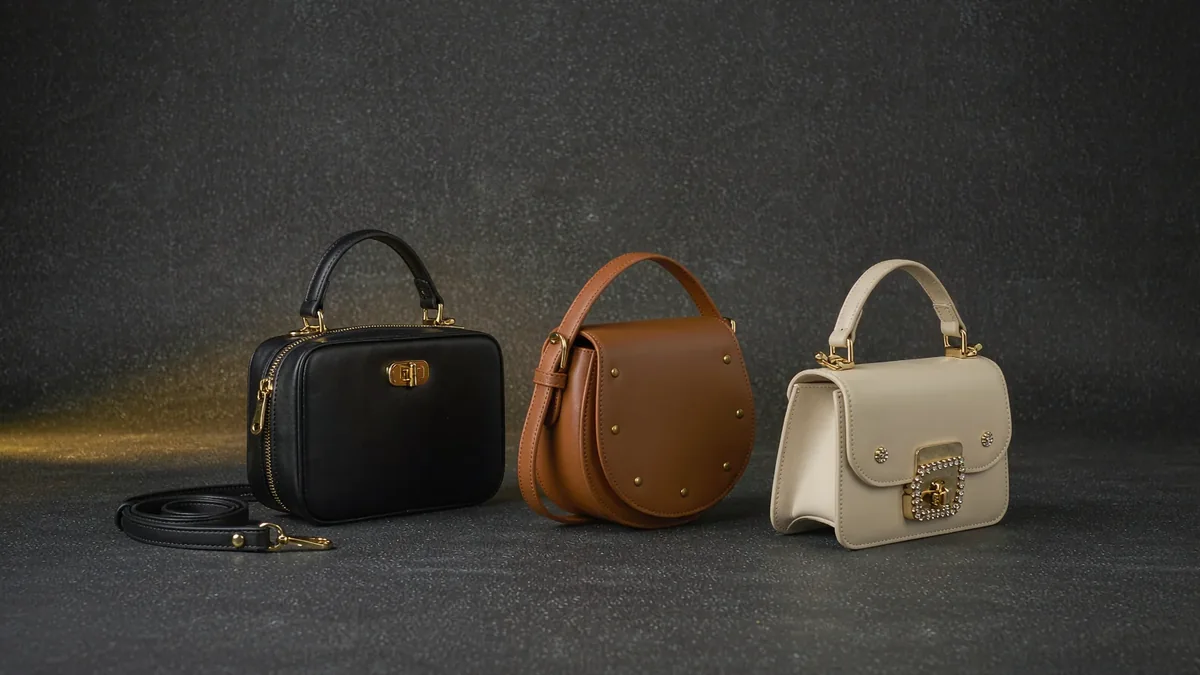
The comparison order, before the numbers
The total at the bottom of a quote is the last thing worth reading and the first thing everybody reads. Two quotes for the same drawing can differ by a third and both be entirely honest, because each one describes a different bag: one at 12 panels and one at 24, one with a stock lock and one with a bespoke one, one at AQL 2.5 and one with no standard named at all. The order below makes the two comparable before it tries to compare them.
- Confirm both quotes describe the same construction: the same panel count, the same skiving, the same stitch density.
- Compare the material line: the tannery, the thickness band, the finish and the fastness methods.
- Compare the bench figure sitting behind the price, which is the part that decides the tier.
- Compare the hardware route: stock or bespoke, and the plating thickness and the salt spray hours.
- Compare the inspection standard and the written remedy for a rejected lot.
- Only then compare the totals, alongside the two clocks attached to each of them.
Six steps, and the sixth is where the money really is. A quote that is 8 per cent lower and three weeks later is not a lower quote, it is a different one, and the calendar will charge you for that difference long after the invoice has stopped mattering. Work the six in order and the total becomes the seventh item on the list rather than the only one.
Make the two quotes describe the same bag
Start by sending the same brief to both houses. That sounds obvious and it is the step most often skipped, because a buyer usually has one drawing and sends it out with a note asking for a price. The drawing does not say how many panels the body is made of, whether the turnings are skived to 0.6 mm, or whether the seams are worked at 8-9 stitches per inch. Two houses will fill those gaps differently, and both of them will be right.
The five gaps to close in the brief are the panel count, the skiving, the stitch density, the interlining and the lining. Write all five down and the two quotes describe the same object. Leave them open and the lower quote is usually the one built on fewer panels, and a bag with fewer panels will not hold the same shape on a shelf or on a shoulder.
Compare the material line, not the total
Material is the largest single line on a leather bag and the easiest to move without the buyer noticing. A 1.2-1.4 mm full-grain calfskin with a semi-aniline finish and colour fastness to rubbing of grade 4 under ISO 105-X12 is one thing; the same thickness in a corrected grain with no method named at all is another, and the two do not age in the same way. Ask for the tannery, the thickness band and the methods together, never separately.
The yield question sits underneath the same line. A full-grain hide gives roughly 55-60% usable cutting area after grading, and a nest laid to that yield costs less than one that is not. Two houses cutting the same panels from the same grade will not quote the same material line if their nests are not equally efficient, and the one with the better nest is usually the one that has cut this construction before.
The adhesive and the thread belong to the same comparison and are almost never itemised. A water-based adhesive with an 8 minute open time, and a bonded nylon thread at Tex 40 and 0.45 mm, are the two inputs that decide whether a structural seam holds under load, and they are the two that a lower quote is most likely to have substituted. Ask for them by name and the material line becomes complete.
Compare the bench figure behind the price
Every tier price is an hours figure in disguise. A soft construction at 12 panels runs about 1.8 bench hours per piece, a structured one at 24 panels runs about 4.5, and a hand-finished or exotic one at 30 panels runs about 9. Ask each house which of those three its number was built on. The answer tells you more than the total does, because it tells you what the bag is going to feel like in the hand.
Then ask what is included in those hours. Three coats of edge paint with a 600-grit pass between each one, structural seams at 8-9 stitches per inch, and a bonded nylon thread at Tex 40 and 0.45 mm are the base specification in this tier of the market. A quote that takes two coats instead of three, or 7 stitches per inch instead of 9, is lower for a reason, and the reason becomes visible about eighteen months later.

Compare the hardware route
Hardware is quoted on a single line and behaves like a project. A stock zamak turn-lock with 0.15-0.3 micrometre plating, held 48 hours in neutral salt spray under ISO 9227, with nickel release below 0.5 microgram per square centimetre per week under EN 1811, costs a unit price and nothing else. A bespoke lock costs a tool-up, a plating minimum, 500 pieces of the part and about three weeks. Two quotes that look close can be a whole project apart.
Three more hardware lines are worth comparing because they are rarely itemised. A magnet closure should be specified to a pull force of 1.2-1.6 kgf, since a weaker one opens inside a bag and a stronger one damages the leather on the way out. Rivets at 3.5 mm and a turn-lock tested to 5,000 cycles are the other two, and a quote that does not mention them has probably averaged them.
Compare the inspection and the remedy
A quote at AQL 2.5 under ISO 2859-1 at general inspection level II and one with no standard named at all are not two prices for the same thing. On a 500-pcs lot the first draws 50 pieces with an accept number of 3 and a reject number of 4. The second draws whatever the room decides on the day, which is a courtesy rather than an inspection.
Then ask what happens next, because the comparison is not finished until you have. The remedy worth having is a written sequence: re-inspect, re-sort, re-make, and a defined credit where re-work is not possible. A quote that gives a low total and no remedy is offering the price without the part of the relationship you will eventually need. Compare the two clauses before the two numbers and the choice gets easier.
Compare the clocks, not just the price
Two clocks travel with every quote and both belong in the comparison. The sampling window is 6-10 working days for a standard construction and 12-15 working days for a framed, hand-stitched or exotic one. The bulk window is 35-50 days from an approved sample and a booked hide lot. A house quoting 40 days and a house quoting 55 are not quoting the same thing, whatever the two totals say.
Add the freight to the same line. Under FOB Xiamen the goods are yours once they are on the vessel, and 15-20 days to Northern Europe or the United States east coast is the working figure. A quote 8 per cent lower that arrives three weeks later has cost you a season, and a season is worth more than the difference on 500 pcs at any tier of this market.
A comparison grid you can copy
| Line to compare | What to write in the brief | What a strong answer contains | What to treat as a warning |
|---|---|---|---|
| Construction | Panel count, skiving, stitch density | 12 panels, skived to 0.6 mm, 8-9 stitches per inch | No panel count given at all |
| Material | Tannery, thickness band, methods | 1.2-1.4 mm, ISO 105-X12 grade 4, 55-60% yield | A grade word with no numbers |
| Bench | Tier and hours per piece | About 1.8, 4.5 or 9 hours, named in writing | A total with no hours behind it |
| Hardware | Stock or bespoke, plating, hours | 0.15-0.3 micrometre, 48 hours ISO 9227, EN 1811 | A plating colour with no thickness |
| Inspection | Standard, level, remedy | AQL 2.5, ISO 2859-1, level II, written remedy | A pass rate with no standard |
| Clocks | Sampling and bulk windows | 6-10 working days and 35-50 days | A single date with no window |
Use the grid in the order it is printed. The first row is the one that decides whether the other five mean anything at all, because a quote describing a different construction is not comparable at any price. Once the six rows are filled in for each house, the totals can be read honestly for the first time. The luxury quality control page carries the fuller inspection row.
Five things a lower quote may be carrying
Fewer panels
Twelve instead of 24. The bag will not hold the same shape, and the difference in price is the difference in shape.
Two coats of edge paint
Instead of three with a 600-grit pass between each. It looks identical on the day and different in a year's time.
Seven stitches per inch
Instead of 8-9 on the structural seams. It is faster to sew and weaker exactly where the load falls.
No named inspection
A pass rate is not a standard. AQL 2.5 under ISO 2859-1 at level II is the number to insist on every time.
A later delivery week
A lower price arriving three weeks late is a season lost, and the season is worth more than the saving on 500 pcs.
None of those five is a reason to distrust a quote, and all of them are reasons to make the two comparable before choosing. The choice is only real once both numbers describe the same object. A buyer who compares six lines will nearly always pick the right house; a buyer who compares one line will usually pick the wrong one, and will find out why in the second season.
What to do when two quotes still differ
If the briefs were identical and the six rows match, the difference is real and it is worth asking about directly. The three honest answers are the nest efficiency, the line the order is scheduled against, and the relationship with the tannery. All three are legitimate, all three are worth hearing before the decision, and the lowest of them is rarely the one you want.
One more variable belongs on the page: the reference unit of USD 4.80 on the entry tier. If a quote sits far below that for a construction that belongs at it, something in the six rows has been averaged. Our programme runs 7 production lines releasing about 200,000 pcs per month, with export experience since 2014, and every lot placed with our validated partner factory Quanzhou Yingming Bags is inspected at AQL 2.5 under ISO 2859-1 before it leaves.
Send us the brief, not the drawing
Send the six comparison lines with your next request and we will fill every one of them in writing, then quote against a named line. Request a quote
Frequently Asked Questions
What is the right way to compare two handbag quotes?
Compare six lines before the total: construction, material, bench hours, hardware route, inspection with its remedy, and the two clocks. Each line can move the total by several per cent honestly, so a comparison made on the total alone is a comparison of two different bags.
Why do two quotes for the same drawing differ so much?
Because the drawing does not say how many panels the body has, whether the turnings are skived to 0.6 mm, or whether the seams are at 8-9 stitches per inch. Two houses fill those gaps differently and both are right. Close the five gaps in the brief and the two become comparable.
What construction details must be in a handbag brief?
The panel count, the skiving at the turnings, the stitch density, the interlining and the lining. Without those five, a lower quote is usually the one built on fewer panels, and that bag will not hold the same shape on a shelf or on a shoulder.
How can I tell if the material line is equivalent?
Ask for the tannery, the thickness band and the fastness methods together. A 1.2-1.4 mm full-grain calfskin with a semi-aniline finish and colour fastness to rubbing of grade 4 under ISO 105-X12 is not the same line as a corrected grain with no method named.
What bench hour figures should I expect per piece?
About 1.8 hours for a soft construction at 12 panels, about 4.5 for a structured one at 24 panels, and about 9 for a hand-finished or exotic one at 30 panels. Ask which of the three the number was built on, because the answer describes the bag as much as the price does.
What should the hardware line of a quote contain?
The plating thickness in micrometres, the salt spray hours and the standard, and the nickel release result if the part touches skin. Expect 0.15-0.3 micrometre, 48 hours under ISO 9227, and nickel release below 0.5 microgram per square centimetre per week under EN 1811.
Which inspection standard belongs on a handbag quote?
AQL 2.5 under ISO 2859-1 at general inspection level II, single sampling. On a 500-pcs lot that draws 50 pieces with an accept number of 3 and a reject number of 4. A pass rate percentage with no standard behind it is a courtesy rather than an inspection.
How do I compare two quotes with different delivery dates?
Put the clocks on the comparison. Sampling is 6-10 working days for standard work and 12-15 for complex, bulk is 35-50 days, and sea freight from FOB Xiamen is 15-20 days. A lower price that arrives three weeks later has cost a season.
What is the reference unit price on the entry tier?
USD 4.80, used as the reference figure for an entry construction at 500 pcs per style / colourway. A quote sitting far below it for a construction that belongs at it has almost certainly averaged something in the six comparison lines.
What remedy should a quote promise on a rejected lot?
A written sequence: re-inspect, re-sort, re-make, and a defined credit where re-work is not possible. Compare the two remedy clauses before comparing the two totals, because a low price with no remedy is missing the part you will eventually need.
Is the lowest handbag quote ever the right one?
Sometimes, when the six lines match and the difference is nest efficiency, the scheduled line or the tannery relationship. Those three are legitimate reasons for a real difference, and the lowest among them is rarely the one a buyer wants.
What capacity sits behind a quote I receive?
Our programme runs 7 production lines releasing about 200,000 pcs per month, with export experience since 2014. The relevant question is which of those lines your order is scheduled against, and a quote that cannot answer that has not reserved anything.
People Also Ask
How do I compare handbag quotations?
On six lines before the total: construction, material, bench hours, hardware, inspection and the clocks. Panel count, thickness band and AQL level each move the total honestly, so the total alone compares two different bags.
What is a realistic bench hour figure for a handbag?
About 1.8 hours per piece for a soft build at 12 panels, 4.5 for a structured build at 24 panels, and 9 for a hand-finished or exotic build at 30 panels. Ask which figure the quote was built on.
Why is one handbag quote much lower than another?
Usually fewer panels, two coats of edge paint instead of three, 7 stitches per inch instead of 9, no named inspection standard, or a later delivery week. Each is a real saving and each has a cost attached to it.
What should a handbag brief contain?
The panel count, the skiving at the turnings, the stitch density, the interlining and the lining, plus the tannery and thickness band. With those in the brief, two quotes describe the same object and the totals become comparable.
Does the FOB term affect how I compare prices?
Yes. Under FOB Xiamen the goods are yours once they are on the vessel, so add 15-20 days of sea freight to Northern Europe or the United States east coast to every comparison you make.
Sources and further reading
Every figure on this page is either our own programme data or attributed below. Open the originals before you write them into a specification.
- ISO 2859-1, ISO 9227 and ISO 105-X12 standardsInternational Organization for Standardization ISO 2859-1 for the AQL 2.5 inspection line, ISO 9227 for hardware plating, and ISO 105-X12 for colour fastness to rubbing.
- Incoterms 2020 rulesInternational Chamber of Commerce Defines where cost and risk transfer under FOB Xiamen, which is the term beneath every comparison in this article.
- REACH Annex XVII restrictionsEuropean Chemicals Agency The restriction that separates a compliant leather line from one that will be held at a European customs check.
- Leather Working Group environmental audit protocolLeather Working Group The audit protocol used to grade a tannery named on the material line of a quotation.