Handbag Maison MOQ Explained for Designer Brands: What 500 Pcs Really Buys
What is the minimum order on a handbag maison programme? It is 500 pcs per style and colourway, and the figure exists because that is roughly where a run covers its own tooling, its material reservation and the bench changeover it consumes. Below it, three costs refuse to fall with quantity: the clicking die, the graded pattern set and the first-hour setup on the bench. Above it, unit price falls only gently. This article answers the six questions buyers ask in the order they surface, then lists the parameters to send before you request a number of your own.
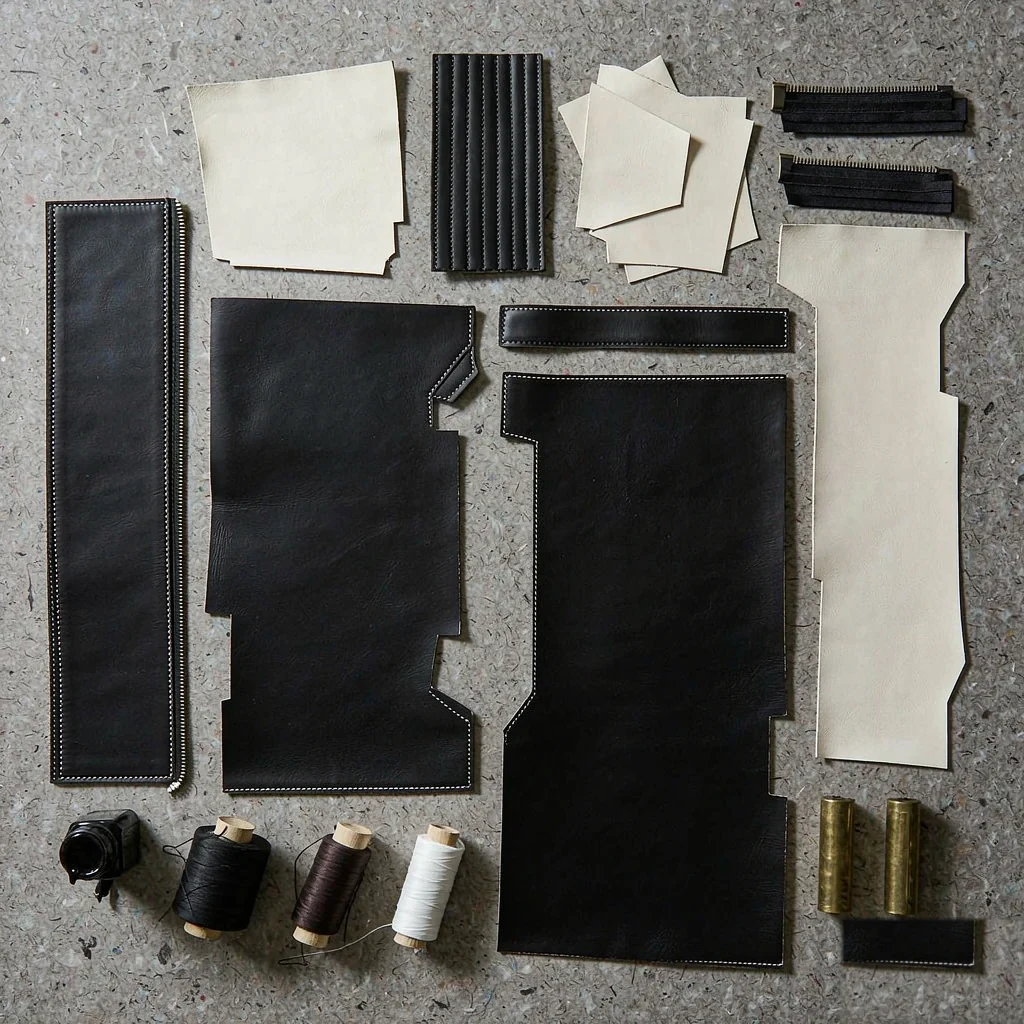
Question One: What Is the Minimum, and What Is It Buying?
The minimum is 500 pcs per style and colourway, and what it buys is a run long enough to spread tooling, pattern grading and bench setup across enough units that the unit price reflects the materials rather than the preparation behind them.
A minimum is not a sales threshold. It is the point at which fixed preparation, which is almost identical whether you order 120 units or 500, stops dominating what each piece costs. Understanding which costs are fixed and which scale is what turns the figure from an obstacle into a planning input you can actually work with.
So the first question to ask is not whether the figure can be lowered. It is which preparation steps this particular run has to carry. A style needing four bespoke dies and a graded pattern set carries far more fixed cost than one built on existing tooling in a single size, and the two deserve different answers even at the same unit count.
Question Two: Why 500 and Not 100?
Because three costs sit almost entirely in the first hour of a run: tooling preparation, the material lot reservation, and setting the bench to a new specification. Those three behave as one fixed block, and 500 units is roughly where their share of the unit price becomes modest rather than decisive.
- A clicking die for a 28 cm body panel costs USD 180-260 and is unavoidable whether the run is 120 units or 500.
- Leather is bought by the hide, and a first run of 500 units typically draws 95-110 full-grain hides once grading losses are counted.
- Bench setup, thread change and machine tensioning take 40-55 minutes per colourway before the first saleable stitch is laid.
- Compliance testing is booked per lot rather than per unit, so it costs the same at 120 units as it does at 500.
- Below roughly 300 units the fixed block can exceed 30% of the unit price, which is where the arithmetic stops working for both sides.
The shape of that curve matters more than the exact figure. Between 500 and 1,200 units the unit price typically falls by only 6-9%, because the fixed block has already been absorbed. Below 300 it climbs steeply, and much of what a buyer saves in commitment is paid back in price.
Question Three: Per Colourway or Across the Whole Style?
Per colourway. A style offered in three colours carries three separate minimums of 500 pcs each, because each colour needs its own lot reservation, its own thread and edge paint match, and its own bench setup before the first acceptable unit appears.
| Order structure | Units | What changes on the bench | Effect on unit price |
|---|---|---|---|
| Single style, one colourway | 500 pcs | One lot, one thread match, one setup | Reference price |
| One style, three colourways | 1,500 pcs | Three lots, three setup windows | Reference, marginally better on materials |
| Three styles, one colourway each | 1,500 pcs | Three pattern sets, three dies | About 4-7% above reference |
| 500 pcs split across five colourways | 100 pcs each | Five lots, five setups, no continuity | Roughly 18-25% above reference |
| 500 pcs split across two sizes | 250 pcs each | Two graded pattern sets | Around 10-14% above reference |
The fourth row explains most disputes about the minimum. The commitment is identical in units; only the division changes. Splitting one commitment across many variations multiplies the preparation while dividing the continuity, which is precisely the opposite of what a small first capsule needs from its bench.
There is also a quality argument hiding in the same arithmetic. A bench that runs 500 units of one construction reaches a steady rhythm somewhere around the second hundred pieces. Five short runs of 100 never reach it, and the variation between the first and last unit of each short run is where most finish inconsistency is born.
Question Four: Where Does the First-Run Cost Actually Sit?
In a typical 500-unit calfskin run, materials take the largest share, then bench labour, then preparation, then testing and packing. Preparation is the surprising entry for founders, because it is almost invisible on the finished piece and yet behaves as though it were a material.
| Cost bucket | Share of a 500 pcs run | Scales with quantity? | Typical range |
|---|---|---|---|
| Leather and lining | 38-45% | Yes | Full-grain calfskin held to a named lot |
| Hardware | 14-20% | Yes | Plated brass with a 0.15-0.3 µm finishing layer |
| Bench labour | 18-24% | Mostly | Skiving, assembly, edge finishing |
| Preparation, tooling and patterns | 6-10% | No | Dies, graded pattern set, first-article proving |
| Testing and compliance | 2-4% | No | Booked per lot per destination market |
| Packing and presentation | 3-6% | Partly | Dust bag, carton, insert card |
Preparation and testing together account for roughly 8-14% of a first run and do not scale at all. That is the block the minimum is protecting, and it is the reason ordering half the quantity rarely produces anything close to half the invoice.
It also explains why an experienced buyer will ask about tooling before asking about price. Tooling is the part of the invoice that is paid again with every new style, and it is the part that a well-planned capsule can genuinely reduce by sharing dies across sizes and across seasons.
Question Five: What Can Be Split Without Losing the Price?
Construction can be varied inside one commitment; colourways and materials cannot. A capsule that shares one body, one lining and one hardware finish across three colours keeps its price, because the preparation is shared even though the material reservations are not.
- Keep the body pattern and lining constant, and vary only the outer leather colour across the run.
- Use one hardware finish across the capsule so plating is booked as a single batch rather than three.
- Share the internal architecture across sizes so grading is arithmetic rather than a second pattern set.
- Reserve lining and thread in a single lot, which is where most of the material saving actually sits.
- Vary strap length rather than body geometry, since strap changes rarely require a new die.
The discipline is deciding what genuinely counts as one style. Two bodies sharing a lining are two styles. One body in three colours is one style with three material reservations, and the bench treats those two situations very differently even though the unit counts match.
Question Six: When Is a Smaller First Count Honest?
Three situations genuinely justify fewer than 500 units: a pilot in one colourway ahead of a larger commitment, a re-order on a pattern that already exists, and a capsule built entirely on held materials and stock components.
A pilot before a commitment
A 250-300 unit pilot in a single colourway, priced with the preparation block shown explicitly, then a 500-unit follow-up. Honest when both sides agree the second run follows inside the same season.
A re-order on a frozen pattern
Where the pattern, the dies and the compliance reports already exist, the preparation block has been paid. Re-orders can start at 300 units with the price reflecting materials and bench time alone.
A stock-material capsule
Built on a held lot and stock components, with no tooling to amortise and no lot to reserve. Preparation falls to almost nothing, which is the only case where a genuinely small count prices cleanly.
What is not honest is asking for 500 units of variety at 500-unit economics. The two requests look identical in a briefing email and behave completely differently once the lot has been reserved and the bench has been set.
The Parameters That Decide Whether 500 Is Enough
Seven parameters decide the answer before any quotation is written: panel size, hide yield, leather substance, stitch density, edge finish, hardware plating and colourway changeover. Send these and the figure you receive will survive contact with the run itself.
- Body panel dimension
- A 28 cm by 24 cm body draws roughly one hide per 4.5-5.2 units including grading losses
- Leather substance
- Full-grain calfskin split to 1.2-1.4 mm for body panels, 0.8-1.0 mm for gussets
- Skiving tolerance
- Seam allowances reduced to 0.6-0.8 mm so folds sit flat without bulking at the corner
- Stitch density
- 8-9 stitches per inch on Tex 40 bonded nylon thread
- Edge finish
- Three passes of edge paint with 8-12 minutes of drying between each pass
- Hardware plating
- Brass with a 0.15-0.3 µm finishing layer, tested to 48 hours of salt spray
- Colourway changeover
- 40-55 minutes of bench setup per colourway before the first saleable unit
Those seven numbers are also the argument for the minimum written out in full. The first 40-55 minutes of any colourway produce nothing saleable, three passes of edge paint need their drying interval, and hides are graded before cutting rather than after. None of that compresses around a smaller order.
How the Minimum Interacts With the Calendar
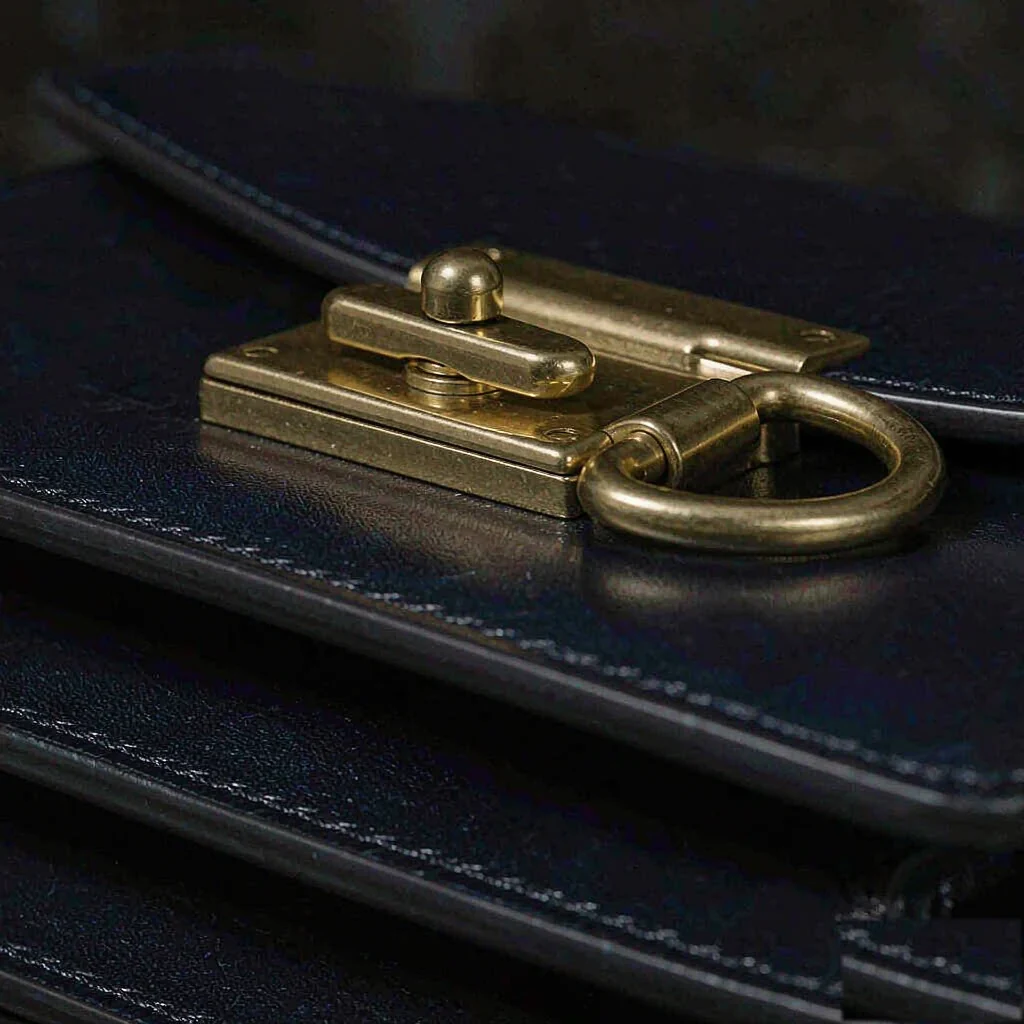
The minimum and the calendar are the same constraint seen from two directions: a run too small to amortise its preparation still needs most of the bulk window, because bulk time is driven by operations rather than by quantity.
- Sampling runs 6-10 working days, or 12-15 for complex construction, and is unaffected by your order count.
- Material reservation runs 15-20 working days for a named lot, and shortens only where a lot is already held.
- Bulk runs 35-50 days from intake, and halving the quantity removes roughly 3-5 of those days.
- Testing is booked per lot against the destination market, so a smaller run does not shorten the laboratory stage.
- Packing and documents hold 3-5 days whatever the quantity, since the carton count is not the constraint.
That produces a conclusion founders rarely expect. Halving the order saves very little calendar time and costs a disproportionate amount of unit price. Where the delivery date is the binding constraint, the better answer is almost always to reserve the material lot earlier rather than to order fewer pieces.
What to Send So the Number You Get Back Is Real
A minimum quoted without drawings, dimensions and a colourway count is a placeholder, and placeholders move. Five pieces of information turn it into a figure that survives all the way to invoice.
Five inputs before any minimum is quoted
- Dimensioned drawings, or a reference piece with every intended change noted in writing.
- Quantity per style and per colourway, stated separately rather than as a single total.
- Material direction, including whether the lot is already held or still to be named.
- Destination markets, because testing is booked per lot for each one.
- The immovable date, so the calendar can be built backwards from it.
Those same five inputs settle most disagreements about the minimum before they begin. Two brands asking for 500 units can be asking for entirely different programmes, and the difference is visible in the second input alone.
Settling the Number in One Round
Most minimums are settled in a single exchange once the fixed block is made explicit. Ask which costs do not scale, decide which variations the capsule genuinely needs, and the figure usually stops being the obstacle it appeared to be.
The minimum protects preparation, tooling, lot reservation and testing. Those four behave as one fixed block. Once you can see it whole, the useful question becomes how to share it across the capsule rather than how to reduce it.
The programmes that run most smoothly are usually those where the brand ordered 500 pieces of one body in two colours and then expanded the following season. The programmes that struggle are usually those where the same 500 pieces were divided into something closer to five separate launches, each carrying its own preparation.
Our programme works to MOQ 500 pcs per style and colourway, with sampling at 6-10 working days and bulk at 35-50 days on FOB Xiamen terms, inspected to AQL 2.5 under ISO 2859-1. It runs across 7 production lines with about 200,000 pcs per month of capacity and export experience since 2014, delivered through our validated partner factory Quanzhou Yingming Bags, an SGS-validated site.
Send your capsule and get the real number
Send your drawings, dimensions, per-colourway quantities and destination markets. You will receive the unit price with the fixed preparation block shown separately, plus the two or three splits that would improve it, within two working days. Request a quote.
Frequently Asked Questions
What is the minimum order on a handbag maison programme?
500 pcs per style and colourway. The figure covers the fixed block of tooling, pattern grading, material lot reservation, bench setup and per-lot compliance testing. Those five behave as one cost that barely changes between 120 units and 500, which is why the number is set where it is.
Does the minimum apply per colourway or across the whole order?
Per colourway rather than across the whole order. A style offered in three colours carries three minimums of 500 pcs each, because each colour needs its own lot reservation, its own thread and edge paint match, and its own 40-55 minute bench setup before the first saleable unit appears.
Why does the unit price not fall much above 500 units?
Because the fixed block has already been absorbed by then. Between 500 and 1,200 units the unit price typically falls only 6-9%, since what remains scales with quantity: leather, hardware and bench time. The preparation behind the run does not get cheaper the second time you pay for it.
What happens if I split 500 pieces across five colourways?
The unit price typically rises 18-25%. Each colourway carries its own lot, its own setup window and its own matching work, while continuity on the bench is divided five ways. The unit commitment is unchanged; only the preparation is multiplied, and that is what the invoice reflects.
Is a smaller first run ever honestly possible?
Yes, in three cases: a 250-300 unit pilot ahead of a seasonal commitment, a re-order on a pattern whose tooling and reports already exist, and a capsule built entirely on held materials and stock components. In each case the preparation block has been paid or genuinely does not exist.
How much does tooling add to a first run?
A clicking die for a 28 cm body panel costs USD 180-260 and is unavoidable at any quantity. Together with pattern grading and first-article proving, preparation accounts for roughly 6-10% of a first run, before testing, which adds a further 2-4% booked per lot. Neither falls with quantity.
Does ordering fewer pieces shorten the calendar?
Barely. Halving the quantity removes roughly 3-5 days from a 35-50 day bulk window, and nothing at all from sampling, testing or packing, all of which are driven by operations and per-lot bookings rather than by unit count. Where the date binds, reserve the lot earlier.
What is included in the sampling stage?
Six to ten working days covering a first built sample, measurement against the pack, a written correction list and one corrected round. Complex constructions take 12-15 days, largely to prove hardware and to settle framed or reinforced bodies before leather is committed. The window is identical at any quantity.
Which compliance testing is booked per lot?
Testing is booked per material lot against each destination market, covering REACH restricted substances, California Prop 65 where the goods ship to the state, and CPSIA where relevant. Because it is booked per lot rather than per unit, it costs the same at 120 units as at 500.
How is the finished run inspected?
At AQL 2.5 under ISO 2859-1, with the sample plan agreed before bulk begins. For a 500 pcs lot at general inspection level II the plan uses code letter H: 50 units drawn, accept 3, reject 4. Third-party inspection can be arranged alongside the internal audit.
What should I send to get an accurate minimum?
Five items: dimensioned drawings or a reference piece with intended changes, quantity stated per style and per colourway separately, the material direction including whether the lot is held, your destination markets, and the immovable delivery date the calendar must be built backwards from. Together they turn a placeholder into a real figure.
People Also Ask
Why do handbag programmes have a minimum at all?
Because preparation costs tooling, pattern grading, lot reservation, bench setup and per-lot testing do not fall with quantity. The minimum is the point where that fixed block stops dominating the unit price.
Is 500 pieces a lot for a first capsule?
It is a normal first commitment for a designer label. Spread across two colourways and one body it is usually workable; spread across five variations of the same 500 it becomes five short runs sharing one preparation cost.
Can I negotiate the minimum down?
Rarely on its own. What can be negotiated is how the fixed block is shared: fewer colourways, shared tooling, a held lot, or a pilot priced with preparation shown explicitly and a follow-up run agreed for the same season.
Does the minimum change for exotic skins?
Usually upwards in practice, because permit documents and lower cutting yields per skin make short runs disproportionately expensive. Exotic capsules are normally planned as a single larger reservation rather than several small ones.
What is the least costly way to add variety to a first run?
Vary colour, strap length and hardware finish while holding the body pattern and lining constant. Those changes ride on existing tooling; changing body geometry requires new dies and a fresh pattern set.
Sources and further reading
Every figure on this page is either our own programme data or attributed below. Open the originals before you write them into a specification.
- ISO — International Organization for StandardizationISO Publisher of ISO 2859-1, which sets the sampling plans, code letters and accept and reject numbers used for the AQL 2.5 inspection described here.
- Leather Working GroupLeather Working Group Tannery audit protocol referenced when a named lot is reserved, which affects hide grading expectations and therefore yield per unit.
- ECHA — European Chemicals AgencyEuropean Chemicals Agency Administrator of REACH, whose restricted substance list drives the per-lot testing booked against each destination market.
- OEHHA — California Proposition 65Office of Environmental Health Hazard Assessment California authority administering Prop 65, which applies to handbag shipments entering the state and is tested per material lot.
- Sourcing JournalSourcing Journal Reporting on material pricing, hide availability and freight conditions that shape minimum commitments and per-lot cost behaviour.