Ethical Exotic Leather Handbag Sourcing: CITES Documents, Traceability and the Eight Months Behind One Crocodile Programme
How is exotic leather sourced ethically for handbags? Through three documents, verified before the skin is cut: a CITES permit or re-export certificate matched to the species and its Appendix listing, a tamper-proof tag tying each skin to a serial number, and a tannery record carrying that tag through to the finished lot. Species on Appendix I cannot be traded commercially at all; most handbag exotics sit on Appendix II and need a permit per shipment. A skin without a matching tag is not a sourcing problem — it is a seizure.

The Case: A 500-Piece Crocodile Programme, Month by Month
A maison came to us with a structured bag in crocodile and a delivery date eight months out. The material, not the construction, decided whether that date was real.
The sequence ran in a fixed order. In the first fortnight the species and its Appendix listing were fixed, because nothing downstream can proceed without them. In the second month the tannery was confirmed and its quota position checked. Only then were 500 pieces of skins ordered, tagged on arrival and matched — and the matching took three weeks on its own.
The lesson the case teaches is about ordering, not caution. Nothing in those eight months was wasted time; each step existed because the step after it could not proceed without the document the earlier one produced.
| Month | Step | Output | What blocks the next step |
|---|---|---|---|
| 1 | Species and Appendix fixed | Written sourcing decision | No listing, no permit can be applied for |
| 2 | Tannery confirmed, quota checked | Tannery record and lot reservation | No reservation, no skins can be allocated |
| 3 | Skins ordered and tagged | Tag numbers per skin | No tag, no certificate can be issued |
| 4 | Matching and cutting approved | Sealed counter sample | No sealed sample, no shade comparison |
| 5-6 | Sampling and bulk | Approved piece | No approved piece, no bulk |
| 7-8 | Export paperwork and handover | Re-export certificates per shipment | No certificate, no customs clearance |
What CITES Actually Requires, Appendix by Appendix
CITES sorts species into three appendices, and the appendix decides whether a commercial trade is possible at all.
Appendix I species cannot be traded commercially; they move only in exceptional circumstances, and a handbag programme is not one. Appendix II species can be traded commercially under a permit, issued only where the export is judged not detrimental to the survival of the species. Appendix III covers species that a country has asked for help protecting.
- Appendix I: commercial trade prohibited — a handbag programme cannot use these.
- Appendix II: commercial trade allowed under permit, with a non-detriment finding recorded.
- Appendix III: trade allowed with the documentation the listing country requires.
- Unlisted: no CITES document needed, though national rules may still apply.
Most handbag exotics sit on Appendix II. That makes them legal to trade, not simple to trade: the permit is what converts a legal possibility into a consignment that clears customs.
Two further things are worth knowing. A permit is issued for a stated quantity and for a stated period, so a consignment split across two shipments needs its own document for each; and a re-export certificate is a different instrument from an export permit, used when the skins leave a country other than the one they came from.
The Three Documents, and the Order They Arrive In
Three documents carry an exotic consignment, and they arrive in a fixed order because each one is issued against the one before it.
- The export permit or re-export certificate, issued by the management authority in the country of origin or re-export and matched to the species and its Appendix listing.
- The tag record: the tamper-proof tag fixed to each skin, carrying the country code and the serial number that ties that skin to the permit.
- The tannery lot record: a written chain from the tagged skin to the crust and then to the finished leather, held by the tannery and produced on request.
A permit without matching tag numbers is a piece of paper. A tag without a tannery record is a number with nothing attached to it. The three are only useful together, and customs officers read them in that order.
Traceability: From Ranch or Quota to the Tannery Lot
Traceability means one thing in practice: given a finished bag, you can name the skin it came from and the place that skin came from.
Two origins are legitimate and they produce different paperwork. A ranched or farmed animal was bred in captivity and carries a ranch record; a wild-take animal was taken under a national quota and carries a quota and a take record. Both are lawful under Appendix II, and both must be evidenced rather than asserted.
- Captive-bred origin
- Ranch or farm record, with the country of origin named
- Wild-take origin
- National quota and take record, with the season named
- Individual skin identity
- Tamper-proof tag carrying the ISO country code and a running serial number
- Non-detriment finding
- Scientific authority opinion that the export will not harm the wild population
- Retention of records
- Held by the tannery and produced on request, commonly for five years
Species and Where Each One Sits
The species list on a handbag programme is short, and each entry carries its own listing conditions.
| Species | Typical listing | Practical consequence for a programme |
|---|---|---|
| Nile crocodile (Crocodylus niloticus) | Appendix II, some range states under a zero export quota | Confirm the exporting country's quota before ordering |
| Siamese crocodile (Crocodylus siamensis) | Appendix I, with ranched populations traded under a quota | Use a ranched source and hold the ranch record |
| Reticulated python (Malayopython reticulatus) | Appendix II with national export quotas | Quota position decides availability before price does |
| Ostrich (Struthio camelus) | Listed in some range states, unlisted elsewhere | Origin decides whether a permit is needed at all |
| Stingray | Not CITES-listed | Traceability is a brand requirement, not a legal one |
The scientific name belongs in the specification, not the trade name. A trade name can cover two different species with two different listings, and the difference is discovered at customs.
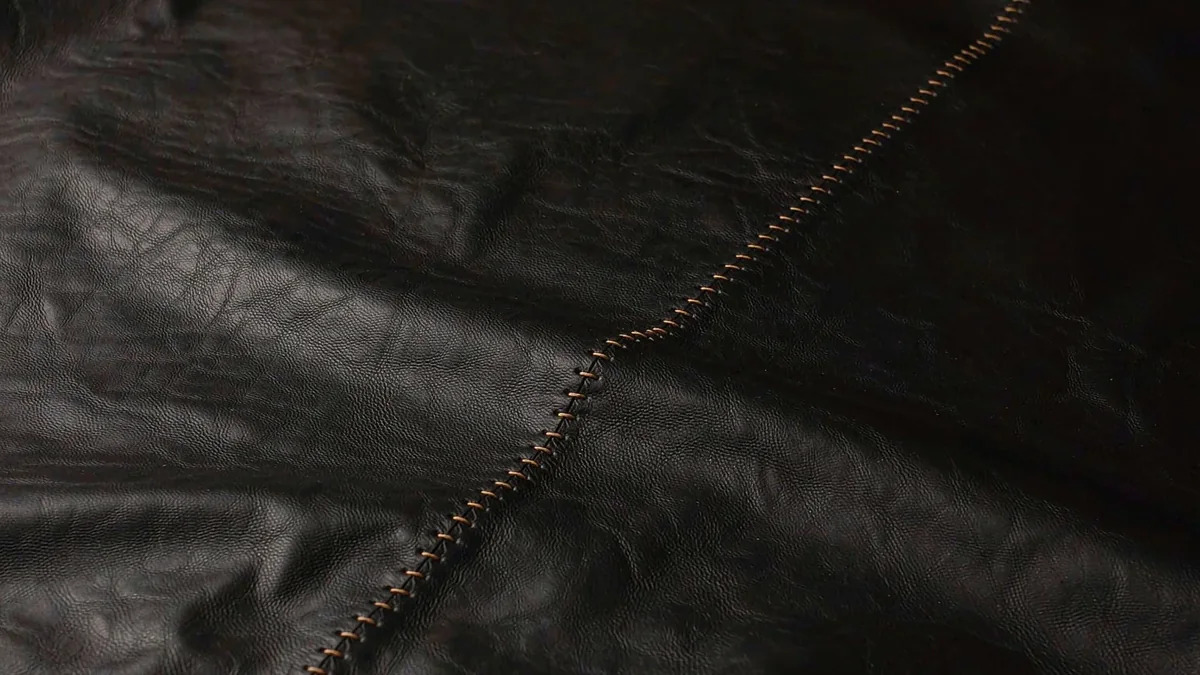
The Tannery Record, and Why It Decides Everything
The tannery is where traceability is either kept or lost, because it is the last point at which one skin can still be identified individually.
A sound record carries each tag through the beamhouse to a crust lot and then to a finished lot, and keeps retained samples for each. A weak one records a batch and loses the individual skin inside it — and a programme that cannot name a skin cannot defend a bag.
Records kept
Tag numbers carried through the beamhouse to the crust lot and the finished lot, with retained samples held for each lot and produced on request.
Records lost
Skins grouped into a batch at the beamhouse door, and the individual identity dropped there. Every downstream document then refers to a batch rather than a skin.
What to ask for
A specimen record for one lot, produced before the order is placed rather than after the shipment is queried. A tannery that can produce one in a day can produce one in an hour.
Where Ethical Sourcing Actually Fails
Exotic programmes rarely fail on intent. They fail at three predictable points, and all three are documentary.
- Substituting the species: a skin sold as one species and found to be another, which is the most damaging failure and the hardest to detect by eye.
- Breaking the tag: a tag removed at the tannery and re-fixed to a different skin, which is why tag integrity matters more than tag presence.
- Letting the permit lapse: a permit has a validity period, and a programme shipping after it expires is in the same position as one with no permit.
The common thread is timing. Every one of these is preventable by the same discipline: verify the document before the skin is cut, not after the bag is packed and the consignment is standing at a border.
One case from our file shows how small the discrepancy can be. A python consignment was held at a border for eleven days because the re-export certificate described the skins by quantity rather than by tag number, and the mismatch between the two was enough for the officer to question the whole lot. The fix was administrative — a corrected certificate listing the serials line by line — but eleven days of demurrage and a missed sailing taught the lesson more inexpensively than a seizure would have. Since then the tag numbers go onto the certificate individually, and the three documents are checked against each other by two separate people before the consignment leaves the yard.
What It Costs, and How Long It Takes
Exotic sourcing costs more in administration than most programmes plan for, and the money is small beside the time.
The administrative handling of one CITES-tagged skin, from tag fixation through to the certificate that travels with it, is commonly quoted at around USD 4.80 per skin. The permit and re-export certificates carry nationally set fees on top, and those are quoted per consignment rather than per skin.
The time is the real cost. Permit processing commonly runs two to six weeks, and a quota position that changes while a programme is in development can move a delivery by a season. Allow weeks for the documents, not days.
On our programme, export experience runs since 2014 across 7 production lines with about 200,000 pcs per month of capacity, delivered through our validated partner factory Quanzhou Yingming Bags, an SGS-validated site, and the species, the Appendix listing and the documents are agreed in writing before sampling begins.
Alternatives When the Paperwork Cannot Be Closed
Two alternatives exist when a listing or a quota will not permit a species: an unlisted material with a comparable hand, or an embossed one whose origin is straightforward.
- Stingray and ostrich from unlisted states: genuine exotics with no CITES document, where traceability becomes a brand standard rather than a legal one.
- Embossed bovine: a full-grain hide pressed with a scale pattern, which reads as exotic at a distance and is honest on the label.
- A different species on the same programme: often the lightest of the three in paperwork terms, because the specification has already been written.
What is not an alternative is proceeding without the documents. A seizure is not a delay; it is the loss of the consignment and the beginning of a conversation with a regulator that no brand wants to have.
The Sourcing Protocol to Agree Before Sampling
An ethical exotic sourcing protocol is six lines long, and it is agreed before any skin is ordered rather than after it.
The six lines to agree
- Species and origin: named by scientific name and by exporting country, not by trade name.
- Appendix listing: confirmed against the current listing, with the exporting state's quota checked.
- Tag: tamper-proof, carrying the ISO country code and serial, fixed at the tannery and recorded.
- Documents: the three, matched to each other and held together for the life of the lot.
- Retention: tannery records and retained samples held for five years.
- Substitution: a written statement that the species cannot be changed without a fresh agreement.
Against that protocol the rest of the programme is unchanged: MOQ 500 pcs per style and colourway, sampling in 6-10 working days and 12-15 for complex constructions, bulk in 35-50 days, and handover on FOB Xiamen terms.
Agree the documents before the skins are ordered
Tell us the species, the quantity and the destination markets and we will return the sourcing protocol, the document list and the calendar, in writing, before sampling starts. Request a quote.
Frequently Asked Questions
What makes exotic leather sourcing ethical?
Three documents, verified before the skin is cut and matched to each other: the CITES permit or re-export certificate, the tamper-proof tag tying each skin to a serial number, and the tannery record carrying that tag to the finished lot. Ethical sourcing is a documentary claim, and it is only as good as the third document.
Which CITES appendix applies to handbag exotics?
Most sit on Appendix II, which allows commercial trade under a permit with a non-detriment finding. Appendix I species cannot be traded commercially at all, and Appendix III covers species a country has asked for help protecting. Confirm the listing for the specific species and the exporting country.
What is a non-detriment finding?
The opinion of a scientific authority that exporting a given quantity will not harm the wild population. It is required before an Appendix II export permit is issued, and it is the reason a quota position can change independently of price. Without it, no permit follows.
Why does each skin need a tag?
Because the permit is issued against identified skins, not against a quantity. The tamper-proof tag, carrying the ISO country code and a running serial number, is what ties one physical skin to one line of paperwork — and it is the thing customs officers check first.
Can a ranch-raised crocodile be used commercially?
Yes, where the species is listed on Appendix II or where a ranched population is traded under a quota, and where the ranch record exists to prove the origin. The listing and the quota are set per species and per country, so both must be checked.
Is ostrich leather CITES-listed?
It depends entirely on origin. Ostrich is listed in some range states and unlisted elsewhere, so the same species needs a document from one country and none from another. Origin, not species, decides, which is why the exporting country belongs in the specification.
How long does the paperwork take?
Permit processing commonly runs two to six weeks, and it can only begin once the species and the exporting country are fixed. A quota position that changes during development can move a delivery by a whole season, so the documents are scheduled over weeks rather than days.
What does traceability mean in practice?
Given a finished bag, you can name the skin it came from and the place that skin came from. That requires the tannery to carry each tag through the beamhouse to the finished lot, which is the last point at which one skin can still be identified individually.
How do exotic programmes actually fail?
At three documentary points: a species substituted and detected at customs, a tag removed and re-fixed to a different skin, or a permit allowed to lapse before the consignment ships. All three are prevented by verifying documents before cutting rather than after packing.
What happens if a shipment arrives without documents?
It is detained, and the outcome is forfeiture rather than a delay. Undocumented exotic consignments are seized rather than held, and the loss falls on whoever owns the goods at the border, which is worth establishing in the contract in advance.
Are there alternatives to a listed species?
Yes: an unlisted exotic such as stingray, an embossed full-grain bovine that reads as exotic at a distance, or a different species on the same programme. Proceeding without documents is not an alternative, because a seizure costs the whole consignment.
How should the species be written into a specification?
By scientific name and by exporting country, not by trade name. A single trade name can cover two species with two different listings, and the difference between them is discovered at customs rather than at the tannery, where it could still have been simple to fix.
People Also Ask
What is CITES in simple terms?
A treaty that sorts wild species into three appendices and controls their trade with permits. Appendix I species cannot be traded commercially; most handbag exotics sit on Appendix II and need a permit per shipment.
Do I need a permit for every exotic shipment?
For a CITES-listed species, yes, and the permit must match the skins by tag number. For an unlisted material such as stingray, no CITES document is required, though traceability remains a brand standard most maisons apply anyway.
Why is the tannery record so important?
It is the last point at which one skin can still be identified individually. Skins grouped into a batch at the beamhouse lose their identity there, and every later document then refers to a batch rather than to a skin.
Can ethical exotic sourcing be verified by a buyer?
Yes, by asking for a specimen tannery record for one lot before the order is placed. A tannery that can produce one in a day can usually produce one in an hour, and a hesitation is itself an answer worth reading.
How much does the documentation cost?
The administrative handling of one tagged skin, from tag fixation to the certificate, is commonly quoted at around USD 4.80 per skin, with nationally set fees for the permit and re-export certificates charged per consignment on top.
Sources and further reading
Every figure on this page is either our own programme data or attributed below. Open the originals before you write them into a specification.
- CITES — Convention on International Trade in Endangered SpeciesCITES The treaty that sets the three appendices, the permit system and the non-detriment finding.
- UNEP-WCMCUNEP World Conservation Monitoring Centre Administrator of the CITES trade database, the reference for checking a species listing and an export quota.
- Leather Working GroupLeather Working Group Tannery audit protocol behind the environmental records that sit alongside the wildlife documents.
- Sourcing JournalSourcing Journal Reporting on exotic material sourcing, compliance enforcement and enforcement actions in the accessories trade.
- FashionUnitedFashionUnited Industry data on exotic material availability, quota decisions and their effect on delivery calendars.