Designer Handbag Atelier vs Mass Production: What the Numbers Say Across Eight Variables
Designer handbag atelier versus mass production is a decision that shows up in eight numbers: minimum quantity, sampling window, bulk window, hand-finishing minutes per piece, stitch density, edge operations, inspection level and material yield. An atelier programme runs at MOQ 500 pcs per style and colourway with 6-10 working days of sampling and 35-50 days of bulk. A high-volume line trades finishing time for speed. The difference is not craft against no craft; it is where the minutes go.
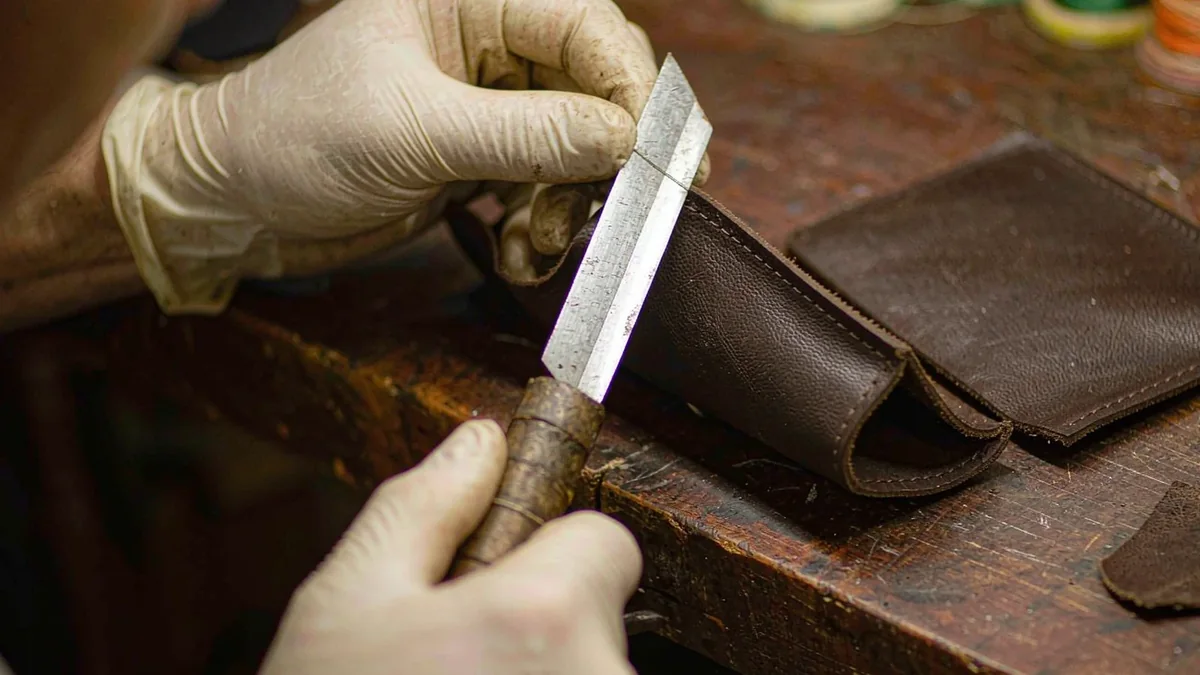
Where the Minutes Go: Atelier Versus Line
The difference between an atelier programme and a high-volume line is not better against worse; it is where the minutes are spent. A hand-finished structured body absorbs roughly 2.5 hours of bench time, most of it in skiving, turning and three-coat edge work. The same silhouette simplified for volume absorbs closer to 0.4 hours, because the panel count falls, the edge drops to one pass and the reinforcement is designed into the pattern.
Both are legitimate responses to different briefs. What fails is specifying like an atelier and pricing like a volume line, which produces a quotation that cannot be delivered against at any volume.
The eight variables below make the trade-off explicit, because each one can be read as a number rather than as a claim about craft. Numbers can be checked; claims about craft usually cannot. That is the whole argument for comparing the two models this way rather than arguing about which is finer. Two of the eight are consequences rather than choices: output follows from the minutes spent per piece, and the minimum follows from the development share that has to be carried.
Eight Variables, Side by Side
The comparison below sets the same eight variables against each model. Read it as a specification guide rather than a verdict: most established labels run both, at different points in the calendar.
| Variable | Atelier programme | High-volume line | What it decides |
|---|---|---|---|
| Minimum per style and colourway | 500 pcs | 1,000-3,000 pcs | How thinly development is spread |
| Sampling window | 6-10 working days | 15-25 working days | How fast the bench can answer |
| Complex build sampling | 12-15 working days | 20-30 working days | Framed and exotic work extends both |
| Bulk window | 35-50 days | 20-30 days | Sequence length against finishing depth |
| Hand finishing per piece | About 2.5 hours | About 0.4 hours | Skiving, turning and edge coats |
| Stitch density | 8-9 per inch | 6-7 per inch | Finer stitching is slower to sew |
| Edge finishing | Three coats, 8-10 min flash | One pass or raw burnished | Three operations against one |
| Inspection level | AQL 2.5 (ISO 2859-1) | AQL 4.0 | Tighter acceptance at lower volume |
The pattern across all eight rows is consistent. An atelier programme spends more minutes per piece and therefore accepts a lower output; a volume line removes minutes from each piece and requires a higher minimum to make the development worthwhile.
Minimum Quantity and the Development Share
MOQ is 500 pcs per style and colourway, and the reason is arithmetic rather than preference. A pattern, a graded size set, a cutting die set and two toiles exist whether the run is 500 pieces or 5,000; only the per-unit share changes.
Below that figure the arithmetic stops working in a specific way, and it is worth understanding why rather than simply accepting the number. The die set is still cut, the pattern is still graded, the colour is still matched on the bench and the plating bath is still run — but each now divides across fewer units. The result is a step change rather than a modest increase, because several of those elements are indivisible: you cannot cut half a die set, run half a bath or match half a colour.
- 500 pcs in one colourway carries the whole development cost on 500 units.
- 1,500 pcs across three silhouettes divides a slightly larger development cost three ways.
- Two colourways on a shared shell can often be split 250/250 inside the 500-pcs total.
- Exotic shells keep the 500-pcs minimum and add 7-10 working days for documentation.
For a first collection the arithmetic favours a single lot, because the option to reorder is worth more than the saving from spreading development across pieces that have not yet sold.
Sampling: 6-10 Working Days Against 15-25
A standard development sample takes 6-10 working days on an atelier bench, and 12-15 where the construction is complex. High-volume runs quote longer windows, typically 15-25 working days, because the piece travels further through material booking and line scheduling before it reaches a bench.
The sampling comparison is not simply that one bench works faster than another. A volume programme quotes 15-25 working days because the piece is queued behind material booking and line scheduling, and because a correction there re-enters a queue rather than returning to the artisan who made the piece. An atelier bench answers in 6-10 working days precisely because it is not competing with a full schedule for a slot.
- The shorter window is available because the bench is not competing with a full line schedule.
- Two correction rounds normally sit inside the 6-10 working day window.
- A toile in calico before the first leather round removes most round-two corrections.
- An open specification, not bench speed, is what turns 6-10 working days into 25.
The practical implication is that a designer should spend the saved time on decisions rather than bank it. A fast sample against an unsettled specification is simply a fast way to reach the wrong conclusion.
Bulk: 35-50 Days, and Why It Does Not Shrink
An atelier programme occupies 35-50 days of production 35-50 days on a volume line. The difference is not inefficiency; it is the number of operations that remain in the sequence.
- Cutting, splitting and grain matching: 5-7 working days on a confirmed lot.
- Skiving, reinforcement and preparation: 5-7 working days, largely hand-guided.
- Assembly of body, gussets and handles: 10-14 working days at 8-9 stitches per inch.
- Edge finishing in three coats: 6-9 working days, with flash time between passes.
- Hardware and closure setting, cleaning, inspection and packing: 9-13 working days.
Compressing that sequence is possible in one place only — by removing operations from the specification. Everything else is a request for the line to run faster than the bench can work, which is where finishing quality starts to drift. A dropped stitch is visible; a rushed edge coat is not, until it cracks in month four.
Inspection: AQL 2.5 Against AQL 4.0
Inspection level is the variable most often quoted and least often explained. AQL 2.5 under ISO 2859-1 accepts a materially smaller number of minor defects than AQL 4.0, which is why an atelier programme draws its plan at the tighter level and holds a re-work reserve.
In practice the inspection level changes three things: how many pieces are drawn from the run, how many minor defects are tolerated before a lot is rejected, and what happens after a rejection. At AQL 2.5 a finding is corrected on the bench against the approved reference. At AQL 4.0 the same finding is more often accepted, and discovered later by a customer rather than an inspector.
The inspection level changes three things in practice: how many pieces are drawn from the run, how many minor defects are tolerated before a lot is rejected, and what happens after a rejection. At AQL 2.5 a finding is corrected on the bench against the approved reference. At AQL 4.0 the same finding is more often accepted, and discovered later by a customer rather than an inspector.
What the inspection level changes
- Sample size drawn from the run, set by the lot size and the general inspection level.
- Acceptance and rejection counts for critical, major and minor defects.
- The size of the re-work reserve needed to correct a failed audit without airfreight.
- How much of the finishing variance reaches a customer rather than the bench.
- Whether a boutique return becomes a repair or a write-off.
Third-party inspection can be added alongside the internal audit. Agreeing the plan before bulk begins is what makes the result usable, since a level agreed at inspection is a negotiation rather than a standard.
Material Yield and Grade Placement
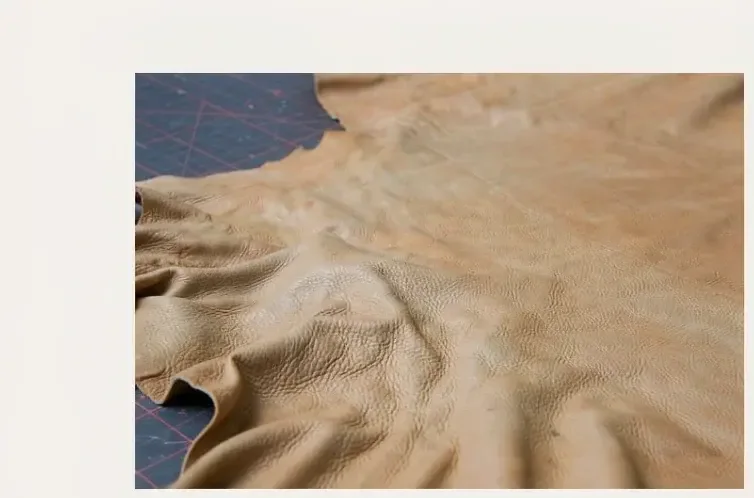
Yield is where the two models diverge most quietly. An atelier programme places panels to keep visible faces clean, holding marker efficiency at 78-84%. A volume line raises that to roughly 85-92% by accepting lower-grade placement on less visible panels, which is a different standard rather than a different method.
Grade placement is the part of yield most designers never see. Panels that sit under a gusset or against the body can come from lower-value areas of the hide, and a volume programme is built deliberately to use them. An atelier programme protects the visible faces first, which is why its marker converts a smaller share of purchased area into usable panels.
- Marker efficiency, atelier
- 78-84%, panels placed clear of scars with grain direction fixed
- Marker efficiency, volume
- 85-92%, lower grades accepted on gussets and bases
- Structured body thickness
- 1.2-1.4 mm full-grain calfskin
- Soft body thickness
- 0.8-1.0 mm, with less material area per unit
- Hides per colourway
- Three, below which a second dyelot is unavoidable
The measurable consequence is that a yield improvement of five points on a structured body is worth more than any reduction obtainable on trim, which is why the specification matters more than the negotiation. It is also why the material line should be read first in any costing, before the lines that are easier to discuss.
Capacity: What 7 Lines Actually Means
Seven production lines carrying about 200,000 pcs per month is a statement about sequence rather than speed. Each line runs the same seven stages, and the capacity figure describes how many pieces can occupy that sequence at once.
A 500-pcs capsule
Occupies a fraction of one line's sequence, which is why a capsule can be scheduled alongside longer runs rather than after them.
A 1,500-pcs three-silhouette drop
Occupies three die sets across the sequence, but a single shared material lot, which keeps the scheduling simple.
A 5,000-pcs seasonal run
Occupies several lines for the full 35-50 days, and is the case where material reservation date governs everything.
What matters to a designer is not the headline figure but the slot. A capsule booked early occupies a short sequence; the same capsule booked late competes with runs that cannot be moved without breaking someone else's delivery date. The monthly figure matters less than where the piece sits in the sequence.
Which Model Fits Which Programme
The choice is not permanent, and most labels use both. These five rules usually settle which applies to a given drop.
- Untested silhouette: atelier programme at 500 pcs, archive set retained so a reorder can be matched to the original lot.
- Proven silhouette at volume: the same pattern can be simplified and moved to a longer run.
- Exotic or bespoke specification: atelier bench, because the proving and documentation are bench work.
- Tight calendar: atelier sampling at 6-10 working days beats a volume line's 15-25 working day window, which is often the deciding factor.
- Wide colourway range: sequence the colourways across drops rather than committing to all at once.
The programme runs through our validated partner factory Quanzhou Yingming Bags, an SGS-validated site with 7 production lines and about 200,000 pcs per month of capacity, holding export experience since 2014. Sampling runs 6-10 working days, or 12-15 on a complex build, bulk occupies 35-50 days, and inspection is drawn at AQL 2.5 under ISO 2859-1, with third-party inspection available alongside the internal audit.
Most labels end up running both models at different points in the calendar: an atelier bench while a silhouette is being proved, then a simplified pattern at volume once it has sold. The transition between them is a specification exercise rather than a negotiation, and it is considerably cheaper when the archive set and the numbered correction history from the first drop were kept.
Compare the two models for your drop
Send the silhouette, your material direction, quantity per colourway and delivery date. You will receive a costed comparison of both routes with the calendar for each. Request a quote.
Frequently Asked Questions
What is the real difference between an atelier and mass production?
Where the minutes go, not whether craft is present. A hand-finished structured body absorbs about 2.5 hours of bench time in skiving, turning and three-coat edge work; the same shape simplified for volume absorbs roughly 0.4 hours by removing operations from the specification. The difference shows up as minutes per piece rather than as an absence of skill.
What is the minimum for an atelier programme?
MOQ 500 pcs per style and colourway. A pattern, a graded size set, a cutting die set and two toiles exist at any volume, so only the per-unit share of that fixed development cost changes as quantity rises. Several of the fixed elements are indivisible, which is why the change is a step, not a slope.
How long does sampling take on each model?
An atelier bench runs 6-10 working days for a standard build and 12-15 for a complex one. High-volume programmes quote 15-25 working days, because the piece travels further through material booking and line scheduling before reaching a bench. A correction there re-enters a queue rather than returning to the artisan who made the piece.
Why is bulk longer on an atelier programme?
Because more operations remain in the sequence: 5-7 working days on cutting, 5-7 on preparation, 10-14 on assembly, 6-9 on edge finishing, then 9-13 on hardware, cleaning, inspection and packing. Everything else is a request for the line to run faster than the bench can work.
What inspection level applies to designer work?
AQL 2.5 under ISO 2859-1, which accepts materially fewer minor defects than the AQL 4.0 drawn on most volume lines. A re-work reserve is held so a finding is corrected on the bench rather than by airfreight. The shares show where the money is; the variables show what you can still change.
Can third-party inspection be arranged?
Yes. It can be added alongside the internal audit, and the plan is agreed before bulk begins. Agreeing the level at inspection turns it into a negotiation rather than a standard. Agreeing the plan before bulk begins is what makes the result usable rather than negotiable.
How does material yield differ between the two models?
Atelier placement holds marker efficiency at 78-84%, keeping visible faces clear of scars with grain direction fixed. Volume placement reaches 85-92% by accepting lower grades on gussets and bases. At the tighter level a finding is corrected on the bench against the approved reference rather than accepted.
What does a capacity of 200,000 pcs per month mean in practice?
It describes sequence rather than speed. Each of the 7 production lines runs the same seven stages, and the figure states how many pieces can occupy that sequence at once. Grade placement is the part of yield most designers never see on a costing sheet.
Which model suits a first collection?
The atelier programme at 500 pcs in one colourway, with the archive set retained. The option to reorder inside the same season is worth more than the saving from spreading development across unsold pieces. Add sampling in front of that and the full capsule sits at roughly twelve to fourteen weeks.
Can a proven silhouette move to a volume run?
It can, once it has sold. The pattern is simplified, the panel count falls and the edge specification is reduced, which is what removes the minutes per piece. It can, once sold: the pattern is simplified, the panel count falls and the edge specification reduces, which removes minutes from every piece.
When does an atelier programme beat a volume line on speed?
On sampling. An atelier bench answers in 6-10 working days against 15-25 working days on a volume programme, which usually decides whether a drop makes its window. An atelier bench answers faster, which usually decides whether a drop makes its release window at all rather than landing late.
Do exotic materials change which model applies?
Yes. Exotic shells are bench work, because matching, cutting and documentation all happen before a line is involved, and they add 7-10 working days for permit handling. Matching, cutting and documentation all happen before a line is involved, which is why they add seven to ten working days.
People Also Ask
Is atelier production always better quality?
Not in the abstract. It spends more minutes per piece on skiving, turning and edge finishing, which produces a different result rather than a universally superior one. Each can be specified and measured, which distinguishes a technique from an impression of quality.
Why are volume minimums higher?
Because development is a fixed cost. A pattern, graded sizes and tooling exist at any volume, so a higher minimum is what makes the per-unit share commercially workable. An under-cured edge looks correct for weeks, so the saving feels free until the coats crack.
What makes bulk hard to compress?
The seven stages run in sequence rather than in parallel, so the only way to shorten the run is to remove operations from the specification itself. Rushing it produces a fold that opens in the third week rather than on the bench.
How should a label choose between the two?
By evidence. An untested silhouette belongs on an atelier bench at 500 pcs; a proven one can be simplified and moved to a longer run. By evidence: untested shapes suit a bench, proven ones suit a longer run.
Does inspection level really change the result?
Yes. Drawing at AQL 2.5 under ISO 2859-1 rather than AQL 4.0 materially reduces the number of minor defects that reach a customer. Numbers kept with the archive set are what make the next run match this one.
Sources and further reading
Every figure on this page is either our own programme data or attributed below. Open the originals before you write them into a specification.
- ISO — International Organization for StandardizationISO Publisher of ISO 2859-1, the sampling standard that defines AQL 2.5 and AQL 4.0 inspection plans, and of ISO 105, ISO 3376 and ISO 11644.
- Leather Working GroupLeather Working Group Tannery audit protocol used to evidence hide traceability, which underpins grade placement and yield claims on either model.
- OEHHA — California Proposition 65Office of Environmental Health Hazard Assessment State authority administering Proposition 65, which applies to the destination market on both production models.
- Sourcing JournalSourcing Journal Reporting on capacity, freight and material conditions across the leather goods sector, used for the ranges quoted here.