Choosing a Handbag Maison for Exotic Leather Lines: A Six-Branch Decision Tree
How do you choose a handbag maison for exotic leather lines? Work through six branches in a fixed order: which appendix the species sits in, whether provenance traces backwards to the source, whether the bench understands how the skin behaves, who handles permit documents, whether the construction suits the material, and whether a re-order is even possible. A house can be excellent on calfskin and wholly unprepared for caiman. This article sets out the six branches, compares four species, and gives the yield and calendar figures exotic work carries.
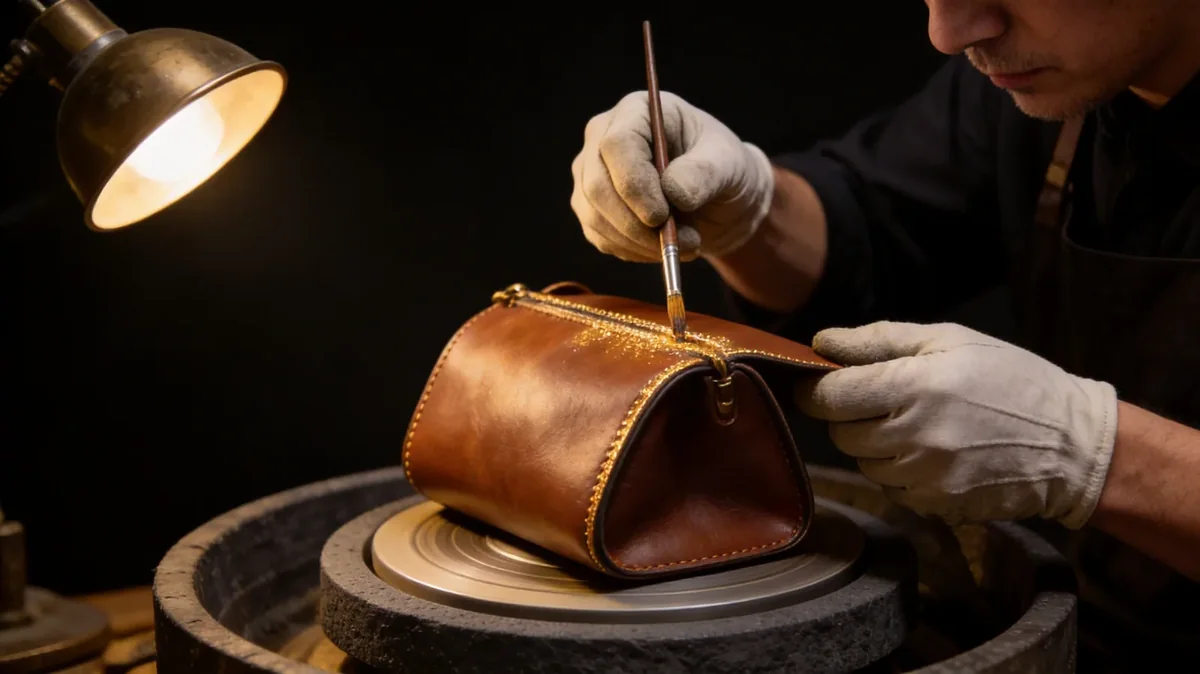
The Order in Which to Judge an Exotic Capability
Judge exotic capability in a fixed order: appendix status, provenance, skin behaviour, permit handling, construction suitability, then re-order continuity. Running them out of order wastes the conversation, because a beautiful sample answers none of the five branches that decide whether the line can be repeated or even shipped.
The order is also the order of risk. Getting the appendix wrong stops a shipment at customs. Getting provenance wrong stops a retailer listing the piece. Getting the skin behaviour wrong produces units that crack in service. The sample, which is what most buyers judge first, is the least informative of the six.
- Appendix status: which listing the species sits under, and what documents follow from it.
- Provenance: whether a skin can be traced backwards to the source with records.
- Skin behaviour: whether the bench understands cutting, backing and conditioning for that material.
- Permit handling: who prepares the documents, and how they are reconciled with the invoice.
- Construction: whether the body is designed for a material that will not stretch or forgive.
- Continuity: whether a re-order in eighteen months will match the first run.
A house that clears the first four and fails the sixth can still deliver one capsule. A house that shows a beautiful exotic sample while failing the first three cannot reliably deliver anything, because the failure will occur at a customs desk rather than at a bench.
Branch One: Which Species, and Which Appendix?
Start by establishing which appendix the species sits under, because that single fact determines whether the line needs export permits, re-export certificates or none, and it determines them before any design work is worth doing.
CITES lists species across three appendices, and commercial trade in listed skins generally runs on Appendix II or Appendix III, where export permits or certificates of origin apply. Appendix I species are not a commercial proposition for a handbag line, and a house that suggests otherwise is telling you something important about its documentation discipline.
- Establish the species and its appendix before a drawing is made, not after a sample is approved.
- Confirm the documents that follow: export permits, re-export certificates, or a certificate of origin.
- Confirm the document must reconcile with the commercial invoice on species and quantity.
- Confirm the authority's processing window, which typically runs 30-45 working days.
- Confirm which of the two sides prepares each document, written down rather than assumed.
The third item is where shipments fail. A permit describing a different quantity or a different species from the invoice does not produce a query; it produces a refusal, and it does so at a border rather than at a bench where somebody could have corrected it.
Branch Two: Can Provenance Be Traced Backwards?
Ask to trace a skin backwards from the finished piece to the source, with records at each step. A house with genuine provenance discipline produces the chain within a working day; one without it produces a certificate that describes a batch rather than a skin.
- Skin record
- Species, country of origin and the source reference for each skin used
- Tanning record
- Tannery, finish and the batch the skin was processed in
- Lot linkage
- The run the skins were allocated to, recorded against the inspection result
- Permit linkage
- Document numbers matched to the invoice on species and quantity
- Retention
- Provenance and permit records held for ten years, matching the pattern archive
- Trace-back response
- Within one working day, with records attached rather than described
Retention matters more here than on calfskin. A permit queried three years after a shipment needs its records to still exist, and a house that keeps an archive is the difference between a resolved query and a destroyed line.
Branch Three: Does the Bench Understand How the Skin Behaves?
Exotic skins are not simply expensive versions of calfskin: they vary in thickness across a single skin, they have a grain direction that governs how panels must be laid, and most need backing and conditioning before they can be cut at all.
Ask four operational questions and listen for numbers. How long are skins conditioned before cutting, what backing is applied, what thickness variation is tolerated across a panel, and what needle and stitch density is used. A bench working from habit will answer in generalities; one working from a specification will answer in figures.
Conditioning
Skins are conditioned at 55-65% relative humidity for 48 hours before cutting, so panels do not move after assembly. Skipping this is the most common cause of distortion on a finished exotic body.
Backing
Most exotic skins are backed with a 0.4-0.6 mm reinforcement so scales do not lift and thin areas do not tear. Backing is applied before cutting, not after the panel is shaped.
Laying
Panels are laid to the grain direction and matched across the body, which is why symmetry on an exotic piece is a cutting decision rather than a design one.
Stitching
Exotic panels take 7-8 stitches per inch with a 90/14 needle, slightly coarser than the 8-9 used on calfskin, to avoid perforating the skin between scales.
The third card explains why an exotic line cannot simply be a calfskin pattern recut. Symmetry across a body means matching scales from two different areas of the same skin or of a matched pair, and that is a cutting discipline with its own yield arithmetic.
Branch Four: Who Handles the Permit Documents?
Establish who prepares which document, and write it down. Permit handling fails most often in the gap between two parties who each assumed the other had prepared a document, and it fails at a border rather than in a workshop.
| Document | Prepared by | Reconciled against | Typical window |
|---|---|---|---|
| Export permit application | The house, from the skin records | Species and quantity on the commercial invoice | 30-45 working days |
| Re-export certificate | The house, where skins are re-exported | The original export document | 30-45 working days |
| Certificate of origin | The house, from provenance records | The tannery batch | 6-10 working days |
| Commercial invoice | The brand or the house by agreement | The permit, exactly | Before booking |
| Packing list | The house | Carton count and permit quantity | 3-5 working days |
| Test reports | Booked by the house, per lot | Destination market requirements | 5-7 working days |
Note that the permit window is longer than the testing window and roughly as long as material reservation on a calfskin route. This is why an exotic line is planned backwards from the permit application rather than forwards from the drawing.
Branch Five: Is the Construction Right for the Material?
Exotic skins do not stretch, do not forgive a poor pattern, and cannot be re-cut once a panel is wrong. The construction has to be designed for a material with no recovery, which changes several decisions a calfskin pattern takes for granted.
- Panels are cut once: an error on an exotic panel is a new skin rather than a re-cut piece.
- Corners need a construction that does not rely on the material stretching around them.
- Seam allowances are skived less aggressively, since the skin is thinner between scales.
- Reinforcement is applied as backing rather than as extra thickness in the pattern.
- Exotic panels are usually cut last in the sequence, after the calfskin elements are proven.
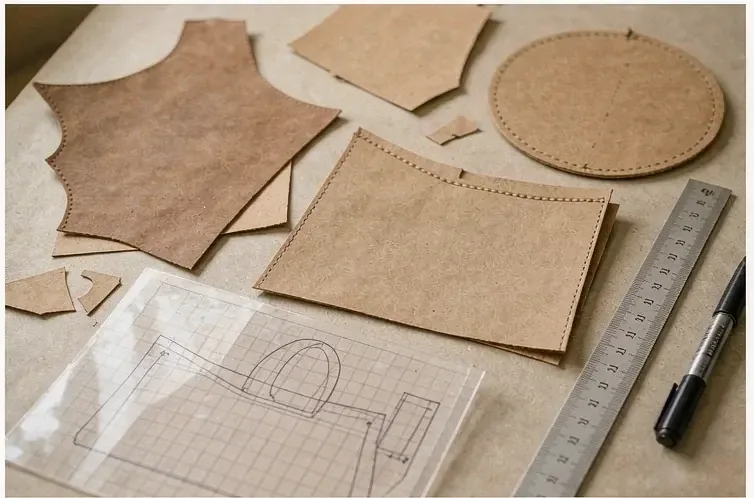
The fifth item is a sequencing rule rather than a design one, and it is worth insisting on. Cutting the expensive, irreplaceable material once the rest of the construction is proven is the difference between one wasted skin and a wasted run.
Branch Six: Will the Re-Order Be Possible?
Ask whether a re-order in eighteen months will match the first run. Exotic skins are matched by size, scale pattern and finish, so continuity depends on the source being able to supply comparable skins rather than on a pattern being retained.
- Confirm whether the source can supply a comparable skin size in the next season.
- Confirm whether scale pattern and finish can be matched, and to what tolerance.
- Confirm the permit route still applies, since listings and quotas can change between seasons.
- Confirm the retained reference piece is stored with its provenance records.
- Confirm the pattern, backing specification and stitch density are recorded for the re-order.
The third item is the one outside everybody's control. Listings and quotas change, and a line that shipped cleanly one season may be documentable only with difficulty the next, which is a reason to build an exotic capsule as a continuing programme rather than as isolated drops.
Four Species Compared
Four species account for most exotic handbag work, and they differ in yield, handling and documentation more than their prices suggest. Comparing them on the bench rather than on a price list is usually the more useful exercise.
| Species | Yield per skin | Handling notes | Documentation |
|---|---|---|---|
| Caiman belly | 1.8-2.4 units | Backed at 0.4-0.6 mm, matched across the body | Appendix II, export permit |
| Python | 2.0-2.6 units | Thin, requires careful backing and scale laying | Appendix II, export permit |
| Ostrich leg | 1.2-1.6 units | Dense, quill pattern governs panel placement | Often outside listing; origin records required |
| Stingray | 1.4-2.0 units | Rigid, needs edge treatment that will not fray | Origin records, permit where listed |
Yield is the figure that surprises buyers most. One caiman belly producing 1.8-2.4 units against one calf hide producing 4.5-5.2 on the same body is an arithmetic difference that shapes the entire commercial model of an exotic line.
It is also why exotic work resists small runs. Matching panels across a body consumes skins that maximum economy would have used elsewhere, and the matching is what makes the piece look like an exotic piece rather than a patterned one.
What Exotic Work Adds to Yield, Cost and Calendar
Exotic work adds to three places at once: yield falls, the development calendar lengthens by 30-45 working days, and the fixed block of preparation is carried by fewer units. Understanding where each lands is what separates a realistic plan from an optimistic one.
- Cutting yield
- One caiman belly per 1.8-2.4 units, against one calf hide per 4.5-5.2
- Conditioning
- 48 hours at 55-65% relative humidity before cutting
- Backing
- 0.4-0.6 mm reinforcement applied before panels are cut
- Stitch density
- 7-8 stitches per inch with a 90/14 needle
- Permit window
- 30-45 working days, issued by an authority on its own timetable
- Development addition
- 30-45 working days before bulk capacity is discussed
- Inspection
- AQL 2.5 under ISO 2859-1, plan agreed before bulk
The sixth item is the one that changes a launch plan. Where an exotic skin and a bespoke closure meet one date, the honest recommendation is usually to launch the calfskin version first and introduce the second version a season later.
The permit window is as long as material reservation and longer than sampling. Building an exotic calendar forwards from a drawing produces a date the authority will not honour; building it backwards from the application produces one it will.
Questions to Ask Before Naming a Species
Eight questions asked before the species is named will settle most of what follows. Each is designed so that a house with real exotic capability answers with a record, a figure or a retained object.
Eight questions before you commit to a species
- Which appendix does the species sit under, and which documents follow from it?
- Can you trace a skin from a finished piece back to its source, within a working day?
- How long are skins conditioned before cutting, and at what relative humidity?
- What backing is applied, at what thickness, and before or after cutting?
- What stitch density and needle size do you use on this material, and why?
- Who prepares the export permit, and how is it reconciled with the invoice?
- What is the realistic yield per skin on this body, with matched panels?
- Can a re-order in eighteen months match the first run on size, scale and finish?
The seventh question is the one that most often reveals whether a house has really made this line before. A yield quoted without reference to matching describes maximum economy, which is not how an exotic piece is actually cut.
Our programme works to MOQ 500 pcs per style and colourway, with sampling at 6-10 working days and bulk at 35-50 days on FOB Xiamen terms, inspected to AQL 2.5 under ISO 2859-1. It runs across 7 production lines with about 200,000 pcs per month of capacity and export experience since 2014, delivered through our validated partner factory Quanzhou Yingming Bags, an SGS-validated site.
Discuss your exotic line before you name the species
Tell us the silhouette and the quantity. We will return the six-branch assessment, the permit route and the realistic yield per skin, within two working days. Request a quote.
Frequently Asked Questions
What should I check first when choosing a partner for exotic skins?
The appendix the species sits under. That single fact decides which documents the line needs, whether an export permit or a certificate of origin applies, and how long the authority will take, which is typically 30-45 working days. Establish it before any drawing is made.
Why is permit documentation more important than the sample?
Because permit failures happen at a border rather than at a bench, where nobody can correct them. A permit describing a different species or quantity from the commercial invoice produces a refusal rather than a query, and it arrives too late to ship that season.
How long do CITES permit documents take?
Typically 30-45 working days, issued by an authority working to its own timetable. That is roughly as long as material reservation on a calfskin route, which is why an exotic calendar is built backwards from the application rather than forwards from the drawing. Apply before you finalise the pattern.
How should exotic skins be conditioned before cutting?
For 48 hours at 55-65% relative humidity. Skins that are cut without conditioning move after assembly, which is the most common cause of distortion on a finished exotic body and one that no amount of correction later will remove. Ask what humidity the house conditions at.
What backing do exotic skins need?
Usually a 0.4-0.6 mm reinforcement, applied before the panels are cut rather than after they are shaped. Backing stops scales lifting and prevents thin areas between them from tearing during assembly and in service. It is applied before cutting and never after shaping.
What stitch density suits exotic leather?
Seven to eight stitches per inch with a 90/14 needle, slightly coarser than the 8-9 used on calfskin. The coarser setting avoids perforating the skin between scales, which is where exotic panels most often fail in service. Perforation between the scales is where exotic panels most often fail.
How does yield differ between exotic and calfskin?
Sharply. One caiman belly yields 1.8-2.4 units on a medium structured body, against one calf hide at 4.5-5.2. The gap is largely matching: panels are laid so the scale direction is symmetrical, which consumes skins economy would have used elsewhere. Matching is what closes the gap.
When should exotic panels be cut?
Last, after the calfskin elements of the construction have been proven on the bench. Because an exotic panel cannot be re-cut, one wasted skin is the best outcome and a wasted run is the alternative. Prove the calfskin elements first, because an exotic panel cannot be re-cut.
Can an exotic line be re-ordered a season later?
Sometimes. Continuity depends on the source supplying comparable skin size, scale pattern and finish, and on the permit route still applying. Ask for a retained reference piece stored with its provenance records. It also depends on listings and quotas, which can change between seasons without warning.
How is an exotic run inspected?
At AQL 2.5 under ISO 2859-1, with the plan agreed before bulk. For a 500 pcs lot at general inspection level II the plan uses code letter H: 50 units drawn, accept 3, reject 4, with the result recorded against the run. Agree the plan before intake.
What should the commercial invoice show for an exotic shipment?
The same species and the same quantity as the permit, exactly. The two documents are checked against each other, and a discrepancy discovered at the port is not correctable in time for the season. Check the two documents against each other before the freight is booked.
Should an exotic skin and a bespoke closure share one launch date?
Rarely. Where both long-lead elements meet one date, the more honest recommendation is to launch the calfskin version first and introduce the exotic version a season later, once the permit route is proven. Prove the permit route first, and quote a date only once it is issued.
People Also Ask
What is CITES and why does it matter for handbags?
CITES lists species across three appendices, and commercial trade in listed skins generally runs on Appendix II or III, where export permits or certificates of origin apply and must reconcile with the invoice.
Can any bag house work with exotic skins?
No. It needs conditioning, backing, matched laying, coarser stitching and permit handling. A house excellent on calfskin can be wholly unprepared for caiman, which is why provenance and behaviour are judged before the sample.
How many bags does one exotic skin produce?
About 1.8-2.4 units from a caiman belly, 2.0-2.6 from python and 1.2-1.6 from ostrich leg on a medium structured body, assuming panels are matched rather than cut for maximum economy.
What is the biggest risk with exotic leather lines?
Documentation rather than craft. A permit and an invoice that disagree on species or quantity stops the shipment at a border, at a point where nothing can be corrected in time for the season.
Sources and further reading
Every figure on this page is either our own programme data or attributed below. Open the originals before you write them into a specification.
- CITES — Convention on International Trade in Endangered SpeciesCITES Appendix listings determine which permit documents are required for listed skins, and those documents must reconcile with the commercial invoice before shipping.
- ISO — International Organization for StandardizationISO Publisher of ISO 2859-1, which sets the sampling plans, code letters and accept and reject numbers used for inspection on exotic runs.
- Leather Working GroupLeather Working Group Tannery audit protocol relevant to the tannery records held in an exotic provenance chain.
- ECHA — European Chemicals AgencyEuropean Chemicals Agency Administrator of REACH, whose restricted substance list applies to the finishes and adhesives used on backed exotic panels.
- Sourcing JournalSourcing Journal Reporting on exotic material availability, traceability expectations and the retail documentation now required before listing exotic leather goods.