Best Packaging Touches for Premium Handbag Lines: Eleven Details Worth Paying For
Which packaging touches are worth paying for? A house launching a structured top-handle in Copenhagen specified eleven of them and then removed six after costing the set; the five that survived were a 25 millimetre grosgrain ribbon, a 3 millimetre board corner radius, a 30 millimetre seal, foil on the wrap at a controlled dwell, and a dust bag mouth that holds its shape. This article tells that story, ranks the eleven touches by cost per unit of memory, and gives the specification numbers that make each one work.
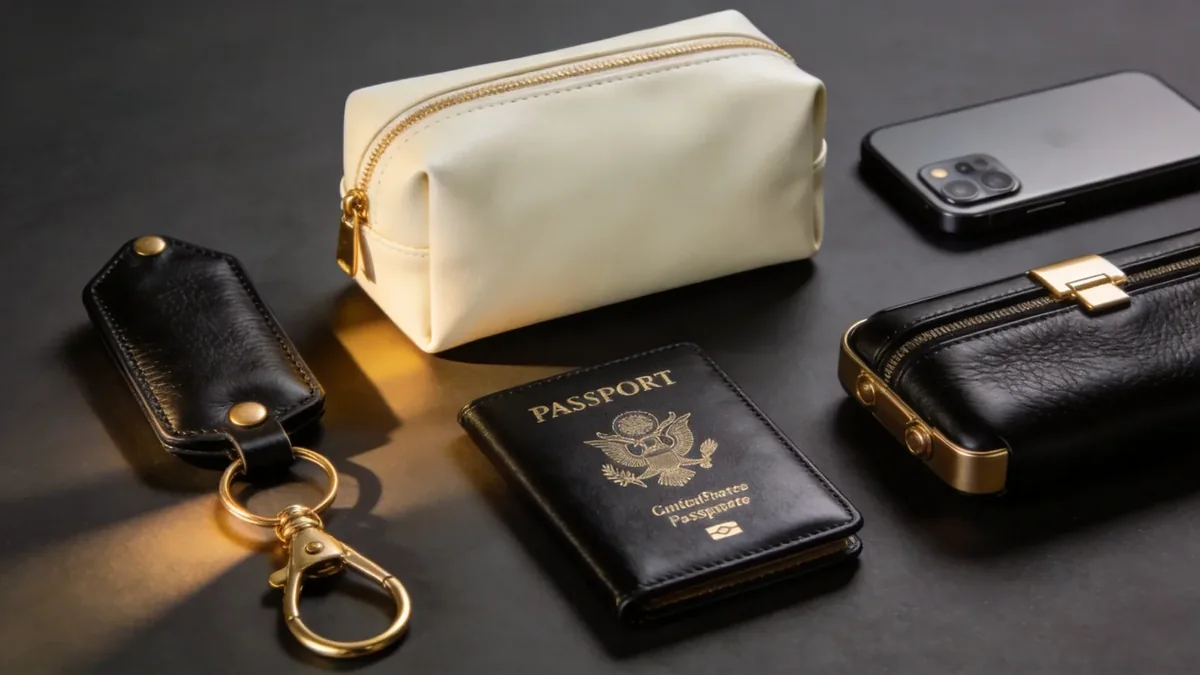
A packaging touch is a small, modest-looking detail that a client remembers disproportionately. The word doing the work is disproportionately, because a touch that costs twice as much and is remembered twice as much is not a good trade; it is merely linear, and linear is not what a set needs. The touches below are ranked by how much they cost against how much they are remembered, and the ranking is not the one most programmes would guess before they have costed a set.
The Launch That Prompted This List
A house preparing a structured top-handle for a northern European launch specified a full presentation set on the basis of what looked right in a sample photograph. Eleven touches went onto the drawing: a grosgrain ribbon, a magnetic closure, a wax seal, a foil mark, a debossed mark, a spotted coating, four tissue sheets, a printed envelope, a sticker, a cloth wrap and a double-wall shipper for a parcel route that did not need one. The set was beautiful and roughly ninety per cent over the number the line could carry.
Six touches were then removed, and the house braced for a visible loss. The interesting part is that no client ever mentioned a single one of the six. What clients did mention, unprompted, was the ribbon, the weight of the box, the way the tissue folded and the dust bag. Those four things cost a fraction of the six that were cut, and they were the ones the house would have cut first on a spreadsheet.
What Was Actually Wrong With the Set
Nothing was wrong with any individual element. What was wrong was the allocation: money had gone into surfaces the client looks at once and not into surfaces the client touches repeatedly. A cloth wrap is looked at once. A dust bag mouth is touched every time the bag is stored, which is several hundred times over the life of the piece. Allocating by frequency of contact rather than by prominence in a photograph is the single rule that comes out of that launch.
- Looked at once: the cloth wrap, the spotted coating, the printed envelope.
- Touched once: the ribbon, the seal, the sticker.
- Touched repeatedly: the dust bag mouth, the tissue, the lid, the box weight.
- Wrongly specified: a double-wall shipper on a single-parcel route.
- Correctly specified, and low in cost: the 3 mm corner radius on the board.
Touch One: A Ribbon That Opens at 3 to 5 Newtons
A ribbon is the most tactile element in a set and the most sensitive to a single number: how hard it is to undo. Below about 3 newtons it comes undone in transit, which is worse than no ribbon at all. Above about 5 newtons the client hunts for the end and the opening stalls. Grosgrain at 25 millimetres with a single bow sits reliably in that band; a 15 millimetre satin ribbon sits below it and slips, which is why satin ribbons are usually found untied on arrival.
- Ribbon width
- 25 mm grosgrain; 15 mm satin slips below the band
- Release force
- 3 to 5 N, tested on five packed sets per run
- Board corner radius
- 3 mm, which is what stops a corner arriving crushed
- Seal diameter
- 30 mm wax or foil, applied clear of the board corner
- Foil dwell
- Controlled temperature, typically 110 to 130 C on a coated wrap
- Deboss depth
- 0.3 to 0.5 mm on board and on uncoated card
- Sticker diameter
- 40 mm, removable without leaving residue on the wrap
- Dust bag mouth
- Stabilised so it holds its shape when the bag is lifted out
- Tissue
- 30 gsm acid-free, folded rather than scrunched
Touch Two: A 3 Millimetre Corner Radius on the Board
The least glamorous touch on the list and the one with the best return. A square board corner arrives crushed on a meaningful share of any palletised shipment, because the corner takes every point load between the mill and the table. Radiusing the corner at 3 millimetres distributes that load, and the cost is a tooling detail rather than a material one. Clients never comment on a corner that arrives intact, and always comment on one that does not.
The same reasoning applies to the wrap. An uncoated textured wrap scuffs at the corners in transit regardless of how the board is finished, which is why a corner radius and a slightly heavier wrap belong together. Where a programme has chosen a cloth wrap for the way it looks, the corner problem largely disappears, because cloth absorbs the load that paper transfers.
Touch Three: A Seal at 30 Millimetres
A seal is the touch that most reliably reads as ceremony, because it has to be broken. At 30 millimetres a foil or wax seal is large enough to be noticed and small enough not to dominate the wrap, and it should be applied clear of the board corner so that it is not the thing taking the point load. Wax reads as heritage and costs more per piece; foil reads as precision and is faster to apply and more consistent in colour.
Where a programme wants both the heritage reading and the consistency, the workable compromise is a foil seal with a debossed edge, which gives the depth of wax and the repeatability of foil. It needs a die, so it belongs to a mark the house expects to keep for several seasons, and it is one of the few touches where the tooling argument favours spending rather than saving.
Touch Four: Tissue Folded, Not Scrunched
Tissue is the least costly layer in the set and the one that decides whether the reveal feels paced or perfunctory. Two sheets at 30 gsm acid-free, folded in a single envelope rather than pressed in loose, adds perhaps ten seconds of packing time and changes the entire character of the opening. Scrunched tissue reads as filler; folded tissue reads as wrapping. The material cost is identical and the difference is entirely in the instruction given at the packing bench.
That makes tissue the clearest example of a touch that costs labour rather than money, and therefore the one most often lost when a packing line is under time pressure. The remedy is to put the fold pattern in the specification with a photograph of the finished fold, because a written instruction alone is read three different ways by three different packers.

Touch Five: A Dust Bag Mouth That Holds Its Shape
The dust bag is the only part of the set the client keeps and uses, and the part of it they touch most is the mouth. A mouth that collapses makes the bag awkward to put away every single time, which is a small irritation repeated several hundred times. Stabilising it costs a little more fabric and a better channel, and it is the highest-frequency contact in the whole set, which puts it near the top of any ranking built on frequency.
Touch Six: A Sticker at 40 Millimetres
A sticker closing the tissue or the envelope is a small ceremony and a colour match problem. At 40 millimetres it is large enough to read as a seal and small enough to sit on a fold. The specification that matters is not the size but the adhesive: it has to release cleanly from the wrap or the tissue without lifting the surface or leaving residue, and it should be tested on the production material rather than on a substitute stock.
Touch Seven: The Magnet, and Why It Is Rarely the Answer
A magnetic closure reads well in a photograph and adds assembly time, weight and a failure mode. The lid resistance it produces is also harder to control than the fit of a skirt, which is how a magnetic box ends up either too easy or too stiff. For a programme that wants a slow, controlled release, a lift-off lid with the skirt fit held at plus or minus 0.5 millimetres is the more reliable way to get there, and it is lighter to ship.
The Eleven Touches Ranked by Return
Ranked by how much each is remembered against what each costs. The ranking is deliberately uncomfortable: the top of the list is almost all labour and specification, and the bottom is almost all material.
| Touch | Cost character | Remembered | Verdict |
|---|---|---|---|
| Tissue folded, not scrunched | Labour only | High | Always |
| Dust bag mouth stabilised | Small material | High | Always |
| 3 mm board corner radius | Tooling detail | High when absent | Always |
| Ribbon at 25 mm grosgrain | Small material | High | Almost always |
| Lid resistance tuned | Specification only | High | Always |
| Seal at 30 mm | Material plus die | Medium | Where the mark is stable |
| Foil on a coated wrap | Material plus die | Medium | Where the wrap suits it |
| Sticker at 40 mm | Small material | Medium | Optional |
| Deboss at 0.3 to 0.5 mm | Die | Medium | Where the mark is stable |
| Cloth wrap | High material | Medium | Rarely worth it |
| Magnetic closure | Material plus labour | Low | Rarely |
Where Touches Stop Working
Touches stop working when they accumulate. One ceremony in an opening is memorable; four is a queue, and the client starts performing them rather than enjoying them. The working limit is two: one that has to be undone, such as a ribbon or a seal, and one that has to be lifted, such as a lid or a fold of tissue. Beyond two, each additional touch reduces the impact of the ones before it and adds a failure mode to a set that already has nine contacts to get right.
A cloth wrap is looked at once. A dust bag mouth is touched several hundred times over the life of the piece. Spend on what is touched often, and treat anything that only photographs well as a candidate for the next season rather than this one.
What the Five Survivors Cost
Set against a reference unit cost of USD 4.80, the five touches that survived the Copenhagen costing added a modest share of set cost, and four of the five were either labour or specification rather than material. That is the pattern worth taking away: the touches clients remember are not bought, they are specified. The ribbon is the only material addition among them, and it is the one that most programmes would have cut first.
Fitting Touches Into the Programme Clock
Every touch that needs a die, a seal or a stabilised dust bag has to be specified early enough for tooling to be cut. Sampling takes 6-10 working days and 12-15 for complex constructions, bulk production runs 35-50 days, inspection sits at AQL 2.5 under ISO 2859-1, and handover is on FOB Xiamen terms. Work runs at 500 pcs per style and colourway through our validated partner factory Quanzhou Yingming Bags, an SGS-validated site operating since 2014 with 7 production lines and capacity of about 200,000 pcs per month. See luxury handbag packaging for the layer specification these touches sit on.
Take this to the bench
- Allocate by frequency of contact, not by what photographs well. Two ceremonies per opening, no more. Fold the tissue, stabilise the dust bag mouth, radius the board corner at 3 millimetres, and tune the lid rather than adding a magnet.
Choose the touches for your line
Send the silhouette and the set you have in mind, and we will rank the touches by what they cost against what a client remembers. Request a quote
Frequently Asked Questions
Which packaging touches are worth paying for?
The ones a client touches repeatedly: folded tissue, a dust bag mouth that holds its shape, a 3 millimetre board corner radius and a tuned lid resistance. Four of those five cost labour or specification rather than material, which is why they return so well.
What ribbon width suits a luxury bag box?
Grosgrain at 25 millimetres, tied in a single bow. It releases at 3 to 5 newtons, which is the band where it neither undoes in transit nor stalls the client. Satin at 15 millimetres sits below that band and is usually found untied on arrival.
Why does a board corner radius matter?
Because the corner takes every point load between the mill and the table, and a square corner arrives crushed on a meaningful share of any palletised shipment. A 3 millimetre radius distributes the load and costs a tooling detail rather than a material change.
Should a luxury box use a magnetic closure?
Rarely. It adds assembly time, weight and a failure mode, and the lid resistance it produces is harder to control than a skirt fit. A lift-off lid with the fit held at plus or minus 0.5 millimetres gives a more reliable release and ships lighter.
How big should a seal on a bag box be?
Around 30 millimetres, applied clear of the board corner. It is large enough to read as a seal and small enough not to dominate the wrap. Wax reads as heritage and costs more per piece; foil is faster, more consistent in colour and easier to repeat.
Is a wax seal better than a foil seal?
Not objectively. Wax gives a heritage reading and a slight variation between pieces; foil gives precision and colour consistency. A foil seal with a debossed edge is a workable compromise, giving the depth of wax and the repeatability of foil, though it needs a die.
How should tissue be packed around a handbag?
Folded in a single envelope rather than pressed in loose. Two sheets at 30 gsm acid-free is the working specification. Scrunched tissue reads as filler and folded tissue reads as wrapping, at identical material cost but perhaps ten seconds more packing time.
What makes a dust bag feel considered?
A mouth that holds its shape. It is the highest-frequency contact in the set, used several hundred times over the life of the piece, and a mouth that collapses turns each of those into a small irritation. Stabilising it costs a little more fabric and a better channel.
How many packaging touches should a set have?
Two ceremonies: one that has to be undone, such as a ribbon or a seal, and one that has to be lifted, such as a lid or a fold of tissue. Beyond two, each additional touch reduces the impact of the ones before it and adds a failure mode.
Is a cloth wrap worth the cost?
Rarely. It is looked at once and it costs more per sheet than paper, with a longer lead time and a minimum to reconcile. Where a programme does choose it, one benefit is that cloth absorbs the point load at the corner that paper transfers.
What temperature is foil applied at?
On a coated wrap, typically 110 to 130 degrees Celsius at a controlled dwell, with the foil grade matched to the laminate by trial. A matte laminate can reject foil unless the grade is matched, which is a trials question rather than a specification one.
How do packaging touches fit the production schedule?
Anything needing a die, a seal or a stabilised dust bag must be specified early enough for tooling to be cut. Sampling takes 6-10 working days, bulk runs 35-50 days, inspection sits at AQL 2.5 under ISO 2859-1, and handover is on FOB Xiamen terms.
People Also Ask
What is a packaging touch?
A small detail that a client remembers disproportionately to its cost. The best ones are labour or specification rather than material: folded tissue, a shaped dust bag mouth, a radiused board corner.
How do I choose between packaging details?
Allocate by frequency of contact. A dust bag mouth is touched several hundred times; a cloth wrap is looked at once. Anything that only photographs well is a candidate for a later season.
Does a ribbon really improve an opening?
Yes, when it is 25 mm grosgrain releasing at 3 to 5 newtons. Below that band it undoes in transit; above it the client stalls. It is the one material touch worth adding to a set.
Why do box corners arrive damaged?
A square corner takes every point load in transit. A 3 mm radius distributes that load and costs a tooling detail rather than a material change, which is why it has one of the best returns in the set.
How many ceremonies should an unboxing have?
Two. One to undo and one to lift. A fourth or fifth touch turns the opening into a queue, and clients start performing the steps rather than enjoying them.
Sources and further reading
Every figure on this page is either our own programme data or attributed below. Open the originals before you write them into a specification.
- Technical Association of the Pulp and Paper IndustryTAPPI Test methods behind board corner behaviour, grammage and wrap scuff resistance.
- ASTM standards for packaging and transit testingASTM International Referenced for drop, compression and vibration practice on packed presentation sets.
- ISO standards catalogueInternational Organization for Standardization Reference for ISO 2859-1 inspection applied to packaging elements at goods-in.
- FSC certification and chain of custodyForest Stewardship Council Chain of custody reference for ribbon, board and tissue where a claim is made.
- REACH legislationEuropean Chemicals Agency Substance restrictions relevant to foil, adhesive and sticker materials.