Best Craftsmanship Signs of a Luxury Handbag: Nine Measurements, Not Impressions
The best craftsmanship signs of a luxury handbag are nine measurements rather than impressions: 8-9 stitches per inch with no more than one stitch of variance over 25.4 mm, a seam line that deviates under 0.5 mm over 100 mm, an edge film of 0.10-0.15 mm after three coats, and a hardware plate seated within 0.2 mm. Each can be checked in under a minute with a gauge, a loupe and a ruler.
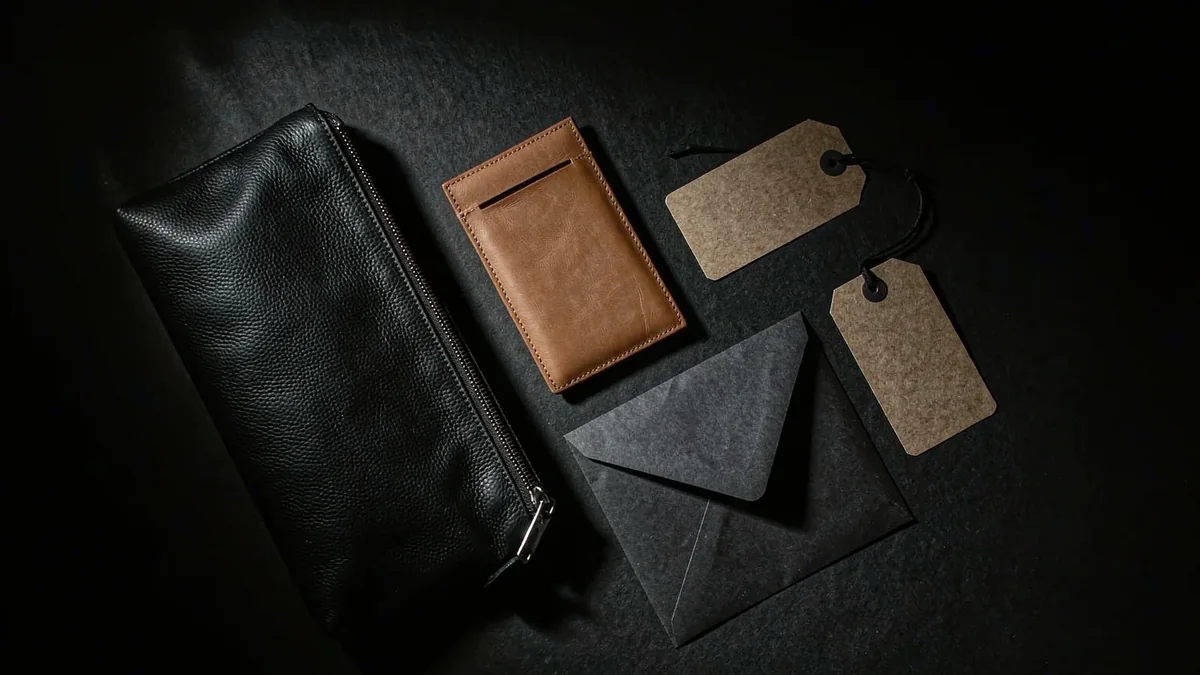
Nine Numbers That Decide Whether a Bag Is Well Made
Start with the numbers, because every one of them can be checked and none of them is a matter of taste. A well made piece holds pitch within one stitch over 25.4 mm, keeps its topstitch 2.5 mm from the edge within ±0.3 mm, holds its seam line to 0.5 mm over a 100 mm run, builds an edge film of 0.10-0.15 mm, and seats its hardware within 0.2 mm. Add handle symmetry within 2 mm, lining slack under 1 mm, a corner mitre gap under 0.2 mm and feet at 5 mm in five positions, and the piece is well made by any reasonable definition.
- Stitch pitch
- 8-9 per inch, variance <= 1 over 25.4 mm
- Topstitch from edge
- 2.5 mm, held to ±0.3 mm
- Seam line deviation
- <= 0.5 mm over a 100 mm run
- Edge film, dry
- 0.10-0.15 mm after three coats
- Hardware plate gap
- <= 0.2 mm between plate and panel
- Handle drop symmetry
- within 2 mm, measured under a 250 g load
- Lining slack at the base
- <= 1 mm with the bag empty
- Corner mitre gap
- <= 0.2 mm, external radius 8-10 mm
- Base feet
- 5 mm at five positions
The list is deliberately narrow. It excludes anything that cannot be measured, which means it excludes most of the vocabulary used to sell craft. What remains are nine figures a buyer can verify at goods-in and a bench can be held to during a run.
Pitch and Distance From the Edge
Pitch is the first thing an eye reads and the easiest to check. Count the stitches over 25.4 mm at three points on each seam — start, middle and turn — and the count should not vary by more than one. At 8 per inch the spacing is 3.18 mm; at 9 it is 2.82 mm. The topstitch, where the design carries one, sits 2.5 mm from the edge and holds to ±0.3 mm, because a line that drifts towards the edge is the detail that makes a piece look hurried.
- Count over 25.4 mm at three points, not once at a convenient spot.
- A seam that opens up towards its end signals a hand losing rhythm or a machine feeding unevenly.
- The slant should be constant at 15-20 degrees, with no reversal part-way along a run.
- Thread ends are trimmed to 1.5 mm and set with wax; anything longer catches and then lifts.
Distance from the edge is the companion check and the one more often missed. A topstitch at 2.5 mm held consistently reads as a straight line even where the panel below it is not perfectly straight; the same stitch wandering between 2.0 and 3.0 mm draws attention to the panel rather than away from it.
Seam Line Deviation: The 0.5 mm Test
Lay a steel rule along a 100 mm run of seam and read the largest gap between rule and stitch line. On a well made piece that gap stays under 0.5 mm. Above about 1.0 mm the seam begins to read as curved, which is visible in a photograph and obvious in the hand. The test takes fifteen seconds and it is the single most reliable indicator of whether the panels were clicked and nested carefully or rushed.
Deviation has two usual causes, and they are worth separating because they have different fixes. A pattern error produces the same deviation on every piece of the run; a placement error produces a different deviation on each. The first is corrected on the pattern, the second at grade placement, and confusing them costs a full sampling round.
Edge Build-Up and the Corner Mitre
Edge finishing is three coats, and the film that results should measure 0.10-0.15 mm dry. Run a fingernail from panel to edge: a well built edge feels continuous, with no ridge at the coat boundary and no lip standing proud of the surface. Build-up beyond about 0.25 mm reads as a painted strip stuck onto the edge rather than a finish worked into it.

At the corner, the mitre join should close to 0.2 mm or less with an external radius of 8-10 mm. A mitre that gaps is not a cosmetic issue: the corner is where the piece is set down, picked up and abraded, and an open mitre is where the edge coat fails first.
Hardware: Seating, Plating and the Gap Test
Hardware is checked in three ways. Seating: no gap larger than 0.2 mm between the plate and the panel, with the foot flush rather than rocking. Plating: 0.15-0.3 µm on brass, verified on a sample from each lot. Finish: 24 hours of salt spray on a standard specification and 48 hours on a high-wear one. All three are written on the hardware drawing sheet, which is why every metal item needs its own sheet rather than a shared note.
- A plate that rocks has not been seated; the gap test catches it before the closure does.
- Plating thickness is checked per lot, not per season, because a plating bath drifts within a week.
- Zips are specified by size: a #5 with a 4 mm tape reveal on a body opening.
- A turn-lock should close with resistance and release without force; anything else is a setting error.
Handle Symmetry, Lining Fit and the Base
Handle drop is measured with the bag empty and a 250 g load applied, and the two sides must agree within 2 mm. A visible difference of more than about 4 mm is what a customer notices as the bag hanging crooked. Lining is checked for slack at the base: with the bag empty there should be no more than 1 mm of fabric standing away from the board, and the lining seam allowance should be a full 10 mm so it cannot pull through at the fold.
Handle drop
Two sides within 2 mm under a 250 g load. This is the measurement most often skipped and the one customers see first when the piece is carried.
Lining fit
No more than 1 mm of slack at the base with the bag empty, and a 10 mm seam allowance so the lining cannot pull through the fold in month two.
Base and feet
Five feet at 5 mm, set after edge work, so the piece stands level on a hard surface without rocking when it is set down empty.
What Holding These Numbers Costs
Tolerances cost bench time, and the cost is concentrated in the three operations that cannot be hurried: turning, edge finishing and hardware seating. Tightening edge build-up and hardware seating from an ordinary tolerance to the figures above adds roughly USD 4.80 per unit. Across 500 pieces that is a real number, and it is worth paying on the seams and edges a hand finds and not worth paying on the interior.
| Check | Ordinary tolerance | Luxury tolerance | Extra bench time |
|---|---|---|---|
| Pitch variance | Up to 2 over 25.4 mm | 1 over 25.4 mm | 4-6 min per piece |
| Seam line deviation | Up to 1.5 mm per 100 mm | 0.5 mm per 100 mm | 5-8 min per piece |
| Edge film | 0.20-0.30 mm dry | 0.10-0.15 mm dry | 8-12 min per piece |
| Hardware gap | Up to 0.5 mm | 0.2 mm | 3-5 min per piece |
| Handle symmetry | Within 5 mm | Within 2 mm | 2-3 min per piece |
| Lining slack | Up to 3 mm | 1 mm | 2-4 min per piece |
Read across the table and the total is 24-38 minutes of additional bench time per piece. That is the honest price of the nine numbers, and it is why the list should be applied selectively: all nine on visible and loaded areas, and a reduced set on the interior.
Ten Minutes at Goods-In
The whole list can be checked in under ten minutes per piece with a steel rule, a loupe and a 250 g weight. Take five pieces from the run rather than one, because a single piece proves nothing about the other 495, and record the readings rather than the verdict.
- Count pitch over 25.4 mm at three points on three different seams.
- Lay a rule along 100 mm of seam and read the largest gap.
- Run a fingernail across the edge from panel to finish and feel for a ridge.
- Try a 0.2 mm feeler at the hardware plate and read the handle drop under 250 g.
- Press the lining flat at the base and measure the slack that remains.
Inspection itself is drawn at AQL 2.5 under ISO 2859-1 with a re-work reserve held, and the material behind the checks is tested against ISO 3376 for tensile strength, ISO 11644 for finish adhesion and ISO 105 for colour fastness. Hide traceability is evidenced through Leather Working Group tannery audits, and where an exotic shell is specified, CITES documentation is checked before the panel is released.
Signs That Do Not Mean Anything
Three commonly cited signs carry no information, and relying on them is how a weak piece passes a review. A heavy piece is not better made; it is often a thicker interlining or a heavier board. A stiff piece is not better made; it is frequently over-bonded and will crease rather than soften. And a dense stitch count is not automatically finer — at 12 per inch on a 1.2-1.4 mm shell the holes begin to perforate the panel rather than sew it.
The signs that do carry information are all comparative: does the second piece match the first, does the seam stay at the same distance from the edge, does the handle hang level. Consistency across a run is the hardest thing to buy and the only thing that reliably indicates a disciplined bench.
The programme runs through our validated partner factory Quanzhou Yingming Bags, an SGS-validated site with 7 production lines and about 200,000 pcs per month of capacity, holding export experience since 2014. Sampling takes 6-10 working days, or 12-15 on a complex build; bulk occupies 35-50 days; minimums sit at 500 pcs per style and colourway; and shipments leave FOB Xiamen, with FOB, CIF and DDP terms all available.
Have the nine numbers checked on your run
Send the drawings, your material direction, quantity per colourway and delivery date. You will receive a costed inspection plan naming the tolerance held on each of the nine checks. Request a quote.
Frequently Asked Questions
What are the clearest craftsmanship signs of a luxury handbag?
Nine measurable ones: pitch within one stitch over 25.4 mm, topstitch 2.5 mm from the edge, seam deviation under 0.5 mm per 100 mm, edge film 0.10-0.15 mm dry, hardware gap under 0.2 mm, handle symmetry within 2 mm, lining slack under 1 mm, mitre gap under 0.2 mm and five feet at 5 mm.
How many stitches per inch should a luxury handbag have?
Eight to nine on visible seams, which is 3.18 mm or 2.82 mm between holes, with no more than one stitch of variance over 25.4 mm. Twelve per inch is used on fine detail but begins to perforate a 1.2-1.4 mm shell rather than sew it.
How do you check whether a seam line is straight?
Lay a steel rule along a 100 mm run and read the largest gap between rule and stitch line. Under 0.5 mm is well made; above about 1.0 mm the seam reads as curved. The test takes fifteen seconds and needs no equipment beyond a rule.
What should the edge of a luxury bag feel like?
Continuous with the panel. Run a fingernail from panel to edge and there should be no ridge at the coat boundary and no lip standing proud. The dry film measures 0.10-0.15 mm after three coats; build-up beyond about 0.25 mm reads as a strip stuck onto the edge.
How is hardware quality checked?
Three ways: seating, with no gap above 0.2 mm between plate and panel and no rocking of the foot; plating, at 0.15-0.3 µm on brass verified per lot rather than per season; and finish, with 24 hours of salt spray standard and 48 hours on a high-wear specification.
Why does handle symmetry matter?
Because it is the first thing a customer sees when the piece is carried. Measured with the bag empty under a 250 g load, the two sides should agree within 2 mm. A visible difference beyond about 4 mm reads as the bag hanging crooked.
What does lining tell you about how a bag was made?
Quite a lot. With the bag empty there should be no more than 1 mm of fabric standing away from the base board, and the lining seam allowance should be a full 10 mm. Slack lining or a narrow allowance pulls through the fold within a month or two.
Is a heavier bag better made?
No. Weight usually indicates a thicker interlining or a heavier base board, neither of which is a craft signal. The same is true of stiffness, which frequently means over-bonding and a piece that will crease rather than soften with use.
Is a higher stitch count always finer?
No. At 12 per inch on a 1.2-1.4 mm shell the holes begin to perforate the panel rather than sew it, and the seam reads raised rather than drawn. Pitch should be matched to thickness, with 8-9 per inch the designer standard on a body seam.
How long does it take to check a bag properly?
About ten minutes per piece with a steel rule, a loupe and a 250 g weight. Take five pieces from the run rather than one, because a single piece proves nothing about the other 495, and record readings rather than verdicts.
What does holding these tolerances cost?
Around 24-38 minutes of additional bench time per piece, concentrated in turning, edge finishing and hardware seating. Tightening edge build-up and hardware seating alone adds roughly USD 4.80 per unit, which is worth paying on visible areas and not on the interior.
How is the inspection actually drawn?
At AQL 2.5 under ISO 2859-1, with a re-work reserve held so a finding is corrected on the bench rather than at the destination. Material is tested alongside it against ISO 3376 for tensile strength, ISO 11644 for finish adhesion and ISO 105 for colour fastness.
People Also Ask
What is the single best test of bag craftsmanship?
The seam line test: lay a rule along 100 mm and read the gap. Under 0.5 mm indicates careful clicking and nesting; above 1.0 mm reads as curved in the hand and in photographs.
How can you spot poor craftsmanship quickly?
Count pitch at three points, feel for an edge ridge, try a 0.2 mm feeler at the hardware, and compare handle drop sides under a 250 g load. Inconsistency, rather than any single flaw, is the tell.
Does a heavy bag mean better quality?
No. It usually means thicker interlining or a heavier board. Stiffness likewise often means over-bonding, which produces a piece that creases rather than softening with use.
Should I check one bag or several?
At least five from the run. A single piece proves nothing about the other 495, and consistency across the run is the hardest thing to buy and the clearest sign of a disciplined bench.
How much does tighter tolerance add to cost?
Roughly 24-38 minutes of bench time per piece, with edge build-up and hardware seating alone adding about USD 4.80 per unit, which is why the checks are applied selectively rather than uniformly.
Sources and further reading
Every figure on this page is either our own programme data or attributed below. Open the originals before you write them into a specification.
- ISO — International Organization for StandardizationISO Publisher of ISO 2859-1 for the AQL 2.5 inspection plan, ISO 3376 for tensile strength, ISO 11644 for finish adhesion and ISO 105 for colour fastness.
- Leather Working GroupLeather Working Group Tannery audit protocol that evidences hide traceability behind the grade placement checks described above.
- CITES — Convention on International Trade in Endangered SpeciesCITES The convention whose Appendices determine which exotic shells require documentation before a panel is released to the bench.
- SATRA Technology CentreSATRA Independent testing body for leather goods, referenced for hardware seating, plating thickness and salt spray test methods.