Atelier Workflow for a Luxury Handbag: Three Routes From Intake to Release
What does an atelier workflow for a luxury handbag actually look like? Material is conditioned, cut, skived, assembled at 8-9 stitches per inch with 0.45 mm thread, edged in three coats, dressed with hardware and released against AQL 2.5 under ISO 2859-1. How those stages are routed is the real decision: bench-led, cell-based or line-assisted. This guide compares the three routes stage by stage, then says which suits which programme.
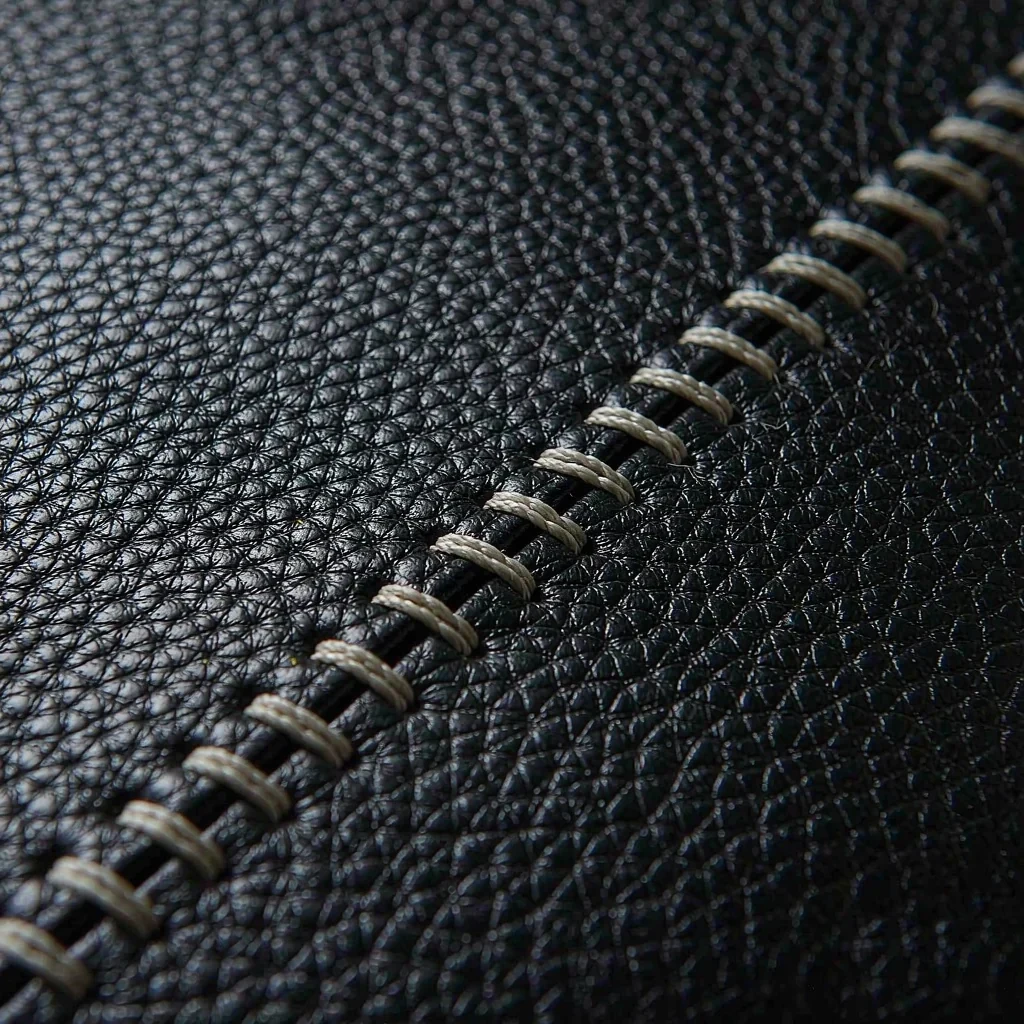
Three Routes Through the Bench, Compared
Every atelier runs the same stages in the same order. What differs is how work moves between them. A bench-led route keeps one body with one maker from cutting to release. A cell-based route groups three or four benches so that a body passes hand to hand with a short queue between each. A line-assisted route splits the stages across stations, with machines taking the work the machines do better.
| Factor | Bench-led | Cell-based | Line-assisted |
|---|---|---|---|
| Bodies in progress | One per maker | Three or four in the cell | Many, paced by station |
| Consistency | Depends on the maker | Shared reference across the cell | Highest, set by the station |
| Complexity tolerated | Highest | High | Moderate |
| Speed on a repeat order | Slowest | Balanced | Fastest |
| Change tolerance | Excellent | Good | Poor once set |
| Typical use | Couture bodies and complex constructions | Premium collections in regular production | Large repeats of a proven body |
Material Intake: Conditioning Before Anything Is Cut
Leather arrives and is conditioned before it is touched. Hides are counted against the delivery note, laid flat, and held in a room at stable temperature and humidity, around 55-65% relative humidity, long enough for the material to settle after transit. Cutting unconditioned leather is the most common cause of a panel that measures correctly on the day and moves a week later.
Intake is also where the lot record is created. Each batch is given a reference, panels are graded and sorted into shade bands, and a retained cutting is sealed. From this point every body in the programme can be traced back to a lot, which is the only way a later question about colour or substance can be answered rather than argued.
Exotic material adds one gate at this stage. A belly or a quill field is approved panel by panel, under a D65-equivalent light source, before any blade touches it, because a cut exotic panel cannot be recovered. That approval is the reason an exotic programme carries an extra step that a calfskin one does not, and it is the single most valuable half hour in the entire exotic workflow.
Cutting and Marking: Where the Route Sets the Rhythm
Cutting sets the rhythm of everything after it. On a bench-led route the maker cuts the panels for the body they will build, which wastes a little material and buys complete familiarity with the skin. On a line-assisted route one station cuts for many bodies, which saves material and loses that familiarity. Neither is wrong; they suit different programmes.
- Conditioning
- Stable temperature, around 55-65% relative humidity, before cutting
- Panel marking
- Every panel marked with its lot reference and nap direction where relevant
- Skiving
- Edges reduced to around 0.6 mm so a fold lies flat
- Interlining
- 0.8 mm non-woven on structured calfskin panels, 0.4 mm on soft ones
- Stitch density
- 8-9 stitches per inch, thread 0.45 mm braided polyester
- Saddle stitch
- Two needles, one thread, locked at every pass
- Edge build
- Three coats, sanded between coats, final coat dressed
- Release
- Inspected to AQL 2.5 under ISO 2859-1
Skiving, Backing and Reinforcement
Before assembly, panel edges are reduced so that a fold lies flat rather than bulky. Skiving to around 0.6 mm at the seam allowance is standard. Interlining follows: 0.8 mm non-woven on a structured calfskin panel, 0.4 mm on a soft one, and none at all where the design wants the panel to fall. Reinforcement patches go behind any point that will carry a fitting.
Skiving
Thinning the edge so a seam or a turned edge lies flat. Done unevenly it shows as a wave along the seam, which is why it is a measured operation.
Interlining
A substrate bonded to the back of a panel to add discipline. Weight chosen against the substance of the skin, not against the size of the body.
Reinforcement
A patch behind a fixing point. Invisible in the finished body and the reason a flap stays flat around its closure.
Backing
A full or partial second layer, used where a panel must not stretch at all, typically at a handle or a strap root.
Assembly Order: The Sequence That Cannot Be Reversed
Assembly has a fixed sequence because later stages close off access to earlier ones. Gussets go to bodies before the base is closed. Linings go in before the top edge is finished. A strap root is set before the panel it sits against is closed. Reverse any of these and the body either cannot be finished or has to be finished badly, which is why a workflow drawing matters more than a workflow description.
This is also where the routes diverge most visibly. A bench-led maker can hold a body half-open while a fitting is test-set and adjusted. A line-assisted station cannot, so the sequence has to be proven in sampling before the run starts. That proof is exactly what the 6-10 working days of standard sampling buys.
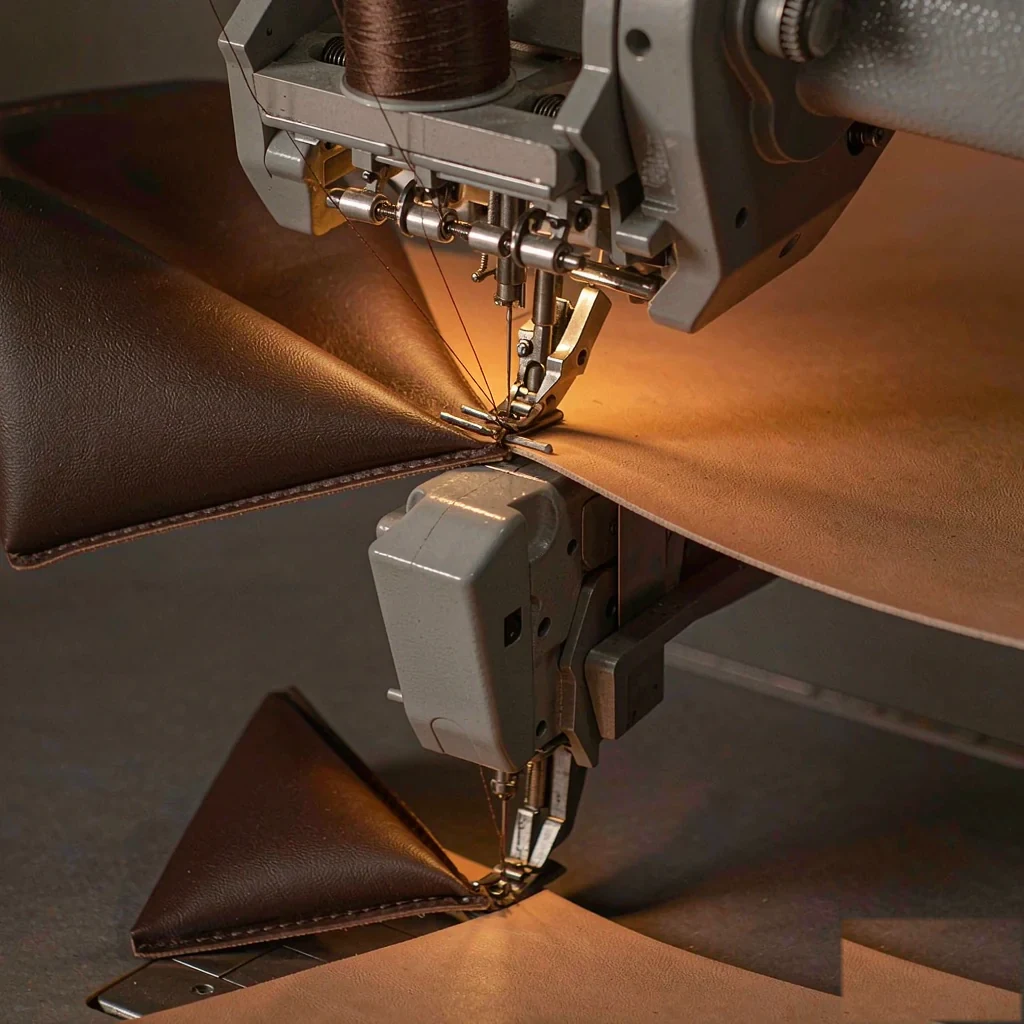
Stitching: 8-9 per Inch and What a Saddle Stitch Buys
Stitch density is the number most often quoted and least often understood. At 8-9 stitches per inch with 0.45 mm braided polyester, the line is fine enough to read as detail and open enough not to perforate the leather into weakness. Denser looks impressive and weakens the seam; looser looks coarse and lets the panel gap.
A saddle stitch uses two needles on one thread, locking at every pass, so a broken stitch does not unpick the line the way a machine chain does. It is slower and it is the reason a hand-finished body survives a repair. Machine stitching is faster, more uniform and entirely appropriate on a body where the stitch is structural rather than decorative. Most programmes use both, in different places.
Edge Work: Three Coats and the Difference Between Them
An edge is built in three coats, sanded between each. The first fills the fibre, the second builds the body of the edge, and the third is dressed to the final arris. Skipping a coat saves a few minutes and produces an edge that sinks along the seam within a season, which is one of the most common defects found at final inspection.
- First coat fills the exposed fibre at the cut edge and is sanded back.
- Second coat builds the edge to its full profile and is sanded smooth.
- Third coat is dressed to the arris and left to cure before handling.
- A turned edge needs a slightly lower stitch density so the fold does not pucker.
- Suede does not take edge paint; use a turned, raw or bound edge instead.
Hardware Setting and Final Dressing
Hardware is set last, once the body is closed and edged, because a fitting fixed earlier would block access to a seam. Feet, rings, closures and plates are set against the reinforcement patches drawn at specification stage, and the setting is checked for alignment before the maker moves on. This is also the stage where the zip is fitted and its action tested on the assembled body.
Dressing follows: the body is brushed, the nap or grain is checked under the light it will be sold under, the interior is inspected and the dust bag, care card and documentation reference are prepared. It is unglamorous work and it is the difference between a body that arrives looking finished and one that arrives looking made.
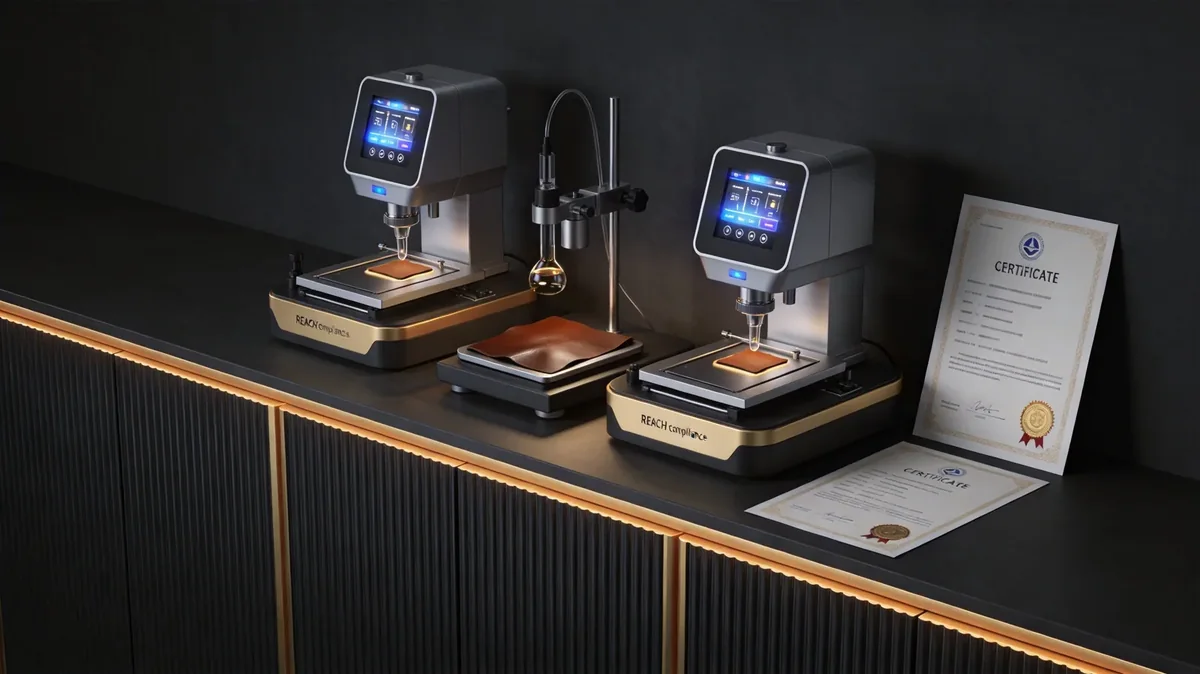
Release: Inspection, AQL 2.5 and the Retained Unit
Release is a measurement, not an opinion. Bodies are drawn against the AQL 2.5 sample size under ISO 2859-1, defects are classified as critical, major and minor, and the acceptance number scales with the delivery. A third-party inspection is available on request, and at this level it is usually worth taking. One unit from each lot is retained as the reference for any later question.
Workflow rules worth keeping
- Condition material before cutting; unconditioned leather moves after the body is made.
- Create the lot record at intake, not at dispatch.
- Prove the assembly sequence in sampling; later stages close off access.
- 8-9 stitches per inch with 0.45 mm thread; denser weakens the seam.
- Three edge coats, sanded between; a skipped coat sinks within a season.
- Set hardware last, against the reinforcement patches already drawn.
A retained unit is the least glamorous and most useful object in the whole workflow. One body from each lot is kept, unbrushed and untouched, alongside its lot record. When a question arrives months later about colour, substance, edge build or how a fitting sat, the retained unit answers it in minutes. Without one, the same question becomes a correspondence that nobody wins.
Which Route Suits Which Programme
Choose by complexity and by repetition. A couture body with a frame, a lining and hand-set trim belongs on a bench-led route. A premium collection produced in regular drops suits a cell. A proven body repeating at volume suits a line-assisted route, where the consistency is highest and the tolerance for change is lowest. Most houses run two of the three at once, for different bodies in the same range.
The programme terms sit underneath whichever route is chosen: MOQ 500 pcs per style and colourway, sampling at 6-10 working days and 12-15 for a complex construction, bulk at 35-50 days on FOB Xiamen terms, and a base reference unit of USD 4.80 before material. Capacity runs across 7 production lines at about 200,000 pcs per month with export experience since 2014, delivered through our validated partner factory Quanzhou Yingming Bags.
Planning how a body should be routed?
Send the silhouette, the construction notes and the expected repeat. We will return a route recommendation and a stage plan. Request a quotation
Frequently Asked Questions
What are the main stages of an atelier workflow for a handbag?
Conditioning and intake, cutting and marking, skiving and reinforcement, assembly in a fixed sequence, stitching, edge work in three coats, hardware setting and dressing, then release. The order is fixed because later stages close off access to earlier ones, which is why the sequence is proven during sampling.
What is the difference between bench-led and line-assisted work?
Bench-led keeps one body with one maker from cutting to release, tolerating complexity and late change at the cost of speed. Line-assisted splits stages across stations, giving the highest consistency and the fastest repeat, but it cannot absorb change once the run is set.
Why must leather be conditioned before cutting?
Because it moves. Leather that has just come off a truck holds the humidity of its journey, and a panel cut then will relax afterwards and change dimension. Holding material at stable temperature and around 55-65% relative humidity before cutting prevents a body that measures correctly on the day and drifts a week later.
What stitch density is used on a luxury handbag?
Typically 8-9 stitches per inch with 0.45 mm braided polyester. Denser looks impressive but perforates the leather into weakness at the seam; looser looks coarse and lets the panel gap. Suede and other bulky materials are worked slightly lower, at 7-8 per inch, to avoid puckering.
What does a saddle stitch do that a machine stitch does not?
It uses two needles on one thread and locks at every pass, so a broken stitch does not unpick the line. That makes a hand-finished body repairable in a way a machine chain is not. Machine stitching is faster and more uniform and is entirely appropriate where the stitch is structural rather than decorative.
How many coats does a handbag edge need?
Three, sanded between each. The first fills the fibre at the cut edge, the second builds the profile and the third is dressed to the arris. Skipping a coat saves minutes and produces an edge that sinks along the seam within a season, which is a common finding at final inspection.
When is hardware set on a handbag body?
Last, after the body is closed and edged, because a fitting fixed earlier would block access to a seam. Feet, rings, closures and plates are set against reinforcement patches drawn at specification stage, and alignment is checked before the maker moves on.
What does skiving achieve on a leather panel?
It thins the edge, typically to around 0.6 mm, so that a seam or a turned edge lies flat rather than bulky. Done unevenly it shows as a wave along the seam line, which is why it is treated as a measured operation rather than a finishing touch.
Why is the assembly sequence so important?
Because later stages close off access to earlier ones. Gussets go in before the base closes, linings before the top edge is finished, strap roots before the panel they sit against. Reversing any of these means the body either cannot be finished or is finished badly.
What inspection standard applies at release?
AQL 2.5 under ISO 2859-1, with defects classified as critical, major and minor and counted against the sample size drawn from the lot. A third-party inspection is available on request and is usually worth taking at this level. One unit per lot is retained as a reference.
How long does an atelier programme take from sample to shipment?
Sampling runs 6-10 working days for a standard construction and 12-15 for a complex one, and bulk runs 35-50 days on FOB Xiamen terms. The route affects pace more than the calendar: a line-assisted route moves faster on a repeat, while a bench-led route protects a complex body from rework.
Which route suits a couture or highly complex body?
Bench-led. One maker holding one body can test-set a fitting, adjust a fold and hold a seam half-open while a decision is made. A line-assisted station cannot, which is why complexity and route have to be matched before the run is planned rather than during it.
Can two routes run at the same time in one programme?
Yes, and most houses do. A couture body sits on a bench-led route while a proven repeating body runs line-assisted, both inside the same collection. What matters is that each body is routed deliberately and that the routing is recorded, so a re-order repeats the same route.
What should be recorded during the workflow?
The lot reference at intake, the shade band of each panel, the maker or cell, the inspection result and one retained unit per lot. Those five records answer nearly every question that can be asked later, and without them any discussion about a delivery becomes a matter of opinion.
People Also Ask
What happens in a handbag atelier?
Material is conditioned, cut, skived, assembled in a fixed sequence, stitched at 8-9 per inch, edged in three coats, dressed with hardware and released against AQL 2.5. The stages are constant; how work is routed between them varies.
What is bench-led production?
One maker keeps one body from cutting to release. It tolerates complexity and late change better than any other route and is slower, so it suits couture bodies and complex constructions.
Why is leather conditioned before cutting?
Because it moves. Leather cut before it settles at around 55-65% relative humidity will relax afterwards, so a panel that measured correctly changes dimension once the body is assembled.
How is a handbag edge finished?
In three coats of edge paint, sanded between each: one to fill the fibre, one to build the profile, one dressed to the arris. A skipped coat sinks along the seam within a season.
What is AQL 2.5 in bag inspection?
An acceptance quality limit applied under ISO 2859-1. A sample is drawn from the lot, defects are classified as critical, major or minor, and the acceptance number scales with the delivery size.
Sources and further reading
Every figure on this page is either our own programme data or attributed below. Open the originals before you write them into a specification.
- ISO — international standardsISO Publisher of ISO 2859-1, the sampling standard behind the AQL 2.5 release inspection described here.
- Leather Working Group — tannery audit protocolLeather Working Group The audit framework behind the material records created at intake, including lot traceability.
- SATRA — leather and materials testingSATRA Independent test house whose methods are used to verify seam strength and edge durability before a route is fixed.
- ISO/TC 289 — Leather technical committeeISO Develops the ISO leather test methods referenced in the conditioning and inspection stages of the workflow.