Scaling a Premium Handbag Line: Four Gates That Decide When to Switch Partners
When should a growing handbag line change production partner? Run four gates in order, because each one eliminates a class of false alarms: has demand genuinely passed the current structure, is the binding constraint capacity or capability, what does the handover actually cost, and can two houses run side by side during the move. Scaling is not a complaint about the present arrangement; it is a decision about which constraint you are willing to live with next. A programme running 7 production lines at about 200,000 pcs per month can absorb roughly 28,000 pieces per line per month, which is the number most brands are really asking about.
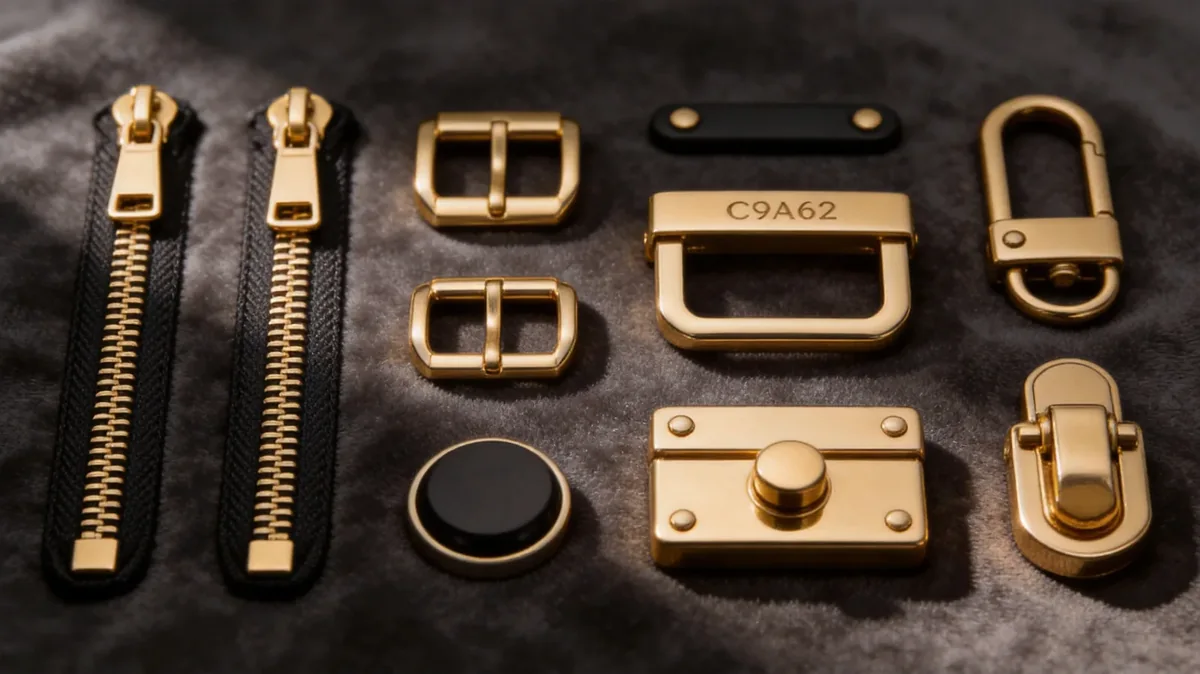
The Switch Decision, in Four Gates
Take these four gates in order and stop at the first one that fails, because a switch justified by the fourth gate is almost always a decision that should have been made at the first.
- Demand: has the order book genuinely outgrown the current structure, or has one season disappointed?
- Constraint: is the binding limit capacity, or is it capability — the two have opposite remedies?
- Cost: what does the handover cost in money, in calendar and in quality risk during the overlap?
- Continuity: can two houses run side by side, and does your tooling ownership clause permit it?
The most expensive switches are the ones made in response to a single bad season. A late delivery or a rejected lot is a problem to be solved with the current partner, and moving converts a recoverable operational failure into a full redevelopment under time pressure.
Gate One — Has Demand Passed the Structure?
Demand has passed the structure when the same style re-orders at or above the current minimum several times in a year, not when one large order arrives, because one large order is a spike and three re-orders are a trend.
The diagnostic is unglamorous: count re-orders rather than revenue. A line that re-orders 500 pieces four times a year has a different problem from one that places a single 2,000-piece order, and the first is the one that genuinely needs a larger structure.
- Three or more re-orders of the same style in twelve months is the clearest signal of all.
- A request to cut the sampling window below 6-10 working days means the calendar is the constraint.
- Colourways multiplying beyond two per style means the committed piece count has outgrown the structure.
- A single large order is a spike, and spikes are better served by planning than by moving.
Be honest about the fourth point. Moving because one buyer placed one large order leaves you with a bigger structure, higher minimums and no evidence that the volume will repeat.
Gate Two — Is the Constraint Capacity or Capability?
Capacity and capability have opposite remedies, so misdiagnosing this gate sends brands in exactly the wrong direction: capacity is solved by more volume in the same structure, while capability is solved by a different bench entirely.
Capacity shows up as a calendar problem on work you already know how to make: lead times drifting from the quoted 35-50 days towards 60 and beyond, and booking windows stretching further ahead each season. Capability shows up as a quality problem on work nobody has made before: a construction that cannot be held to tolerance, a finish that will not repeat, a material the bench cannot handle.
- Capacity per production line
- About 28,000 pcs per month across 7 lines at roughly 200,000 pcs monthly
- Booking window warning sign
- Allocations needing to be placed 8-10 weeks ahead rather than 4-6
- Lead time drift worth acting on
- Quoted 35-50 days consistently landing beyond 60 across three lots
- Inspection signal
- Two of five consecutive lots rejected, triggering tightened inspection under ISO 2859-1
- Unit cost change from 500 to 5,000 pieces
- Commonly in the region of 8-14%, mostly tooling amortisation
If the answer is capability, moving is usually correct and urgent. If the answer is capacity, ask whether the current structure can grow with you first, because a partner that knows your patterns is worth a great deal when volume rises.
Gate Three — What Does the Transition Actually Cost?
A handover costs three things at once, and the third is usually the largest: a second development cycle, a calendar overlap, and a quality dip while two sets of hands learn the same piece.
The development cycle is the visible cost and it is the one everyone budgets. The overlap is the hidden one: for roughly 90 days both arrangements need to be funded, with one winding down and one winding up, and that period carries the highest defect rate of the whole relationship.
Second development cycle
Patterns, toiles, dies and a sampling round repeated. Avoidable in full only if the tooling ownership clause was written before the first die was cut.
Calendar overlap
Around 90 days in which two arrangements are live. Allow for the cash and, more importantly, for the attention it takes, since this is when standards slip.
Quality dip
The least budgeted and most damaging. Two sets of hands learning one piece produce a defect rate neither would accept alone, so inspection must tighten during the overlap.
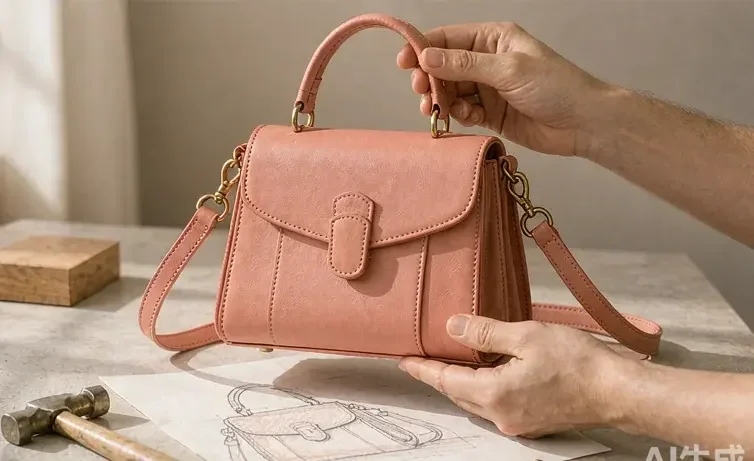
One comparison makes the arithmetic clear. A single bought-in brass closure outside a production run costs around USD 4.80; re-cutting a full die set costs an entire development cycle. Written tooling ownership is what keeps you paying the first rather than the second.
Gate Four — Can Two Houses Run Side by Side?
Two houses can run side by side only if three things are true: your tooling is yours to release, your specification is documented well enough to be handed over, and both sides are told what is happening.
The third is the one most often skipped, and secrecy here is self-defeating. A partner told nothing notices the falling volume, draws the obvious conclusion and reallocates capacity anyway, so the gradual wind-down you were protecting becomes an abrupt one.
- Tooling ownership written before the first die, with release on written request within a stated number of days.
- A numbered technical pack with a frozen revision and a sealed counter sample on both sides.
- A declared lot code, so material continuity survives the move rather than being re-sourced.
- A dual-source split, commonly around 70/30 during the overlap, with both sides inspected to the same plan.
The dual-source split is worth the complexity during a handover and is usually not worth it afterwards. Running two houses permanently doubles the specification work and halves the attention each one gives you.
Signals That Say Go, and Signals That Say Wait
Some signals justify a move immediately and others are warnings that moving will make things worse, and confusing the two is the most common error in scaling decisions.
| Signal | Read it as | Because |
|---|---|---|
| Three re-orders of one style in a year | Go | A trend, not a spike, and evidence the volume will repeat |
| Lead times drifting beyond 60 days | Go | Capacity is binding and the current structure cannot absorb more |
| A construction cannot be held to tolerance | Go | A capability limit, and no amount of volume fixes it |
| One late delivery on one lot | Wait | An operational failure with a recoverable cause |
| One rejected lot at AQL 2.5 | Wait | Inspection is working; tighten and solve the process instead |
| A single unusually large order | Wait | A spike better served by planning than by a new structure |
Notice that two of the three wait signals are quality signals. That is deliberate: inspection catching a problem is evidence the system works, and it is the worst possible reason to leave a partner who is telling you the truth.
What Must Travel With You
Five things have to travel for a style to survive a move intact, and if any one of them stays behind, the piece is effectively redeveloped rather than transferred.
- The cutting dies for every panel, numbered and listed, released rather than re-cut.
- The graded pattern set, including any correction made after the first sampling round.
- The jigs for handle placement, hardware setting and any repeated hand operation.
- The sealed counter sample, with the lot code, finish reference and thread shade recorded on it.
- The inspection plan: AQL 2.5 under ISO 2859-1, the defect library and the switching rules.
The fourth item is the one that settles arguments. Without a sealed reference, a change in shade or hand feel between the old arrangement and the new one is unfalsifiable, and both sides will be telling the truth about a different object.
Protecting Quality Across the Handover
During a handover, tighten inspection rather than relaxing it, because the overlap is precisely the period when two sets of hands are learning one piece and neither has yet settled into it.
Run the same plan at both houses: AQL 2.5 under ISO 2859-1 at General Inspection Level II, the same defect library, the same sealed reference. Where the two differ, the difference is information rather than an argument, and it usually points at one operation that has not yet been documented properly.
Take the same style, made in the same lot, built at both houses in the same month, and compare the major defect count per hundred pieces. That single figure tells you more than any amount of correspondence.
A Ninety-Day Transition Sequence
A handover that works usually takes about ninety days, and the order below is the one in which decisions realistically have to fall rather than an idealised plan drawn up in advance.
Ninety days, in the order it actually happens
- Days 1-15: tooling release requested in writing, packs transferred, counter samples exchanged.
- Days 16-30: first pieces built at the new bench, compared against the sealed reference side by side.
- Days 31-50: dual running begins, commonly around a 70/30 split, with both sides inspected to one plan.
- Days 51-70: the split reverses, defect counts compared, and the remaining operations documented.
- Days 71-90: the old arrangement winds down on a stated final quantity, and allocation moves entirely.
The programme holds export experience since 2014 and runs across 7 production lines with about 200,000 pcs per month of capacity, delivered through our validated partner factory Quanzhou Yingming Bags, an SGS-validated site, so the receiving end of that sequence can be planned with a figure rather than a promise.
Keep the sampling window intact through the move: 6-10 working days for a standard construction and 12-15 for complex work. Compressing it to save a fortnight during a handover is the decision most likely to cost a season. Bulk then runs 35-50 days from a signed approval, with inspection at AQL 2.5 under ISO 2859-1 and handover on FOB Xiamen terms, and MOQ at the receiving end sits at 500 pcs per style and colourway.
After the Move: What Changes in the Second Season
The second season after a move is when the decision is finally judged, and what changes is mostly structural rather than cosmetic: higher minimums, longer booking windows and a different relationship with material.
Minimums matter most. A larger structure usually means committing more per style and per colourway, so the piece count discipline that protected a first capsule becomes more important, not less. Booking windows lengthen too, which is the price of allocating capacity rather than finding it.
- Commit more per colourway, and be stricter about which colourways earn a place.
- Reserve material earlier, since a larger lot needs a longer tannery window.
- Expect to book capacity ahead rather than on demand, and plan the season around that.
- Use the volume to amortise bespoke tooling a small run could never justify.
The last point is the genuine reward. A signature closure that was unaffordable across 500 pieces becomes reasonable across 5,000, and that is usually the change customers actually notice in the season after a move.
Test the switch decision before you make it
Tell us your re-order history, current lead times and target volume, and we will run the four gates with you and say plainly whether a move is warranted. Request a quote.
Frequently Asked Questions
When is the right time to change production partner?
When three or more re-orders of the same style arrive within twelve months, or when a capability limit means a construction cannot be held to tolerance. Both are structural signals. A single late delivery or one rejected lot is an operational problem with a recoverable cause instead.
How do I tell capacity problems from capability problems?
Capacity presents as a calendar problem on work you already know how to make, with lead times drifting past 60 days. Capability presents as a quality problem on new work, where a construction will not hold tolerance or a finish will not repeat across a run.
How much capacity does one production line hold?
Across 7 production lines running at about 200,000 pcs per month, roughly 28,000 pieces per line per month. That figure is what lets a scaling question be answered with a number rather than with an assurance that volume can be absorbed. Ask for the figure per line rather than in total, because a total tells you nothing about what can actually be scheduled alongside you.
What does switching actually cost?
Three things at once: a second development cycle, around a 90-day overlap in which both arrangements are funded, and a quality dip while two sets of hands learn one piece. The third is least often budgeted and usually the most damaging. Plan the overlap explicitly, name who owns quality during it, and hold inspection at the tighter end until both sides have settled.
Can I keep the old partner running during a handover?
Yes, and a split of roughly 70/30 during the overlap is common. It requires your tooling to be yours to release, your specification to be documented well enough to hand over, and both sides to be told what is happening. A split of roughly 70/30 during the overlap is common, and it should be reversed deliberately rather than allowed to drift.
Should I tell my current partner I am moving?
Usually yes. A partner told nothing notices falling volume, draws the obvious conclusion and reallocates capacity anyway, so the gradual wind-down you were protecting becomes an abrupt one, typically at the worst possible moment. Capacity is reallocated either way, so a stated wind-down on a stated final quantity gives you a far better result than silence does.
What has to travel with a style for it to survive a move?
Five things: the numbered cutting dies, the graded pattern set including post-sampling corrections, the jigs for repeated hand operations, the sealed counter sample with its lot code recorded, and the inspection plan with its defect library. If any one of the five stays behind, the style is redeveloped rather than transferred, and the cost is a full sampling cycle.
Why does the counter sample matter during a handover?
Because without a sealed reference, a difference in shade or hand feel between the old arrangement and the new one cannot be settled. Both sides end up telling the truth about a different object, and there is no document that resolves it. Keep it sealed and dated, and record the lot code, finish reference and thread shade against it before the move begins.
Should inspection be relaxed during a transition?
No, it should be tightened. The overlap is when two sets of hands are learning one piece and neither has settled, so run the same AQL 2.5 plan under ISO 2859-1 at both houses and compare the major defect count per hundred pieces. A defect count per hundred pieces, taken at both houses in the same month, tells you more than any correspondence will.
How long does a handover take?
Around ninety days: roughly a fortnight on tooling release and pack transfer, a fortnight building and comparing first pieces, twenty days of dual running, twenty days reversing the split, and a final wind-down on a stated quantity. Compress it and the handover saves a fortnight and risks a season, which is a poor trade at any volume worth moving for.
How much does unit cost improve with volume?
Moving from around 500 pieces to around 5,000 commonly improves unit cost in the region of 8-14%, mostly through tooling amortisation and better material pricing. Leather area per bag and bench operations per bag stay broadly constant either way. The improvement comes mostly from amortising tooling and from better material pricing, not from anything changing on the bench.
What changes in the season after a move?
Mostly structure: higher committed minimums per style and colourway, longer booking windows for capacity, and earlier material reservation. The reward is that bespoke tooling unaffordable across 500 pieces becomes reasonable across 5,000. Book capacity earlier, reserve material further ahead, and be stricter about which colourways earn a place in the range.
People Also Ask
When should a growing bag line change partner?
When demand is a trend rather than a spike and the binding constraint is structural. Three re-orders of one style in a year, or a capability limit on a construction, justify it; one late delivery or one rejected lot does not.
What is the difference between capacity and capability limits?
Capacity is a calendar problem on known work, shown by lead times drifting beyond 60 days. Capability is a quality problem on new work, shown by a construction that will not hold tolerance. They have opposite remedies.
How long does a production handover take?
Around ninety days, covering tooling release, first pieces compared against a sealed reference, a dual-running period at roughly a 70/30 split, then a reversal and a wind-down on a stated final quantity.
Do I own the dies and patterns if I move?
You should, if the clause was written before the first die was cut. It lists each die, pattern and jig, states where they are held, and commits to release on written request, which turns a redevelopment into a handover.
Does unit cost fall much when I scale up?
Moving from about 500 to about 5,000 pieces commonly improves unit cost by 8-14%, largely through tooling amortisation. Material area per bag and bench operations per bag remain broadly constant, so the saving is real but bounded.
Sources and further reading
Every figure on this page is either our own programme data or attributed below. Open the originals before you write them into a specification.
- ISO — International Organization for StandardizationISO Publisher of ISO 2859-1, whose switching rules govern inspection during a dual-running transition.
- Sourcing JournalSourcing Journal Reporting on capacity allocation, minimum order escalation and what brands face when scaling a proven style.
- Business of FashionBusiness of Fashion Coverage of how growing labels restructure their production arrangements as volume rises.
- WWDWWD — Women's Wear Daily Trade reporting on accessories supply capacity and the seasonal booking windows brands must plan around.
- FashionUnitedFashionUnited Industry data on re-order behaviour, sell-through rates and growth patterns among independent labels.