Premium Handbag Manufacturer vs Atelier: Nine Checklist Questions and the Tradeoffs Behind Each
Should a premium collection be built by a production programme or by an atelier? The two are not grades of the same thing but different instruments, and the choice turns on nine questions answered in one sitting: quantity, repeatability, tolerance, bench hours, development speed, second-season capacity, tooling ownership, cash committed and how much of the finishing a customer will actually notice. A production programme runs at MOQ 500 pcs per style and colourway with sampling in 6-10 working days and bulk in 35-50 days; an atelier will take 25 pieces and spend roughly twice the bench hours on each one. Neither is better, and choosing wrongly is expensive in both directions.
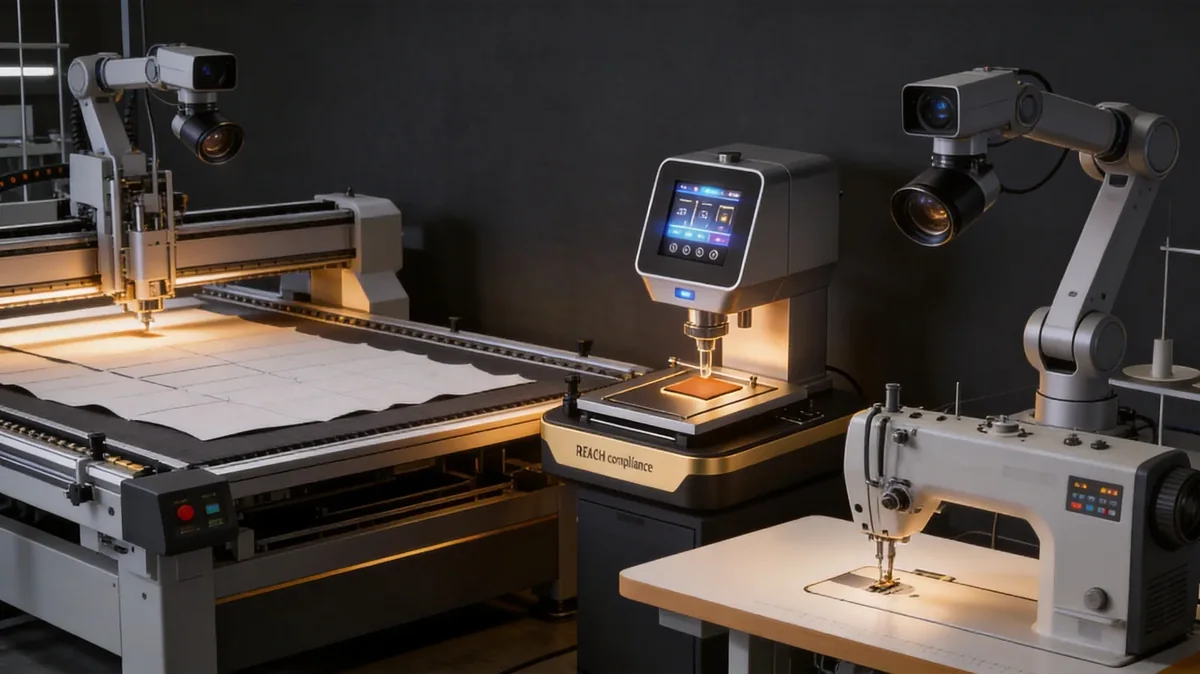
The Checklist: Nine Questions Before You Choose
Work these nine questions in order and the answer usually appears by the fifth, because the first four eliminate one of the two models for most collections before any figures are compared.
- How many pieces per style, honestly — under 100 or over 500? Below roughly 100, an atelier is the only model that fits.
- Will this style be re-ordered, or is it a one-off? Repeatability is the strongest argument for a production programme.
- Does the design depend on a tolerance under half a millimetre, or on a hand effect? Each model tolerates one better.
- Is the calendar driven by a launch date or by a craft ideal? A fixed date favours a programme; an open one does not.
- How many bench hours does the piece need, and can you pay for them at your quantity?
- Will a second season need twice the volume, and is that volume available to you?
- Who should own the dies and patterns, and does the chosen model let that be written down?
- How much cash can sit in committed pieces before anything sells?
- Where will the customer actually look — at the seam, or at the silhouette from three metres?
The last question is the one most often skipped and it is frequently decisive. Work that is visible at arm's length is worth paying an atelier for; work that reads at three metres is not, and spending bench hours there buys nothing anyone notices.
Where an Atelier Wins, Honestly
An atelier wins on quantity, on deviation and on the finishing operations that cannot be routinised: it will take 25 pieces, it will hand-cut a one-off panel, and it will burnish an edge in a way no production line can match at speed.
It also wins on development intimacy. When a single artisan holds the whole piece, a design can be changed on Tuesday and re-cut on Wednesday without a revision log, a die change or a planning meeting, and for a genuinely experimental silhouette that flexibility is worth more than any unit-cost advantage.
- Minimum quantities an order of magnitude below a production programme, often from 25 pieces.
- Deviation tolerated mid-build, which suits a design still being discovered.
- Hand-burnished edges and saddle stitching done by one pair of hands on every piece.
- A named maker whose judgement improves the piece rather than merely executing it.
Where a Production Partner Wins, Honestly
A production programme wins on repeatability, on calendar and on the second season: piece number 500 from a line looks like piece number 1, the calendar is quoted in working days rather than in weeks, and a re-order needs no redevelopment.
It wins on documentation too. A technical pack with a numbered revision, a held counter sample, a declared lot code and an inspection plan drawn at AQL 2.5 under ISO 2859-1 give a brand something an atelier rarely provides: a specification that survives the departure of any individual.
- Consistency across hundreds of pieces, because dies and jigs hold geometry that hands do not.
- A quoted calendar: 6-10 working days of sampling, 12-15 for complex work, 35-50 days bulk.
- Capacity that can absorb a second season: 7 production lines and about 200,000 pcs per month.
- Documented compliance, with material declarations held against the lot rather than in memory.
One anchor is useful when comparing quotes. A single bought-in brass closure outside a production run costs around USD 4.80, while an atelier bills the hours spent hand-finishing it by the hour. Neither figure is wrong; they are simply measuring different things, and confusing them is how comparisons go wrong.
Bench Hours as a Number, Not a Mood
Bench hours are the single most revealing number in either model, and they are rarely quoted: a structured calfskin satchel takes roughly 4.5-6 hours of bench time in an atelier and roughly 2.0-2.6 hours on a production line.
The gap is not laziness or haste. It is jigs, dies, standardised sequences and operators who repeat one operation all day, each of which removes minutes that a single artisan spends on setup, marking and judgement. The atelier's extra hours buy deviation and hand finishing; the line's fewer hours buy consistency and price.
- Bench hours, structured satchel, atelier
- 4.5-6 hours, including hand cutting, marking and burnishing
- Bench hours, same piece on a production line
- 2.0-2.6 hours, with dies and jigs removing setup time
- Hand saddle stitch density
- 7-8 stitches per inch with 0.8 mm linen thread
- Machine stitch density on visible seams
- 8-9 stitches per inch with 0.45 mm bonded thread
- Edge finishing
- Three thin coats, sanded between passes, or hand burnishing where specified
Read those figures as a ratio rather than as a ranking. If your piece is 80% hand operation, an atelier is proportionally less penalised; if it is 80% assembly, a line is dramatically more efficient and the quality difference narrows to almost nothing.
Tolerance: The Quiet Difference Nobody Prices
Tolerance is the difference nobody puts on a quote and everybody notices on a shelf: a die-cut panel holds roughly ±0.3 mm, while a hand-cut panel varies by around ±0.8 mm across a run.
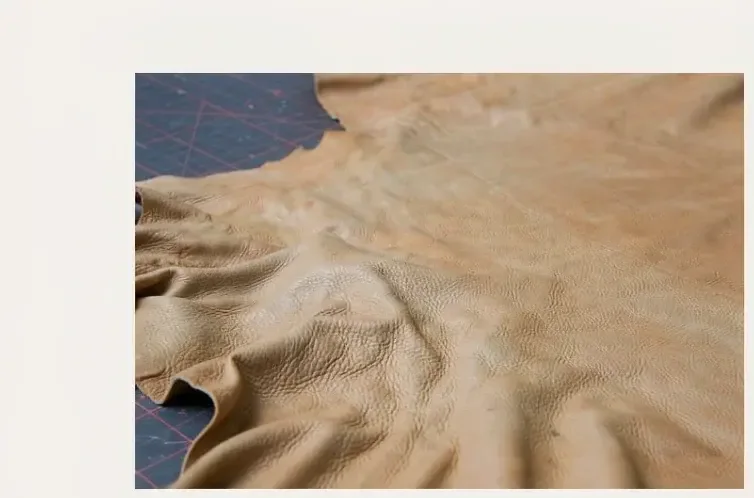
That sounds like an argument for the line, and for geometry it is. But the same tolerance argument reverses for materials that vary: a hide with natural grain and a shade that shifts across its area rewards a cutter who can read it, and a die cannot. Exotics, in particular, are laid out by eye for good reason.
| Dimension | Atelier | Production programme | Which matters when |
|---|---|---|---|
| Quantity floor | From around 25 pieces | 500 pcs per style and colourway | A one-off or a test favours the atelier |
| Geometry tolerance | About ±0.8 mm, hand-cut | About ±0.3 mm, die-cut | Framed and rigid silhouettes favour the line |
| Material judgement | Read by eye per hide | Held by the cutting plan | Exotics and variegated grain favour the bench |
| Bench hours per piece | 4.5-6 hours | 2.0-2.6 hours | Hand-heavy work narrows the gap |
A practical test: photograph piece 1 and piece 200 side by side under the same light. If you can tell them apart in a way you would not accept on a shelf, tolerance is your governing constraint and the choice follows from it.
Capacity, Repeatability and the Second Season
The second season is where the decision is really made, because the first is survivable in either model and the second is not: an atelier that built 60 pieces beautifully may not be able to build 600 at all.
Ask what happens at five times your current volume before you commit to anyone. A programme built across 7 production lines with about 200,000 pcs per month of capacity, holding export experience since 2014 and delivered through our validated partner factory Quanzhou Yingming Bags, an SGS-validated site, can answer that question with a number rather than with optimism.
What happens at five times your current quantity, in the same quality and the same calendar? If the answer involves finding another workshop, you are choosing a launch model rather than a production model, and should plan the second move now.
The Hybrid Route Most Brands Actually Take
Most established labels run both, and the split is principled rather than sentimental: atelier for the development round and the hero pieces, production programme for the repeatable volume.
Develop at the bench
Prototypes, toiles and one-off press pieces benefit from a maker who can deviate. Tolerance matters less than judgement when a silhouette is still being discovered.
Produce on the line
Once geometry is frozen and a counter sample is sealed, repeatable volume belongs on dies and jigs, where piece 500 matches piece 1 and the calendar is quoted in working days.
Keep the hand work visible
Whichever model runs the volume, spend hand finishing where hands and eyes land: handles, turned edges and the closure area.
The handover is the difficult part and it is a documentation problem. A numbered pack, a frozen revision, a sealed counter sample and a written tooling ownership clause are what let a piece travel from one bench to another without being redeveloped.
What Each Model Costs You in Calendar
Calendars differ in kind rather than in length: a production programme quotes working days, while an atelier quotes weeks and adjusts as the work reveals itself.
- Sampling: 6-10 working days on a programme, 12-15 for complex framed or hand-lasted work.
- Bulk: 35-50 days from a signed approval sample, plus inspection, packing and handover.
- Handover: FOB Xiamen terms as standard, with FOB, CIF and DDP options available.
- Atelier work: quoted by the piece and by the week, and lengthened by deviation, which is the point of it.
Neither model is faster in the abstract. A programme is faster at a known, frozen piece; an atelier is faster at an unknown one, because you can change direction without reopening a plan.
What Breaks When You Choose Wrong
Choosing an atelier for volume breaks on consistency and on calendar: piece 300 drifts from piece 1, and the launch date moves in a way no deposit can prevent.
Choosing a programme for a one-off breaks on cost and on flexibility. Development overhead is spread across 500 pieces and works beautifully there; across 25 it dominates the unit price, and the revision discipline that protects a large run feels like bureaucracy on a single piece.
The third failure is quieter and more common: choosing a model that cannot grow with you. A brand that proves itself at 60 pieces and then finds its bench cannot reach 600 has to redevelop under time pressure, which is the most expensive version of this decision.
A Decision Rule for One Meeting
Apply this rule in a single sitting: under roughly 100 pieces, or a design still changing, choose an atelier; over roughly 500 pieces of a frozen design, choose a production programme; in between, develop at the bench and produce on the line.
Three lines, decided in one meeting
- Under about 100 pieces, or a silhouette still moving: an atelier, and accept the unit cost.
- Over about 500 pieces of frozen geometry: a production programme, with inspection at AQL 2.5 under ISO 2859-1.
- In between, or unsure: prototypes and hero pieces at the bench, repeatable volume on the line.
Whatever the answer, write the tooling ownership clause before the first die is cut and retain a sealed counter sample at approval. Both cost an hour and both decide whether a proven piece can ever travel.
Decide which model fits your piece
Send the sketch, the quantity and the date you must hit, and we will tell you honestly whether a programme or a bench suits it better. Request a quote.
Frequently Asked Questions
What is the real difference between an atelier and a production programme?
Two instruments rather than two grades. An atelier takes around 25 pieces, tolerates deviation and spends roughly twice the bench hours per piece; a programme runs 500 pcs per style and colourway on dies and jigs, quotes working days and makes piece 500 match piece 1.
How many bench hours does a structured bag take?
Roughly 4.5-6 hours at an atelier, including hand cutting, marking and burnishing, against 2.0-2.6 hours on a production line. The difference is jigs, dies and repeated operations rather than haste, and it narrows as a design becomes more hand-dependent. A design that is mostly assembly will show a wider gap than one that is mostly hand finishing, so read the ratio rather than the headline.
Which model holds tighter tolerance?
A production line, for geometry: die-cut panels hold about ±0.3 mm against roughly ±0.8 mm hand-cut. That reverses for variable materials, where a cutter reading a hide by eye outperforms a fixed cutting plan, particularly on exotic skins. Which matters more depends on whether your piece is governed by geometry or by material, and most are governed by one clearly.
Can an atelier handle a re-order of several hundred pieces?
Usually not without changing model. The constraint is bench capacity and repeatability rather than skill, which is why the honest time to ask what happens at five times your current volume is before the first order, not after it sells through. Bench capacity and repeatability, not skill, are the binding limits, and neither improves with goodwill or a larger deposit.
Is hand stitching better than machine stitching?
It is different rather than better. A hand saddle stitch at 7-8 stitches per inch with 0.8 mm linen thread behaves differently under load and fails differently, while machine work at 8-9 stitches per inch with 0.45 mm bonded thread is more uniform across a run.
How long does each model take from brief to delivery?
A programme quotes working days: 6-10 for sampling, 12-15 for complex constructions and 35-50 for bulk from a signed approval. An atelier quotes weeks and adjusts as the work progresses, which suits an evolving piece and frustrates a fixed launch date. The two are only comparable once the geometry is frozen, because an open design genuinely is faster at a bench that can deviate.
Which model gives better documentation?
A production programme, almost always. A numbered technical pack, a frozen revision, a held counter sample, a declared lot code and an inspection plan at AQL 2.5 under ISO 2859-1 produce a specification that survives the departure of any individual. An atelier can provide all of it, and often does on request, but it is rarely offered unprompted because nothing in the workflow requires it.
Can I develop at a bench and produce on a line?
Yes, and most established labels do exactly that. The handover is a documentation problem, so a numbered pack, a sealed counter sample and a written tooling ownership clause are what let a piece travel without being redeveloped. Development belongs where judgement is highest and volume belongs where consistency is hardest, and the two are usually different places.
Who owns the tooling in each model?
You should, in both, and the clause should be written before the first die is cut. It names each die, pattern and jig, states where they are held and commits to release on written request, so moving a proven style later costs a handover rather than a redevelopment.
What happens if I choose the wrong model?
An atelier chosen for volume drifts in consistency and in calendar; a programme chosen for a one-off carries development overhead across too few pieces. The costliest version is a model that cannot grow, forcing a redevelopment under time pressure. The costliest version is a model that cannot grow, because the redevelopment then happens under time pressure with a proven style at stake.
How should I compare two very different quotes?
Normalise them onto the same three things: bench hours, tolerance and quantity floor. A single bought-in brass closure outside a run costs around USD 4.80 while an atelier bills the finishing hours by the hour, so comparing headline prices without those three figures is misleading.
Is a higher price evidence of better quality?
No, and this is the most expensive assumption in the category. Price follows bench hours, quantity and material, not care. Ask what the extra hours buy, where they are spent, and whether anyone will see the result at the distance a customer actually stands. Ask for the bench hours, the tolerance and the quantity floor on any quote, and the comparison becomes straightforward.
People Also Ask
Should I use an atelier or a production programme?
Under roughly 100 pieces or a design still changing, use an atelier. Over roughly 500 pieces of frozen geometry, use a production programme. In between, develop at the bench and produce repeatable volume on the line.
How much more bench time does an atelier spend?
Roughly twice. A structured calfskin satchel takes about 4.5-6 hours at a bench against 2.0-2.6 hours on a line, the difference being dies, jigs and repeated operations rather than any difference in care.
Which model is more precise?
A production line for geometry, holding about ±0.3 mm die-cut against roughly ±0.8 mm hand-cut. An atelier for variable materials, where a cutter reads each hide by eye and a fixed cutting plan cannot.
Can a style move between the two models?
Yes, and most do. The handover is a documentation exercise: a numbered pack, a frozen revision, a sealed counter sample and a written tooling ownership clause let a piece travel without being redeveloped.
What is the biggest risk in choosing an atelier?
Growth. A bench that built 60 pieces beautifully may not reach 600 at all, so the honest time to ask what happens at five times your current volume is before the first order rather than after it sells through.
Sources and further reading
Every figure on this page is either our own programme data or attributed below. Open the originals before you write them into a specification.
- ISO — International Organization for StandardizationISO Publisher of ISO 2859-1, the sampling standard behind the AQL 2.5 inspection used on repeatable production volume.
- Leather Working GroupLeather Working Group Tannery audit protocol referenced when a lot is reserved, and the environmental baseline both models should meet.
- Business of FashionBusiness of Fashion Coverage of how independent labels split development and volume work between craft workshops and production programmes.
- WWDWWD — Women's Wear Daily Trade reporting on accessories supply structures, including craft capacity constraints at growing labels.
- Sourcing JournalSourcing Journal Reporting on minimum order thresholds, capacity planning and the economics of scaling a proven style.