Premium Handbag Manufacturer for Small Runs: Five Gates Before You Commit 500 Pieces
Is 500 pieces a small run for a premium handbag house? It is the working entry point rather than a concession: MOQ sits at 500 pcs per style and per colourway, sampling takes 6-10 working days, and bulk runs 35-50 days from a signed approval. Whether that structure carries a first collection depends on five gates taken in order — silhouette against leather, pattern against grading, components against their own minimums, hand work against the bench, and calendar against the selling window. Work them in that sequence and 1,000 to 1,500 pieces usually reads as a complete capsule; take them out of order and the same number arrives late and overcommitted.
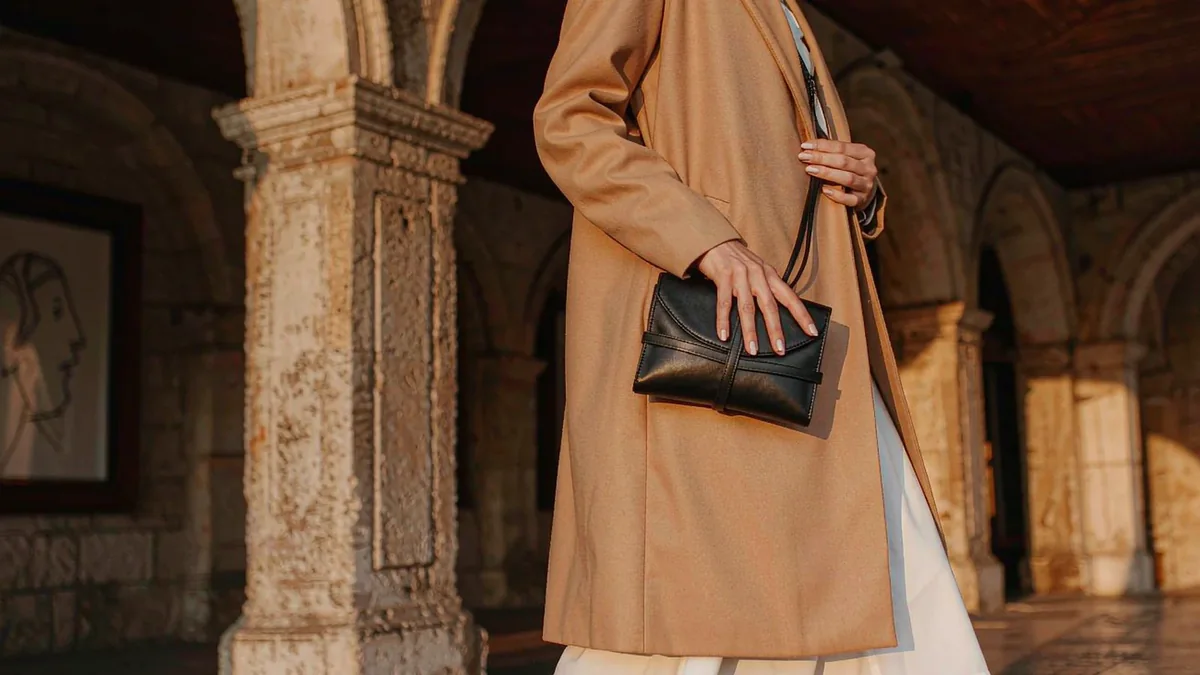
The First Question: Is 500 Pieces Actually a Small Run?
Five hundred pieces is small measured against a seasonal order book and large measured against a first season, so the honest answer is that it is the lowest quantity at which a structured handbag can be built properly without cutting gates out of the process.
Below roughly that figure the arithmetic stops working in your favour. A satchel with 26-30 panels needs a full pattern set, a calico toile and at least one correction round whether 300 or 3,000 pieces follow, and none of those divide usefully. What does divide is the material commitment, which is why 500 per colourway rather than 500 per order is the number worth arguing about first.
Read the minimum as a threshold set by materials rather than as a policy. Hides are reserved by lot, plating houses set a run per finish, and a cutting plan needs enough pieces to nest efficiently. Each of those has its own floor, and 500 is where they converge for a mid-sized structured style in calfskin.
Gate One — Does the Silhouette Survive One Leather?
A small run survives one leather and struggles with three, so the first gate is whether your silhouette still reads as yours when every panel comes from a single lot. If it does, the whole capsule pools into one reservation, one test cycle and one cutting plan.
Weight is where this gate is usually decided. Body panels in full-grain calfskin sit around 1.2-1.4 mm, gussets and turnovers around 0.9-1.0 mm, and a silhouette that needs a third weight to hold its shape is telling you something about its construction. Simplifying the geometry so two weights suffice is cheaper than paying for three lots.
- Body panel substance, full-grain calfskin
- 1.2-1.4 mm for structured satchels and top-handle frames
- Gusset and turnover substance
- 0.9-1.0 mm, where the leather must fold without crazing
- Interlining behind structured panels
- 0.8 mm split backing, skimmed at the fold to avoid bulk
- Cutting yield on a nested two-size plan
- 68-74% on full-grain hides, falling with larger panel count
- Machine stitch density on visible seams
- 8-9 stitches per inch with 0.45 mm bonded thread
Those five figures decide most of what follows. Substance sets whether a silhouette stands unaided, interlining sets how crisp a panel edge stays after a month, yield sets the hide count, and stitch density is the first thing a buyer's eye reads on a seam.
Gate Two — Can the Pattern Be Graded or Must It Be Drawn?
If a second size is a true grade of the first, the capsule gains shelf presence for almost no development; if it needs its own pattern, it costs nearly as much as a second style and should be treated as one.
Grading works when the proportions are unchanged and only the measurements move — a mini that is the same bag at 0.8 scale rather than a different object. It fails when hardware positions, handle drop or panel break points must move independently, because those changes propagate back through the pattern set and the dies.
- A true grade shares one pattern set, one toile round and one correction cycle.
- A redraw needs its own toile, its own dies and usually a second sample round.
- Nesting two graded sizes in one plan can lift yield by 4-6 points against cutting them apart.
- Hardware placement that scales evenly is the clearest signal a size is a grade, not a redraw.
Ask for the two sizes to be nested in a single cutting plan and read the yield figure that comes back. If the gain is there, the second size really is a grade; if it is not, someone is quietly treating it as a second style and charging accordingly.
Gate Three — Which Components Have Their Own Minimums?
Components, not labour, are what usually break a small run, because a plating house, a zip house and a lining mill each set their own floor and none of them care about your piece count.
A single brass turn-lock bought in ones and twos for a sample round lands around USD 4.80, roughly four times its price across a production lot, which is one reason samples cost what they do. The same logic applies to plating: a finish run has a floor, and sharing one finish across the capsule is the least costly way to stay above it.
- One hardware family across every style shares a plating run and shortens component lead time.
- Stock finishes are available at far smaller component minimums than bespoke ones.
- A #5 zip in a standard length avoids both a tooling charge and a separate procurement cycle.
- Lining is bought by the roll, so one lining colour across the capsule avoids a second mill run.
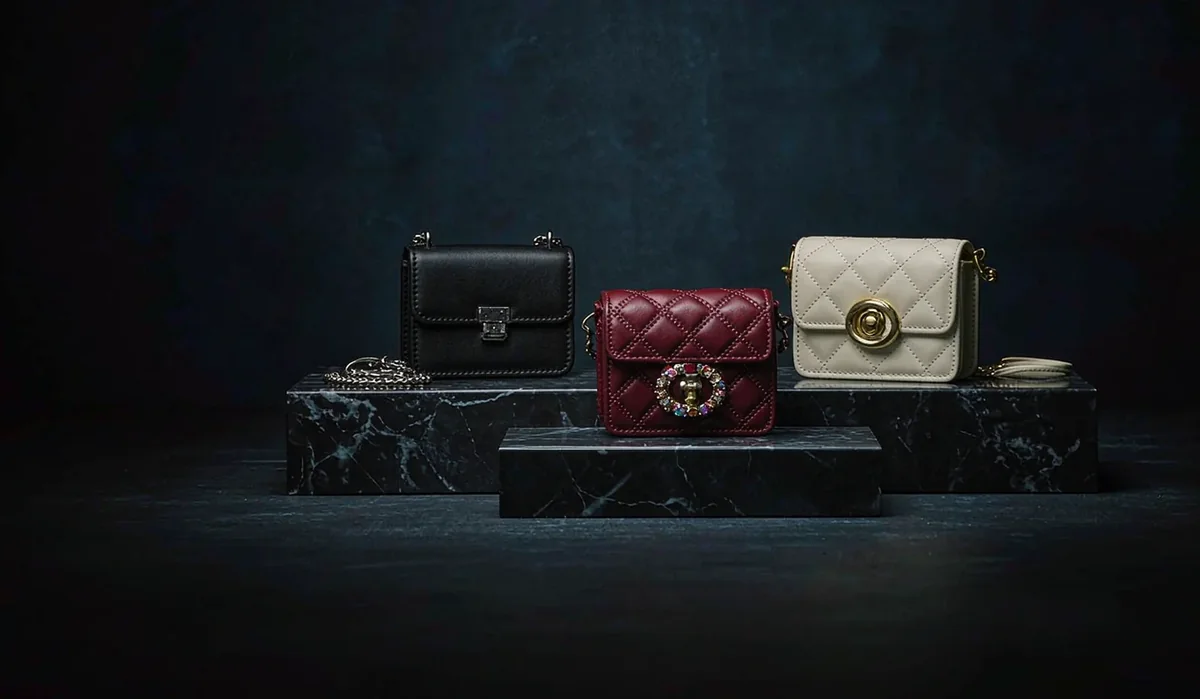
Gate Four — How Much of the Bench Survives at 500 Pieces?
More of the bench survives at 500 pieces than at 5,000, because labour per unit is within reach at this size in a way it rarely is at volume — which is the genuine, underused advantage of running small.
Spend it where hands and eyes land. Handle attachment takes the load of the whole bag and should be reinforced by hand; turned edges on visible seams read as luxury at arm's length; and the closure area is touched every time the bag is opened. Labour spent inside the construction, however finely executed, rarely reaches anyone's attention.
Edge finishing is the clearest example. Three thin coats of edge paint, each sanded back before the next, produce an edge that disappears into the leather rather than sitting on top of it. That is three passes and three drying intervals per bag, a cost in time rather than material, and it is within reach at 500 pieces and expensive at 5,000.
Gate Five — Does the Calendar Still Close Before the Selling Window?
Small runs shorten bulk and do not shorten development, so the calendar is where optimism does the most damage: sampling takes 6-10 working days, complex constructions 12-15, and bulk takes 35-50 days from a signed approval sample.
Work backwards from the date goods must reach a shelf rather than forwards from the brief. Add the reservation window for the hide lot, which is the least compressible gate in the whole sequence, then the sampling round and a written correction cycle, then bulk, then inspection, packing and FOB Xiamen handover.
Four dates that decide a small run
- Lot reservation: booked as soon as the leather direction is fixed, since this gate compresses least.
- Spec freeze: geometry locked before any die is cut, because a revised panel changes every tool.
- Approval signature: the point at which bulk is counted, with a counter sample retained on both sides.
- Shipping window: built with a week of slack around trade fairs and the autumn freight peak.
Where Small Runs Genuinely Cost More
Small runs cost more per piece and that is not a negotiating position: development overhead, sampling and any tooling are spread across fewer units, so the unit figure at 500 sits above the figure at 5,000 for reasons that no amount of goodwill removes.
Development overhead
Pattern research, grading and the toile round cost the same whether 500 or 5,000 follow. Spreading them across fewer pieces is the single largest reason a small run costs more.
Material pricing
Hide pricing improves with lot size, and a single lot reserved for one colourway buys at a less favourable rate than a seasonal booking. The effect is real but usually smaller than the overhead.
Component minimums
Plating and zip houses price by run, not by your order. Sharing one finish across the capsule is the practical way to keep this line proportionate.
The trade is one of risk rather than of price. You accept a higher cost per unit in exchange for committing far fewer units, and for a first season that exchange is usually strongly in the founder's favour.
Three Configurations Compared at 500 Pieces
The table below sets the three configurations most first capsules fall into against one another at MOQ 500 pcs per style and colourway, assuming calfskin bodies, brass hardware and FOB Xiamen terms.
| Configuration | Committed pieces | Where the pressure lands | Best suited to |
|---|---|---|---|
| Two styles, one colourway | 1,000 | Both silhouettes must sell; no colour fallback | A first capsule testing one strong idea |
| Three styles, one colourway | 1,500 | More pattern sets and one more toile round | A brand with one proven retail account |
| Two styles, two colourways | 2,000 | Shade forecasting across two reads of one bag | A launch where colour itself is the story |
Read the third column before the second. Cash is visible early and risk is not, and the risk column is where most first capsules are actually decided — usually too late to change anything.
The Cost of a Late Change at This Size
A change after the spec freeze costs roughly the same whether the run is 500 or 5,000 pieces, which is why small runs do not buy freedom to keep revising — they buy a shorter exposure to a frozen decision.
Treat the freeze as a real gate. Before it, changes cost little and are expected; after it, a revised panel invalidates a die, a revised drop invalidates a handle jig, and a revised lining invalidates a roll already bought. Write corrections as a numbered list and close them in one round rather than discovering them in three.
When to Stop Shrinking the Run
Stop shrinking when the capsule stops reading as a collection, which usually happens somewhere between one and two styles per colourway. Below that, a shelf looks thin and a retailer hesitates, and the saving in committed pieces does not repay the lost credibility.
The programme runs across 7 production lines with about 200,000 pcs per month of capacity and has held export experience since 2014, delivered through our validated partner factory Quanzhou Yingming Bags, an SGS-validated site. Both figures describe what can be scheduled alongside you rather than a scale you are obliged to reach.
Inspection is drawn at AQL 2.5 under ISO 2859-1, agreed before bulk begins, with a third-party audit available in addition. Agreeing that clause early costs nothing and removes an argument from the end of the calendar, which is where arguments are most expensive.
Test your capsule against the five gates
Send sketches, target dimensions and the quantity you have in mind, and we will walk the five gates with you and return a piece count, a calendar and a costed route. Request a quote.
Frequently Asked Questions
What is the minimum order for a premium handbag run?
MOQ sits at 500 pcs per style and per colourway. Because the minimum applies to each combination rather than to the order as a whole, two styles in one shade commits 1,000 pieces, and the fastest way to reduce commitment is usually to reduce colourways rather than styles.
Why is the minimum set per colourway instead of per order?
Each colourway needs its own tannery lot, and a lot has its own floor, usually beginning around 12-15 hides for a single shade. The minimum therefore follows material economics rather than policy, and it applies to every style and shade combination in the range. Reducing colourways is therefore the fastest way to lower a first commitment, and it costs nothing in development.
Can I run two styles inside one small order?
Yes, and two styles in one colourway is the configuration most first capsules should aim for. Each style carries its own pattern set and toile round, so breadth costs development time as well as money; once one silhouette proves itself at retail, breadth becomes much cheaper to add.
How long does sampling take for a small run?
Sampling takes 6-10 working days for a standard construction and 12-15 for complex framed or hand-worked pieces. That window covers pattern drafting, cutting, assembly and finishing, and it excludes the material reservation, which should be run in parallel rather than afterwards. A written correction round follows, and closing it in one pass is the single biggest saving available.
How long does bulk take once the sample is approved?
Bulk runs 35-50 days from a signed approval sample, followed by inspection, packing and handover on FOB Xiamen terms. The spread reflects material availability and the finishing load rather than uncertainty, and a frozen specification is the main way to keep it at the shorter end.
Does a smaller run mean a simpler construction?
No, and this is a common misunderstanding. A 500-piece satchel still needs its full pattern set, its interlining, its edge finishing and its hardware, so complexity is available at this size. What changes is unit cost, because development overhead is spread across fewer pieces. What it does change is flexibility after the freeze, which ends at the same point regardless of quantity.
Can one leather be shared across two different styles?
Yes, and it is the strongest coherence available to a small collection. A single lot is reserved once, tested once and cut across every style, which removes a reservation cycle and one set of compliance reports while producing a capsule that photographs as one idea.
Is custom hardware realistic at 500 pieces?
It depends on whether the closure is the brand or the decoration. A true signature mechanism is worth the tooling and the two to three added weeks; decorative hardware is better deferred until a proven style can carry the tooling across several seasons rather than one.
What does a sample cost beside a bulk piece?
Noticeably more, because components are bought singly and labour is not yet routinised. A brass closure bought in ones and twos for a sample round lands around USD 4.80 against a fraction of that across a run, which is the clearest single example of why samples are priced as they are.
How is quality checked at this volume?
Inspection is drawn at AQL 2.5 under ISO 2859-1, agreed before bulk begins, with a third-party audit available in addition. Defects are classified as critical, major or minor, and the plan names the sample size and the accept and reject numbers rather than leaving them to be argued later.
Can I re-order the same style without redeveloping it?
Yes, and that is the real payoff of a small first run. A frozen pattern, a held lot and a retained counter sample mean a re-order needs almost no development, so it lands faster and lets you add colourways once demand has actually been demonstrated.
What should I send to get a realistic first quote?
Sketches or reference images with target dimensions, the leather and hardware direction, quantity per style and colourway, destination markets and the date goods must reach a shelf. With those six items the first conversation produces a piece count, a calendar and a route. A target price per unit is useful if you have one, though it is the least important of the six.
People Also Ask
What counts as a small run in premium handbag work?
Around 500 pcs per style and colourway, the point at which pattern development, hide reservation and component minimums all remain workable. Below that the fixed costs stop dividing usefully, and above roughly 2,000 pieces a run stops behaving like a capsule.
Why does the minimum apply to each colourway?
Because each colourway needs its own tannery lot with its own floor, usually around 12-15 hides per shade. The threshold reflects material economics rather than an arbitrary rule, which is why adding colour multiplies commitment rather than adding to it.
How long does a small premium run take end to end?
Around ninety days from first conversation to goods on the water: roughly three weeks on the brief, pack and lot reservation, 6-10 working days on sampling with a correction round, then 35-50 days of bulk, inspection and packing.
Is 1,000 pieces enough for a first collection?
Usually yes, in two styles and one colourway. That reads as a capsule on a shelf and in a lookbook while keeping committed cash proportionate to demand that has not yet been demonstrated, and it leaves room to add colour on the re-order.
Does a small run cost more per piece?
Yes, mainly because development overhead is spread across fewer units. Material pricing also improves with lot size, though that effect is usually smaller. What you gain is lower committed cash and finer hand finishing, not a lower unit price.
Sources and further reading
Every figure on this page is either our own programme data or attributed below. Open the originals before you write them into a specification.
- ISO — International Organization for StandardizationISO Publisher of ISO 2859-1, the sampling standard behind the AQL 2.5 inspection drawn before bulk begins.
- Leather Working GroupLeather Working Group Tannery environmental audit protocol referenced when a single hide lot is reserved and shared across a small capsule.
- Sourcing JournalSourcing Journal Reporting on minimum order thresholds, component run economics and why quantity floors exist across the trade.
- WWDWWD — Women's Wear Daily Trade coverage of accessories capsules, including how emerging labels present two- and three-style collections to buyers.
- FashionUnitedFashionUnited Industry data on independent label launches and the retail conditions that shape first-season quantities.