Premium Handbag Production for First Time Brands: One Launch Walked Through, Then Five Rules
For a first capsule, the workable shape is two styles in two colourways, which is four combinations at MOQ 500 pcs each and 2,000 units in total, developed across roughly four months. The launch described here followed exactly that shape: a structured top-handle and a softer shoulder body, both in black and in a seasonal tan, sampled in 6-10 working days and produced in 35-50 days on FOB Xiamen terms. It nearly broke in week six, over a lining decision rather than a leather one, and the five rules that follow are drawn from what that week taught. If you are launching for the first time, start with four combinations and freeze the spec early.
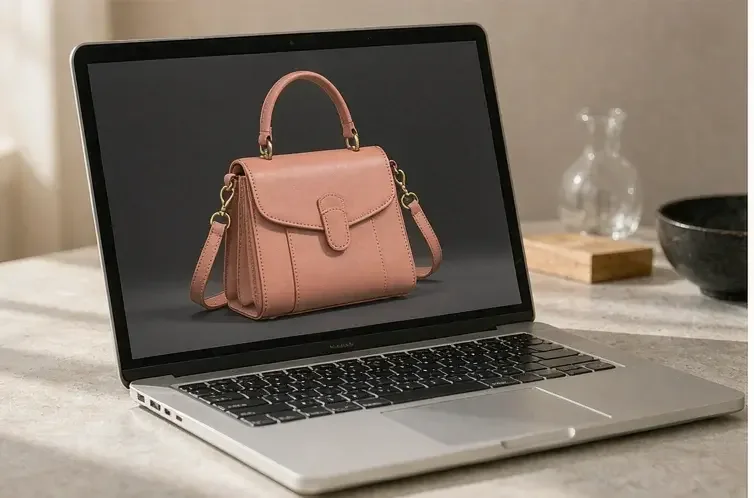
One Launch: Two Styles, Two Colourways, Four Months
The capsule belonged to a designer in Antwerp who had never produced a bag before. The plan was a structured top-handle and a softer shoulder body, each in black and in a seasonal tan, which is four combinations at MOQ 500 pcs per style and colourway and 2,000 units in total. The window from first drawings to goods on a shelf was a little over four months.
Four months sounds generous and is not. Sampling took 6-10 working days per round, two rounds were needed, material reservation ran alongside the technical pack, and bulk took 35-50 days. What remained after that was roughly a month, and it was consumed entirely by decisions the founder had assumed would take an afternoon.
| Week | What happened | What it consumed | What it taught |
|---|---|---|---|
| Week one | Drawings with target dimensions and a named hide direction sent together | 2 days | Sending both at once let material reservation overlap pack writing |
| Weeks two to three | Technical pack written, hide lot reserved, swatch card couriered | 15-20 days of lot waiting, overlapped | The lot's arrival schedule, not the bench, set the early calendar |
| Weeks four to five | First sample built, measured, correction list issued | 6-10 working days | Written corrections resolved in one round what calls had left open |
| Week six | Lining changed from cotton twill to a sueded microfibre | 4 days and a per-unit cost rise | A late change costs more than the component it changes |
| Weeks seven to ten | Second sample approved, spec frozen, bulk opened | 35-50 days | Anything open at the freeze returned as a change order |
| Weeks fourteen to fifteen | Inspection at AQL 2.5, corrections closed, cartons packed | 3-5 days | The final stage behaves as a gate, not as administration |
Week One: What the Founder Got Right
Three things. The drawings carried target dimensions rather than only proportion; the hide direction was named at the same time as the drawings rather than after them; and the quantity per colourway was stated before any price was discussed. Those three removed the two waits that usually open a first capsule.
- Target dimensions with tolerances, so the pattern could be drawn rather than guessed.
- A named hide direction with one acceptable substitute, so a lot failure would not stop the calendar.
- Quantity per style and colourway stated up front, which is what makes a quotation meaningful.
- One named decision owner on the brand side, which prevented two answers to the same question.
- The immovable date, given in week one rather than revealed in week eight.
None of those five is difficult, and together they are worth about three weeks on a four-month calendar. What they have in common is that all five are decisions the brand owns, which is the part first-time founders usually underestimate about production.
Week Six: Where the Capsule Nearly Broke
The capsule nearly broke over a lining. The founder saw the first sample and decided the interior should read softer, moving from a cotton twill to a sueded microfibre. The change itself was simple; its timing was not, because the lining had already been cut into the cost plan and the replacement had its own compliance question.
- Capsule size
- 2 styles x 2 colourways, 4 combinations at MOQ 500 pcs each, 2,000 units
- Sampling
- 6-10 working days per round; 12-15 where the body is structured or framed
- Bulk
- 35-50 days from intake, on FOB Xiamen terms, with CIF and DDP available
- Late lining change
- USD 4.80 per unit, applied to all 2,000 pieces rather than once
- Inspection at 2,000 pcs
- Code letter K: 125 units drawn, accept 7, reject 8 at AQL 2.5
- Inspection at 500 pcs
- Code letter H: 50 units drawn, accept 3, reject 4 at AQL 2.5
- Carton plan
- 20 units per export carton, with the lot number recorded per carton
Read the fourth line carefully, because it is the arithmetic that first capsules get wrong. A change quoted as a small per-unit figure is a permanent charge on every piece, so a decision made in week six cost more in total than any decision made in week one, and it cost four days of calendar besides.
Rule One: Four Combinations, Not Twelve
The most reliable mistake a first capsule makes is breadth. Twelve combinations spread MOQ 500 pcs across twelve lots, twelve material reservations and twelve chances to be slightly wrong, while four combinations concentrate the same capital into four bodies that can actually be finished well.
- Start with two silhouettes that share a hardware family, so tooling and plating are bought once.
- Offer each in two colourways, one permanent and one seasonal, to learn which your customer actually buys.
- Keep the lining and the closure constant across the capsule, which removes two variables at once.
- Let the second season add breadth, once the first has told you which direction sold.
Sharing a hardware family is the least obvious of those four and the most valuable. A single plated brass closure specified across two bodies buys one tooling decision, one plating run and one spare parts position, all of which a first capsule needs more than it needs variety.
Rule Two: Freeze the Spec Before Bulk Is Booked
The spec freeze is the line where development stops and repetition begins. After it, every change is a change order: it costs more per unit, it lands during the 35-50 day run, and it competes for attention with the units already in motion. Before it, a change is simply the next round.
What a spec freeze should contain
- Dimensioned drawings at the approved version number, with tolerances stated.
- The named hide lot, its substance at 1.2-1.4 mm or 0.9-1.1 mm, and its colour result at ΔE ≤ 1.5.
- Hardware specification, including plating thickness of 0.15-0.3 µm and the cycle test result.
- Stitch density of 8-9 per inch and skive width of 8-10 mm, written rather than assumed.
- The inspection plan: AQL 2.5 under ISO 2859-1, with the sample size for your lot.
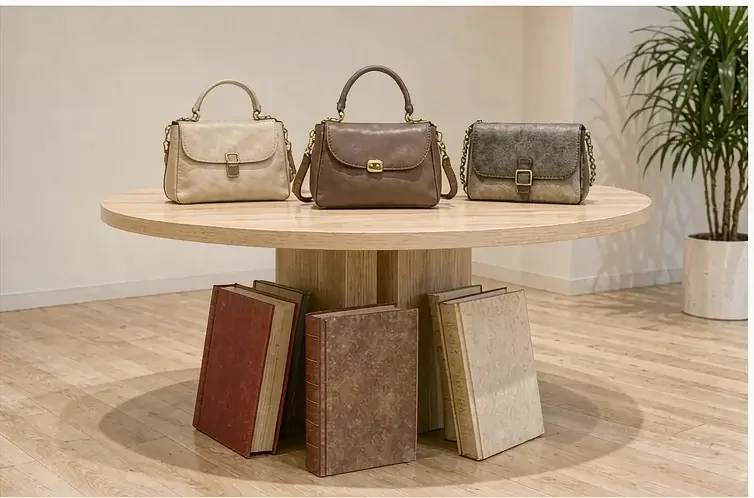
A freeze is not a refusal to change anything. It is an agreement about when change is inexpensive, and the honest version of it includes two days either side for the documents, counter samples and last corrections that always appear.
Rule Three: Spend Rounds in Sampling, Not Days in Bulk
Every correction discovered in sampling costs a round; the same correction discovered during bulk costs days across hundreds of units. That asymmetry is the whole argument for two planned rounds, and it is why the sampling window exists as a range rather than a single figure.
One round
Only safe where the body is a reference adaptation and the pack is already proven. Anywhere else it converts a development question into a bulk problem.
Two rounds
The structure that suits most first capsules. The first build is information about how the drawings behave in leather; the second is the one you sign.
Three rounds
Worth it on a structured or framed body. The third round usually resolves hardware feel and edge build rather than geometry.
Corrections in bulk
The most expensive option by a wide margin, and the one that quietly decides whether a launch date holds.
The founder spent two rounds and changed the lining in the second. Had the same decision been made two weeks later, it would have arrived after intake, and 2,000 units would have carried both the old lining and the argument about who paid for replacing it.
Rule Four: One Material Story, Held Across the Capsule
A first capsule reads as a collection when the material story is held: one hide family, one hardware finish, one lining. Holding those three across two silhouettes is what makes four combinations look deliberate rather than assembled, and it also simplifies every document behind them.
- One hide family across the capsule, with the lot reserved for all four combinations at once.
- One hardware finish, so plating thickness and salt spray results apply to the whole capsule.
- One lining, so a single compliance report covers every unit rather than each colourway.
- A named substitute for each, agreed in advance rather than negotiated at the point of failure.
The fourth line is the one most capsules omit. Substitutes are agreed when everything is going well and used when it is not, which is exactly why agreeing them early produces a better answer than agreeing them under time pressure.
Rule Five: Decide Packaging While the Sample Is Being Made
Packaging is decided last and needed first. A dust bag, a carton plan and an insert card all carry lead times of their own, and all three are usually discussed only once the bags are finished, which is the least convenient possible moment.
For this capsule the carton plan was 20 units per export carton, with the lot number recorded per carton, and the dust bags were specified during the second sampling round. That single decision removed a week from the end of the calendar, because nothing was waiting on a print run when the goods were ready.
The Numbers a First Capsule Actually Runs On
Four numbers decide whether a first capsule works: total units, elapsed calendar, per-unit cost at that quantity, and the retail multiple you need to make the exercise worthwhile. Everything else is detail that can be adjusted once those four are honest with each other.
- Total units: 2,000 across four combinations, at MOQ 500 pcs per style and colourway.
- Elapsed calendar: roughly four months, of which bulk alone is 35-50 days.
- Compliance: booked per lot and per market, 6-10 working days per report.
- Correction buffer: three days at the end, plus two days either side of the freeze.
- Freight slack: one week around seasonal peaks, booked rather than hoped for.
The programme runs across 7 production lines with about 200,000 pcs per month of capacity and has held export experience since 2014, carried out through our validated partner factory Quanzhou Yingming Bags, an SGS-validated site. Inspection is drawn at AQL 2.5 under ISO 2859-1, and third-party inspection can be appointed alongside it.
A Two-Week Plan for Your First Capsule
If you are starting now, the first two weeks should produce five artefacts: dimensioned drawings, a named material direction with a substitute, quantity per colourway, your destination markets, and the date the goods must land. With those five in hand, a calendar can be built backwards and the rest follows.
Plan a first capsule against a real date
Send your drawings, material direction and quantity per colourway. You will receive a week-by-week calendar for your capsule and a written cost plan at 2,000 units. Request a quote.
Frequently Asked Questions
How many units should a first handbag capsule be?
Two styles in two colourways is the workable shape: four combinations at MOQ 500 pcs per style and colourway, or 2,000 units. Twelve combinations spread the same capital across twelve lots and twelve chances to be slightly wrong. That shape is large enough to learn from and small enough to finish properly.
How long does a first capsule take from drawings to delivery?
Roughly four months. Sampling takes 6-10 working days per round and two rounds are usual, material reservation runs alongside the technical pack, and bulk takes 35-50 days, with three to five days at the end for inspection and packing. Material waiting runs alongside pack writing, and decisions on the brand side take the rest.
Why is MOQ 500 pcs set per colourway rather than per style?
Because each colourway is a separate material lot, a separate cutting plan and often a separate compliance test. Setting the minimum per style alone would leave a house holding four lots for one committed quantity, which is why the rule is stated per combination. Each also needs its own cutting plan, which is the practical reason behind the rule.
What should I send before anything can be quoted?
Dimensioned drawings or a reference piece, the material direction with one named substitute, quantity per style and colourway, the destination markets, and the date the goods must land. Five artefacts, and a calendar can be built backwards from them. With those five artefacts together, a calendar can be built backwards from the delivery date.
How many sampling rounds does a first capsule need?
Two, in most cases. The first build tells you how the drawings behave in leather and the second is the one you sign. Structured or framed bodies often justify a third, usually to resolve hardware feel and edge build rather than geometry. A third round usually resolves hardware feel and edge build rather than geometry.
What is a spec freeze and why does it matter?
It is the line where development stops and repetition begins. After it, every change becomes a change order landing during the 35-50 day run; before it, the same change is simply the next round, which is why the freeze is worth two days either side. Every capsule needs two days either side for documents, counter samples and last corrections.
How much does a late change actually cost?
More than the component. A lining changed in week six was quoted at USD 4.80 per unit and applied to all 2,000 pieces, plus four days of calendar, where the same decision in week one would have cost a round of sampling at most. The calendar cost is usually the larger of the two, and it is the one nobody plans for.
Should both colourways share the same hide lot?
Yes, where the colours exist within one lot family, because one lot means one compliance report, one reservation and one colour reference. Where they cannot, each colourway needs its own lot identity, swatch card and test booking. Where a single lot cannot serve both, each colourway needs its own swatch card and test booking.
How is a 2,000 unit order inspected?
At AQL 2.5 under ISO 2859-1, with the sample plan agreed before bulk opens. At general inspection level II, a 2,000 pcs lot uses code letter K: 125 units drawn, accept 7, reject 8, recorded rather than negotiated afterwards. Third-party inspection can be appointed alongside the internal audit on your behalf.
When should packaging decisions be made?
During the second sampling round. Dust bags, carton plans and insert cards carry their own print lead times, and specifying them while the sample is being built removes a week from the end of the calendar when the goods are ready. Carton plans and dust bags carry print lead times that ignore the readiness of the goods.
What is a sensible carton plan for a first order?
Twenty units per export carton works well at this scale, with the lot number recorded against each carton. That record is what allows a specific carton to be traced back to a hide lot if a question arises after delivery. That record is what lets one carton be traced back to a hide lot after delivery.
Can a first brand order fewer than 500 pcs to test the market?
Not on this programme. MOQ 500 pcs per style and colourway is the entry point, and four combinations at that level give enough units to learn from and enough material to be produced consistently rather than as a one-off. Four combinations at that level also give enough material to be produced consistently.
People Also Ask
How do I start a handbag brand with no production experience?
Begin with two styles in two colourways, 2,000 units in total, and send drawings plus a named material direction together. That lets lot reservation overlap pack writing and removes the longest early wait. Sharing one hardware family across both silhouettes simplifies tooling and compliance.
What is the biggest mistake first collections make?
Too much breadth. Twelve combinations spread capital across twelve lots and twelve chances to be wrong, while four combinations concentrate it into bodies that can actually be finished well. Four combinations concentrate capital into bodies that can be finished properly.
How much time should I allow for my first handbag order?
About four months from drawings to delivery. Bulk alone takes 35-50 days, sampling 6-10 working days per round, and the remainder is material waiting and decision time on the brand side. Material waiting and brand-side decisions account for most of the remainder.
Why does changing one small thing late cost so much?
Because it applies to every unit rather than once. A lining change quoted at USD 4.80 per piece costs 2,000 times that, plus the days needed to reopen the component and its compliance position. The calendar cost is usually larger than the component cost, and it is rarely planned.
Do I need my own hardware design for a first collection?
No. Sharing one hardware family across two silhouettes buys a single tooling decision, one plating run and one spare parts position, all of which a first capsule needs more than it needs novelty. Novelty is expensive in a first season; consistency is what makes four combinations read as a collection.
Sources and further reading
Every figure on this page is either our own programme data or attributed below. Open the originals before you write them into a specification.
- ISO — International Organization for StandardizationISO Publisher of ISO 2859-1, which sets the sample plans, code letters and accept and reject numbers used at AQL 2.5 for 500 and 2,000 unit lots.
- Leather Working GroupLeather Working Group Tannery audit protocol referenced when a hide lot is reserved, which decides how early the material window in a first capsule can open.
- European Chemicals AgencyECHA Administrator of REACH Annex XVII, governing the per-lot and per-market testing that a first capsule must book in advance.
- FashionUnitedFashionUnited Reporting on European fashion market timing and retail calendar pressure, which shape realistic launch dates for a first collection.
- Sourcing JournalSourcing Journal Coverage of small-brand sourcing practice, minimum quantities and freight conditions relevant to a first production run.