How a Premium Handbag Manufacturer Prices Orders: Seven Cost Lines and a Checklist for Each
A premium handbag order is priced from seven lines, and the largest of them is material, which typically carries 52-62% of unit cost on a full-grain calfskin body. Hardware follows at 8-14%, labour at 12-18%, finishing and hand work at 5-8%, with compliance, packing and overhead making up the remainder. What surprises most buyers is that the quantity effect is smaller than expected: moving from 500 to 1,200 units commonly moves unit cost by 6-9%, because the leather does not get cheaper per square foot at the same rate. This page sets out the seven lines as a checklist, with the reason each one is checked.

The Seven Lines Every Quote Should Show
A legible quote has seven lines: material, hardware, labour, finishing and hand work, compliance and testing, packing, and overhead. If a quote arrives as a single figure, the first task is to ask for those seven, because without them you cannot tell which line moved when the next quote arrives.
The checklist below is written to be worked through in one sitting. Each line carries a question to ask and the reason it matters, and the reasons are where most of the useful information sits rather than the questions.
| Cost line | Typical share of unit cost | What moves it | Question to ask |
|---|---|---|---|
| Material | 52-62% | Hide lot, substance, cutting yield of 65-75% | Which lot is this figure built on? |
| Hardware | 8-14% | Base metal, plating thickness, tooling amortisation | Is plating thickness stated in microns? |
| Labour | 12-18% | Panel count, seam length, hand-finished operations | How many hand operations does the body need? |
| Finishing and hand work | 5-8% | Edge paint coats, sanding passes, creasing | How many coats and how many sanding passes? |
| Compliance and testing | 1-3% | Number of markets, number of lots, report count | Is testing booked per lot or per style? |
| Packing | 2-4% | Dust bag, carton specification, insert cards | Does the figure include the carton plan? |
| Overhead | 7-10% | Line allocation, inspection, documentation | Is the AQL 2.5 audit inside this line? |
Line One: Material, the 52-62% That Decides Everything Else
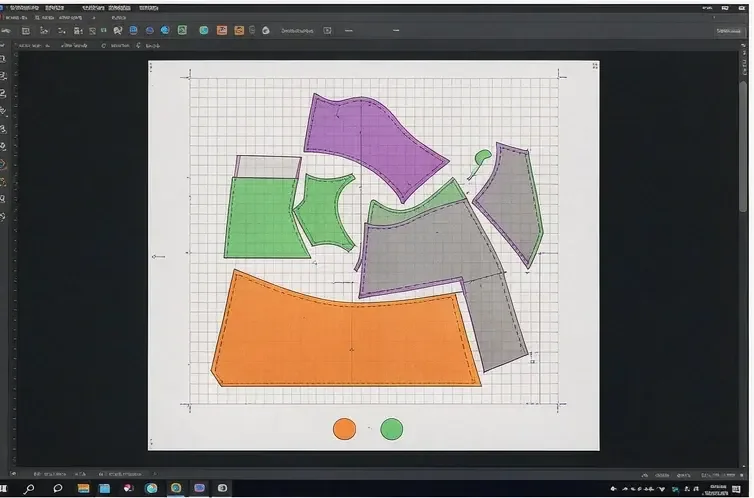
Material dominates, and it dominates for a reason that is easy to miss: leather is bought by area and sold by panel, so the cutting yield sits between the two. A graded panel set typically yields 65-75% from a side, which means the offcut is paid for at full price and carried into the unit.
- Ask which lot the figure is built on, because a named lot can be verified and a description by type cannot.
- Ask for the substance in millimetres, 1.2-1.4 mm structured or 0.9-1.1 mm soft, since thickness drives cost directly.
- Ask what cutting yield the figure assumes, because a five point change in yield moves the line more than most negotiations.
- Ask what happens on lot exhaustion, since a replacement lot is repriced rather than substituted at the same figure.
- Ask whether the lining is inside this line or in hardware, because quotes differ on where it sits.
A Milan house asked why two quotes for visually identical bags differed by a wide margin. The answer was not margin; it was that one was built on a 1.4 mm full-grain lot and the other on a 1.0 mm corrected grain, and the yield assumption differed by eight points.
Line Two: Hardware, Small Share and Large Variance
Hardware carries 8-14% of unit cost and varies more than any other line, because a stock zamak closure and a solid brass one with custom tooling sit at opposite ends of it. The variance is legitimate, which is exactly why it should be shown separately rather than folded into a single figure.
- Plating thickness
- 0.15-0.3 µm stated by finish, verified by a 24-hour neutral salt spray result
- Tooling amortisation
- Spread across the order quantity, so it falls sharply between 500 and 2,500 units
- Stock versus bespoke
- A bespoke closure adds tooling, proving and a second sample before panels are cut
- Zip specification
- A #5 metal zip on a 6 mm tape, with the pull specified separately
- Spare parts
- Commonly 1-2% of units held as spares, quoted as its own line
- Upgrade example
- Moving from zamak to plated brass is quoted at USD 4.80 per unit
The third line of that table is the one worth dwelling on. Tooling is a fixed cost divided by quantity, so a bespoke closure is expensive at 500 units and reasonable at 2,500, which is an argument for planning a signature closure into a style that will run again.
Line Three: Labour, and Why It Does Not Scale Down Neatly
Labour sits at 12-18% and scales with complexity rather than with quantity. A body with many panels, long seams and hand-set hardware costs more per unit at 2,500 pieces than a simpler body does at 500, which is the reason simple constructions are genuinely better value at scale.
- Panel count drives cutting and closing time more than overall size does.
- Seam length drives machine time, and a lined body roughly doubles it.
- Hand-set hardware, hand-rolled handles and hand-creasing each add an operation per unit.
- A structured body with reinforcement adds a second pass at the bench.
- Stitch density of 8-9 per inch is slower than a looser specification, and it should be.
That list has an implication that surprises buyers: reducing panel count is often a better saving than reducing quantity expectations. Two panels removed can move the labour line more than doubling the order does.
Line Four: Finishing, Where the Visible Quality Lives
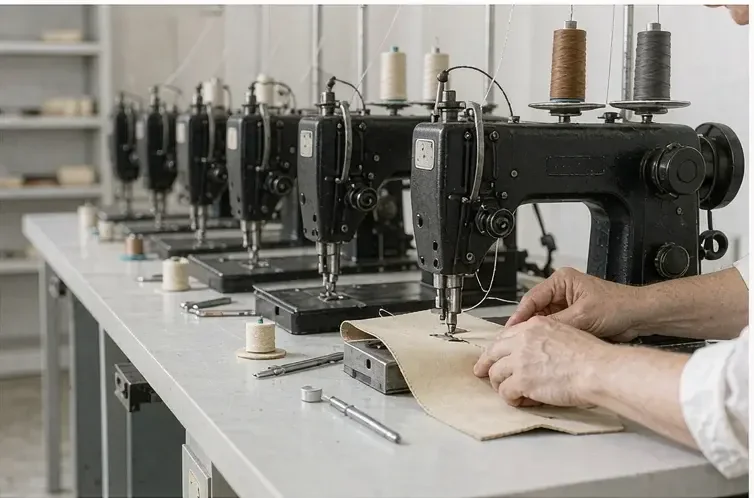
Finishing carries 5-8% and covers the operations a customer notices without naming them: edge paint in three coats with sanding between, creasing, handle rolling and final pressing. This line is where a house that looks similar on paper separates from one that does not.
Finishing questions worth asking in writing
- How many edge paint coats, and how much flash-off time between them?
- How many sanding passes between coats, and is the final edge sealed?
- Is the handle rolled by hand or turned on a machine, and where is the seam set?
- Is creasing done hot or cold, and at what width?
- Is the final press done on the finished body or before hardware is fitted?
Those five questions are quick to ask and expensive to discover later. A body finished in two coats looks correct under studio light and opens at the edge within a season, which is the kind of failure that reaches a customer rather than a checklist.
Line Five: Compliance and Testing, Priced Per Lot and Per Market
Compliance carries 1-3% and is priced per lot and per destination market, not per style. A capsule shipping to three markets with two hide lots carries six reporting positions where a buyer might assume one, and the difference is usually discovered at the invoice rather than at the quotation.
- State every destination market at quotation, so the testing count is correct from the start.
- Confirm whether reports are booked per lot or per style, because the answer changes the number.
- Ask for report turnaround, typically 6-10 working days, and where it sits in the calendar.
- Ask whether a lot change triggers a new report or an amendment to the existing one.
- Confirm who pays for a re-test triggered by a substitution requested after the freeze.
Line Six: Packing, Priced Per Unit and Often Forgotten
Packing carries 2-4% and is frequently omitted from a first quote, then added once goods are ready. It covers the dust bag, the carton, the insert card and the labour to pack, and all four have their own lead times that ignore how ready the bags are.
- Dust bag material and print, specified during sampling rather than at packing.
- Carton specification, commonly 20 units in a carton of about 0.055 m³ at this scale.
- Insert cards, which carry a print lead time independent of the bag.
- Packing labour, which is counted per unit and often quietly assumed rather than quoted.
Line Seven: Overhead, and What Should Sit Inside It
Overhead carries 7-10% and should explicitly include inspection, documentation and line allocation. If inspection sits outside it, the quoted figure is not comparable with one that includes it, and the comparison will be wrong in the direction that looks more attractive at first.
Overhead including inspection
Comparable and usually honest. The AQL 2.5 audit under ISO 2859-1 is a real cost, and a quote that names it is easier to compare with another.
Overhead excluding inspection
Not necessarily worse, but not comparable. Add the audit cost back before comparing, or you will be comparing two different scopes.
Documentation included
Look for lot records, test reports and packing lists inside the scope. These are small per unit and expensive to assemble late.
Third-party inspection
Usually booked and paid separately, by you or on your behalf, and worth agreeing before bulk opens rather than at packing.
What Quantity Actually Changes
Quantity changes unit cost less than most buyers expect, because leather does not fall in price per area at the same rate that overhead does. Moving from 500 to 1,200 units commonly moves unit cost by 6-9%, and to 2,500 units by 11-15%, with almost all of that coming from tooling, setup and line allocation rather than from material.
- Tooling amortisation falls fastest, which is why bespoke hardware rewards larger runs.
- Setup and cutting preparation are fixed per style and colourway, so they halve across two colourways.
- Material falls only slightly, since a larger quantity buys a larger area at roughly the same rate.
- Labour falls hardly at all, because each unit still needs the same operations.
The programme runs across 7 production lines with about 200,000 pcs per month of capacity and has held export experience since 2014, carried out through our validated partner factory Quanzhou Yingming Bags, an SGS-validated site. Terms are FOB Xiamen by default, with CIF and DDP available, and inspection is drawn at AQL 2.5 under ISO 2859-1. Sampling takes 6-10 working days, or 12-15 on complex builds, bulk takes 35-50 days at MOQ 500 pcs per style and colourway, and compliance is booked per lot and per market.
Trade Terms: What FOB, CIF and DDP Each Add
The term decides who carries the goods and who carries the risk, and it should be fixed at quotation rather than at handover. FOB Xiamen is the default here; CIF adds freight and insurance to the named port; DDP adds duty, clearance and delivery to the destination address.
- Fix the term at quotation, because changing it later re-prices the whole shipment.
- Under FOB Xiamen, freight and insurance are yours from the port of loading onward.
- Under CIF, freight and insurance are carried to the named port, with risk still passing at loading.
- Under DDP, duty and clearance are included, which requires accurate classification of the goods.
- Sea transit to northern Europe commonly runs 30-35 days; air transit around 5-7 days.
Reading a Quote in Ten Minutes
Ten minutes and six checks are enough to read a quote properly: is it seven lines or one figure, is the lot named, is plating thickness stated, is testing per lot or per style, is packing included, and is inspection inside the overhead line. Six questions, and the answers tell you whether the number is comparable with the next one.
Ask for the seven-line breakdown on your capsule
Send your drawings, material direction and quantity per colourway, and you will receive a seven-line cost build for your style, with the lot and plating thickness named. Request a quote.
Frequently Asked Questions
What are the seven cost lines in a handbag quote?
Material, hardware, labour, finishing and hand work, compliance and testing, packing, and overhead. Material typically carries 52-62% of unit cost on a full-grain calfskin body, with the other six sharing the remainder between them. Asking for those seven is the fastest way to make two quotes comparable.
Why does material dominate the cost of a handbag?
Because leather is bought by area and sold by panel, so the cutting yield sits between the two. A graded panel set typically yields 65-75% from a side, which means the offcut is paid for at full price and carried into every unit. Yield assumptions differ between houses more than buyers expect, and they move the line further than margin does.
How much does doubling the order reduce unit cost?
Less than most buyers expect. Moving from 500 to 1,200 units commonly moves unit cost by 6-9%, and to 2,500 units by 11-15%, with almost all of the saving coming from tooling, setup and line allocation rather than from leather. The remaining saving comes from amortising tooling, setup and line allocation across more units.
Should I use stock hardware or develop my own?
Stock hardware keeps you inside the standard sampling window and avoids tooling. A bespoke closure adds tooling, proving and a second sample, and its cost falls sharply as quantity rises, so it suits a style intended to run again. A bespoke closure suits a signature style that will run again rather than a single-season piece.
Why should hardware be quoted as a separate line?
Because it varies more than any other line and moves independently of leather. A stock zamak closure and a solid brass one with custom tooling sit at opposite ends of the same 8-14% band, so folding it into one figure hides the decision. Separating it also lets you judge whether an upgrade is worth its cost per unit.
How is compliance testing priced?
Per lot and per destination market rather than per style. A capsule shipping to three markets with two hide lots carries six reporting positions, each taking 6-10 working days, which is why stating all markets at quotation matters. Stating all markets at quotation is what keeps the testing count and the invoice aligned.
Is packing usually included in a first quote?
Often not, which is why it appears later as an addition. Ask for the dust bag, the carton specification, insert cards and packing labour as a named line, since all four have lead times that ignore how ready the bags are. All four should be specified during sampling, while the sample is still on the bench.
What should sit inside the overhead line?
Inspection, documentation and line allocation. If inspection sits outside it, the figure is not comparable with a quote that includes it, and the comparison will be wrong in the direction that looks more attractive initially. Add the audit back before comparing, or the two figures describe different scopes.
What does FOB Xiamen mean for my landed cost?
It means the goods are handed over at the port of loading, with freight, insurance and onward risk yours from that point. CIF carries freight and insurance to the named port, while DDP additionally covers duty, clearance and final delivery. Fix the term at quotation rather than at handover, because changing it re-prices the shipment.
How long does sea freight take from Xiamen?
Commonly 30-35 days to northern European ports, against roughly 5-7 days by air. The difference is why many capsules split the shipment, sending a portion by air to meet a launch date and the remainder by sea. Many capsules split the shipment, sending a portion by air and the remainder by sea.
Does a thicker leather always cost more?
Yes, because price follows area and weight, and because a thicker substance usually means fewer usable panels per side. That is why a quote built on 1.4 mm full grain and one built on 1.0 mm corrected grain differ visibly. Both should be stated in millimetres on the quote, alongside the lot identity.
How much does a hardware upgrade add per unit?
It depends on the base metal, the plating thickness and whether tooling is involved. A move from a stock zamak closure to a plated brass one is quoted here at USD 4.80 per unit, applied to every piece for as long as the style runs. Tooling amortisation means the same upgrade costs less per unit at higher quantities.
People Also Ask
What is the biggest cost in making a handbag?
Material, typically 52-62% of unit cost on full-grain calfskin. Cutting yield of 65-75% sits inside that figure, which is why panel layout changes the price more than most negotiations do. Panel layout and yield assumptions therefore matter more than negotiation.
Why doesn't a bigger order cut the price much?
Because leather does not get cheaper per area at the same rate that setup costs fall. Most of the saving between 500 and 2,500 units comes from tooling, setup and line allocation. Labour falls hardly at all, since each unit still needs the same operations.
Are sample fees credited against the order?
Often, where the style proceeds, though the credit may apply per style or per order. Ask which, and ask whether it survives a change of material lot, since that is the usual exception. Ask whether the credit applies per style or per order before relying on it.
What is the difference between FOB, CIF and DDP?
FOB hands the goods over at the port of loading; CIF adds freight and insurance to the destination port; DDP adds duty, clearance and delivery. Each shifts risk and cost at a different point. The term should be fixed at quotation rather than at handover.
How can I compare two quotes fairly?
Check that both have seven lines, name the hide lot, state plating thickness, book testing per lot, include packing and place inspection inside overhead. Without those six, the figures describe different scopes. Those six checks take about ten minutes and make later quotes comparable.
Sources and further reading
Every figure on this page is either our own programme data or attributed below. Open the originals before you write them into a specification.
- ISO — International Organization for StandardizationISO Publisher of ISO 2859-1, which sets the AQL 2.5 inspection plan whose cost sits inside the overhead line of a quotation.
- Leather Working GroupLeather Working Group Tannery audit protocol behind lot identification, which is what allows a material line in a quote to be verified rather than assumed.
- European Chemicals AgencyECHA Administrator of REACH Annex XVII, which determines how many compliance reports a capsule needs per lot and per destination market.
- ICC — Incoterms rulesInternational Chamber of Commerce Publisher of the Incoterms rules that define FOB, CIF and DDP, and the point at which cost and risk pass between buyer and seller.
- Sourcing JournalSourcing Journal Coverage of material pricing, freight rates and cost structure trends across the premium leather goods supply chain.