Premium Handbag OEM vs Luxury ODM: Which Route Does Your Brand Actually Need
Which route does your brand need — a brand-specified programme or a house-designed one? Choose the brand-specified route when the design, the closure or the tolerance set is your property and must stay exclusive; choose the house-designed route when speed and proven patterns matter more than originality. Both run at 500 pcs per style and colourway, sample in 6-10 working days, ship bulk in 35-50 days and inspect at AQL 2.5 under ISO 2859-1, quoted FOB Xiamen. This guide gives a five-question checklist, a side-by-side comparison and a risk register for each route.
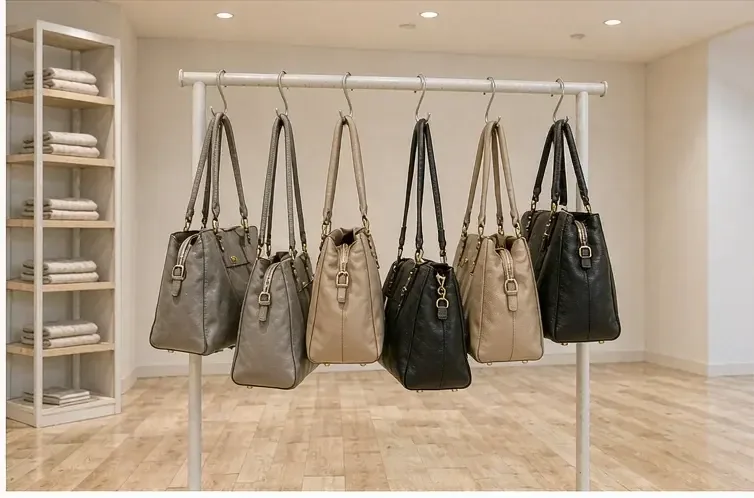
The Decision in One Sentence
Take the brand-specified route when the design is the asset; take the house-designed route when the season is the asset. The first gives you ownership of patterns, tooling and tolerances at the cost of development time and tooling spend. The second gives you a proven pattern and a faster start at the cost of exclusivity, because the underlying shape may be offered elsewhere.
Both routes run on the same bench, to the same quality gates, at the same 500 pcs minimum. What differs is who owns the file and who carries the development risk. That is a commercial decision about your brand, and it should be taken deliberately rather than inherited from whatever a previous partner happened to offer.
Checklist: Five Questions That Settle the Route
Work through these five in order. A clear yes to the first two points to the brand-specified route; a clear yes to the last two points to the house-designed one. Where the answers split, the hybrid at the end of this guide is usually the honest answer.
- Is there a component — a closure, a frame, a proportion — that a competitor could not be allowed to use?
- Do you hold dimensioned drawings with tolerances, or only reference images?
- Is the launch date inside twelve weeks, with no room for a correction round?
- Would an existing, proven silhouette with your leather, hardware and branding satisfy the season?
- Is the development spend — tooling at USD 450-900 and a longer pattern stage — available this season?
Side by Side: What Each Route Actually Controls
The two routes differ on five axes, and only one of them is cost. Read the table as a statement of what you acquire and what you give up, not as a scoreboard. Most houses that regret a route choice picked on cost and discovered the exclusivity or ownership term afterwards.
| Axis | Brand-specified route | House-designed route |
|---|---|---|
| Design ownership | Yours: pattern, tolerance set and tooling held for your brand | Shared: the house pattern may be offered with different materials |
| Pattern development | 2-4 working days per style, original work | Pattern exists; graded to your dimensions |
| Tooling | USD 450-900 for a custom closure, held for you | Usually none; house fittings are used |
| Exclusivity | Full on custom components; the file is yours | Applies to the material and finish combination only |
| Speed to first sample | 6-10 working days, or 12-15 with frame work | 6-10 working days, pattern stage already closed |
| Minimum order | 500 pcs per style and colourway | 500 pcs per style and colourway |
| Bulk window | 35-50 days from approval sample | 35-50 days from approval sample |
| Inspection | AQL 2.5, ISO 2859-1, level II | AQL 2.5, ISO 2859-1, level II |
Checklist: Design Ownership and Who Holds the File
Ownership is the axis most often assumed and least often written down. On the brand-specified route the pattern file, the tooling and the tolerance ledger are held against your brand and are not offered elsewhere. On the house-designed route, what you own is the combination — the material, the finish, the hardware choice and the branding method applied to a shape the house also builds.
- Pattern file
- Yours on the brand-specified route, held and reused
- Custom tooling
- Yours, USD 450-900 per mould, reused on every drop
- Tolerance ledger
- Yours, written before sampling begins
- Sealed golden sample
- One per style and colourway on either route
- House fittings
- Shared across clients; exclusivity sits in the finish
- Branding method
- Yours either way: emboss, foil or a metal plaque
The practical test is simple. Ask what happens if you leave. On the brand-specified route you take the file, the tooling and the sealed sample with you. On the house-designed route you take the sealed sample and the specification, and the shape stays. Neither is wrong; both should be known before the first order rather than discovered at the end of a relationship.
Checklist: Cost Structure Compared
The unit price on either route is built from the same six lines. What differs is the one-off column and the development time. A house-designed route usually carries no tooling and a shorter pattern stage, which is why the first season is less expensive; a brand-specified route carries tooling once and then reuses it, which is why later seasons converge toward the same figure.
- First season: the house-designed route is usually lower, because there is no tooling and no original pattern work.
- Second season onward: the two converge, because tooling is a one-off and the pattern already exists on both sides.
- Sampling cost: USD 180-320 per prototype either way, rising to USD 320-520 with a custom-cast closure.
- Quote validity: thirty days on either route, because hide prices move with the tannery market.
Checklist: Timeline Compared
Both routes sample in 6-10 working days and run bulk in 35-50 days. The difference sits in front of sampling: the brand-specified route needs pattern development of 2-4 working days per style, and any custom component adds 8-12 days for tooling. The house-designed route starts with a pattern that exists, so the same calendar buys slightly more correction time.
- Brand-specified: brief and feasibility, pattern 2-4 days, materials 3-6 days, prototype 6-10 days.
- House-designed: brief and selection, grading to your dimensions, materials 3-6 days, prototype 6-10 days.
- Either route: correction round 5-7 days, then a sealed golden sample per style and colourway.
- Either route: production 35-50 days against a live sealed reference.
- Custom closure on either route: add 8-12 days and USD 450-900 in tooling.
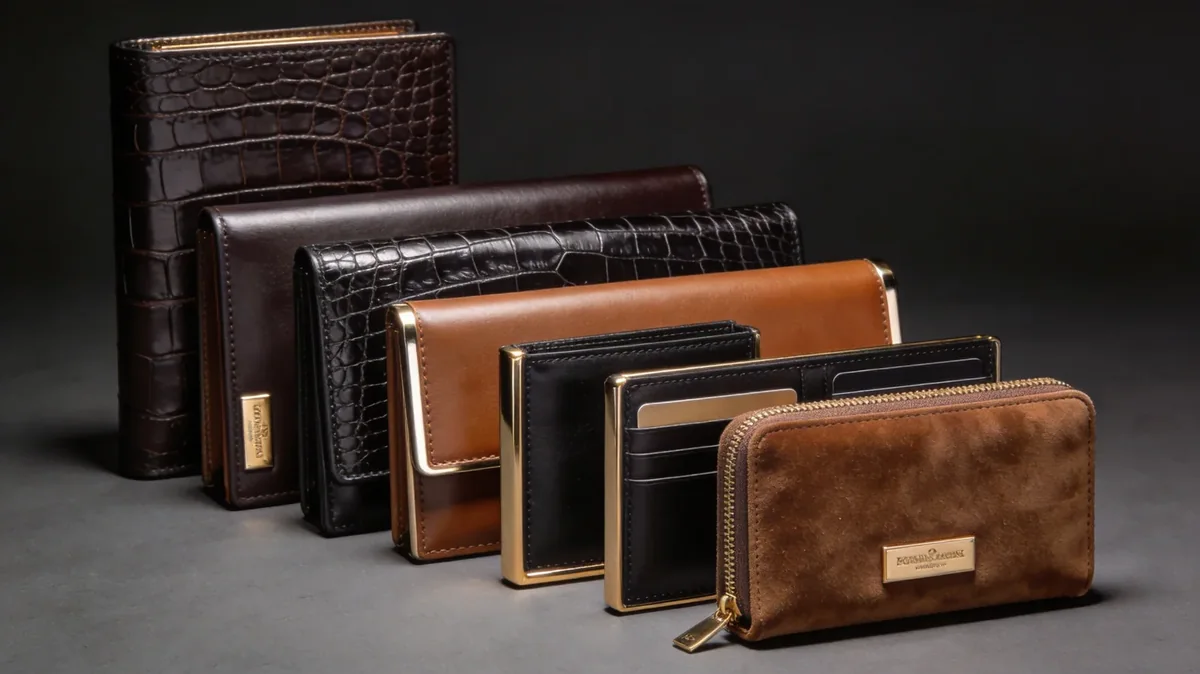
Checklist: Quality and Consistency Under Each Route
Quality does not differ by route; specification does. Both are inspected at AQL 2.5 under ISO 2859-1 at general inspection level II, both hold shade at ΔE ≤ 1.0 under D65, and both plate hardware at 0.15-0.3 µm. Where consistency differs is in the tolerance ledger: a brand-specified route writes tolerances from the start, whereas a house-designed route inherits them from the house pattern and adjusts only where you ask.
Tolerances
Brand-specified writes ±1.5 mm on cut panels from the outset; house-designed inherits the house standard unless you change it.
Shade control
Either route holds ΔE ≤ 1.0 under D65 against an approved swatch, with a named alternative finish.
Hardware
Either route plates at 0.15-0.3 µm and runs 24-hour salt spray, or 48 hours for humid markets.
Reference unit
Either route should produce a sealed golden sample; without one, re-orders have nothing to be measured against.
Risk Register: What Goes Wrong on Each Route
Every route has a characteristic failure, and naming it in advance is most of the mitigation. The brand-specified route fails through under-specification: a drawing without tolerances, a closure decided too late, a tooling spend nobody budgeted. The house-designed route fails through sameness: a shape that appears elsewhere in a different leather, discovered after launch.
| Risk | Brand-specified route | House-designed route |
|---|---|---|
| Under-specification | High, if tolerances are missing at brief | Lower, the house pattern already carries them |
| Schedule slip | Medium, custom tooling adds 8-12 days | Lower, no tooling to wait on |
| Loss of exclusivity | Low, the file and tooling are yours | Higher, the shape may be offered elsewhere |
| Unexpected one-off cost | Medium, tooling at USD 450-900 | Low, usually none |
| Design too close to another client | Very low | Medium, depends on material and finish choices |
The Hybrid: Start House-Designed, Move to Brand-Specified
Many houses run both at once, and it is often the correct answer for a first season. Launch two proven silhouettes on the house-designed route to establish the line and fill the rail, while one signature piece goes through the brand-specified route with its own closure and tooling. The proven styles carry the season; the signature piece carries the brand. A worked example makes it concrete. A house launching four styles might put the tote and the shoulder bag on the house-designed route, where the patterns are proven and the season needs both on the rail quickly, and put the top-handle — the piece that actually carries the brand — on the brand-specified route with a custom-cast clasp. The two proven styles are sampled inside the standard 6-10 working day window; the top-handle takes 12-15 because the clasp is cut first. One material approval covers all three, so the hide, the lining and the hardware finish family are shared, and the line reads as a collection rather than as three separate buys.
- Use the house-designed route for carry-over shapes that must be on the shelf every season.
- Use the brand-specified route for the one piece that must not appear anywhere else.
- Share a material approval across both: one hide, one lining, one hardware finish family.
- Seal a golden sample for every style regardless of route, so re-orders run 28-35 days.
- Move a house-designed style onto the brand-specified route once it has earned its own tooling.
Ask what happens to the file if the relationship ends. On the brand-specified route the pattern, the tooling and the tolerance ledger are yours. On the house-designed route the shape stays with the house and you keep the specification. Knowing which you are buying is worth more than the difference in first-season cost.
Decide your route with our team
Send your season plan, drawings or reference images, and the date you need goods. Our team will tell you which route fits each style and return a costed schedule through our quotation desk.
Final checklist before you choose
- Do you hold dimensioned drawings with tolerances, and is any component worth protecting with its own tooling? Is the launch inside twelve weeks, and is USD 450-900 of tooling available this season? Whichever way those answers fall, insist on three things either way: 500 pcs per style and colourway, a sealed golden sample per style and colourway, and inspection at AQL 2.5 under ISO 2859-1 before packing.
Frequently Asked Questions
What is the difference between the two handbag programme routes?
On the brand-specified route the design, pattern and tooling belong to you and are not offered elsewhere. On the house-designed route the shape already exists and you choose the leather, hardware, finish and branding. Both run at 500 pcs per style and colourway, sample in 6-10 working days and inspect at AQL 2.5.
Which route gives full design exclusivity?
The brand-specified route. The pattern file, the tolerance ledger and any custom tooling are held against your brand. On the house-designed route exclusivity applies to the material and finish combination rather than to the shape, which means the same silhouette may appear with a different leather elsewhere.
Which route is faster to a first sample?
The house-designed route, by the length of the pattern stage — 2-4 working days per style — because the pattern exists and only needs grading to your dimensions. Both then sample in 6-10 working days. A custom closure on either route adds 8-12 days for tooling, so where the season is tight the house-designed route is the safer choice for the styles that must land first.
Which route costs less in the first season?
Usually the house-designed route, because there is no tooling charge and no original pattern development. The brand-specified route carries USD 450-900 for a custom closure plus pattern work. From the second season the two converge, because tooling is a one-off and both patterns then exist.
Do the two routes have different minimum orders?
No. Both run at 500 pcs per style and per colourway, quoted FOB Xiamen. The minimum reflects fixed costs — hide purchase by lot, a cutting marker and line set-up — that are identical whichever route the pattern came from. A capsule of three styles in two colourways runs six production units of 500 pieces on either route.
Is quality different between the two routes?
No. Both are inspected at AQL 2.5 under ISO 2859-1 at general inspection level II, both hold shade at ΔE ≤ 1.0 under D65, and both plate hardware at 0.15-0.3 µm with 24-hour salt spray. What differs is who writes the tolerances, not the tolerances themselves.
Can I run both routes in the same season?
Yes, and it is often the right answer. Launch two proven shapes on the house-designed route to fill the rail, and put one signature piece through the brand-specified route with its own closure and tooling. Share a material approval across both to keep the line coherent.
Who owns the tooling on each route?
On the brand-specified route the mould is yours: it is held against your brand, is not offered to other clients, and is reused on every later drop at no further tooling charge. On the house-designed route there is usually no custom tooling at all, because house fittings are used.
What happens if I move to another partner later?
On the brand-specified route you take the pattern file, the tooling and the sealed golden sample. On the house-designed route you keep your specification and sealed sample, and the shape stays with the house. Both should be stated in writing before the first order. Ask the question at quotation stage, when the answer costs nothing and the relationship is still a choice.
How long does bulk take on each route?
Thirty-five to fifty days from the approved sample and deposit on either route, because the bench work is the same. Re-orders run 28-35 days on both, provided a golden sample was sealed at the end of the first drop and the material approvals are still live.
Should I seal a golden sample on the house-designed route?
Yes. Without a sealed reference the re-order has nothing to be measured against, and the second season becomes a fresh sampling exercise you have already paid for. One sealed unit per style and colourway, held on both sides, costs one bag out of a 500-piece run.
How do I know which route my brand has outgrown?
When a style has sold through twice and you want a component nobody else can use, it has earned its own tooling. Move it onto the brand-specified route, commission the closure, and hold the file. That is the natural path from a house pattern to a signature piece.
People Also Ask
What does a brand-specified handbag route mean?
It means your design is built to your own written specification and the pattern, tooling and tolerance set are held for your brand alone. It costs more in the first season and returns exclusivity and a file you own.
What does a house-designed handbag route mean?
It means you start from a shape the house already builds and specify the leather, hardware, finish and branding. It is faster and cheaper to start, and exclusivity sits in the material combination rather than the silhouette.
Is one route better for a new luxury label?
Most new labels start house-designed to fill a rail quickly, then move their strongest style onto the brand-specified route once it has earned custom tooling. Running both in one season is common and usually sensible.
How much does custom handbag tooling cost?
A custom-cast closure costs USD 450-900 for the mould and adds 8-12 days to the schedule. The mould is held against your brand and reused on every later drop of that style at no further tooling charge.
Do both routes use the same inspection standard?
Yes. Both inspect at AQL 2.5 under ISO 2859-1 at general inspection level II, with defects classified critical, major and minor before the inspector begins. On a 3,000-piece lot the sample is 125 units.
Sources and further reading
Every figure on this page is either our own programme data or attributed below. Open the originals before you write them into a specification.
- ISO — International StandardsInternational Organization for Standardization Publisher of ISO 2859-1 sampling procedures and ISO 105 colour fastness methods applied on either route.
- Leather Working GroupLeather Working Group Tannery audit protocol referenced when either route names a hide source that must stay available.
- Regulation (EU) No 1007/2011 on textile fibre namesEUR-Lex Fibre composition and labelling rules that apply to linings and labelled material content.
- Understanding REACHEuropean Chemicals Agency Annex XVII restrictions on substances in leather, coatings and plated hardware, checked at material approval.