Premium Handbag Manufacturer Material Sourcing: One Lot, Four Tests, and the Calendar That Decides Them
How does material sourcing work on a premium handbag programme? It turns on one decision taken early and four tests taken once: reserve a single tannery lot rather than three, then confirm tensile strength, finish adhesion, rub fastness and colour fastness against named ISO methods before anything is cut. A Copenhagen label came to us with two leathers and a fixed launch date, and the choice to pool them into one lot removed a reservation cycle, one set of compliance reports and about ten days from the calendar. Sampling then ran 6-10 working days and bulk 35-50 days at MOQ 500 pcs per style and colourway.

A Buyer, A Deadline, and Two Leathers
A Copenhagen accessories label arrived in March with two sketches, a shipping date in July and a firm view that the collection needed two leathers: a full-grain calfskin for the body and a contrasting suede for the gusset.
The deadline was not the problem. The problem was that each leather carries its own lot, its own test cycle and its own compliance file, and two of them running in parallel meant two reservation windows in a calendar that had room for one. Asking which of the two actually carried the design produced a quick answer: the calfskin did, and the suede was doing decorative work on a panel nobody photographed.
The resolution was to keep the calfskin as the hero and move the contrast to a woven trim rather than a second leather. One lot, one test cycle, one compliance file, and a calendar that closed with room to spare. The rules that follow are the ones that case made visible.
Why the Lot, Not the Swatch, Is the Real Decision
A swatch tells you what a leather looks like and a lot tells you what it will be, so the reservation — not the selection — is the decision that actually governs a production run.
Hides vary within a batch and between batches, and the variation is visible nowhere more clearly than in colour depth. Booking a named lot means the 500 pieces in your order and the 500 in your re-order come from the same reservation, which is the only way to get two deliveries to sit together on a shelf without an argument.
- Typical lot size booked for one shade
- Around 12-15 hides upward, aligning closely with a 500-piece run
- Cutting yield on full-grain calfskin
- 68-74% on a nested plan, falling as panel count rises
- Body panel substance
- 1.2-1.4 mm for structured silhouettes that must stand unaided
- Gusset and turnover substance
- 0.9-1.0 mm, where the leather has to fold without crazing at the crease
- Interlining behind structured panels
- 0.8 mm split backing, skimmed at the fold to avoid bulk
Record the lot code on the technical pack, on the approval sample's label and on the invoice. Three documents, one code: that is the entire mechanism by which consistency is made provable rather than promised.
Reading a Tannery Submission Properly
A tannery submission should be read as a set of numbers rather than as a photograph, because the photograph is identical across three grades of leather and the numbers are not.
Ask for the substance in millimetres, the finish type, the test reports and the environmental audit status. The Leather Working Group runs the tannery audit protocol that most premium programmes reference, with rated sites published by the group, and a current audit is the fastest available signal that the rest of the paperwork will hold up.
- Substance stated as a range, not a single figure, since hides vary across the area.
- Finish type named, because it decides how the edge behaves and how the patina develops.
- Test reports dated, not generic, and traceable to the lot you are actually buying.
- Environmental audit status current, with the rating and the audit date given.
Be sceptical of a submission with beautiful images and no numbers. It usually means the house is selling an appearance rather than a material, and the difference appears at the cutting table rather than in the sample room.
The Four Tests That Decide a Hide
Four tests decide whether a hide is fit for a structured handbag: tensile strength under ISO 3376, finish adhesion under ISO 11644, colour fastness to rubbing under ISO 11640, and colour fastness to light under ISO 105-B02.
Each answers a different failure. Tensile strength answers whether a loaded handle will tear out; finish adhesion answers whether a coating will lift at a fold; rub fastness answers whether a dark shade will transfer onto light clothing; and light fastness answers whether a window display will bleach a panel over a season.
| Property | Method | Working threshold | What failure looks like |
|---|---|---|---|
| Tensile strength | ISO 3376 | Commonly accepted from around 10 N/mm² | Handle tearing out under load at the stitch line |
| Finish adhesion | ISO 11644 | Assessed by coating condition after flexing | Finish lifting or crazing at a folded edge |
| Rub fastness | ISO 11640 | Rated on a grey scale, 4 and above for wear | Colour transferring onto light garments |
| Light fastness | ISO 105-B02 | Blue wool scale, 4 and above for display | Panel bleaching in a window over one season |
Ask for the reports against the lot, not against the article generally. A test performed on last year's production of a similar leather tells you nothing about the hides in front of you, and this is the most common substitution in a submission.
Exotic Leathers and the Paper Trail
Exotic skins are entirely a paperwork exercise: the material is usually available and the documents usually are not, so the decision is made on whether the papers can be assembled before the calendar needs them.
CITES governs the trade, and most farmed crocodilian species used in accessories are listed in Appendix II, which permits trade under a permit system, while several others sit in Appendix I where commercial trade is far more restricted. Every shipment needs documentation that matches the skin, and a mismatch stops goods at a border rather than at a bench.
- Confirm the listing status of the exact species before the material is quoted, not after.
- Require the permit to name the skins in your shipment, and keep it with the commercial documents.
- Expect re-export paperwork if goods will later move between markets.
- Build the permit lead time into the calendar, since it is external and cannot be compressed.
If the paperwork cannot be assembled in time, the honest answer is to run the season in calfskin and schedule the skin for a later delivery. A border seizure costs more than a deferred material choice, and it costs it in the least recoverable currency there is.
Hardware Sourcing Runs on Different Rules
Hardware follows the arithmetic of plating houses rather than of tanneries: the constraint is a minimum run per finish, not a lot size, which is why one hardware family across a capsule saves more than any other single sourcing decision.
Two numbers govern specification. Decorative gold plating is typically applied at roughly 0.15-0.3 µm, and salt spray resistance is commonly tested at 24 hours for a standard finish and 48 hours for a specification intended for humid or coastal markets. Ask which of the two you are being quoted.
A single brass pull sourced outside a production run lands around USD 4.80, against a fraction of that across a full lot, which is the clearest illustration of why stock finishes suit a first capsule. Bespoke mechanisms are worth developing once a proven style can carry the tooling across several seasons rather than one.
Lining, Interlining and the Parts Nobody Photographs
Lining and interlining decide whether a bag feels expensive in the hand, and they are the parts most often left unspecified on a pack, which is why they account for a disproportionate share of first-round corrections.
Name three things: the lining article and its weight in grams per square metre, the interlining substance in millimetres, and the shade of both against the outer leather. A lining that is heavier than specified eats interior volume; an interlining that is lighter than specified lets a structured panel slump within weeks.
Lining weight
Stated in grams per square metre and matched to the silhouette. Too heavy and it steals interior volume; too light and it bags at the base within a season.
Interlining substance
Typically 0.8 mm behind structured panels, skimmed at the fold. This is what holds a crisp edge and it is invisible in every photograph.
Thread and stitch
0.45 mm bonded thread at 8-9 stitches per inch on visible seams, with the shade recorded on the pack rather than matched by eye.
What Compliance Asks For by Market
Compliance is a destination question rather than a material question: the same bag faces different requirements in the European Union, the United Kingdom and California, and the differences sit in chemical restrictions rather than in construction.
REACH Annex XVII sets the European restrictions that matter most to leather, including limits on chromium VI in tanned hides, and California's Proposition 65 sets its own listing and warning regime. Both are about substances, so both are answered by documentation from the tannery rather than by anything done on the bench.
- Name your destination markets on the first call, since this decides which reports are needed.
- Ask for substance declarations against the lot, dated, rather than a general statement of conformity.
- Keep the declarations with the commercial documents, because that is where an enquiry arrives.
- Treat fibre and labelling rules as separate: textile composition rules apply to linings and to many straps.
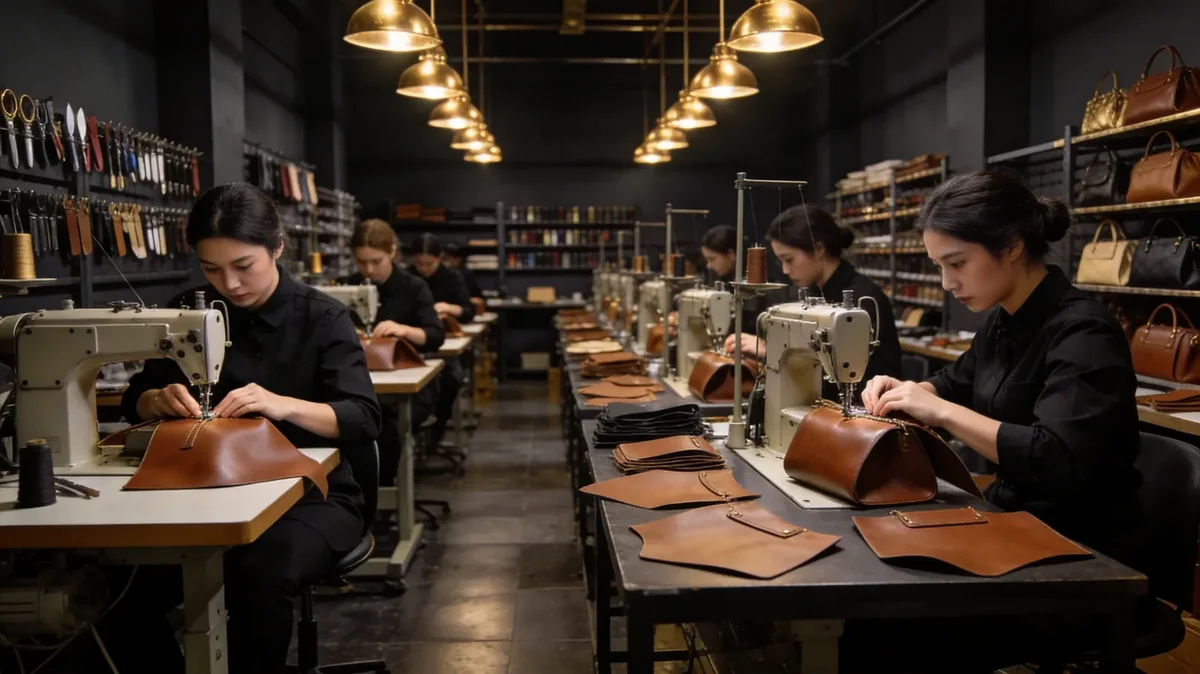
The programme has held export experience since 2014, runs across 7 production lines with about 200,000 pcs per month, and is delivered through our validated partner factory Quanzhou Yingming Bags, an SGS-validated site. It works to REACH, Prop 65 and CPSIA requirements as a matter of course, with Leather Working Group audit status referenced when a lot is reserved. Ask which reports exist before you ask about price.
Cost Behaviour: Why One Leather Beats Three
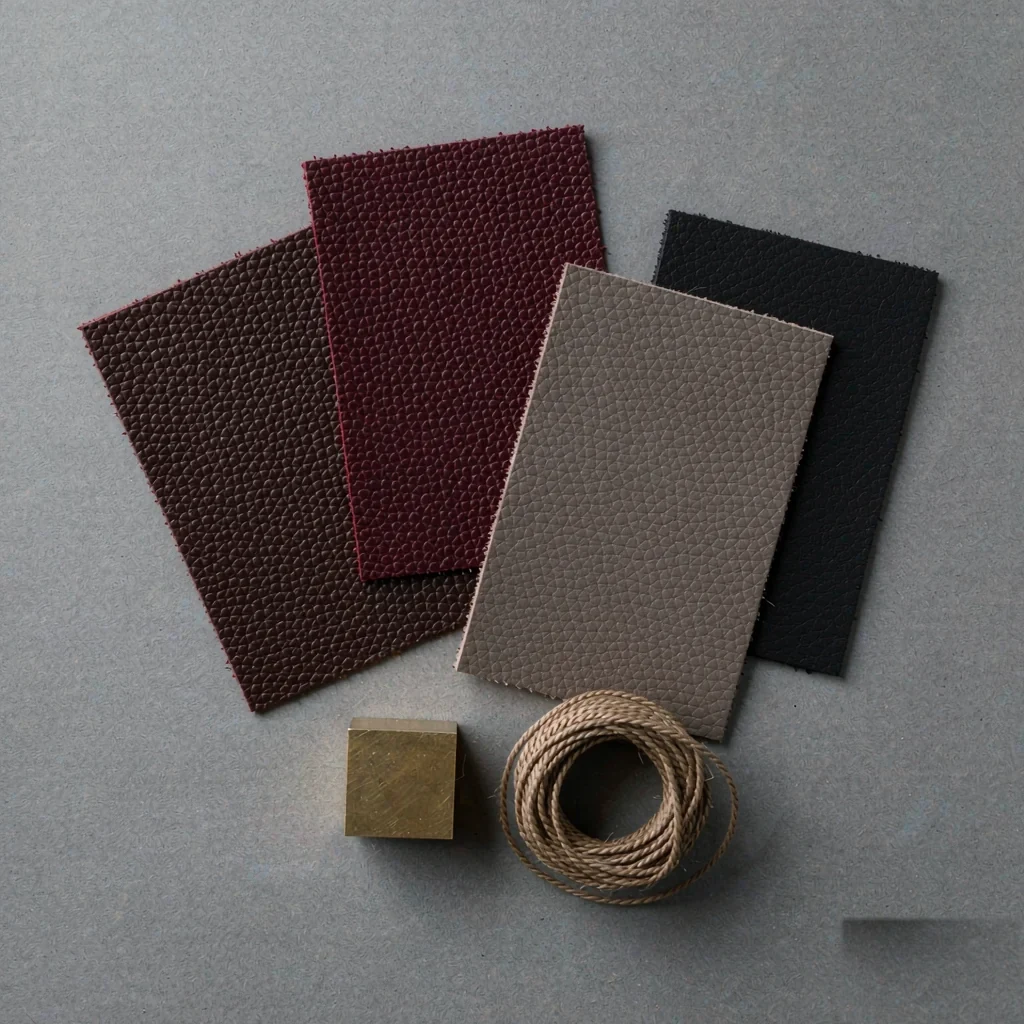
One leather across a capsule beats three on cost for two reasons that have nothing to do with negotiating: the lot is bought once at a larger volume, and the test cycle runs once instead of three times.
The second reason is usually the larger one. A test cycle is a fixed cost in both money and days, and three leathers mean three of them, three sets of declarations and three chances for one to come back late and hold the whole run. Pooling removes all of that at a stroke.
Where a second material genuinely carries the design, put it where the eye lands and where the volume is small: a handle, an accent panel or a trim. The aesthetic gain survives and the material arithmetic does not move.
Building a Material Calendar That Holds
A material calendar holds when it is built backwards from the cutting date, and it fails when it is built forwards from the brief, because the reservation window is the least compressible gate in the whole sequence.
Order the material gates like this
- Reserve the lot first: the least compressible gate, and the one that governs everything downstream.
- Run testing in parallel with pattern work, not after it, so reports arrive before cutting.
- Freeze materials at the same moment as geometry, since a revised panel changes the yield.
- Confirm declarations against the lot before bulk intake, not before shipment.
- Keep two days between approval and intake for documents and any recorded correction.
Against that sequence, sampling runs 6-10 working days for standard constructions and 12-15 for complex ones, and bulk runs 35-50 days from a signed approval. Inspection is drawn at AQL 2.5 under ISO 2859-1 and goods are handed over on FOB Xiamen terms.
Bring the material question early
Tell us the leather, hardware and destination markets and we will return a sourcing route, the tests that apply and a calendar. Request a quote.
Frequently Asked Questions
Why does a hide lot matter more than a swatch?
A swatch shows appearance and a lot determines consistency. Hides vary within and between batches, most visibly in colour depth, so booking a named lot is the only way a first delivery and a re-order sit together on a shelf without an argument. Colours, finishes and hand feel all drift between batches, and the drift is far more visible in a re-order than in a sample.
How large is a typical leather lot for one shade?
Tanneries commonly book from around 12-15 hides upward per shade, which aligns closely with a 500-piece run of a mid-sized structured style. Below that volume there is little reason for a tannery to hold your colour, which is the real origin of the minimum. Buy above that floor and the tannery will hold your shade; below it, you are buying whatever is available that month.
Which tests should I ask for on a leather submission?
Four: tensile strength under ISO 3376, finish adhesion under ISO 11644, colour fastness to rubbing under ISO 11640, and colour fastness to light under ISO 105-B02. Each maps to a distinct failure, from handle tear-out to a panel bleaching in a window. Ask for the reports against your lot, with dates, since a generic certificate for a similar article tells you nothing useful.
What thresholds should those tests meet?
Tensile strength is commonly accepted from around 10 N/mm², rub fastness is rated on a grey scale with 4 and above taken as wearable, and light fastness is read on the blue wool scale with 4 and above suitable for display. Ask for the reports against your lot.
How do I know if a tannery is environmentally credible?
Look for a current audit under the Leather Working Group protocol, with the rating and audit date stated rather than implied. A current audit is the fastest available signal that the rest of the paperwork will hold up under enquiry. A rated site, an audit date and traceable reports together take about ten minutes to check and are worth checking every time.
What is involved in sourcing exotic skins?
Mostly paperwork. Most farmed crocodilian species used in accessories are listed under CITES Appendix II, which permits trade under a permit system, while others sit in Appendix I where commercial trade is far more restricted. The permit must name your skins. Build the permit lead time into the calendar, and if the documents cannot be assembled in time, defer the skin rather than the season.
Can I use two leathers in one small capsule?
You can, but it costs a second lot, a second test cycle and a second compliance file. Where contrast genuinely carries the design, place it where the eye lands and the volume is small: a handle, an accent panel or a trim. Each additional material also brings its own reservation cycle, and one late report is enough to hold an entire run.
Why is hardware specified differently from leather?
Because plating houses set a minimum run per finish rather than a lot size, so the constraint is different. Sharing one hardware family across a capsule is the most effective single saving available in sourcing. Leather is bought by the lot and hardware by the finish run, so pooling works differently in each case and the savings are larger on hardware.
What plating specification should I ask for?
Decorative gold plating is typically applied at roughly 0.15-0.3 µm, and salt spray resistance is commonly tested at 24 hours for a standard finish and 48 hours for humid or coastal markets. Ask which of the two you are being quoted. Plating thickness and salt spray hours are the two figures that separate a specification from a description, so ask for both.
How much does a single hardware component cost outside a run?
A single brass pull sourced outside a production lot lands around USD 4.80, against a fraction of that across a full run. That gap is why stock finishes suit a first capsule and why bespoke tooling waits for a proven style. Multiply that across a full sample round of components and the reason samples are priced separately from bulk becomes clear.
What compliance documents will I need?
It depends on destination. REACH Annex XVII sets the European restrictions that matter most to leather, including chromium VI limits, while California's Proposition 65 sets its own listing and warning regime. Both are answered by dated declarations from the tannery. Fibre and labelling rules sit separately again, and they apply to linings and to most straps as well as to dust bags.
How long does material sourcing add to the calendar?
Reservation is the least compressible gate, so plan it first. Once a lot is confirmed, sampling runs 6-10 working days and bulk 35-50 days from a signed approval, with inspection at AQL 2.5 under ISO 2859-1 and FOB Xiamen handover. Reservation itself is external and cannot be compressed, which is why it is planned first rather than fitted in later.
People Also Ask
How does material sourcing work for premium handbags?
One named tannery lot is reserved first, then four ISO tests are run against it, then declarations are collected for the destination market. Pooling into a single lot removes a reservation cycle, one test round and roughly ten days from the calendar.
Why is one leather better than three?
The lot is bought once at larger volume and the test cycle runs once rather than three times. The second saving is usually larger, since each additional material adds a fixed cost in money, days and one more chance of a late report.
What tests decide whether a hide is usable?
ISO 3376 for tensile strength, ISO 11644 for finish adhesion, ISO 11640 for rub fastness and ISO 105-B02 for light fastness. Requested against the specific lot rather than the article, with the report dates checked.
Do exotic leathers need special documents?
Yes. CITES governs the trade, most farmed crocodilian species used in accessories sit in Appendix II under a permit system, and the permit must name the skins in your shipment. Assemble the papers before quoting, not after.
How far ahead should materials be booked?
As early as the design allows, because reservation compresses least. Build the calendar backwards from the cutting date, run testing alongside pattern work, and confirm declarations before bulk intake rather than before shipment.
Sources and further reading
Every figure on this page is either our own programme data or attributed below. Open the originals before you write them into a specification.
- Leather Working GroupLeather Working Group Runs the tannery environmental audit protocol referenced when a lot is reserved for a premium programme.
- ISO — International Organization for StandardizationISO Publisher of ISO 3376, ISO 11644, ISO 11640 and ISO 105-B02, the four methods used to qualify a hide.
- CITES — Convention on International Trade in Endangered SpeciesCITES Sets the Appendix listings and permit system governing trade in exotic skins used in accessories.
- ECHAEuropean Chemicals Agency Administers REACH, including the Annex XVII restrictions on substances relevant to tanned leather.
- OEHHAOffice of Environmental Health Hazard Assessment Administers California's Proposition 65 listing and warning regime for consumer products sold in the state.