Premium Handbag Manufacturer Audit Checklist: Nine Stations, Two Days and the Records to Request First
A premium handbag production audit is not a search for faults; it is a search for reproducibility. The only question that matters is whether the bag approved in the sampling room is the bag that arrives in cartons eleven weeks later, and that question is answered by records rather than impressions. A well-prepared visit runs 1.5-2 days across nine stations, opens with a document request sent two weeks ahead, and closes with a scoring sheet that ranks a partner on evidence instead of hospitality. This checklist gives the stations, the measurements to record at each, and the nine documents to ask for before booking travel.
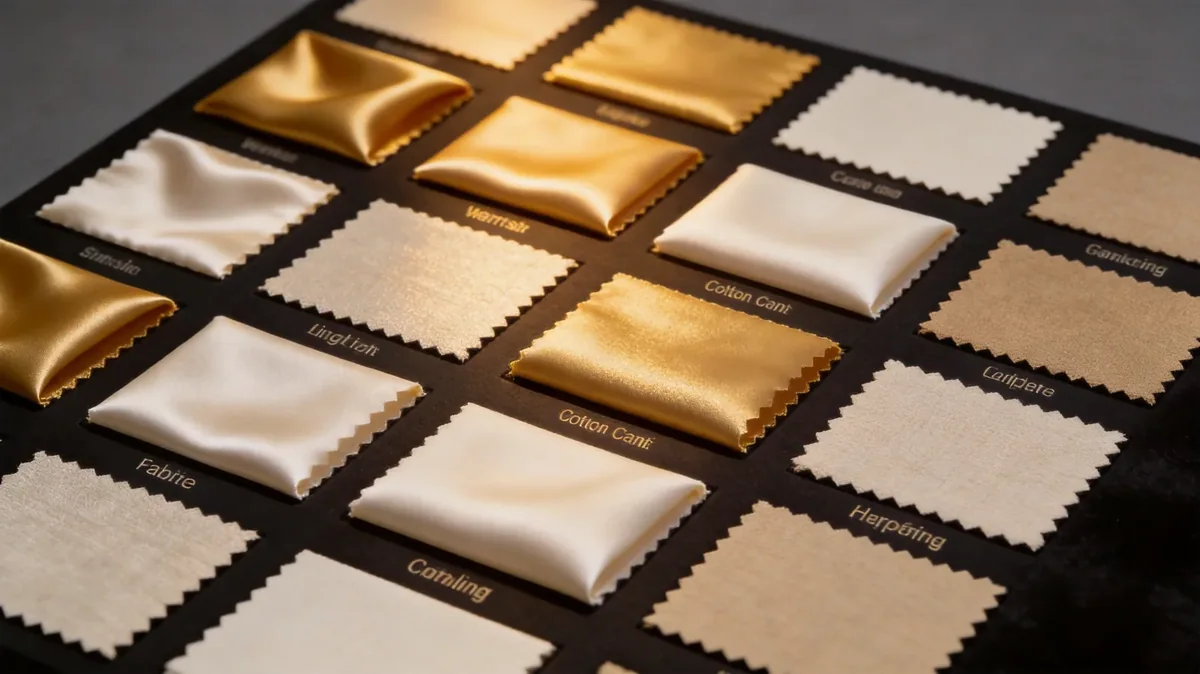
What an Audit Is Actually Meant to Prove
Most visits fail for the same reason: the buyer tours, is impressed by what is shown, and leaves with a feeling rather than a file. A feeling cannot be compared against a second option or used to resolve a dispute two seasons later. A measured value can.
The purpose is therefore narrower than most people assume. You are not judging whether a house can make one beautiful sample, because every house can. You are judging whether it can make five hundred that match it, and whether it can prove that it did. Those are questions about method, and method leaves paperwork.
- Reproducibility, meaning the approved sample can be matched at volume without a hero operator.
- Traceability, meaning any carton can be traced back to a hide lot, a plating batch and a bench date.
- Honest defect classification, meaning the inspection record names defect types rather than totals.
- Correction behaviour, meaning what happens when a measurement falls outside tolerance.
Before You Travel: The Nine Documents to Request
Send the request two weeks ahead. What comes back tells you a great deal before anyone boards a flight, because a house that keeps records against lots rather than dates can usually produce them within a day.
| Document | Why it matters | What good looks like |
|---|---|---|
| Technical pack with revision history | Shows whether changes were recorded or improvised | Dated revisions with the reason for each change |
| Material lot register | Basis of all traceability | Lot references against hides, lining and hardware batches |
| Incoming material test reports | Proves material was checked before cutting | Reports filed by lot, within the past twelve months |
| Hardware plating report | Sets the corrosion expectation | Thickness in microns with the measurement method named |
| In-process inspection records | Shows inspection happens during assembly | Station records with measurements, not tick marks |
| Final AQL inspection report | The release document for the shipment | Sample size, accept and reject counts, defect classification |
| Compliance certificates | Required by destination market | Current BSCI or Sedex reference, REACH and Prop 65 scope notes |
| Corrective action log | The single best predictor of future behaviour | Dated entries with root cause and the change made |
| Capacity and scheduling plan | Determines whether your dates are realistic | Line allocation by week, with sampling separated from bulk |
If a document arrives late, note it.
Station-by-Station: How the Two Days Are Spent
Walk the sequence in production order rather than the order you are shown, spending longest where the most decisions are made. Assembly and final inspection together account for over half the visit, because those are where a specification either holds or quietly drifts.
| Station | Time | What to observe | What to record |
|---|---|---|---|
| Inward material store | 45 min | Hide lots separated, labelled and resting flat | Lot numbers against the pack, graded area per hide |
| Cutting | 45 min | Nesting plan, grain direction marks, knife condition | Yield percentage, thickness at five points per hide |
| Skiving and preparation | 30 min | Skive width consistency along turned edges | Skive width in mm, checked with a dial gauge |
| Assembly | 2 h | Stitch density, thread tension, panel alignment | Stitches per inch at three points across three units |
| Edge finishing | 1 h | Number of coats, sanding between passes, heat setting | Coat count and wet film thickness per coat |
| Hardware setting | 45 min | Reinforcement behind plates, washer placement | Press setting, pull-off result for feet and rivets |
| Final inspection | 90 min | AQL sampling by lot, defect classification practice | Sample size, accept and reject counts, defect types |
| Packing | 30 min | Carton count, dust bag placement, moisture control | Carton dimensions, gross weight, units per carton |
| Records room | 45 min | Whether reports are filed by lot or merely by date | Report references, dates and lot cross-references |
The last station is the one visitors skip, and it is where the visit is won. Reports filed against dates cannot answer what you will ask later, which is which lots were in a given carton.
Materials Inward: Lot, Yield and Traceability
Material control is where reproducibility begins. A hide lot that is not recorded against the cutting plan cannot be re-selected when a capsule repeats, and a repeat without lot control is the most common reason a second season does not match the first.
- Body leather thickness
- 1.2-1.4 mm full-grain calfskin, tolerance of plus or minus 0.1 mm, measured at five points per hide
- Graded usable area per hide
- 47-53 sq ft, entered against the lot reference at inward inspection
- Cutting yield
- 66-74% on a 32 cm structured body with grain direction held constant
- Colour fastness to rubbing
- ISO 105-X12, target grade 4 dry and grade 3-4 wet
- Finish adhesion
- ISO 11644, result filed with the lot reference rather than the carton date
Ask to see a hide rejected at inward inspection and the note explaining why. A house that never rejects anything is either buying from one source under unusually good terms or is not looking, and only one of those is a reassuring explanation.
Hardware: Plating, Cycles and Corrosion
Hardware fails in two ways that look identical to a customer and behave completely differently: the plating wears through, or the mechanism wears out. Both are testable before bulk, and both should have a number on the file rather than an assurance.
- Ask for plating thickness in microns, measured by X-ray fluorescence, with a target band of 0.2-0.3 µm over a palladium underlayer.
- Ask for neutral salt spray hours tested to ISO 9227, with 48 hours the common target for boutique-grade closures.
- Cycle every zip 500 times under light load before bulk release, because a slider that feels smooth in the hand can bind after a season.
- Record pull-off force for feet and rivets, since a loosened foot is the most frequent return on structured bodies.
- Confirm the alloy in writing, because brass and zinc alloy age differently even under identical plating thickness.
Bench Standards: Stitch, Edge and Assembly
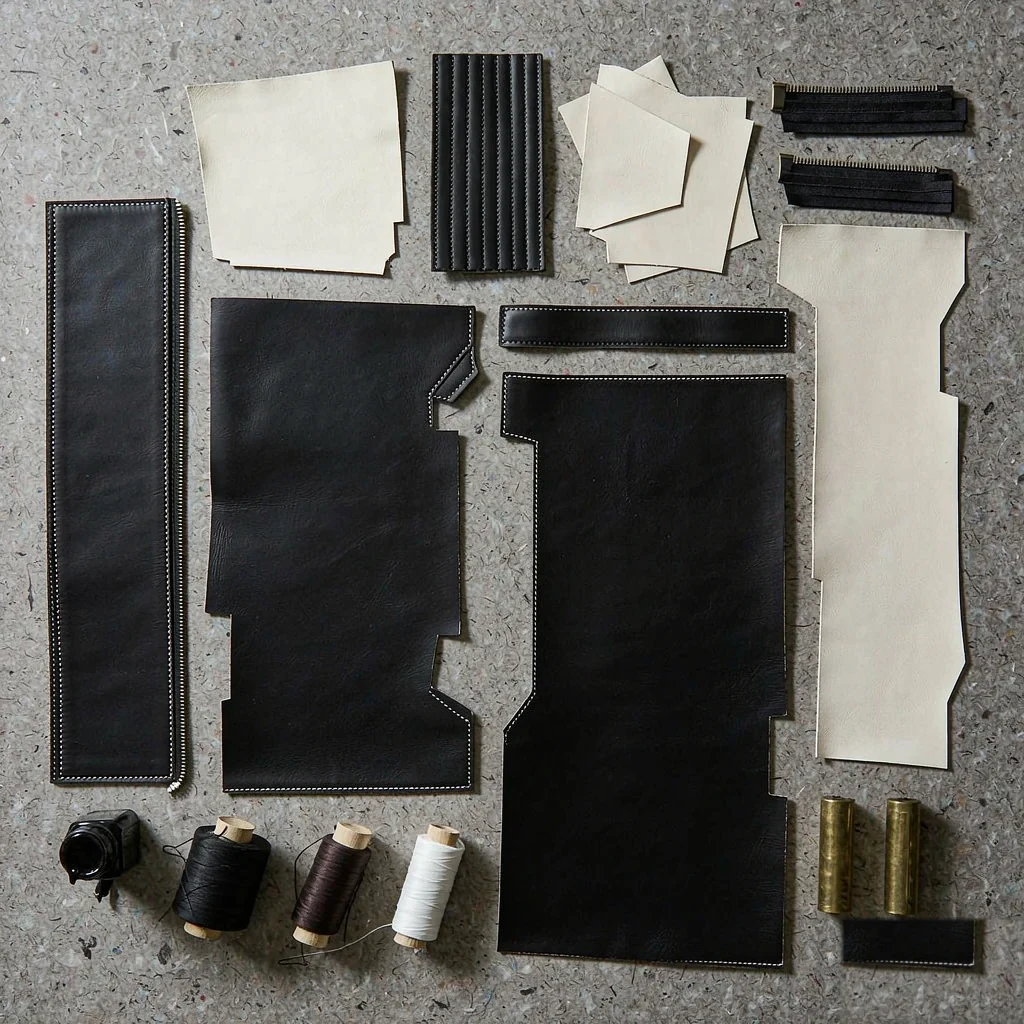
The bench is where a specification becomes an object, and it is also where tolerance quietly widens. Stitch density is the clearest single indicator: a seam specified at 8 per inch and delivered at 6.5 has not been changed by a decision, it has been changed by drift, and drift left alone spreads to every other station.
Edge finishing deserves the same attention. Three coats at 12-15 µm each, sanded between passes and heat set, produce an edge that flexes with the leather; two heavy coats produce a ridge that cracks at the fold. Count the coats at the bench rather than trusting the pack, because the pack describes an intention and the bench describes a habit.
The Physical Tests Worth Recording on the Day
You do not need a laboratory on site, but you do need a results sheet with real numbers. Six tests cover most of what a boutique return will later investigate, and each produces a figure that can be re-tested at destination.
- Stitch density
- 8 per inch, tolerance plus or minus 0.5, checked at three points per unit
- Edge paint build
- 3 coats at 12-15 µm each, sanded between passes, heat set on the last
- Thread diameter
- 0.45 mm bonded nylon for high-density seams on structured bodies
- Zip cycling
- 500 open-close cycles under light load, recorded before bulk release
- Handle static load
- 12 kg held for 30 minutes with no stitch movement at the root
- Lining abrasion
- 20,000 Martindale cycles for body linings in daily-use programmes
Record the instrument as well as the value, since a figure without the tool that produced it cannot be reproduced at destination.
Final Inspection and AQL in Practice
Final inspection on this programme runs at AQL 2.5 under ISO 2859-1, using general inspection level II. In plain terms, a lot of 501-1,200 units draws sample size code letter J, giving 80 units to inspect, with an accept number of 5 and a reject number of 6 for major defects at that level.
How to read an AQL report
- Sample size must be stated; a report without it has not used the standard.
- Defects must be classified as critical, major or minor, not merely counted.
- Critical defects trigger rejection regardless of the accept number, since they concern safety and compliance.
- A rejected lot should generate a dated corrective action entry naming the root cause.
- Re-inspection costs time and, when packing must be redone, roughly USD 4.80 per unit before freight.
Ask to see one rejected lot file from the past six months. A house with no rejections in six months is not necessarily excellent; it may simply be classifying generously, and the defect list will say which.
Social and Chemical Compliance Files
Compliance is checked on paper and verified by laboratory, not observed on a walk-through. The file should be current, scoped to your destinations, and cross-referenced to the materials actually in your bag.
- BSCI or Sedex references, current and carrying a valid audit window.
- REACH Annex XVII screening for European Union destinations, per material lot.
- California Prop 65 assessment and CPSIA documentation for United States programmes.
- GRS scope where recycled lining or textile components are specified.
- Leather Working Group references for tanneries supplying the named lots.
- EU Regulation 1007/2011 fibre composition labelling where textile content is declared.
Cross-reference the certificate against the lot register. One that names no lot and no date is a marketing asset rather than a compliance one.
The Scoring Sheet to Fill In Before You Leave
Score on the drive to the airport, while the measurements are still legible and the hospitality has worn off. Three bands are enough, and the band matters less than the evidence written beside it.
Evidence-led
Measurements recorded at every station, reports filed by lot, corrective actions dated and closed. This is the band a long programme requires.
Adequate with gaps
Measurements held at final inspection but thin in process; reports exist but are filed by date. Workable with written conditions attached.
Assurance-led
Answers given confidently without figures, no lot register produced, corrective actions described verbally. Treat as unproven regardless of the sample quality.
This programme runs across 7 production lines with about 200,000 pcs per month of capacity and has held export experience since 2014, executed through our validated partner factory Quanzhou Yingming Bags, an SGS-validated site. Sampling runs 6-10 working days, complex builds 12-15, bulk runs 35-50 days at MOQ 500 pcs per style and colourway quoted on FOB Xiamen terms, and inspection is set at AQL 2.5 under ISO 2859-1 with third-party audit available in addition.
Request the audit file before your visit
Ask for the nine documents, the station measurements and a sample AQL report from a recent lot. You will receive the file within two working days. Request an audit pack.
Frequently Asked Questions
What is a premium handbag production audit actually checking?
It checks reproducibility rather than appearance. The question is whether the sample approved in the development room can be matched across a full run without depending on one exceptionally skilled operator, and whether records exist to prove it. That means measurements at stations, reports filed by lot, and a corrective action log with dated entries.
How long should an on-site audit take?
Plan for 1.5-2 days across nine stations. Assembly and final inspection together account for over half the visit, because those two stations are where a specification either holds or quietly drifts. Anything shorter than a day tends to become a tour, and a tour produces impressions rather than a file you can compare.
Which documents should I request before travelling?
Nine: the technical pack with revision history, the material lot register, incoming material test reports, the hardware plating report, in-process inspection records, a final AQL report, current compliance certificates, the corrective action log and the capacity plan. The corrective action log and the lot register together predict more than the rest.
What does AQL 2.5 mean in plain terms?
It is the acceptable quality limit used to decide whether a lot passes, defined under ISO 2859-1. At general inspection level II, a lot of 501-1,200 units draws 80 units for inspection, with an accept number of 5 and a reject number of 6 for major defects. Critical defects trigger rejection regardless of the count.
Which leather measurements should I record at inward inspection?
Record thickness at five points per hide against a target of 1.2-1.4 mm with a tolerance of plus or minus 0.1 mm, graded usable area of 47-53 sq ft per hide, and the cutting yield achieved, typically 66-74% on a 32 cm structured body. File every result against the lot reference rather than the delivery date.
How do I check hardware quality during a visit?
Ask for plating thickness in microns measured by X-ray fluorescence, targeting 0.2-0.3 µm over a palladium underlayer, and for neutral salt spray hours tested to ISO 9227, with 48 hours typical for boutique-grade closures. Then cycle each zip 500 times under light load and record pull-off force for feet and rivets.
Why does stitch density matter so much?
Because it drifts silently. A seam specified at 8 per inch and delivered at 6.5 has usually not been changed by a decision but by gradual drift, and drift that goes uncorrected at one station tends to spread to the others. Counting stitches at three points across three units catches it for the cost of a steel rule.
What is the correct edge paint specification?
Three coats at 12-15 µm each, sanded between passes and heat set on the final coat. Two heavy coats are faster and build a ridge that cracks at the fold within a season. Count the coats at the bench rather than trusting the pack, since the pack records an intention while the bench records a habit.
How do I tell whether inspection records are genuine?
Ask for a rejected lot file from the past six months and read the defect classification. A report that names defect types, states sample size and separates critical from major and minor defects is genuine. A record with no rejections at all, or totals without classification, usually means generous classifying rather than perfect output.
Which compliance certificates should be in the file?
Current BSCI or Sedex references, REACH Annex XVII screening for European Union destinations, California Prop 65 assessment and CPSIA documentation for United States programmes, GRS scope where recycled textile content is specified, and Leather Working Group references for the tanneries supplying your named lots. Confirm the audit window on each is still open, since an expired reference is equivalent to having none at all.
What happens if a lot fails final inspection?
The lot is rejected and a corrective action entry should be raised, dated, and closed with the root cause named and the change recorded. Re-inspection then adds time to the schedule and, where packing has to be redone, roughly USD 4.80 per unit before freight, which is why inspection during assembly matters more than inspection at the end. Treat a rejection as evidence that the standard is being applied rather than as a failure of the relationship.
Should I bring a third-party inspector as well?
For a first programme, usually yes. An external inspector applies the same AQL 2.5 standard under ISO 2859-1 without any relationship to the line, which makes the result easier to act on internally. On this programme third-party audit is available in addition to in-house inspection, and both reports can be filed against the same lot.
How do I score what I found?
Use three bands: evidence-led, where measurements sit at every station and reports are filed by lot; adequate with gaps, where records exist but are filed by date; and assurance-led, where answers are confident but unfigured. Write the evidence beside each band, because the note matters more than the score.
What is the single most revealing thing to ask for?
The corrective action log. Any house can present a flawless sample and a tidy line. What distinguishes a long-term partner is a dated record of what went wrong, what caused it, and what changed as a result, because that log describes behaviour under pressure rather than performance on a good day.
People Also Ask
What should a handbag production audit checklist include?
A document request sent two weeks ahead, nine stations walked in production order, measurements recorded against your specification, a physical test sheet, an AQL review and a compliance file check. Close with a scoring sheet filled in before you leave the site.
How many units are inspected under AQL 2.5?
It depends on lot size and inspection level. At general inspection level II under ISO 2859-1, a lot of 501-1,200 units draws 80 units, with an accept number of 5 and a reject number of 6 for major defects. Always confirm the sample size is stated on the report.
Which tests catch the most handbag defects before shipping?
Stitch density counts, edge paint coat counts, zip cycling, handle static load, pull-off force on feet and rivets, and lining abrasion. Together these cover the failure modes behind most boutique returns without requiring a laboratory on site.
Why should test reports be filed by lot rather than by date?
Because a date cannot answer the question you will eventually ask, which is which materials were in a specific carton. Filing by lot lets a result be traced to the hides, the plating batch and the bench that produced it.
What is the difference between a tour and an audit?
A tour shows what a house is proud of and leaves you with an impression. An audit walks the sequence in production order, records measurements against your specification, and leaves you with a file that can be compared against a second option.
Sources and further reading
Every figure on this page is either our own programme data or attributed below. Open the originals before you write them into a specification.
- ISO — International Organization for StandardizationISO Publisher of ISO 2859-1 for AQL sampling inspection, ISO 9227 for neutral salt spray corrosion testing, ISO 105-X12 for colour fastness to rubbing and ISO 11644 for finish adhesion.
- Leather Working GroupLeather Working Group Tannery environmental audit protocol behind the tannery references checked in the compliance file.
- European Chemicals AgencyECHA Authority for REACH obligations, including the Annex XVII restrictions screened for European Union destinations.
- U.S. Consumer Product Safety CommissionU.S. Consumer Product Safety Commission Administrator of CPSIA requirements, including limits applied to metal components alongside California Prop 65 assessment.
- SGSSGS Third-party verification body whose audit scope covers the site validation and inspection arrangements described here.