Luxury Handbag QC for Exotic Leather Explained: Grading, CITES Paperwork and the Six Faults Unique to Exotic Skins
How does QC work on an exotic leather handbag? It starts with the skin, not the bag: grading the hide for tile symmetry and defect bands, verifying the CITES documentation that travels with it, then inspecting six faults that appear only in exotic skins — scale lift, tile mismatch at a seam, backing show-through, glaze unevenness, dry cracking at a fold, and colour rub on the scale edges. Conditioning at 45-55 percent relative humidity matters more here than with bovine leather, because a dry skin lifts along the scale root.
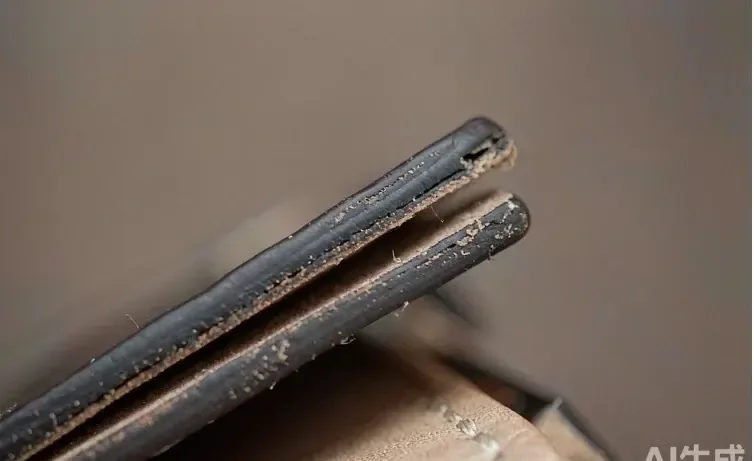
The Capsule That Stopped at the Bench
A maison preparing a twelve-piece capsule in crocodile belly for a spring presentation had approved the silhouette in calfskin and reordered it in skin, expecting the second run to be a change of material and nothing else.
What stopped it was not the cutting. It was that nobody had specified how the tiles were to be matched across the front panel, so each of the twelve pieces matched itself and none of them matched each other. By the time the discrepancy was visible, the skins were cut, the CITES paperwork tied to those specific skins, and a reorder impossible without fresh documents.
Three rules would have prevented it: a written matching rule, a graded and photographed skin before cutting, and a retained offcut from each skin. None of the three is exotic-specific in principle, and all three matter more with skin than with anything else, because no two skins are alike and none can be replaced.
What Exotic Skin Inspection Actually Looks At
Exotic skin inspection begins before cutting, at the skin itself, because faults in a skin are permanent and no operation downstream can remove them. A hide can be re-cut around a mark; a skin that lifts cannot be repaired at all.
- Crocodile belly, finished thickness
- Roughly 1.0-1.4 mm, with the tile row counted across the width
- Lizard skin, finished thickness
- Around 0.6-0.9 mm, backed before cutting in most constructions
- Ostrich leg, finished thickness
- About 0.8-1.2 mm, graded on quill definition rather than on tile count
- Conditioning before inspection
- 45-55% relative humidity at 18-22 degrees, held 24 hours
- Scale lift risk threshold
- Sustained below about 35% relative humidity, where the scale root dries
- Tensile reference for finished skin
- ISO 3376, with working values in the region of 10 N/mm²
- Colour rub reference
- ISO 105-X12, with dry and wet grades of about 4 expected on a scale edge
The conditioning line is the one that separates exotic from bovine work. A bovine hide shrugs off a dry week; a skin held below about 35 percent relative humidity begins to lift along the scale root, and the lift is permanent.
Grading: Tile Symmetry, Defect Bands and What Each Grade Is For
Skins are graded on symmetry, tile regularity and the presence of natural marks, and the grade should dictate which panel the skin is used for rather than simply whether it is accepted.
| Grade | What it allows | Best used for | What to avoid |
|---|---|---|---|
| Grade I | Symmetrical tile rows, no visible marks, even glaze across the whole skin | Front panels, top flaps and any single large visible face | Wasting it on linings or gussets where the symmetry is never seen |
| Grade II | One or two minor marks away from the centre line, slight tile irregularity | Side gussets, backs and base panels | Placing the mark on a visible face to use the skin efficiently |
| Grade III | Visible marks, irregular scaling, or a repaired area | Interiors, facings and small components | Using it externally in the hope the mark will not be noticed |
| Reject | Scale lift, dry cracking, backing separation or glaze failure | Nothing; the fault is progressive rather than cosmetic | Cutting around it, since lifting spreads beyond the visible area |
Reject is the line that needs stating explicitly, because it is the only grade where the fault is progressive. A mark stays where it is; scale lift spreads.
Documentation: CITES and the Paper Trail
Every exotic skin travels with documentation that identifies the specimen, and the inspection cannot be completed without it, because the paperwork is part of what is being verified rather than an administrative extra.
- Confirm the species and the CITES appendix it falls under, since Appendix I, II and III carry different requirements.
- Match the tag on the skin to the permit, specimen by specimen, before any cutting begins.
- Record the skin reference against the lot code, so a finished piece can be traced back to its own document.
- Retain the documentation for the life of the piece, not the life of the season, since resale and repair both require it.
- Check the re-export position for the destination market, because the requirement sits with the importer of record.
The third line is the one that fails. A lot code that records a batch is not enough; with skin, the traceability has to run to the individual specimen, or the piece cannot be documented at all.
Confirm the current appendix listing with the national authority for the species you are buying. Listings change, and the responsibility for holding the correct document sits with the party importing the goods.
The Six Faults Unique to Exotic Skins
Six faults appear in skin work and nowhere else, and each is classified before bulk so that none of them is negotiated at the bench.
- Scale lift at the root, usually from dry storage — critical, because it spreads beyond the visible area.
- Tile mismatch across a seam or panel join, where rows do not continue — major on a visible face.
- Backing show-through, where the reinforcement reads through a thin skin — major.
- Uneven glaze, producing patchy reflection across one panel — major, and best judged under raking light.
- Dry cracking at a fold or a turned edge — critical, since it opens with use.
- Colour rub on the scale edges, showing a lighter line along the tile — major, checked to ISO 105-X12.
The first and the fifth are critical rather than major for the same reason: both progress. A bag delivered with a small lift at the scale root arrives at the customer with a larger one, and no amount of argument at the bench changes that.
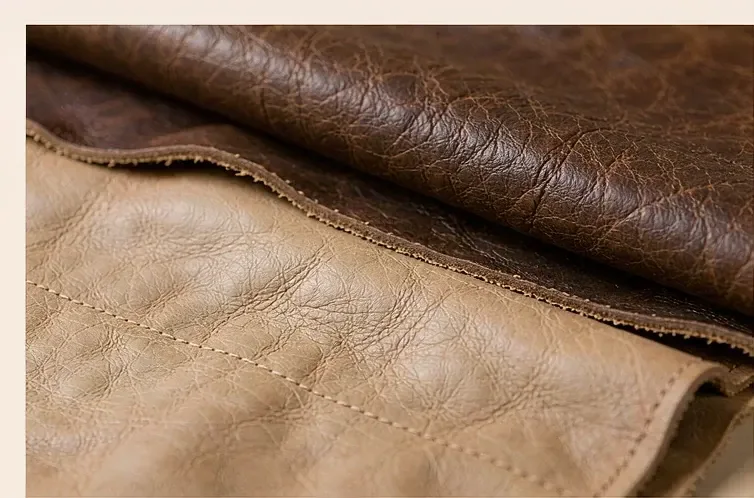
Matching and Symmetry Across a Panel
Matching is the specification most often left unwritten and the one that produces the most expensive disappointment, because it is only visible once several pieces are standing next to each other.
Centre-line matching
The tile row is centred on the panel and runs symmetrically outward to both edges. The most demanding rule and the only one appropriate for a front panel on a flagship piece.
Directional matching
Tiles run in the same direction on every piece, without symmetry about a centre line. Faster to cut and perfectly acceptable on gussets, backs and smaller styles.
Book matching
Two adjacent panels mirror each other across a join, which reads as deliberate on a symmetrical silhouette and as a mistake if the silhouette is not symmetrical.
Write the rule on the tech pack alongside the grade for each panel, and photograph the approved piece from directly in front. In the capsule that opened this article, that single line would have saved the entire run.
Handling, Storage and What the Bench Does Differently
Skin work changes four things at the bench, and each of them is a specification rather than a preference.
- Skins are stored flat, never folded, and separated by tissue rather than stacked against each other.
- Cutting is planned on the light table with the grade marked for each panel before any blade touches the skin.
- Stitch pitch runs finer than on bovine work, commonly around 9-10 stitches per inch, with a correspondingly finer needle.
- Offcuts from every skin are retained and bagged against the skin reference, so a repair years later can be matched.
The last of those is the one nobody budgets time for and everybody eventually needs. A single damaged panel on a piece in its third year is repairable from a retained offcut and essentially unrepairable without one, since a replacement skin will not match either in grain or in glaze.
Yield: What One Skin Actually Delivers
Yield is the exotic number that most often surprises a founder, because it is calculated after grading rather than before it, and grading removes far more of a skin than a cutting plan drawn on paper suggests.
| Measure | Working figure | Consequence |
|---|---|---|
| Usable area after grading | Commonly 45-60% of the skin for Grade I panels | A cutting plan drawn on gross area overestimates the run badly |
| Skins per piece on a medium structured style | About 1.2 to 1.5, once selection and rejection are counted | Ordering by piece count alone leaves the run short of skins |
| Grade I proportion in a delivery | Rarely more than a minority of the total skins received | Front panels become the constraint, not the total skin count |
| Offcuts retained per skin | Every skin, bagged against its own reference | Future repair is possible; without them it is not |
Plan the skin order on the panel that is hardest to supply rather than on the piece count. On a structured style the front panel governs, because only Grade I skins can supply it, and those are a minority of any delivery.
This is also why the capsule that opened this article could not simply be re-cut. The skins were allocated, the documents were attached to those skins, and the grade needed for twelve front panels was not present twice in the same delivery.
Writing Exotic Inspection Into the Plan
Exotic inspection adds six lines to the standard plan, and those six lines are the difference between a material change and a material gamble.
Six lines to add for exotic skin
- Grade per panel: which grade is used where, written before cutting rather than decided at the table.
- Matching rule: centre-line, directional or book matching, stated on the tech pack for every visible face.
- Documents: species, appendix and specimen reference recorded against the lot code before cutting starts.
- Conditioning: 45-55% relative humidity at 18-22 degrees, held 24 hours, with the reading on the report.
- The six faults: classified in the defect library, with scale lift and dry cracking held at zero.
- Retained offcuts: bagged against the skin reference and held for the life of the style.
The rest of the programme is unchanged: MOQ 500 pcs per style and colourway, sampling in 6-10 working days and 12-15 for complex constructions, bulk in 35-50 days, inspection at AQL 2.5 under ISO 2859-1, and handover on FOB Xiamen terms. Export experience on this programme runs since 2014 across 7 production lines with about 200,000 pcs per month of capacity, delivered through our validated partner factory Quanzhou Yingming Bags.
One figure explains the caution. Reworking a single closure on a piece that has reached a customer costs around USD 4.80 in parts and bench time before freight; replacing one panel in exotic skin costs the panel, the specimen documentation and several times the bench time, which is why grading happens before the blade.
Three actions that take under an hour per skin and remove almost every exotic-specific dispute. No two skins are alike and none can be replaced, so the record made before cutting is the only record that will ever exist.
Specify the skin before you cut it
Tell us the species, the style and the quantity and we will return the grading rule, the matching specification and the documentation checklist before bulk begins. Request a quote.
Frequently Asked Questions
How does QC differ for exotic leather handbags?
It begins at the skin rather than at the finished piece, because faults in an exotic skin are permanent. Grading, matching and documentation all happen before cutting, and six faults unique to skin work are classified in advance.
What thicknesses are typical for exotic skins?
Crocodile belly finishes around 1.0 to 1.4 mm, lizard around 0.6 to 0.9 mm and is usually backed before cutting, and ostrich leg around 0.8 to 1.2 mm. Each is graded differently: tile count for crocodile, quill definition for ostrich.
What does skin grading actually assess?
Symmetry of the tile rows, regularity of the scaling, the presence of natural marks and the evenness of the glaze. The grade then dictates which panel the skin is used for rather than simply whether it is accepted.
Why is scale lift classed as critical?
Because it progresses. A small lift at the scale root delivered to a customer becomes a larger one in use, and lifting spreads beyond the visible area, so cutting around it does not remove the fault.
What humidity should exotic skins be held at?
Between 45 and 55 percent relative humidity at 18 to 22 degrees Celsius, for 24 hours before inspection. Sustained exposure below about 35 percent dries the scale root and produces lift, which is permanent.
What CITES documentation is needed?
The species and its appendix listing, a permit matching the tag on each specimen, and a re-export document where the destination market requires one. Confirm the current listing with the national authority, since listings change.
Why must traceability run to the individual skin?
Because the paperwork identifies a specimen rather than a batch. A lot code recording a batch is not enough for skin: the finished piece has to trace back to its own document for resale, repair and any border question.
What is tile mismatch?
A failure of the tile rows to continue across a seam or a panel join. It is major on a visible face and is judged under raking light, because the discontinuity disappears under direct illumination and appears at an angle.
What matching rules are used on exotic panels?
Centre-line matching, where rows run symmetrically outward from the panel centre; directional matching, where they run the same way on every piece; and book matching, where two panels mirror across a join.
How fine should stitching be on exotic skin?
Finer than on bovine work, commonly around 9 to 10 stitches per inch with a correspondingly finer needle. A coarse needle damages the scale root and produces a fault that appears months later rather than at inspection.
Why retain offcuts from every skin?
Because a damaged panel in the third year is repairable from a retained offcut and effectively unrepairable without one. No two skins match, so the offcut bagged against its own reference is the only replacement that will ever exist.
How is colour fastness checked on exotic skin?
By rub testing to ISO 105-X12, with dry and wet grades of about 4 expected. The failure shows as a lighter line along the scale edge where the glaze has rubbed, which is invisible until the piece has been carried.
People Also Ask
What is exotic leather QC in practice?
Grading each skin before cutting, recording its documentation against the lot code, and inspecting six skin-specific faults. Conditioning at 45-55 percent relative humidity comes first, because dry storage causes permanent scale lift.
Can a flawed exotic skin be cut around?
For a mark, yes: place it on a gusset or interior. For scale lift or dry cracking, no: both progress beyond the visible area, and the correct response is to reject the skin rather than cut around the fault.
What paperwork travels with an exotic skin bag?
The species and appendix listing, a permit matched to the specimen tag, and a re-export document where required. The specimen reference is recorded against the lot code so the finished piece traces to its own document.
Why do exotic bags need a matching specification?
Because no two skins are alike. Without a written rule for centre-line, directional or book matching, each piece matches itself and none matches the others, which is only visible once the pieces stand together.
Is exotic skin harder to inspect than calfskin?
Yes. It is graded before cutting, judged under raking light, conditioned more carefully, and carries six fault types that do not occur in bovine leather, two of which are critical because they progress after delivery.
Sources and further reading
Every figure on this page is either our own programme data or attributed below. Open the originals before you write them into a specification.
- CITES — Convention on International Trade in Endangered SpeciesCITES The treaty governing trade in listed species, including the appendix listings and permit requirements that travel with each specimen.
- ISO — International Organization for StandardizationISO Publisher of ISO 3376 for tensile strength, ISO 105-X12 for colour rub fastness and ISO 2859-1 for sampling.
- Leather Working GroupLeather Working Group Tannery audit protocol covering traceability and environmental performance across the leather supply chain.
- SATRASATRA Technology Centre Independent testing organisation for leather and accessories, including flex and rub testing of finished skins.
- Sourcing JournalSourcing Journal Reporting on exotic material sourcing, documentation requirements and quality disputes in the accessories trade.