Luxury Handbag OEM vs In House Production: A Nine-Line Comparison for Designer Houses
Should a designer house build bags in its own atelier or run them through a partner programme? On nine lines the answer splits cleanly: an in-house bench wins on exclusivity, one-off pieces and instant iteration, while a partner programme wins on material access, specialist operations, capital and volume. Most houses end up hybrid, keeping archives and bespoke work in-house and running 500 pcs per colourway through a partner.
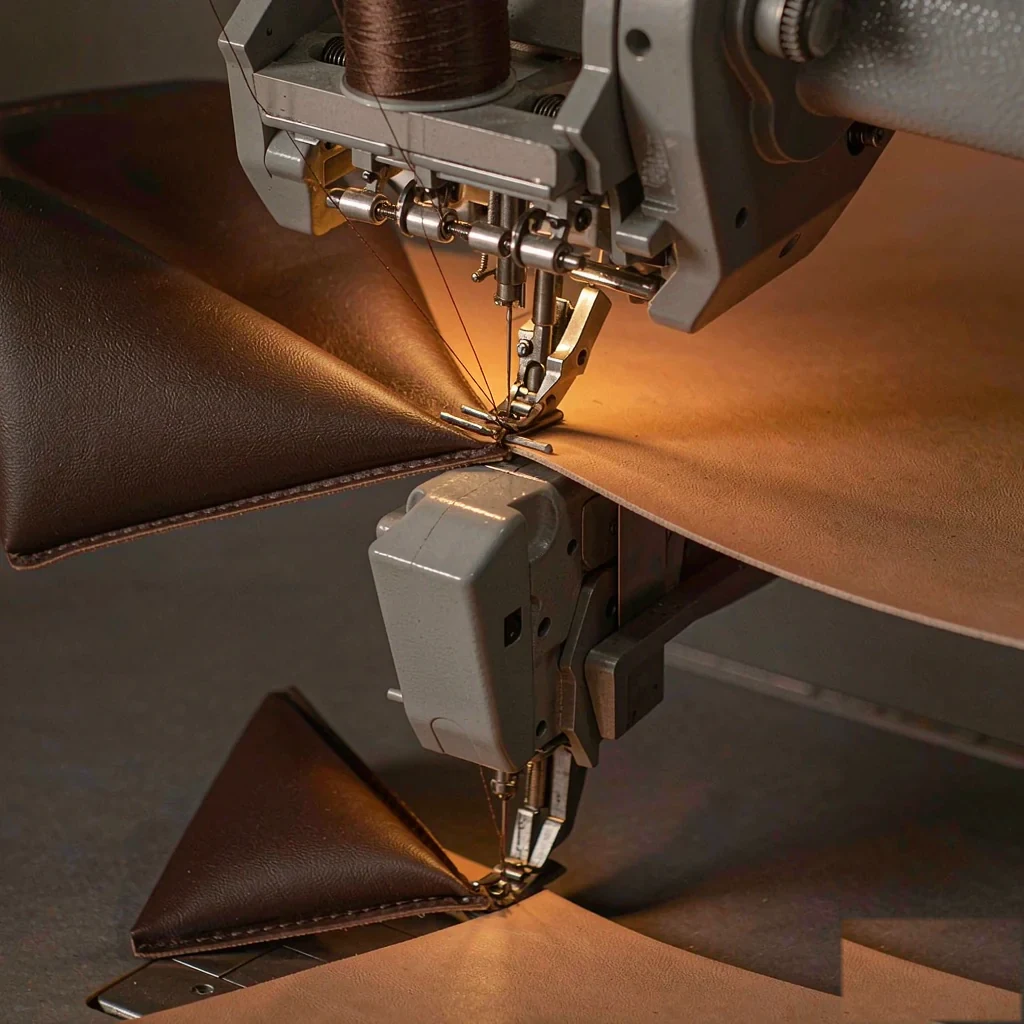
The Three Models Actually on the Table
The choice is rarely binary. Three models exist in practice: a fully in-house atelier, a partner programme where everything runs externally, and a hybrid where the house keeps design, prototypes and archive repair in-house and places bulk with a partner. Each model wins on different lines, and the matrix below is what makes the trade visible.
In-house atelier
Full control of every operation and every secret, at the cost of capital, hiring and a ceiling on volume.
Partner programme
Seven production lines, reserved leather lots and specialist operations, at the cost of a 500 pc commitment per colourway.
Hybrid
Design, first prototypes and archive repair kept in-house; bulk, plating and testing placed with a programme partner.
The hybrid is where most houses arrive after two seasons, not because it is the fashionable answer but because the two halves of the work genuinely want different conditions. Prototyping wants proximity and secrecy; bulk wants a reserved lot, a booked slot and an inspection plan.
Line 1 — Capital and Fixed Cost
An in-house bench for structured work needs a clicker press, a splitting and skiving machine, a post-bed sewing machine, a creasing and folding set-up, an edge-paint bench and a hardware setting press. None of that is small, and all of it is idle for part of the year. A partner programme converts that entire block into a per-unit cost.
- Cutting dies per structured style
- 8-12 dies, cut once and amortised across the run
- Skiving tolerance
- 0.05 mm on a splitting machine, checked with a dial gauge
- Edge paint curing
- 4 hours at 55-60 °C after the third coat
- Hardware setting
- Pressed at 1.5 kN, with reinforcement behind every point
- Per-unit conversion
- Hardware at roughly USD 4.80 per unit for a mid-tier brass set
Line 2 — Craft Depth and Specialist Operations
Craft depth is the one line where an in-house bench can genuinely win, because a house that makes one construction repeatedly becomes exceptional at it. The counterweight is that a partner bench sees more constructions per season, so it holds skills a single house uses twice a year: frame setting, exotic handling, hand-set closures.
- Frame setting is a specialist operation that most houses need once or twice a season.
- Exotic skin handling requires cutting discipline and documentation that are learned by repetition.
- Hand-set closures need a jig and a proving step rather than a press and a habit.
- Edge work at three coats, cured 4 hours at 55-60 °C, is a bench discipline that improves with volume.
- A partner running seven lines sees all five of those operations weekly rather than seasonally.
Line 3 — Material Access
Material access favours the partner programme decisively, because hides are graded and sold by lot and a partner reserves lots across many programmes. A single house buying for its own capsule cannot command the same selection, and shade control across a re-order is where that difference becomes visible.
| Line | In-house atelier | Partner programme | Hybrid |
|---|---|---|---|
| Capital equipment | Bought, maintained, idle in low season | Converted into unit cost | Prototype tools only |
| Specialist operations | Learned slowly, used rarely | Available weekly | Bulk placed externally |
| Leather lot access | Spot buying, weaker selection | Reserved lots, 45-52 sq ft logged | Reserved through the partner |
| Sampling speed | Same day for a sketch | 6-10 working days, 12-15 complex | Same day then 6-10 |
| Quality system | Built from nothing | AQL 2.5 under ISO 2859-1 in place | Shared report format |
| Compliance | House carries every report | Dated audit set issued | Shared responsibility |
| Capacity ceiling | Set by bench hours | About 200,000 pcs per month | Bulk external |
| Cash conversion | Payroll and stock first | MOQ 500 pcs per colourway | Mixed |
| Exclusivity | Complete | Contractual | Complete on design |
Line 4 — Sampling Speed and Iteration
An in-house bench wins the first iteration outright: a sketch becomes a muslin the same afternoon. From the second iteration onward the advantage narrows, because a partner works to a written pack while an in-house bench often iterates against memory, and memory does not scale across a capsule of nine styles.
A partner programme runs 6-10 working days for a standard build and 12-15 working days for framed or hand-set work, with two correction rounds inside the window. What the house gives up in immediacy it recovers in documentation: every round produces a written record, which is what makes a re-order eight months later reproducible.
Line 5 — Quality Control and Traceability
A quality system is expensive to build and costs nothing to inherit. A partner programme already holds the inspection plan, the report format, the conditioning protocol and the first-off discipline; an in-house bench has to design all four and then defend them to a retailer who will ask.
- Finished goods inspected at AQL 2.5 under ISO 2859-1, third-party inspection available.
- At 281-500 pcs under general level II, code letter H gives a sample of 50, accept 3 and reject 4.
- Conditioning at 20 °C and 65% relative humidity for 24 hours precedes measurement.
- A signed first-off card covers dimensions, skive allowance and edge build.
- Stitch density of 8-9 per inch with a 0.45 mm thread is written into the pack.
Traceability is the quiet half of this line. A partner that logs usable area per hide and records the lot against the order can answer a question two seasons later; an in-house bench that bought hides spot cannot, and the answer is usually needed precisely when a re-order is being costed.
Line 6 — Compliance Burden
Compliance is per lot and per market, and it falls on whoever holds the material records. A house running its own bench carries every report, every warning position and every audit; a partner issues a dated set as a matter of course.
- BSCI and Sedex social audits, with issue dates visible on the document.
- REACH Annex XVII position for the European Union, covering chromium VI and azo dyes.
- California Prop 65 written warning position before goods land in that state.
- CPSIA scope for any style placed in a children's market, including small leather goods.
- Leather Working Group recognition at the tannery, referenced by name in the pack.
Our validated partner factory Quanzhou Yingming Bags holds the current set and issues copies with dates on request. For a house weighing the in-house route, that pack is the single largest hidden cost: it is not difficult to obtain and it is not optional.
Line 7 — Capacity, and the Shape of a Season
Capacity is the line that ends most in-house ambitions. A bench that produces beautifully at thirty pieces a week does not become one that produces three thousand, because the constraint is specialist hours rather than square metres. A partner with seven lines running about 200,000 pcs per month absorbs a seasonal peak that would otherwise define the house's ceiling.
Seasonality cuts the other way too. An in-house bench carries its cost through the quiet months, while a partner converts that same period into nothing at all, which is why the hybrid model keeps the bench for design work and places the peaks externally.
Line 8 — Cash Conversion and Risk
The two models convert cash on opposite schedules. An in-house bench spends first on payroll, equipment and material stock, then recovers through sales; a partner programme commits a defined quantity at a known unit and converts inventory in one step at 500 pcs per style and colourway.
- Committed quantity
- 500 pcs per style and per colourway, three colourways commit 1,500
- Bulk window
- 35-50 days from approved sample and reserved materials
- Trade term
- FOB Xiamen, with CIF and DDP priced from the same unit
- Inspection
- AQL 2.5 under ISO 2859-1, third-party inspection optional
- Export record
- Export experience recorded since 2014
Line 9 — Exclusivity and Intellectual Property
Exclusivity is the strongest argument for keeping work in-house and the easiest to overstate. A partner programme protects design through contract rather than through walls, and the practical protections are mundane and effective: tooling owned by the house, patterns held separately, and a confidentiality clause naming the style.
- Own the tooling: dies, plates and bespoke moulds held for the house with a stated storage period.
- Keep pattern development in-house and place only the production pack externally.
- Name the style in a confidentiality clause rather than relying on a general understanding.
- Use a shared hardware family only where it is not the distinctive element of the design.
- Retain the approved sample and the first-off card as the reference for any dispute.
Which Model Fits Which House
The recommendation is not a matter of taste but of what the house is actually trying to do this season. Three scenarios cover almost every case, and each maps to a different point on the matrix.
| If your house is | Choose | Because |
|---|---|---|
| Making fewer than 200 pieces a year, mostly bespoke | In-house atelier | Iteration speed and secrecy outweigh every other line at that volume |
| Launching a first capsule of three styles | Partner programme | Reserved lots, dated audits and a 500 pc minimum suit a defined first drop |
| Running seasonal peaks above bench capacity | Hybrid | Design and prototypes in-house, bulk and compliance placed externally |
| Working in exotic skins at scale | Partner programme | Documentation and repetitive cutting discipline are learned by volume |
| Re-issuing an archive style each season | Hybrid | Archive repair in-house, reproduction placed against retained tooling |
Compare the nine lines against your house
Send your silhouettes, annual volume and destination markets. You will receive a nine-line comparison against your own numbers and a reserved bulk slot within two working days. Request a quote.
The Hybrid Most Houses End Up With
The hybrid is not a compromise; it is an allocation. Design, first prototypes and archive repair stay in-house because they need proximity, secrecy and immediate iteration. Bulk, plating, testing and packing go to a partner because they need reserved lots, booked slots and an inherited quality system.
Six rules for running the hybrid well
- Keep the design pack in-house and place only the production pack externally.
- Own the tooling and state the storage period in the order document.
- Insist on a named leather lot so an archive re-issue matches the original shade.
- Use one report format across both benches so release is comparable.
- Reserve the bulk slot before the sampling window closes, not after.
- Retain the approved sample and first-off card as the reference for any dispute.
Our fixed terms sit on the partner side of that split: MOQ 500 pcs per style and colourway, sampling in 6-10 working days or 12-15 for framed and hand-set work, bulk in 35-50 days, inspection at AQL 2.5 under ISO 2859-1, seven production lines at about 200,000 pcs per month, and FOB Xiamen with CIF and DDP available. Our handbag maison programme page carries the same figures, and our craftsmanship standards page shows which operations stay hand-finished.
Frequently Asked Questions
Is in-house production better for a luxury handbag house?
It is better for bespoke pieces, archive repair and same-day iteration, and weaker on material access, specialist operations and capacity. A bench that produces beautifully at thirty pieces a week does not become one that produces three thousand, because the constraint is specialist hours rather than space.
What does an in-house bench actually need for structured work?
A clicker press, a splitting and skiving machine holding 0.05 mm, a post-bed sewing machine, a creasing and folding set-up, an edge-paint bench with curing at 55-60 °C for 4 hours, and a hardware press at 1.5 kN. All of it is capital, and much of it is idle outside the season.
How many cutting dies does one structured style require?
Between eight and twelve, depending on how many panels, facings and reinforcements the pattern has. They are cut once and amortised across the run, which is why a re-order placed against retained tooling is materially cheaper and faster than a first order.
Why does a partner programme have better leather access?
Hides are graded and sold by lot, and a partner reserves lots across many programmes, recording usable area at 45-52 sq ft per hide. A single house buying for its own capsule cannot command the same selection, and the difference shows up as shade drift on a re-order.
Does working with a partner reduce craft quality?
Not on the operations that matter. Frame setting, exotic handling and hand-set closures are specialist skills learned by repetition, and a bench running seven lines performs them weekly rather than once a season. What a house loses is same-day iteration, not craft depth.
How is exclusivity protected when bulk is placed externally?
Through contract rather than walls. Own the tooling and state the storage period, keep pattern development in-house, name the style in a confidentiality clause, and retain the approved sample and first-off card as the reference. Those four steps cover most practical risk.
What is the minimum commitment on the partner side?
500 pcs per style and per colourway. Three colourways of one style commit 1,500 units, while three styles sharing one colourway commit the same quantity but share a leather lot, a hardware family and a tooling set, which is the more efficient arrangement.
How fast is sampling on each model?
An in-house bench can turn a sketch into a muslin the same afternoon, which is a real advantage for the first iteration. A partner runs 6-10 working days for a standard build and 12-15 for framed or hand-set work, and produces a written record on every round.
Who carries compliance in each model?
Whoever holds the material records. A house running its own bench carries every report, warning position and audit. A partner issues a dated set covering BSCI and Sedex, REACH Annex XVII, California Prop 65, CPSIA and Leather Working Group recognition at the tannery.
How does capacity differ between the two models?
An in-house bench is limited by specialist hours, which is why seasonal peaks define its ceiling. A partner running seven lines at about 200,000 pcs per month absorbs those peaks, and converts the quiet months into no cost at all, which is the financial argument for the hybrid.
What is the hybrid model in practice?
Design, first prototypes and archive repair stay in-house because they need proximity and secrecy. Bulk, plating, testing and packing are placed externally because they need reserved lots, booked slots and an inherited quality system. It is an allocation rather than a compromise.
How should edge paint be specified whichever bench is used?
Three coats, each abraded before the next, cured for 4 hours at 55-60 °C after the third. The build should reach 0.8-1.0 mm and lie flat at a fold. Specifying curing temperature and time is what makes the finish reproducible between two different benches.
What stitch density applies to structured seams?
Eight to nine stitches per inch with a 0.45 mm bonded thread, written into the pack rather than assumed. The figure belongs in the specification because it is one of the items most often interpreted differently by two benches working from the same drawing.
How are hardware components set?
On a press at 1.5 kN with reinforcement behind every point, since a plate through plain lining tears early. A 240 gsm interlining at 0.8 mm behind the hardware is the usual arrangement, and the reinforcement should be named in the pack rather than left to habit.
Which trade terms apply when bulk is placed externally?
FOB Xiamen is the base, with CIF and DDP priced as alternatives from the same underlying unit. The unit covers the bag, its packing and the compliance work; consolidation, port handling and ocean freight sit outside it.
People Also Ask
Should a designer brand make handbags in-house or use a partner?
Most brands end up hybrid. Keeping design, prototypes and archive repair in-house while placing bulk, plating and testing externally captures iteration speed and material access at the same time.
What stops a small atelier from scaling production?
Specialist hours, not space. Operations like frame setting and hand-set closures need trained people and jigs, and the volume needed to justify them usually exceeds a single house's capsule.
Is quality lower when bulk is placed with a partner?
Not if the inspection standard is written in. AQL 2.5 under ISO 2859-1, a signed first-off card and conditioning at 20 °C and 65% RH make quality measurable rather than a matter of opinion.
How do brands protect designs when working with an external bench?
By owning tooling, keeping pattern development in-house, naming the style in a confidentiality clause and retaining the approved sample and first-off card as the reference.
What is the minimum order when placing bulk externally?
500 pcs per style and per colourway. Three styles sharing one colourway commit 1,500 units but share a leather lot, a hardware family and a tooling set.
Sources and further reading
Every figure on this page is either our own programme data or attributed below. Open the originals before you write them into a specification.
- ISO — International Organization for StandardizationISO Publisher of ISO 2859-1 for AQL sampling inspection and ISO 3376 for leather tensile behaviour.
- Leather Working GroupLeather Working Group Tannery environmental audit protocol referenced when comparing in-house buying against reserved partner lots.
- amfori — BSCI social audit systemamfori Administrator of the BSCI framework that a house must carry itself when running its own bench.
- European Chemicals AgencyECHA Authority behind REACH and the Annex XVII restrictions carried by whoever holds the material records.
- Office of Environmental Health Hazard AssessmentOEHHA Administers California Proposition 65 and the warning position required before goods land in that state.