How to Protect Designs With a Premium Handbag Partner: Five Layers, Counted in Days and Exposure
How do you protect a handbag design once the geometry has to leave your hands? Protection is arithmetic rather than trust: five layers — a signed NDA with a defined term, version control on a numbered technical pack, a deliberately split specification, physical control of samples and toiles, and a written tooling ownership clause — reduce exposure to a level most designers find acceptable. The programme runs at MOQ 500 pcs per style and colourway with sampling in 6-10 working days and bulk in 35-50 days, so the period during which drawings sit with someone else is short and worth structuring deliberately.
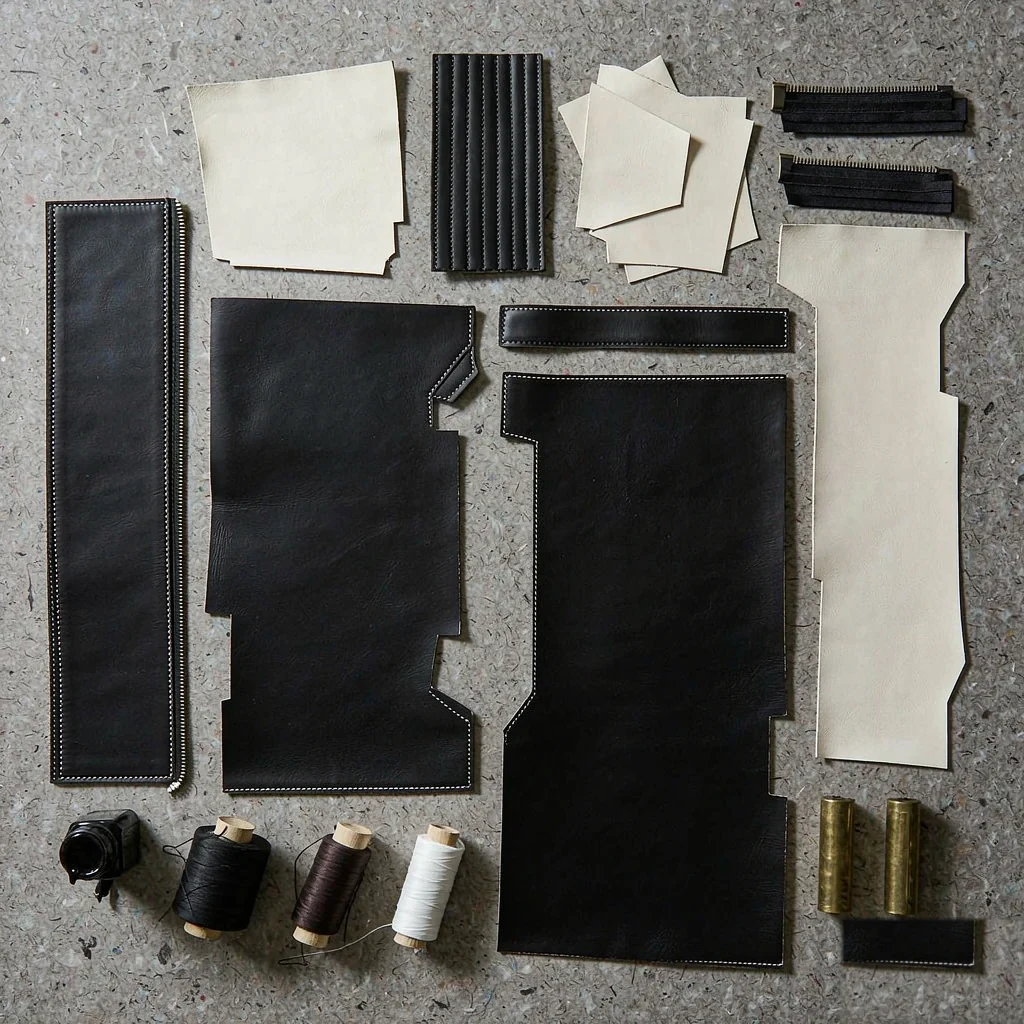
The Numbers Behind a Design Leak
A design leak is not a single event but a sequence of small disclosures, and counting them is more useful than worrying about them. Roughly forty separate pieces of information leave your hands to build one structured bag: dimensions, panel shapes, hardware references, lining codes, stitch density and finish notes.
Only a handful of those are actually valuable. The silhouette and the closure are the two that a competitor can copy from a photograph; the panel geometry and the interlining schedule are the two that make a copy fit and stand properly. Protecting the last two is where effort returns anything, because they cannot be inferred from a finished bag on a shelf.
- Separate data points in one technical pack
- About 40 across dimensions, materials, hardware and finishing
- Pack fields that are dimensional
- Around 24, and these are the ones worth withholding longest
- Revision code format used on packs
- Style-RevNN-YYYY-MM, so Rev03-2026-10 is unambiguous on both sides
- NDA term we sign as standard
- 3 years from disclosure, extended to 5 where tooling is involved
- Counter samples retained
- Two, one held by you and one held on the bench, sealed and dated
Those five numbers describe the whole exposure surface. Forty data points, about half dimensional, carried on a numbered revision, covered for three years, with a physical reference held on each side. Everything below is an explanation of why each of them is set where it is.
Layer One — What the NDA Must Actually Say
A useful NDA names the term, the jurisdiction, what counts as a disclosure and what must be returned or destroyed; a decorative one says only that both parties agree to keep things confidential, which is close to unenforceable in most places.
Three years from the date of disclosure is the term we sign as standard, extended to five where bespoke tooling or a signature closure is involved, because a mechanism outlives a season. Insist on the same clause covering the bench and any subcontracted plating or leather house, since a document that binds only the party you signed with leaves the useful route open.
- Term stated in years from disclosure, not from signature, and not left open-ended.
- Jurisdiction and language named, so an argument is heard somewhere you can actually appear.
- Definition of confidential material that includes drawings, patterns, dies and photographs.
- Return or destruction on request, with a written confirmation rather than an assumption.
- Flow-down to any plating, lining or leather house used on the programme.
Ask to see the document before you send anything, and read whether it survives the end of the working relationship. Most do not, which is precisely the period during which a design is most likely to be reused.
Layer Two — Version Control on the Technical Pack
Version control is the least costly protection available and the one most designers skip: every pack carries a revision code, every revision is dated, and only one revision is ever live at a time.
Use a format both sides can read without a key, such as Style-RevNN-YYYY-MM. When a correction comes back from the bench it is written against a specific revision, and when the sample is approved the approved revision number is recorded on the order. Nothing is then argued from memory.
| Revision | What changed | Who signed | Status |
|---|---|---|---|
| Style-Rev01-2026-09 | First issue: proportions, materials, hardware direction | Designer | Superseded |
| Style-Rev02-2026-09 | Handle drop corrected, gusset depth reduced by 4 mm | Bench | Superseded |
| Style-Rev03-2026-10 | Lining code changed, edge paint finish confirmed | Both | Live |
| Style-Rev04-2026-10 | Packing specification added after first inspection | Both | Draft |
The practical benefit is forensic rather than legal. If a similar bag appears somewhere it should not, a dated revision history is the document that establishes when your geometry existed and who held it.
Layer Three — Splitting the Specification
Split the specification so no single document contains everything anyone would need to reproduce the bag: geometry in one file, material references in a second, hardware codes in a third, and finishing notes in a fourth.
This is not paranoia, it is proportionality. A pattern cutter needs panel shapes and does not need your tannery account name; a plating house needs a finish code and does not need your grading. Issuing each party the smallest document that lets them work also makes an internal leak far less useful.
Send proportions, materials and hardware direction first. Release the full dimensional sheet — around 24 fields — once a deposit or a signed sampling agreement is in place. That single habit removes most casual exposure without slowing anything down.
Watermark drawings lightly, at roughly 15% opacity over the working area, and send images at a resolution that is adequate for review but not for reproduction. Neither measure stops a determined copy, and both stop the accidental forwarding that causes most problems.
Layer Four — Physical Control of Samples and Toiles
Physical control matters more than digital control, because a calico toile in the wrong hands reveals the geometry that no photograph of a finished bag ever will.
Retain a sealed counter sample on both sides, dated and signed, at the point of approval: one with you, one held on the bench. Record the tannery lot code, the hardware finish reference and the thread shade against that sample, so the approved object is a named thing rather than a memory.
- Number every sample physically, not just on the paperwork, and log where each one is.
- Retain the approved counter sample sealed, and open it only to resolve a dispute.
- Account for every toile: they carry the geometry more completely than a finished piece does.
- Record which samples were photographed for lookbook or press use, and when they returned.
Samples also carry a cost that is worth understanding. A single brass closure sourced outside a production lot lands around USD 4.80, while a leaked hero silhouette can cost an entire season's margin — so proportion your protection spending to the second figure rather than the first.
Layer Five — Who Owns the Tooling, Dies and Patterns?
Tooling ownership is the layer most often left unwritten, and it is the one that decides whether you can ever move a proven style to another house without starting again.
Put it in writing before any die is cut: cutting dies, patterns, jigs and any bespoke closure tooling are yours, paid for and identified, and are to be released on request. Without that clause a pattern set stays where it was made, and the practical cost of leaving is a full redevelopment rather than a handover.
Four clauses to settle before the first die
- Ownership: dies, patterns and jigs belong to the brand, named and listed individually.
- Storage and condition: where they are held, in what state, and who pays to maintain them.
- Release: they are returned or transferred on written request within a stated number of days.
- Exclusivity period: how long a signature closure or bespoke mechanism stays with one house.
Registered Rights: What Protection Actually Costs
Registered design protection is the only layer that binds strangers rather than counterparties, and it is worth understanding in outline: in the European Union an unregistered design right arises automatically and runs for three years from disclosure, while a registered design runs in renewable five-year blocks.
The unregistered right is free and short, and it only protects against deliberate copying, which is why the disclosure date has to be recorded. The registered right costs money and time and protects against independent creation as well, which is the difference that matters for a signature silhouette intended to run for years.
Hardware and construction are the awkward cases. A mechanism that works is arguably an invention rather than a design, and a construction detail that cannot be seen in use is not protected by design law at all — which is precisely why the tooling ownership clause in the previous section carries more weight than any filing for those parts.
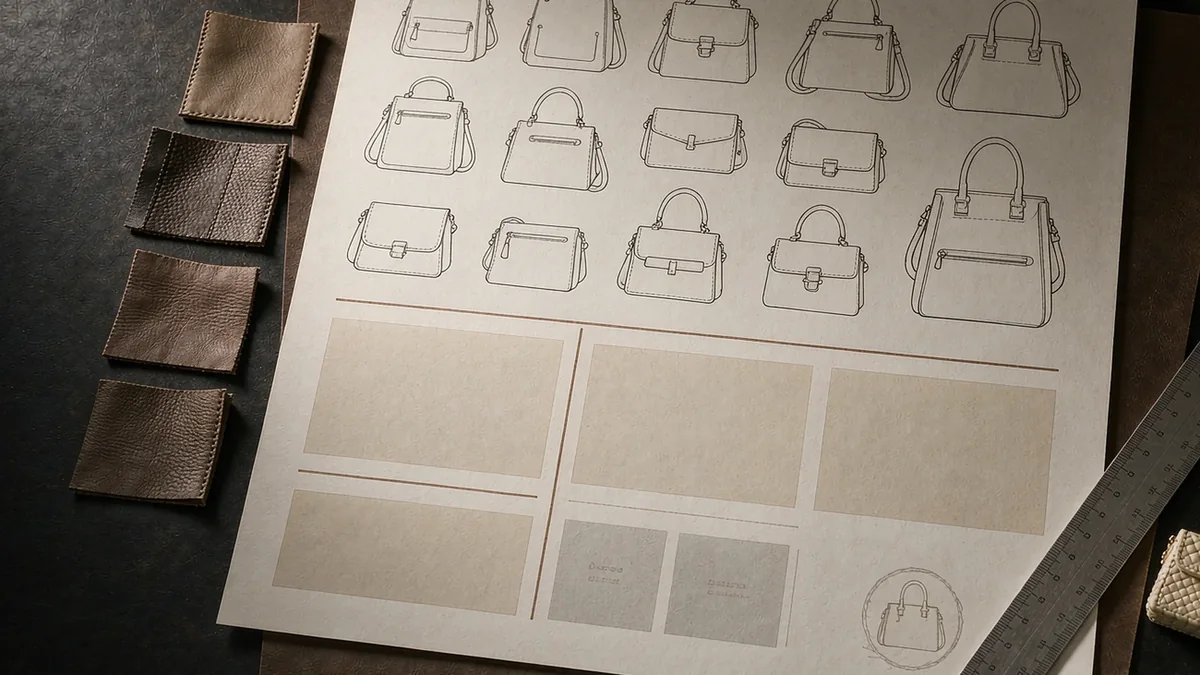
What a Well-Run Programme Does on Day One
A well-run programme protects a design without being asked, and the tell is procedural rather than rhetorical: an NDA offered before drawings are requested, a numbered pack, a written revision log and a named person accountable for both.
Ask what happens to files at the end of a project and listen for a specific answer. Ours runs through a single accountable contact, with export experience since 2014, 7 production lines and about 200,000 pcs per month of capacity, delivered through our validated partner factory Quanzhou Yingming Bags, an SGS-validated site.
Before you send anything
An NDA with a stated term and jurisdiction, offered rather than requested, covering the bench and every subcontracted house on the programme.
At first issue
A numbered revision code, one live version, and a dimensional sheet released against a deposit rather than sent with the brief.
At approval
A sealed counter sample held on both sides, with the lot code, finish reference and thread shade recorded against it.
Twelve Fields That Belong in Every Pack
A pack that names the following twelve fields can be built correctly and can be defended later, because each one turns an assumption into a recorded decision that both sides signed.
- Style name and internal style code, matching the revision log exactly.
- Overall dimensions, stated width by height by depth in millimetres.
- Panel count and the substance of each panel group, in millimetres.
- Leather reference, tannery lot code and finish description.
- Lining reference and its weight, in grams per square metre.
- Interlining substance, typically 0.8 mm behind structured panels.
- Hardware references, finish code and plating thickness range.
- Thread shade, ticket number and stitch density in stitches per inch.
- Edge construction: turned, painted or bound, with the number of coats.
- Handle drop and shoulder strap length, measured under light load.
- Branding method and placement, with artwork supplied as a vector file.
- Packing specification, including dust bag, tissue and carton markings.
Packs missing the fourth, sixth or eighth field cause the most corrections, because each of those is a decision that two people can reasonably make differently. Naming them removes an entire round from the sampling calendar.
What to Do If Something Does Leak
Act on documents rather than on suspicion: assemble the revision history, the dated counter sample and the NDA, establish what was disclosed and when, and only then approach the other party in writing.
Most apparent leaks turn out to be independent development on a shared trend, which is why the dated record matters more than the accusation. Where the record does show a disclosure, a written request to cease and to return the material resolves the majority of cases; a registered design right is what makes the request carry weight against a party you never signed with.
Prevention still reads better than remedy. Inspection on the programme is drawn at AQL 2.5 under ISO 2859-1 and goods are handed over on FOB Xiamen terms, and the same discipline — written, dated, numbered — applies to the design documents as to the inspection plan.
Ask for the NDA before you send the drawings
We will sign first and ask second. Send the brief with whatever detail you are comfortable releasing, and we will return a numbered pack and a protection plan. Request a quote.
Frequently Asked Questions
Do I need an NDA before sending handbag sketches?
Yes, and a good house will offer one before asking for drawings. It should name the term in years from disclosure, the jurisdiction and language, what counts as confidential material, and what must be returned or destroyed on request, rather than simply stating that both sides agree to keep things quiet.
What NDA term is normal for a bag programme?
Three years from the date of disclosure is standard, extended to five years where bespoke tooling or a signature closure is involved, because a mechanism tends to outlive the season it was designed for. The term should run from disclosure rather than from signature, and it must survive the end of the working relationship.
Should I send my full technical pack in the first email?
Send proportions, materials and hardware direction first and hold the dimensional sheet, which runs to around twenty-four fields, until a deposit or signed sampling agreement is in place. That single habit removes most casual exposure without delaying the first conversation at all. Proportions, materials and a hardware direction are enough for a first conversation and a realistic estimate.
How should pack revisions be numbered?
Use a format both sides can read without a key, such as style code, revision number, year and month. Every correction is then written against a named version, only one revision is ever live, and the approved revision number is recorded on the order rather than remembered later.
Who owns the cutting dies and patterns?
You should, and the clause should be written before any die is cut. It names each die, pattern and jig individually, states where they are held and in what condition, and commits to release on written request within a stated number of days, so leaving later costs a handover rather than a redevelopment.
Why does the counter sample matter for protection?
It turns an approval into a named physical object rather than a memory. Sealed, dated and held on both sides, with the tannery lot code, hardware finish reference and thread shade recorded against it, it is the reference that settles any later argument about what was actually agreed.
What is an unregistered design right worth?
In the European Union it arises automatically on disclosure and runs for three years, protecting against deliberate copying but not against independent creation. It costs nothing, which is exactly why the disclosure date must be recorded somewhere both sides accept as evidence. It protects against deliberate copying only, and it is free, so there is no argument for not recording the date.
Is a registered design worth the cost for one style?
For a signature silhouette intended to run across several seasons, usually yes: registration runs in renewable five-year blocks and covers independent creation as well as copying. For a trend-led piece with a single season of life, the paperwork rarely repays the fee and the delay.
Can a construction detail be protected?
Rarely by design law, since protection covers appearance in use and an internal interlining schedule is not visible. That is why tooling ownership and confidentiality clauses carry the weight for construction, and why the dimensional sheet is the document worth withholding longest. What is protectable is the appearance in use, which is why a signature closure earns its development cost.
How do I know if a house takes confidentiality seriously?
Look for procedure rather than assurances. An NDA offered before drawings are requested, a numbered pack with a written revision log, a single accountable contact, and a specific answer to what happens to files at the end of a project are the four signs worth listening for.
What should I do if I suspect a design has leaked?
Assemble documents before making an accusation: the revision history, the dated counter sample and the signed NDA, then establish what was disclosed and when. Most apparent leaks are independent development on a shared trend, and the dated record is what distinguishes the two cases. Approach the other party in writing, with the documents attached, and keep the tone factual throughout.
Does protection slow down sampling?
Barely. Signing an NDA and numbering a pack cost hours, not days, and sampling still runs 6-10 working days for standard constructions and 12-15 for complex ones. What slows sampling is an unclear pack, which is a separate and more common problem entirely. Signing an NDA and numbering a pack are hours of work against days of calendar, so the trade is strongly favourable.
People Also Ask
How do designers protect a handbag design?
Five layers: an NDA with a stated term and jurisdiction, a numbered technical pack with one live revision, a split specification, physical control of samples and toiles, and written tooling ownership. Together they reduce exposure to a level most founders find workable.
Should I share full dimensions before a deposit?
No. Send proportions, materials and hardware direction first and release the dimensional sheet, roughly twenty-four fields, once a deposit or sampling agreement exists. This removes most casual exposure without delaying the first conversation.
How long should a handbag NDA last?
Three years from disclosure is standard, extended to five where bespoke tooling is involved. The term must run from disclosure rather than signature, cover subcontracted houses, and survive the end of the working relationship.
Who should own the dies and patterns?
The brand. The clause is written before the first die is cut, lists each item individually, states where it is held, and commits to release on written request, so moving a proven style later costs a handover rather than a redevelopment.
Does an NDA actually stop copying?
It binds the party that signed, and with flow-down clauses the subcontracted houses too. It does not bind strangers, which is why registered design rights matter for signature silhouettes and why dated records matter for everything else.
Sources and further reading
Every figure on this page is either our own programme data or attributed below. Open the originals before you write them into a specification.
- EUIPOEuropean Union Intellectual Property Office Registers EU designs and publishes the term and renewal structure behind registered and unregistered design rights.
- WIPOWorld Intellectual Property Organization Reference for design protection across jurisdictions and for the disclosure-date principle behind unregistered rights.
- ISO — International Organization for StandardizationISO Publisher of ISO 2859-1, the sampling standard behind the AQL 2.5 inspection agreed before bulk begins.
- Sourcing JournalSourcing Journal Reporting on design protection, tooling ownership disputes and contracting practice across the accessories trade.
- Business of FashionBusiness of Fashion Coverage of independent label strategy, including how smaller houses handle disclosure and development agreements.