Handbag Maison for Boutique Luxury Brands: Capsule Sizing, MOQ 500 and a Season-One Checklist
Is a handbag maison the right model for a boutique luxury brand? Yes, when the line depends on specification rather than volume: a maison programme runs capsules from 500 pcs per style and colourway, samples in 6-10 working days, ships bulk in 35-50 days and inspects at AQL 2.5 under ISO 2859-1. A typical season-one capsule is three styles in two colourways — six production units of 500 pieces, about 3,000 pcs in total — quoted FOB Xiamen. This guide gives the sizing maths, the cost bands and a checklist you can work through before the first call.
What Boutique Houses Need That Volume Programmes Do Not
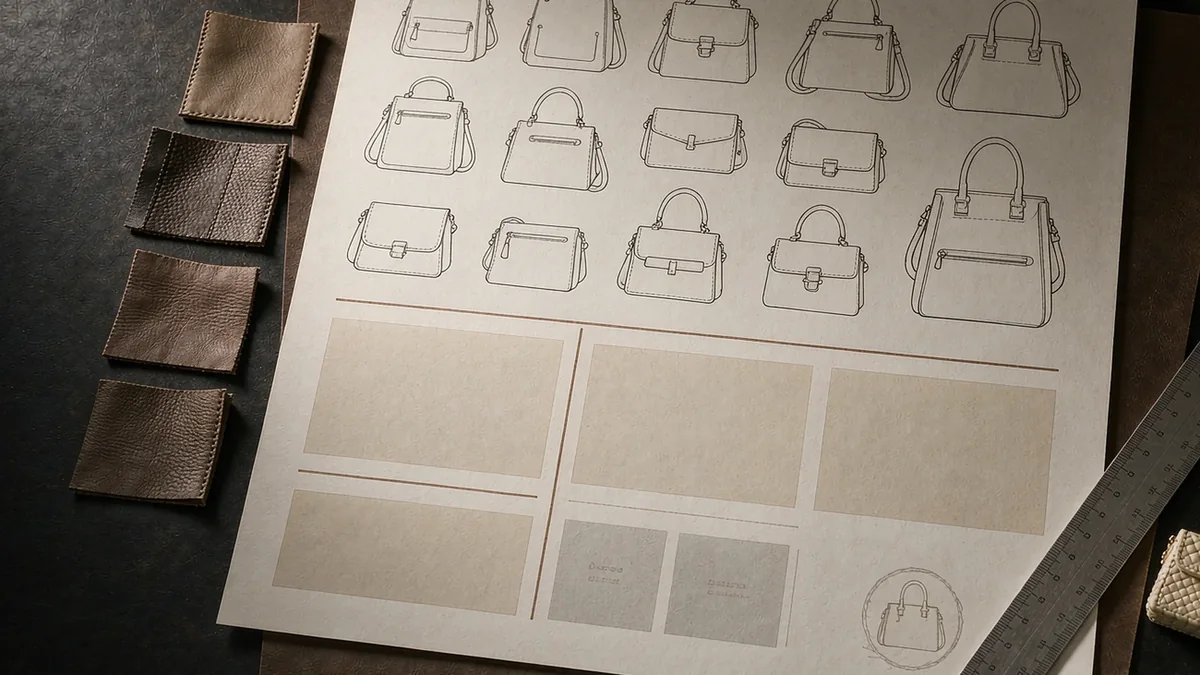
A boutique house sells on specification: a leather substance, a stitch density, a closure that nobody else has. Volume programmes are priced to deliver units at a commodity standard, and the two aims pull in opposite directions on the same bench. A maison programme is arranged the other way round — the specification is fixed first and the cost follows from it, which is why small houses with a clear design file get better results here than large ones with a loose one.
The second difference is attention per unit. A boutique capsule of 3,000 pieces does not need the throughput of a 50,000-piece programme, and it does need a pattern maker who will argue about a 1.5 mm tolerance on a gusset. That argument is the product. Houses that buy on unit price alone rarely get it, because nobody is paid to have it.
Sizing the Capsule: Three Styles, Two Colourways, 3,000 Pieces
The working capsule for a first season is three silhouettes in two colourways each. That gives six production units at the 500 pcs minimum — about 3,000 pieces — which is enough to test three price points and two colour stories without committing the house to a single bet. It also fits one drop window: all six units can be sampled in parallel and shipped in one 35-50 day bulk run.
| Capsule shape | Production units | Total pieces | Indicative FOB Xiamen band |
|---|---|---|---|
| 1 style, 1 colourway | 1 | 500 pcs | USD 52.00-78.00 per bag |
| 2 styles, 2 colourways | 4 | 2,000 pcs | USD 48.00-72.00 per bag |
| 3 styles, 2 colourways | 6 | 3,000 pcs | USD 44.00-68.00 per bag |
| 4 styles, 3 colourways | 12 | 6,000 pcs | USD 41.00-63.00 per bag |
Two cautions on that table. First, the per-unit figure improves with volume because cutting yield and line set-up are spread wider, not because quality drops — the tolerance ledger does not change. Second, a fourth colourway costs more than a fourth style: colour means a new dye lot, a new shade approval and its own 500 pcs minimum, whereas an extra style in an existing colourway reuses the material approvals already on file.
The Minimum Order Question, Answered Plainly
The minimum is 500 pcs per style and per colourway, quoted FOB Xiamen. It is not a negotiating position; it is the point at which a cutting order, a hide purchase and a line set-up stop losing money. Below it, the same fixed costs are divided across fewer units and the per-bag figure rises steeply. Houses that want to test a silhouette at 150 pieces usually do it as a sampling exercise rather than as a production order.
- Minimum per style and colourway
- 500 pcs
- Typical season-one capsule
- 3 styles x 2 colourways = 3,000 pcs
- Sampling
- 6-10 working days, 12-15 for frame work
- Bulk
- 35-50 days from approval sample
- Inspection
- AQL 2.5, ISO 2859-1, level II
- Terms
- FOB Xiamen, CIF and DDP available
Checklist: Before You Send the Brief
The brief is where a boutique season is won or lost. Everything below can be prepared in a week, and each item removes one round of questions later. Treat it as a gate: if an item is missing, expect a delay rather than a guess.
- Target dimensions for every panel, with a tolerance — ±1.5 mm on cut panels is the working default.
- Reference images or a sketch for each silhouette, plus one image of what the bag should not look like.
- Leather type and finish, or at least the hand and weight you want: 1.2-1.4 mm full-grain calfskin for structured shapes.
- Hardware intent — closure type, finish family, and whether the piece is custom-cast or a house fitting.
- Quantity per style and per colourway, and the split if you may reduce one colourway later.
- Target landed cost, stated as a band rather than a single figure, so trade-offs can be discussed honestly.
- Destination market, which sets the restricted-substance declarations required: REACH Annex XVII, Prop 65, CPSIA.
- Launch date, and the date by which you need the first delivery, working back through 35-50 days.
Checklist: Materials and Hardware Decisions
Material choices drive both cost and lead time, and they are the hardest things to change once a cutting order is released. Work through these in order, because each decision constrains the next.
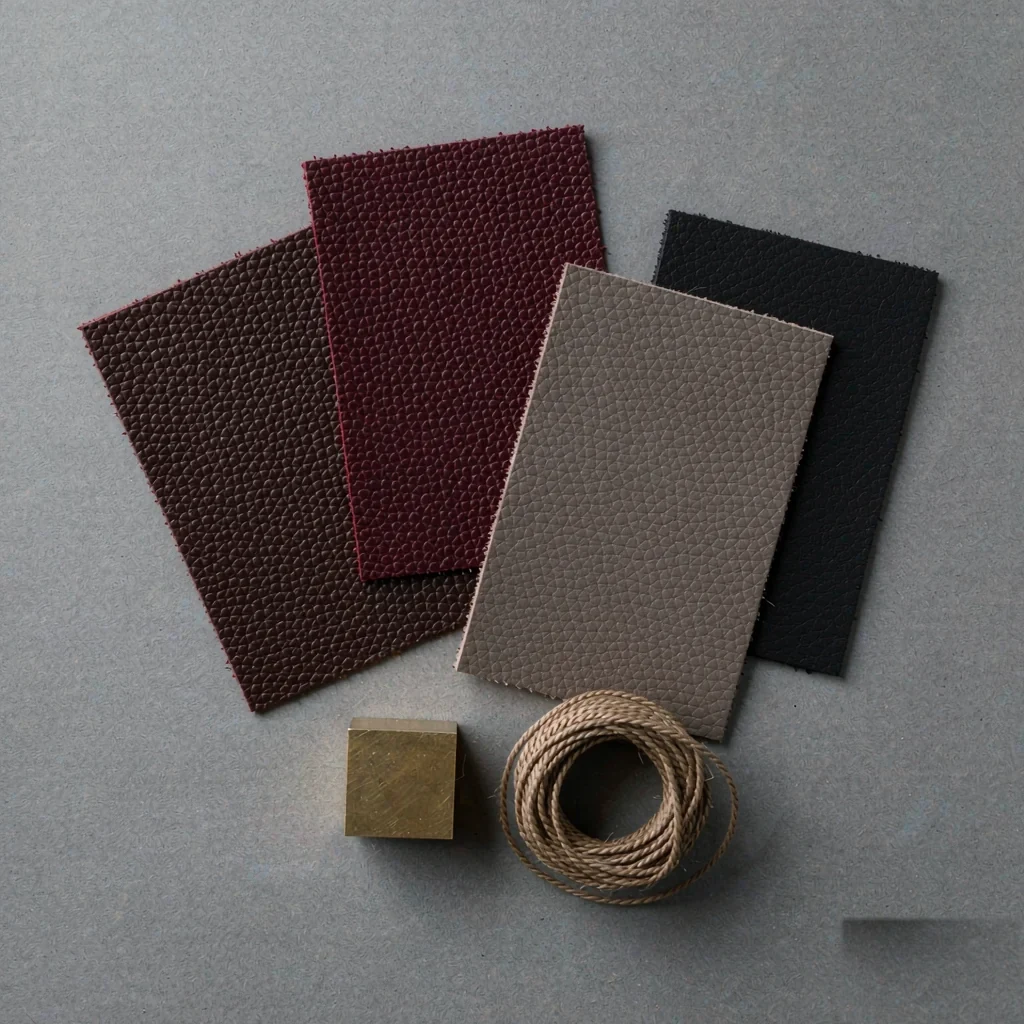
- Confirm the hide: full grain or corrected top grain, substance, and whether the tannery holds an audit file.
- Approve the lining and interlining — a 0.8 mm reinforcement under a soft panel costs little and holds the mouth of the bag.
- Choose the closure. A house fitting keeps cost down; a custom-cast clasp adds USD 450-900 in tooling and 8-12 days.
- Fix the plating: 0.15-0.3 µm over a nickel-free undercoat, with 24-hour salt spray as standard and 48 hours for humid markets.
- Specify the zipper by size and chain — a #5 metal chain suits a structured flap; a lighter chain suits a soft body.
- Set the shade rule: ΔE ≤ 1.0 under D65 against the approved swatch, with a named alternative finish.
- Book the restricted-substance screen before plating and dyeing begin, not after the goods are packed.
Checklist: Sampling and Approval
Sampling for a boutique capsule runs 6-10 working days per style, or 12-15 where a made-to-order frame or clasp is involved. Three styles can be sampled in parallel, so the calendar does not triple. Allow USD 180-320 per prototype for a structured calfskin bag with custom hardware, and expect the figure to rise for a made-to-order frame.
- Approve the pattern before the prototype is cut, not after — a silhouette change at prototype stage costs a full cycle.
- Hold the first sample next to the reference images in daylight, not under studio light alone.
- Check the bag loaded: a 15 kg handle load through 2,000 lift cycles is the working test for a structured frame.
- Record every correction in writing; verbal corrections on a sample call are the most common source of a wrong second sample.
- Seal the approved unit as the golden sample, one per style and colourway, held on both sides.
- Confirm the re-order window in writing — 28-35 days against a sealed reference for the following season.
Checklist: Bulk, Inspection and Delivery
Bulk is the part a boutique house can least afford to get wrong, because a failed inspection at this volume usually means missing a launch. The gates below are the ones worth insisting on.
- Material certificates filed before cutting: hide lot, lining, thread and hardware plating readings.
- Pre-production unit built and photographed against the sealed sample before the full run starts.
- Inline checks at the bench on stitch density 8-9 SPI and edge paint at three coats.
- Final inspection at AQL 2.5 under ISO 2859-1, general inspection level II, defects split critical, major and minor.
- Optional third-party inspection on the first drop of any new style.
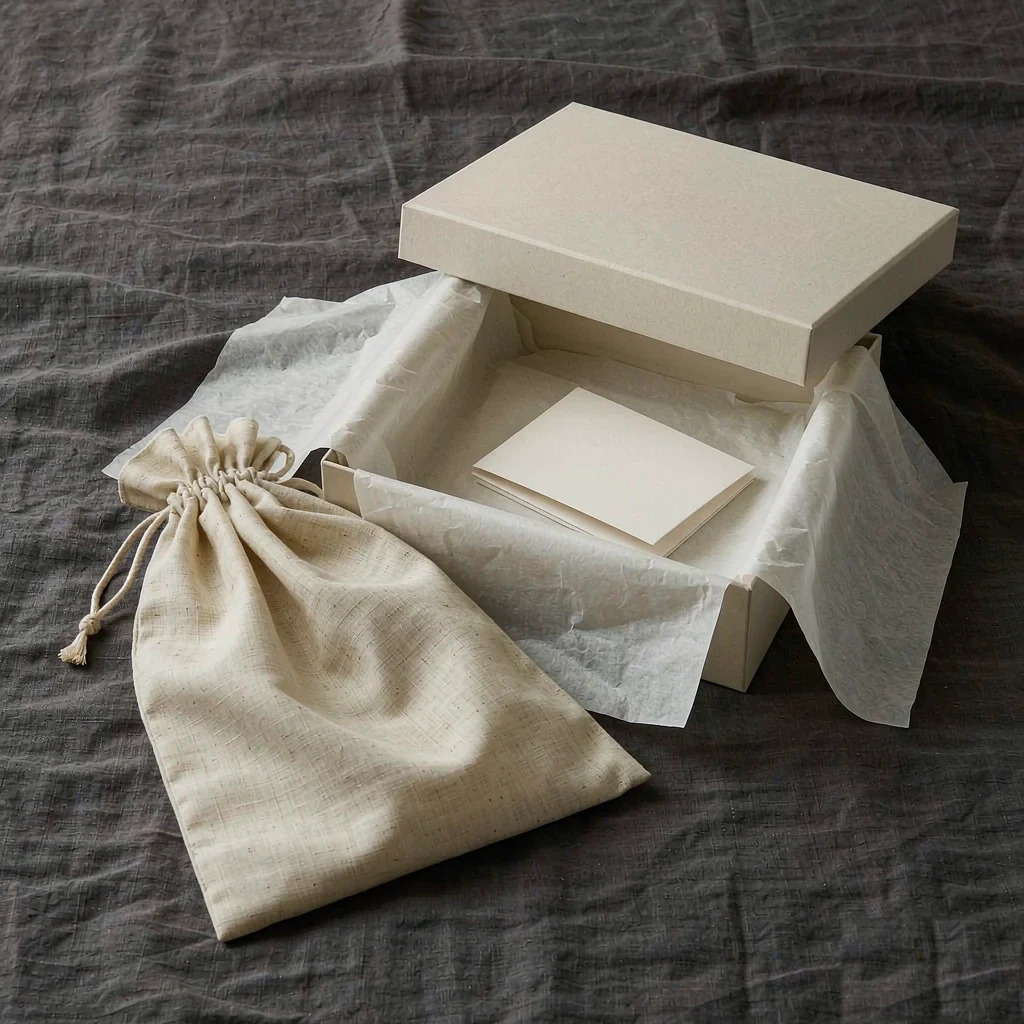
- Packing to the agreed presentation: dust bag, tissue, carton specification and labelling matched to your retail requirement.
- Export documentation and loading, quoted FOB Xiamen, with CIF and DDP available on request.
Where the Money Goes in a Boutique Capsule
Two cost lines surprise first-time buyers. Tooling for a custom closure is a one-off of USD 450-900, charged once and reused for every later drop of that style. Sampling is USD 180-320 per prototype and is usually credited against the bulk order. Neither appears in the per-unit figure, and both are the reason a first capsule costs more than the second.
Five Mistakes Boutique Houses Make in Season One
Sampling one style at a time
Parallel sampling across three styles costs the same calendar as one. Sequencing them turns a 10-day window into a 30-day one.
Leaving hardware to last
A custom closure adds 8-12 days and its own tooling. Choosing it after the prototype is approved pushes the whole drop past the launch date.
Approving colour on screen
Screens lie about leather. ΔE ≤ 1.0 is measured under D65 in a light booth against a physical swatch, not on a display.
Adding a colourway late
A fourth colourway carries its own 500 pcs minimum and a fresh dye lot approval. Add it at brief stage or wait for the next season.
Skipping the sealed sample
Without a golden sample the re-order has no reference, and season two becomes a re-sampling exercise you have already paid for once.
State your launch date and work backwards: 35-50 days bulk, 6-10 working days of sampling, plus material approval. A boutique capsule that misses its window rarely fails on quality; it fails because the hardware decision was taken three weeks too late.
Send your capsule brief
Three styles, two colourways and a target launch date is enough to start. Send the brief you have and our team will return a capsule plan, a sampling schedule and a costed first order through our quotation desk.
What a boutique house gets from this model
- One technical file per season, owned by one team from first pattern to packed carton. Sampling 6-10 working days, production 35-50 days against a sealed reference. MOQ 500 pcs per style and colourway, inspection at AQL 2.5 under ISO 2859-1, quoted FOB Xiamen, backed by export experience since 2014 and 7 production lines at about 200,000 pcs per month.
Frequently Asked Questions
What is the minimum order for a boutique handbag capsule?
The minimum is 500 pcs per style and per colourway, quoted FOB Xiamen. A season-one capsule of three styles in two colourways therefore runs six production units of 500 pieces, about 3,000 in total. Testing a silhouette below 500 pieces is possible as a sampling exercise, but the per-unit figure rises sharply below the minimum.
How many styles should a boutique house launch with?
Three is the working answer. It gives three price points and enough shelf presence to read as a collection, while staying inside one sampling and one bulk window. Two styles under-fill a rail; four or more usually means one of them is under-developed because the same attention is divided further.
How long does a first capsule take from brief to delivery?
Allow 6-10 working days for sampling, plus a correction round of 5-7 days, then 35-50 days for bulk. A custom-cast closure adds 8-12 days for tooling. Working backwards from a launch date, a boutique house should open the conversation roughly three months before it needs goods on the rail.
How much does a boutique handbag capsule cost?
Indicative FOB Xiamen bands for a structured full-grain calfskin bag are USD 52.00-78.00 at 500 pcs, USD 48.00-72.00 at 2,000 pcs and USD 44.00-68.00 at 3,000 pcs. Add one-off costs: USD 180-320 per prototype and USD 450-900 for custom closure tooling, both of which are reused in later seasons.
Can a boutique house run only one colourway?
Yes, and it is a sensible way to start. A single colourway at 500 pcs keeps the first order small and removes the shade-approval work that a second colour adds. The trade-off is that the per-unit band sits at the top of the range, because set-up costs are spread across fewer pieces.
Should a boutique house use a custom closure?
Only if the closure is part of the brand signature. A custom-cast clasp adds USD 450-900 in tooling and 8-12 days to the schedule, but it is the single strongest defence against a design being copied. House fittings are the better choice when the signature lives in the silhouette or the leather instead.
How is colour approved for a boutique capsule?
Against a physical swatch in a D65 light booth, with shade deviation held at ΔE ≤ 1.0. Screen approval is unreliable for leather because the surface reflects differently than a display renders it. A named alternative finish should be approved at the same time, in case the first is discontinued.
What inspection standard applies to a boutique drop?
AQL 2.5 under ISO 2859-1 at general inspection level II, with defects classified critical, major and minor. On a 3,000-piece lot the sample is 125 units, accepted at 7 major defects and rejected at 8. Third-party inspection is worth adding on the first drop of any new style.
Can sampling run on several styles at once?
Yes, and it should. Three styles sampled in parallel finish inside the same 6-10 working day window as one, because the pattern work and the bench time are separate. Sequencing them instead turns a ten-day window into a month, which is the most common avoidable delay in a first season.
What happens if a style sells out mid-season?
A re-order against a sealed reference runs 28-35 days rather than the 35-50 day first window, because the patterns, tooling and material approvals are already on file. That is the practical reason to seal a golden sample on the first drop rather than the second.
Do boutique houses need their own restricted-substance testing?
Declarations should be collected before dyeing and plating begin, covering REACH Annex XVII for the European Union, Prop 65 for California and CPSIA where goods enter the United States. Independent laboratory screening is worth commissioning on the first drop of a style and then periodically.
How is packing specified for a boutique capsule?
Packing is agreed before bulk, not after inspection: dust bag, tissue, carton specification, labelling and any retail barcode requirements. It belongs in the purchase order as a line item, because a carton specification discovered after the run has already been packed is expensive to redo.
People Also Ask
What is a good first order size for a small bag brand?
Six production units of 500 pcs — three styles in two colourways, roughly 3,000 pieces — is the working first order. It fills a rail, tests three price points and stays inside a single sampling and bulk window.
How much does it cost to develop a handbag sample?
A structured full-grain calfskin prototype runs USD 180-320, depending on hardware. Complex frame or clasp constructions cost more because the metal part has to be produced first. Sample cost is usually credited against the bulk order.
Why is there a minimum order quantity for handbags?
Cutting, hide purchase and line set-up are fixed costs. Below 500 pcs per style and colourway those costs are divided across too few units, so the per-bag figure rises steeply rather than the quality falling.
How do small luxury brands protect a design from copying?
A custom-cast closure is the strongest instrument, because copying it needs a new mould and a new tooling spend. Sealing the pattern file and holding it against the brand does the rest.
What is a capsule collection in handbags?
A small, tightly edited group of styles released together, usually three to five silhouettes in two or three colourways. It lets a boutique house test a direction without committing to a full seasonal range.
Sources and further reading
Every figure on this page is either our own programme data or attributed below. Open the originals before you write them into a specification.
- Leather Working GroupLeather Working Group Tannery audit protocol referenced when a boutique house names a hide source that must stay available across seasons.
- ISO — International StandardsInternational Organization for Standardization Publisher of ISO 2859-1 sampling procedures and ISO 105 colour fastness methods used in boutique drops.
- CPSC — Business EducationU.S. Consumer Product Safety Commission CPSIA requirements that apply to handbags and small leather goods placed on the United States market.
- Understanding REACHEuropean Chemicals Agency Annex XVII restrictions on substances in leather, coatings and plated hardware sold into the European Union.