Exotic Leather Bag Regulation Impact on Luxury Trends: The Six Decisions Behind Any Documented Exotic Programme
How does exotic leather regulation shape luxury bag trends? By making paperwork the first decision rather than the last. Species listings determine whether a piece can be traded at all, permits can take 4-8 weeks before shipping, every skin carries its own tag number, and destinations add requirements of their own — which is why the practical answer often involves alternatives rather than fewer pieces.
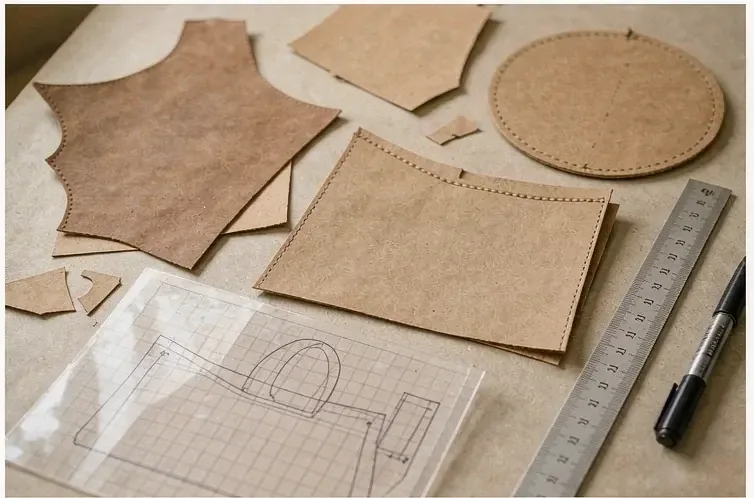
Six decisions, taken in this order
Exotic skin work fails for administrative reasons far more often than technical ones, and the sequence below is arranged to expose those reasons early. Establish the listing status first, then destination requirements, then permit timing, then the material route itself, then yield, then documentation per skin. Reversing that order is how pieces get developed that cannot lawfully be sold.
None of these decisions is especially difficult, and none is expensive once understood. What makes exotic programmes hard is that every step has to be completed before the next begins, and the expensive steps begin once the skins are cut. Discipline about sequence costs nothing and prevents almost every costly outcome in this category.
One further point about the sequence, because it explains why so much advice in this area sounds cautious. Each decision constrains the one after it rather than merely informing it. Listing status determines which destinations are even open to you; destination then determines documentation; documentation determines the calendar; and the calendar determines what can honestly be designed. Working backwards through that chain is what allows an ambitious piece rather than preventing one.
Decision one: establish which listing actually applies
Every programme starts with one question: which appendix is this species listed under, and what does that listing require? CITES maintains appendices offering different levels of control, and the distinction governs whether commercial trade is permitted at all, permitted with documentation, or prohibited outright. Species-level identification must be exact, because a near relative can be listed entirely differently.
- Appendix I
- Commercial trade generally prohibited; any movement requires exceptional documentation and is rarely relevant to a commercial bag programme
- Appendix II
- Trade permitted with documentation issued per consignment, which becomes the practical working case for most programmes
- Appendix III
- Trade permitted with documentation from the listing country, and requirements vary by origin rather than by species alone
- Farmed versus wild origin
- Origin changes the documentation route substantially, so it must be established before selection rather than at shipping
- Species identification
- Must be recorded to species level, since requirements are set by species rather than by the word exotic
- Substitution risk
- A substitute species chosen later without re-checking its listing is the most common cause of a stranded shipment
The last line causes more trouble than anything else in exotic work. A substitution made quietly during sourcing, because something similar was available, can place the finished goods outside their own paperwork. Re-establish the listing whenever the species, origin or consignment changes, and do not let that decision be made twice by two different people.
Decision two: what the destination requires beyond international rules
International documentation is necessary and rarely sufficient. Various jurisdictions impose requirements of their own on listed species, and a few restrict particular categories entirely regardless of what international permits allow. Those rules change, they differ by destination, and they are enforced unevenly, which is a poor combination for anyone assuming last season's paperwork still applies.
- Confirm requirements per destination rather than assuming one global rule, including restrictions broader than international ones.
- Check whether a state or provincial rule applies in addition to a national one, particularly for North American deliveries.
- Ask whether re-export documents will be needed if goods will move onward again after first importation.
- Confirm whether the destination tests at the border rather than accepting external documentation.
- Establish who bears the delay if clearance stalls, and settle that before quotation rather than during it.
- Re-check requirements for every order, since this is an area where assumptions age badly rather than well.
The fifth item is genuinely useful and seldom discussed. If goods are held at a border, somebody pays for that delay, and deciding who beforehand changes how trade terms are quoted. It is also the point at which landed pricing for exotic work starts diverging sharply from the same route calculated on calfskin.
Decision three: book permits against the calendar, not after it
Documentation takes time, and that time sits outside everything normally quoted for production. Allow plenty of weeks for permits before intended shipping: four to eight is a workable planning range, though it varies by jurisdiction, species and season. Nobody quotes manage this away, and no amount of urgency at the shipping stage recovers weeks lost at this step.
| Programme step | Elapsed time | Where it sits |
|---|---|---|
| Species and origin confirmation | Before material selection | Days, but it gates everything after it |
| Documentation applications | Commonly 4-8 weeks before shipping | Parallel to production, never after it |
| Sampling rounds | 6-10 working days, 12-15 for complex | As quoted for any other construction |
| Bulk production | 35-50 days from confirmation | Unchanged by the material being exotic |
| Inspection | AQL 2.5 under ISO 2859-1, agreed before | Same basis whatever the skin |
| Despatch | FOB Xiamen, with CIF or DDP available | Terms matter more when clearance is complex |
Read that table carefully and one thing becomes obvious: the physical programme never changed. Sampling, bulk, inspection and despatch all sit at ordinary durations. Only documentation sits outside them, which means the whole difficulty of exotic work is administrative rather than technical, and therefore entirely manageable if it is scheduled.
Decision four: choose the material route honestly
Sometimes the correct decision is not to use a regulated skin at all. That is not a failure of ambition; it is frequently the right answer for a young label, a tight calendar, or a destination whose requirements make the paperwork disproportionate. The alternatives have genuinely improved, and choosing one deliberately beats discovering by accident that the paperwork cannot be completed.
Listed skin, fully documented
The right route when the piece genuinely depends on it and the calendar accommodates permits. Strongest storytelling, longest preparation, highest documentation burden.
Less restricted species
Several farmed species carry lighter documentation. They still require origin records, but the administrative load is substantially smaller and often fits an ordinary calendar.
Embossed bovine
Modern embossing achieves convincing scale patterns at a fraction of the cost and no listing burden. Honest when described accurately, and increasingly difficult to distinguish at a glance.
Fish and alternative skins
Interesting surfaces generally outside listing regimes, though often with their own durability and tannery capability questions to resolve first.
Mixed material construction
A listed skin used as an inlay or accent rather than the whole panel reduces material demand and documentation weight considerably while retaining the point.
Delayed programme
Occasionally the correct answer is to build the calendar first and re-open the question next season, rather than rushing something that cannot be documented properly.
The fifth card is underused and commercially clever. Using a listed skin as an accent rather than an entire panel reduces both material requirement and administrative weight while preserving the reason the material was wanted. It is also easier to replace later if that specific species becomes harder to document.
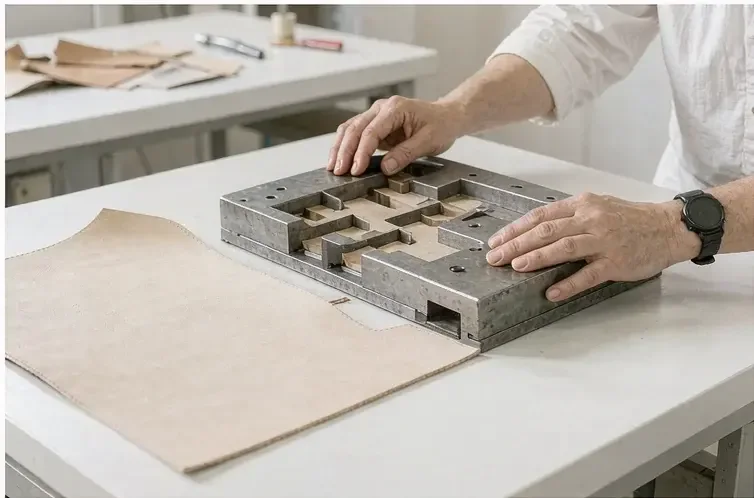
Decision five: understand what yield really looks like
Exotic skins are small, irregular and individually characterful, so cutting behaves nothing like cutting a bovine side. A python skin is commonly only 25-35 cm at its widest, which means a structured front panel frequently requires two skins joined with a deliberate centre seam. Crocodile work revolves around belly tiles, where symmetry across a centre line is the visible measure of quality.
- Plan symmetry first: belly tiles are selected in sequence and matched across a centre line, so tile alignment is commonly held within about 2 mm.
- Accept seams as design rather than apologise for them: two-skin panels read as intentional when the join is centred and deliberate.
- Grade skins before costing, because a lower grade may need radically more pieces than the same design in a better selection.
- Allow for individual variation, since no two skins pattern identically and matching across a run is never guaranteed.
- Record each skin's tag number against every piece cut from it, which is what makes later documentation possible at all.
- Inspect against the same basis as anything else: AQL 2.5 under ISO 2859-1, agreed in writing with a defect library.
The fifth item deserves emphasis because it is the one people skip and the one later requested. Without a skin-to-piece record, a question about a specific bag cannot be answered from anything except guesswork, and guesswork is precisely what documentation exists to replace. Writing it down takes minutes during cutting and cannot be reconstructed afterwards. It also has a second use nobody plans for: a record at skin level is what allows a specific piece to be repaired or re-covered with the right material years later, rather than approximated by whatever happens to be available.
Decision six: document every skin against every piece
Final habit, and the one that turns paperwork from an obligation into an asset. Record the tag number of each skin, which panels it produced, which cartons those pieces shipped in, and which documents accompanied them. That single chain answers a border query, a client question and a later audit with the same file, and none of it can be assembled after the fact.
Consignment-level records answer questions about consignments. Everything difficult is asked about an individual piece — a specific bag held by a specific customer — so records have to be kept at skin level to be worth anything at all.
What regulation did to the trend itself
Three things, and none of them was predicted by anyone writing about the category at the time. Exotic skins became more concentrated at the top of the price range rather than less common, because documentation favours programmes that can absorb it. Mid-range exotics largely disappeared, replaced by excellent embossing. And material storytelling became a discipline rather than a flourish.
The third effect is the one most often missed. Once every material claim has to be supported, labels began documenting everything else — tanning source, audit date, batch reference — because the apparatus already existed. Exotic regulation therefore raised the standard of documentation across the whole category rather than merely within it, which is a strange and welcome outcome.
Building the next exotic programme
Start eight weeks earlier than feels necessary and everything else falls into place. Confirm species and listing, check destination requirements, apply for documents while development is running, grade skins before costing, keep skin-to-piece records, and inspect against the same basis used for every other material. That is the whole method, and it is mostly scheduling.
Our frame sits unchanged under whichever route is chosen: minimum 500 pcs per style and colourway, sampling at 6-10 working days and 12-15 for complex constructions, bulk at 35-50 days on FOB Xiamen terms, inspection agreed at AQL 2.5 under ISO 2859-1 with a written defect library before the line starts, and a base reference unit of USD 4.80 before material. Capacity runs across 7 production lines at about 200,000 pcs per month, with export experience since 2014, delivered through our validated partner factory Quanzhou Yingming Bags.
Confirm the paperwork before developing the piece
Tell us the species and destinations you have in mind and we will return what can be documented, what the timeline looks like and what alternatives suit the same design, in writing, before development starts. Request a quote.
Frequently Asked Questions
Can exotic leather bags still be produced and sold?
Yes, provided species listing status is established before anything is cut and the destination's own requirements are confirmed. Most commercial work falls under Appendix II, which permits trade with documentation issued per consignment. What changed is administrative burden rather than availability, and it is manageable when scheduled properly from the start.
How long does permitting take?
Four to eight weeks is a workable planning range, varying by jurisdiction, species and season. It runs parallel to production rather than after it, so nothing is lost if the application is filed while development is under way. Everything is lost when it is applied for once goods are finished and waiting to ship.
Is national documentation enough for international delivery?
Rarely. Various jurisdictions impose requirements beyond international rules, some broader than them, and a few restrict particular categories outright. Check requirements per destination for every order, including local or state rules that apply alongside national ones, because assumptions in this area age badly from one season to the next.
What happens if the species is substituted during sourcing?
The finished goods can fall outside their own paperwork, because documentation is issued against a specific species and origin rather than against a category. Re-establish listing status whenever species, origin or consignment changes, and make sure that check is never performed twice by two different teams.
Are embossed alternatives convincing now?
Genuinely yes, and modern embossing on good bovine achieves scale patterns very close to the original at a fraction of the cost and with no listing documentation. It must be described honestly as embossed rather than implied otherwise, but at a glance the difference is frequently difficult to detect.
How wide is a usable python skin?
Commonly 25-35 cm at its widest point, which means a structured front panel often requires two skins joined with a deliberate centre seam. Design that seam as an intentional feature rather than treating it as a compromise, since trying to hide it produces worse results than drawing the eye to it.
What tolerance applies to crocodile tile matching?
Tile alignment across a centre line is commonly held within about 2 mm, with tiles selected in sequence rather than individually. Symmetry is the visible measure of quality here, so it should be specified numerically and checked against every piece rather than judged by eye alone during cutting.
Do exotic pieces need different inspection?
Not different, but equally rigorous: AQL 2.5 under ISO 2859-1, agreed in writing with a defect library before the line starts. The material should not lower the basis, and in practice it raises it, because the consequence of an accepted fault in expensive material is considerably larger than elsewhere.
Is using a listed skin as an accent a good idea?
Often yes. It reduces both material requirement and administrative weight while retaining the reason the material was wanted. It is also easier to adapt later if that particular species becomes harder to document, which is a real possibility rather than a theoretical one in this area.
What records should be kept for each piece?
The tag number of each skin, which panels it produced, which cartons those pieces shipped in, and the documents that accompanied them. That chain answers a border query, a client question and a later audit from the same file, and none of it can be reconstructed once the offcuts have gone.
People Also Ask
Which exotic skins are easiest to document?
Generally those from farmed sources with established breeding records, whose population data is well maintained. Establish with certainty rather than assuming, since requirements are set by species and origin rather than by whether a skin seems common in the trade.
How early should an exotic programme start?
Around eight weeks earlier than an equivalent calfskin programme. Nothing about sampling or bulk changes; the additional interval exists purely to allow documentation to be applied for while production is planned, which prevents nearly every delay anyone experiences here.
Can a piece be developed before documentation is confirmed?
Yes, provided nothing is cut. Development, costing and grading all happen safely before permits exist. The constraint arrives at cutting rather than sketching, which means preliminary work is genuinely risk-free as long as nobody commits irreversibly early.
Does using exotics affect landed cost beyond material?
Yes, through documentation, potential clearance delays and specialist handling. Those layers frequently exceed the material difference itself, which is why exotic pricing should always be checked at landed level rather than compared against unit cost alone.
Why did exotic skins concentrate at the top of the market?
Because documentation favours programmes able to absorb administrative cost and delay. Mid-range pieces could not carry it economically, so excellent embossing largely replaced them, while well-documented skins became more strongly associated with the highest price levels.
Sources and further reading
Every figure on this page is either our own programme data or attributed below. Open the originals before you write them into a specification.
- CITES — Convention on International Trade in Endangered SpeciesCITES Secretariat Authority for appendix listings, permit requirements and the documentation that must accompany listed species across borders.
- Leather Working GroupLeather Working Group Publishes tannery audit protocols relevant when selecting specialist tanneries for demanding skins.
- ISO — standards catalogueInternational Organization for Standardization Publisher of ISO 2859-1 inspection sampling, ISO 3376 tensile strength and ISO 3377 tear resistance.
- ECHA — REACH Annex XVIIEuropean Chemicals Agency Maintains restrictions applying to tanning chemistry in articles placed on the European market, including exotic skins.
- Sourcing JournalSourcing Journal Covers how compliance regimes, material substitution and documentation practice are changing exotic leather sourcing.